

Hitch a Ride: 3-Part Mixed, a cappella Choral Octavo
Music by Mary Donnelly and George L. O. Strid
Item: 00-PO-0002932
$2.25
Minimum order quantity: 20 copies
Pickup currently not available
Related Items
Hitch a Ride: 3-Part Mixed, a cappella Choral Octavo |
$2.25
|
View |
Description
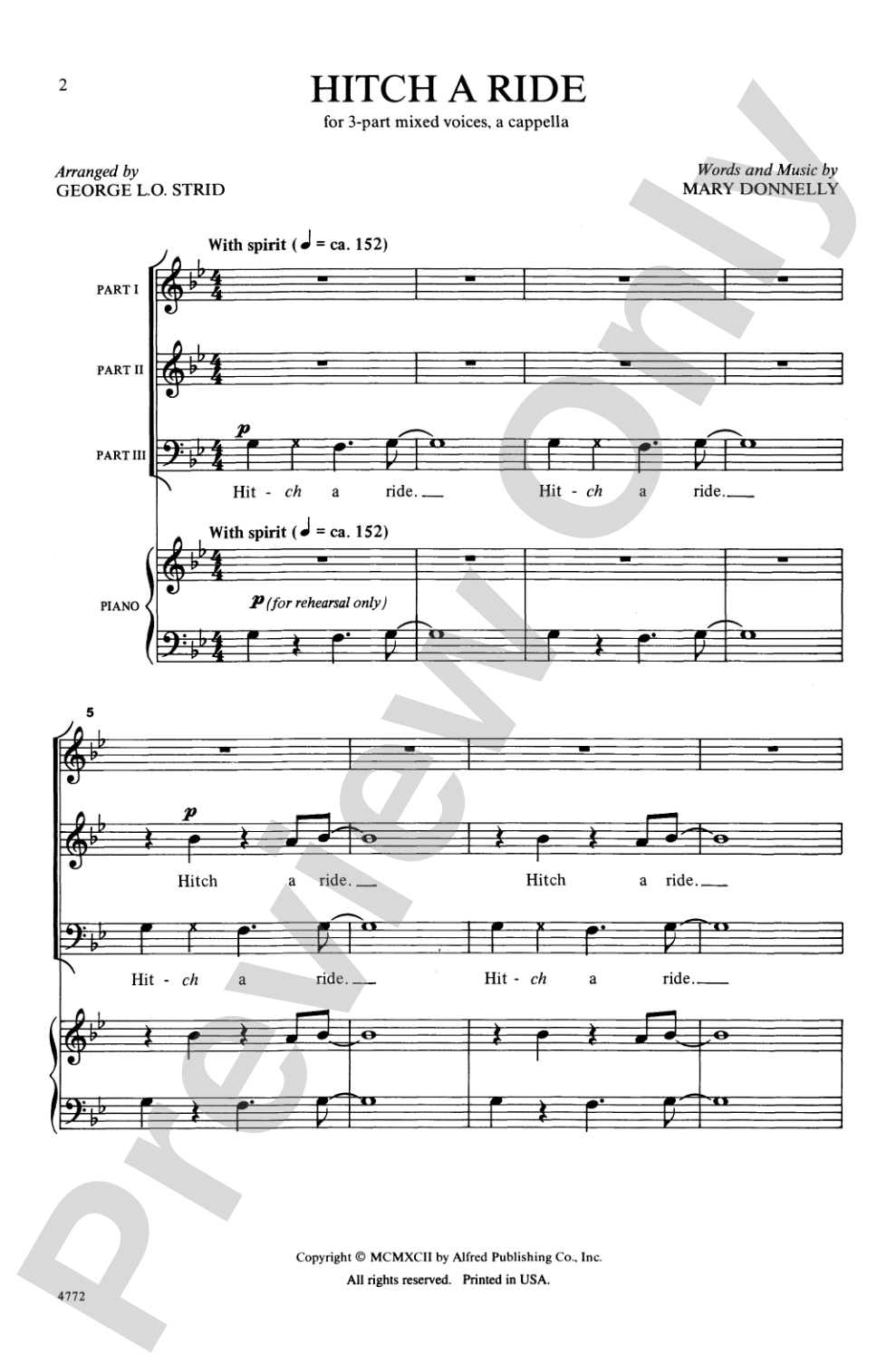
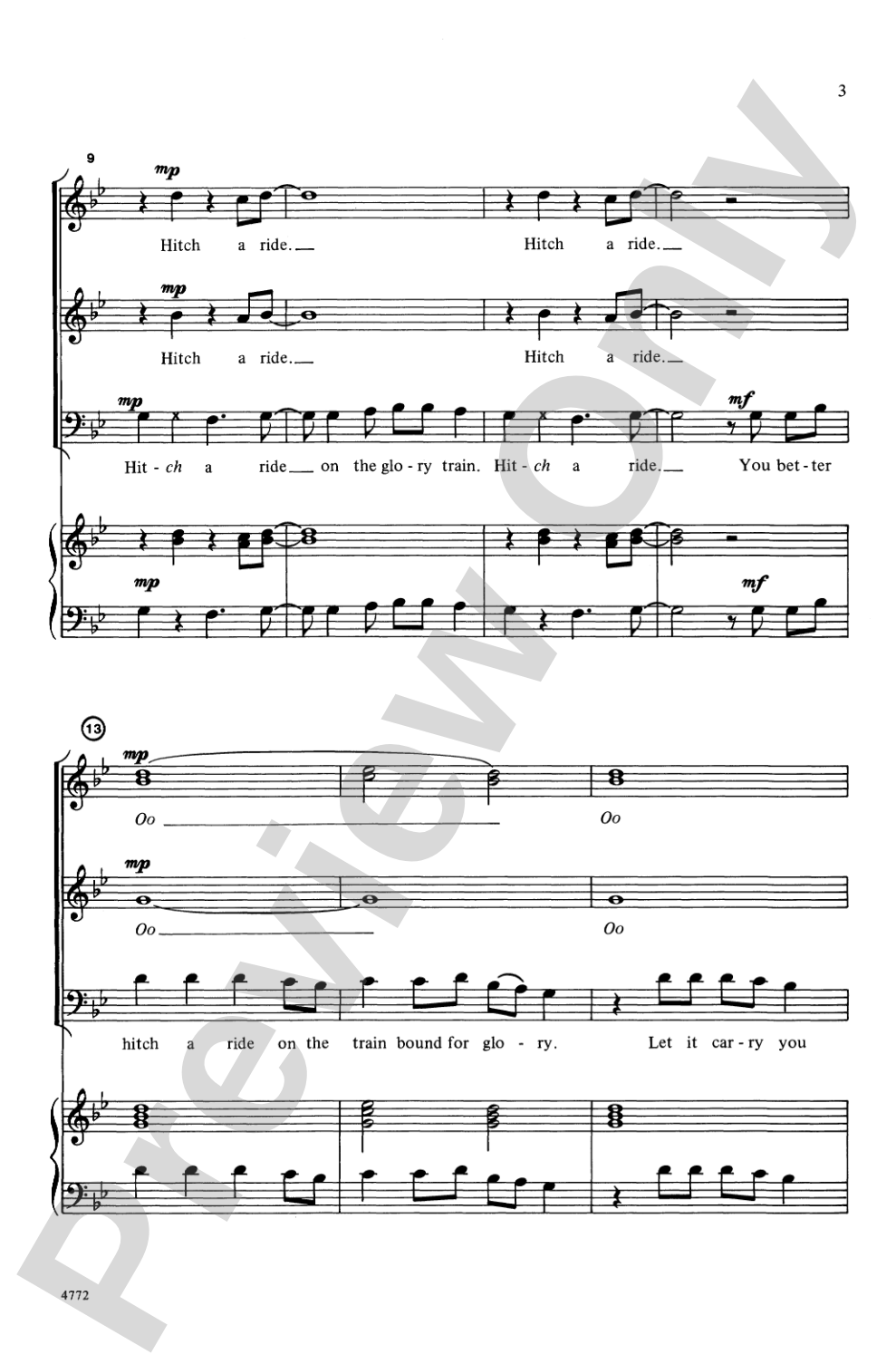
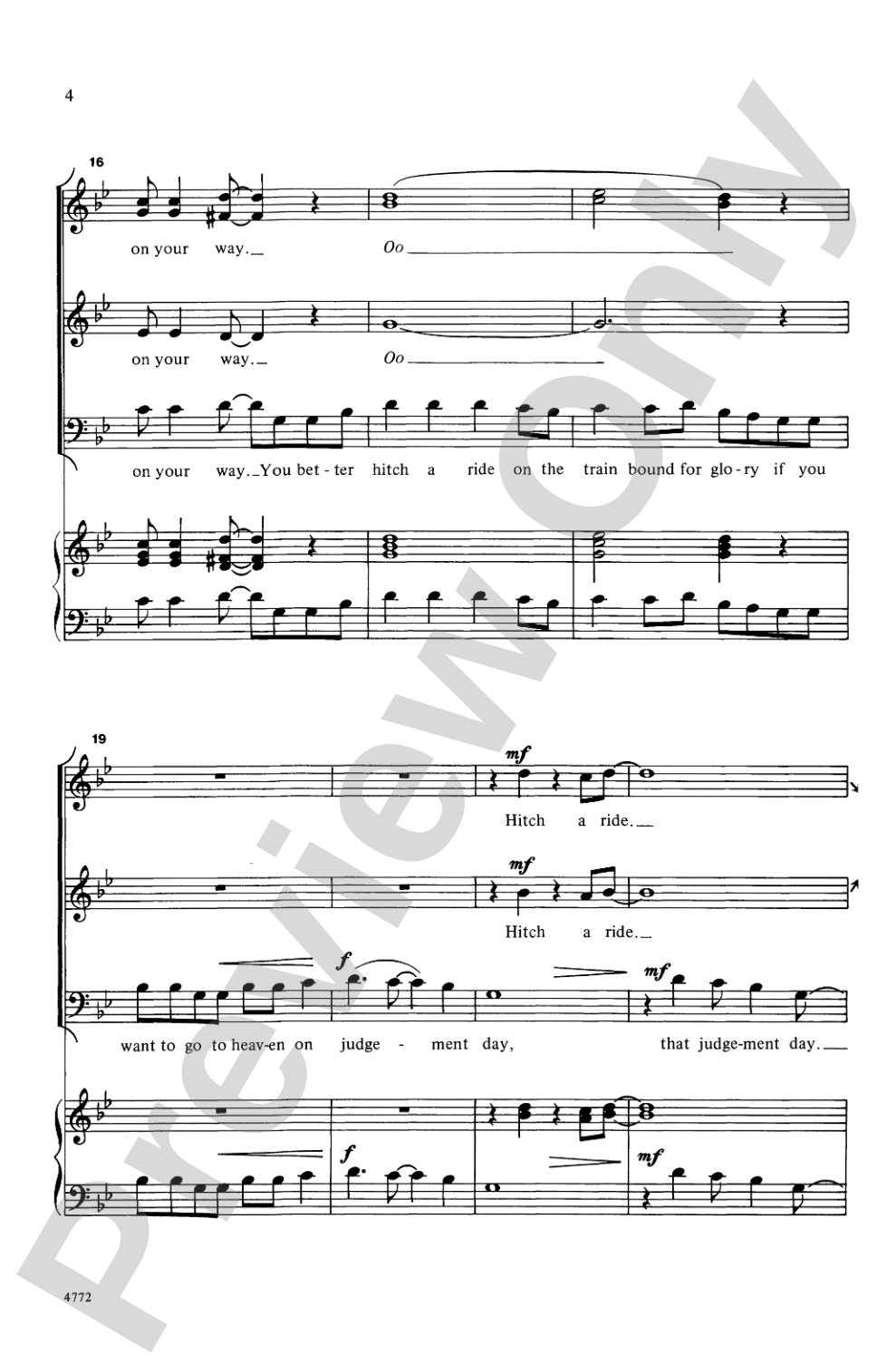
Mary Donnelly and George Strid wrote this exciting spiritual exclusively for 3-part mixed choirs. It has a limited boys' range, but the guys get the melody (which practically sings itself). The piece is built on the percussive sound of the title: 'Hit-ch a ride on the glory train.' Optional piano, but intended to sung a cappella.


Hitch a Ride: 3-Part Mixed, a cappella Choral Octavo isn't in MakeMusic Cloud just yet...but it could be. Let us know you'd like to see it, and you'll help shape what comes next. In the meantime, start a free trial and dive into thousands of interactive titles your students can play along with today.
Request This Title
Tell us you want it.
Start Your Free Trial
Explore everything that's ready to play right now.
Sample Audio
1
Audio File
--:--
0:00
0:00
Sample Video
No sample videos found.
Additional Details
Series:
Alfred Archive Edition: Alfred Choral Designs
Publisher:
Alfred Music
Page Count:
12
SKU:
00-PO-0002932
More about this title
About the Composer: Mary Donnelly
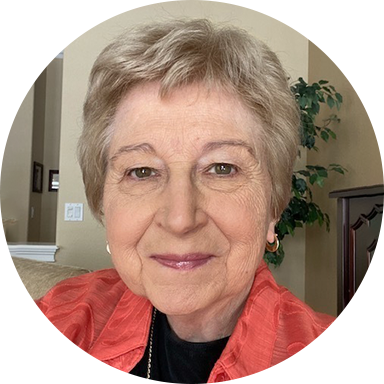
Mary Donnelly grew up in Reno, Nevada, and studied English and French at the University of Nevada before discovering her passion for music education. After co-founding two children's choruses while still in college, she pursued formal training in music pedagogy at Lesley College in Cambridge, Massachusetts, where she focused on arts integration across the curriculum. She spent three decades teaching general music and choir in the Washoe County schools, retiring as an active educator while remaining involved in ACDA, NEA, and ASCAP.
In 1985, Donnelly began a creative partnership with George Strid when they were asked to write a musical for a Reading Week program at their school. That first collaboration, The Million Dollar Mystery, launched a prolific writing career spanning more than two hundred songs and twenty-five musicals. Their work reflects deep understanding of what engages young singers and how to build meaningful choral experiences in school settings.
Why we love this
Donnelly and Strid craft this spiritual with genuine understanding of mixed choir realities: the men get a melody that practically sings itself, the range stays practical, and the percussive energy of 'Hitch a ride on the glory train' creates immediate engagement. The piece proves you don't need complex harmonies or wide ranges to build vocal excitement and deliver authentic spiritual character.
What to expect
The spiritual radiates joy and momentum, built on the infectious rhythm of its central image. Singing 'Hitch a ride on the glory train' feels celebratory and grounded at once, with enough harmonic support to feel full while staying transparent enough to let the text shine.
Who it's for
This octavo works for middle school and high school 3-part mixed choirs, particularly ensembles where keeping men engaged and comfortable matters. It's also effective for community and adult choirs seeking repertoire with accessible ranges and spiritual authenticity without requiring extensive classical training.
How to get the most out of it
- Lean into the percussive consonants in 'Hit-ch a ride' as a rhythmic and energetic anchor for all three parts. This articulation clarity drives the piece forward.
- Balance the top two parts around the men's melody rather than above it. The SAB voicing works best when treble voices support rather than dominate.
- If you add the optional piano, use it sparingly in rehearsal so singers internalize the a cappella sound they'll ultimately perform.
- Consider how the text invites subtle movement or gestures that emphasize the 'ride' imagery without choreography that distracts from the singing.
How to use it
Program this as a cornerstone of a spirituals-focused concert, or use it to introduce repertoire diversity into a classical or show tune set. Its infectious energy and short length make it ideal for building concert pacing or standing as a potent standalone moment that demonstrates your choir's ability to sing with authentic character across genres.
Skills your students will build
- Singing a cappella with rhythmic precision and harmonic independence
- Balancing three distinct vocal lines while maintaining textural clarity
- Interpreting spiritual conventions and the percussive articulation of vernacular English
- Sustaining ensemble cohesion without instrumental support