
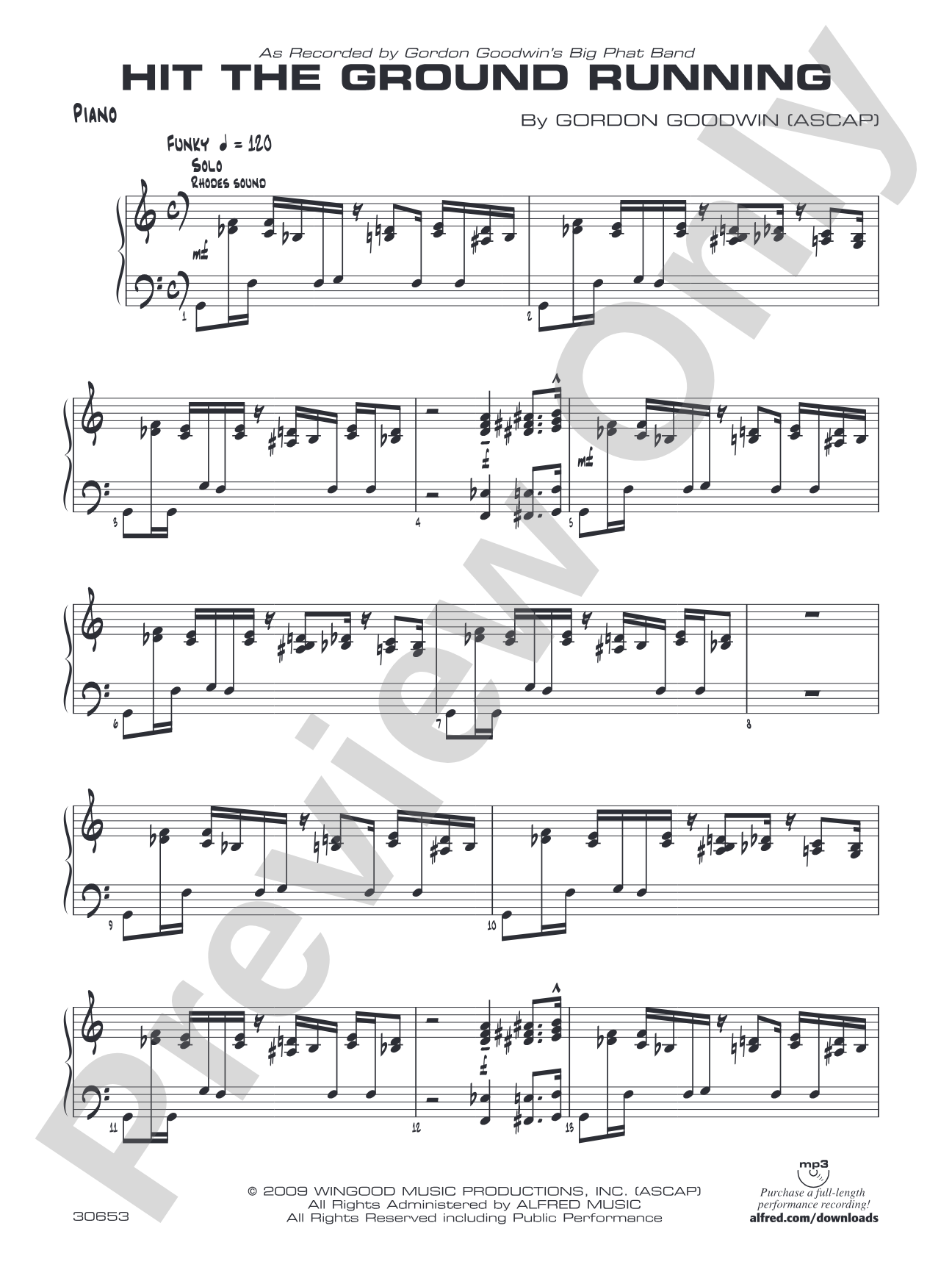
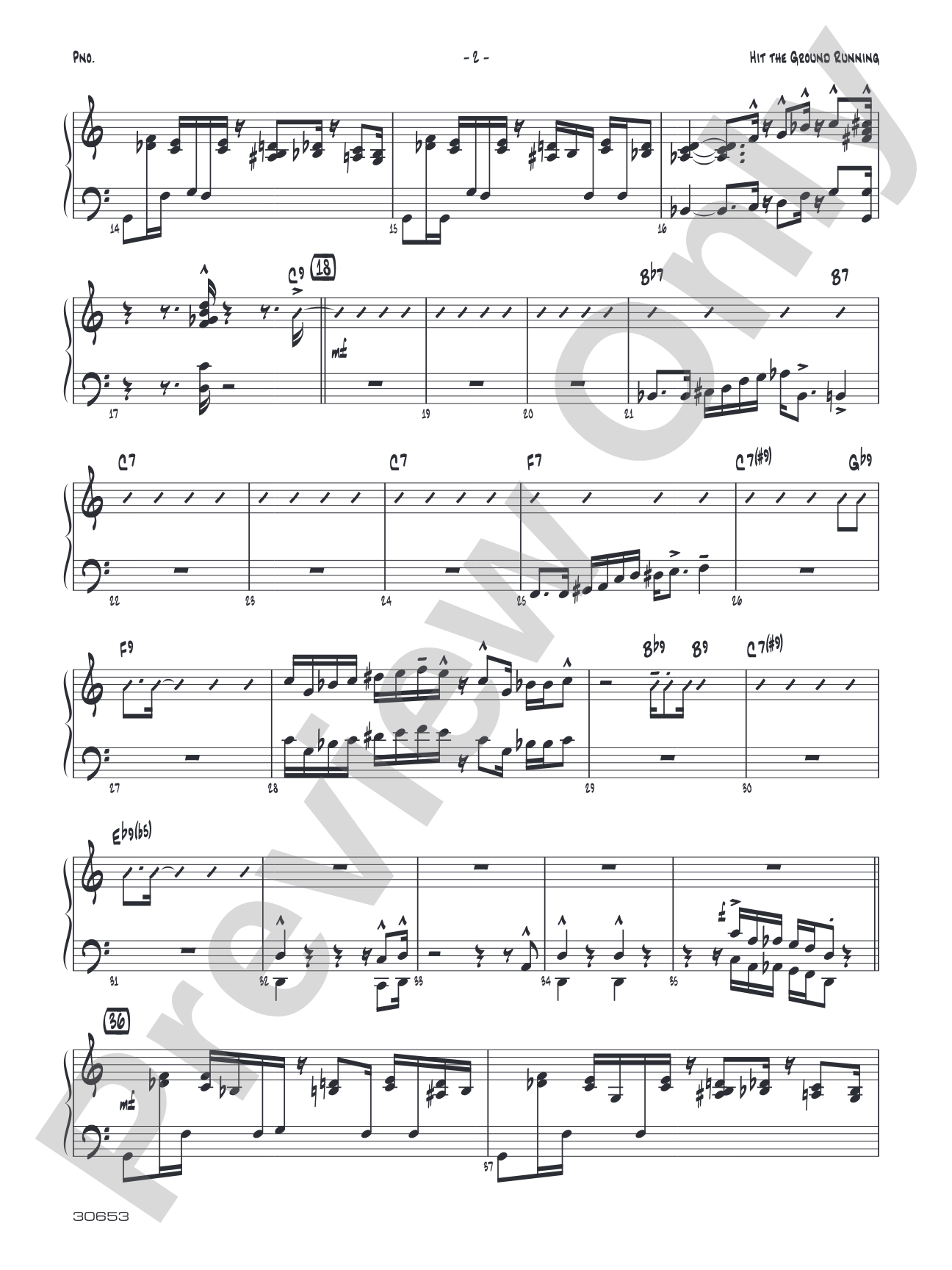

Hit the Ground Running: Piano Accompaniment
As Recorded by Gordon Goodwin's Big Phat Band
By Gordon Goodwin
Grade: 5 (Advanced / Difficult)
Item: 00-PC-0016682_K
$3.00
Pickup currently not available
Description
It's funky with all the Big Phat Band attributes, and it's fairly tough to play, but hey, it's Gordon and you know it will be a hot chart . . . if you have the horses. The opening lick for piano is really hot. The rhythm section will stay busy and it includes an auxiliary percussion part. Solo space is for alto, tenor, bari, trumpet and trombone. Open with this chart! (4:55) This title is available in MakeMusic Cloud.


Don't just read it, hear it, play along with it, and watch your students grow with it. In MakeMusic Cloud, Hit the Ground Running: Piano Accompaniment comes alive with professional accompaniment, adjustable tempo, and built-in practice tools that turn solo practice into real progress.
Open in the Player
Jump straight in and assign it today.
Start Your Free Trial
Open this title and explore the full library in minutes.
Sample Audio
1
Audio File
--:--
0:00
0:00
Sample Video
No sample videos found.
Additional Details
Series:
Gordon Goodwin Series
Publisher:
Alfred Music
Page Count:
86
SKU:
00-PC-0016682_K
More about this title
About the Composer: Gordon Goodwin

Gordon Goodwin heard complete compositions in his head from age five and began writing them down with remarkable precision. By thirteen, he had already written his first big band chart, Hang Loose, signaling a prodigious talent that would shape his entire career. His work as a composer and arranger has earned him three Emmy Awards and multiple Grammy nominations, with film scores for Bad Boys II, Armageddon, Remember the Titans, and Star Trek: Nemesis demonstrating his versatility across genres.
Goodwin's reputation extends far beyond Hollywood. He has written for and performed with artists including Christina Aguilera, Quincy Jones, Ray Charles, and David Foster, and has conducted major symphony orchestras in Atlanta, Dallas, Utah, Seattle, Toronto, and London. Since 2000, he has led Gordon Goodwin's Big Phat Band, Los Angeles's preeminent big band jazz ensemble, solidifying his standing as one of the most accomplished and prolific voices in contemporary jazz composition and arrangement.
Why we love this
Goodwin's fingerprints are all over this chart, from the instantly compelling piano opening to the relentless rhythmic drive that defines his sound. The writing balances genuine difficulty with accessibility for soloists, giving your section leaders showcase moments without isolating less experienced players. It's the kind of opener that sets the tone for a concert, making a statement about your ensemble's chops while staying rooted in infectious funk grooves.
What to expect
Funky, propulsive, and undeniably hot. The chart moves with big band swagger and contemporary edge, driven by Goodwin's signature use of locked rhythms and counterlines. There's a sense of precision meets spontaneity, where the ensemble's tightness creates space for soloists to breathe and stretch.
Who it's for
Grade 5 jazz ensembles with strong fundamentals, confident rhythm sections, and soloists ready to navigate modern jazz vocabulary. This chart rewards ensembles that have logged serious rehearsal time together and are prepared to tackle demanding rhythmic precision and harmonic sophistication.
How to get the most out of it
- Lock the rhythm section's grooves first, especially the interaction between piano and bass during that hot opening lick; this is the foundation everything else sits on.
- Give soloists clear guidance on the density of Goodwin's harmonic language; his jazz vocabulary moves quickly, and advance preparation of chord changes pays dividends.
- Balance the auxiliary percussion part so it sits in the pocket without overwhelming the main rhythm section; it's a color tool, not a second drum kit.
- Run the ensemble section entrances crisply, particularly around transitions where horns rejoin after solo passages; Goodwin's writing can sound muddy if the attacks aren't clean.
How to use it
Open a concert with this chart to grab immediate attention; its energy and musical confidence set a confident tone for what follows. It works equally well as a festival or contest opener, showcasing both ensemble discipline and individual musicianship in one package.
Skills your students will build
- Reading and executing complex syncopated rhythms in funk and jazz idioms
- Playing with precision articulation across the full ensemble to lock grooves
- Navigating sophisticated jazz harmony and chord changes
- Balancing ensemble playing with confident solo improvisation
- Interpreting stylistically accurate big band phrasing and inflection
- Managing rhythmic independence in the rhythm section while maintaining collective pocket