

Hisakata No: SATB a cappella Choral Octavo
In the Peaceful Light
Traditional Japanese Poem, music by Ruth Morris Gray
Item: 00-PO-0000765

$2.20
Minimum order quantity: 20 copies
Pickup currently not available
Related Items
Hisakata No: SATB a cappella Choral Octavo |
$2.20
|
View |
Description
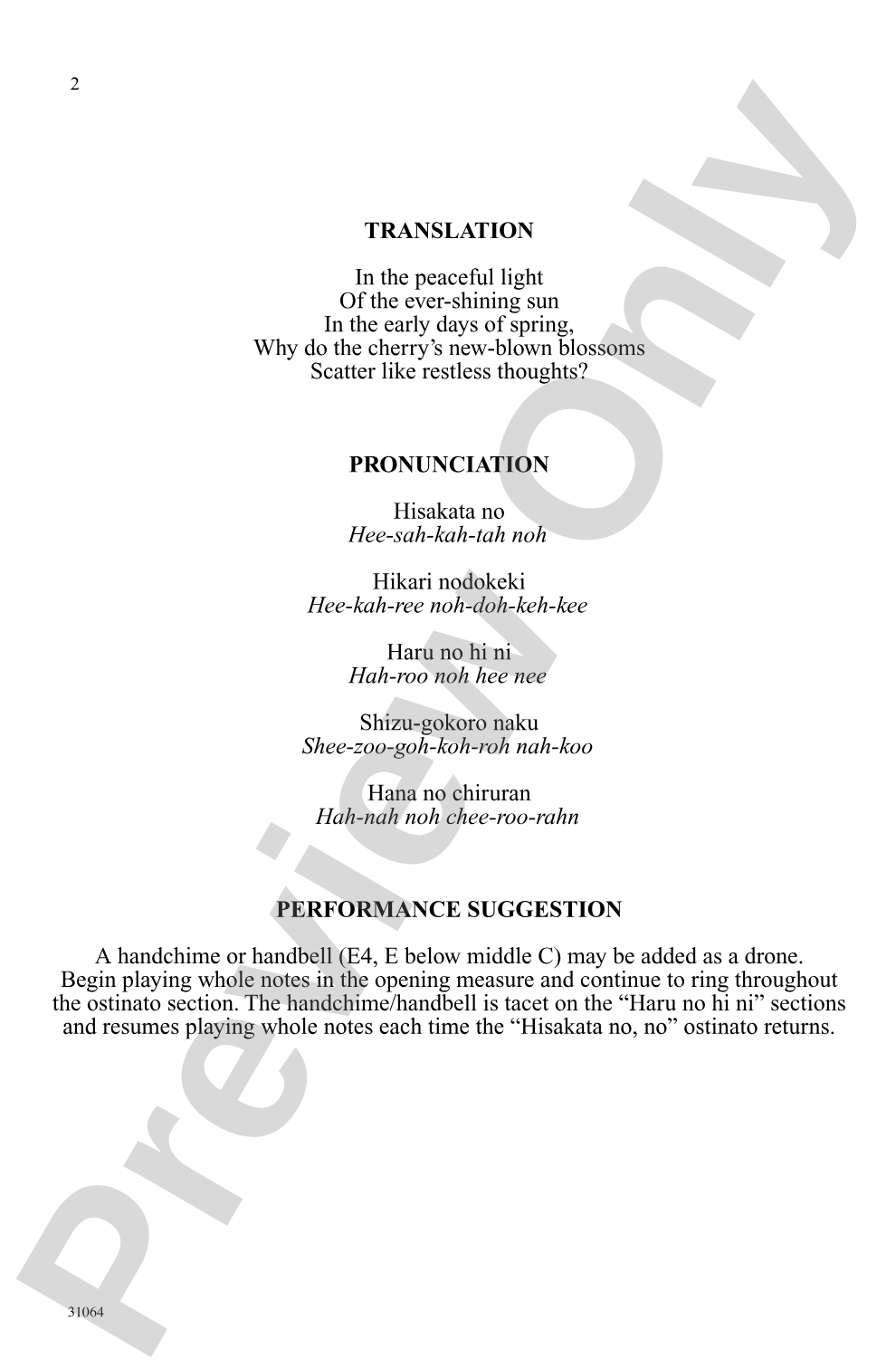
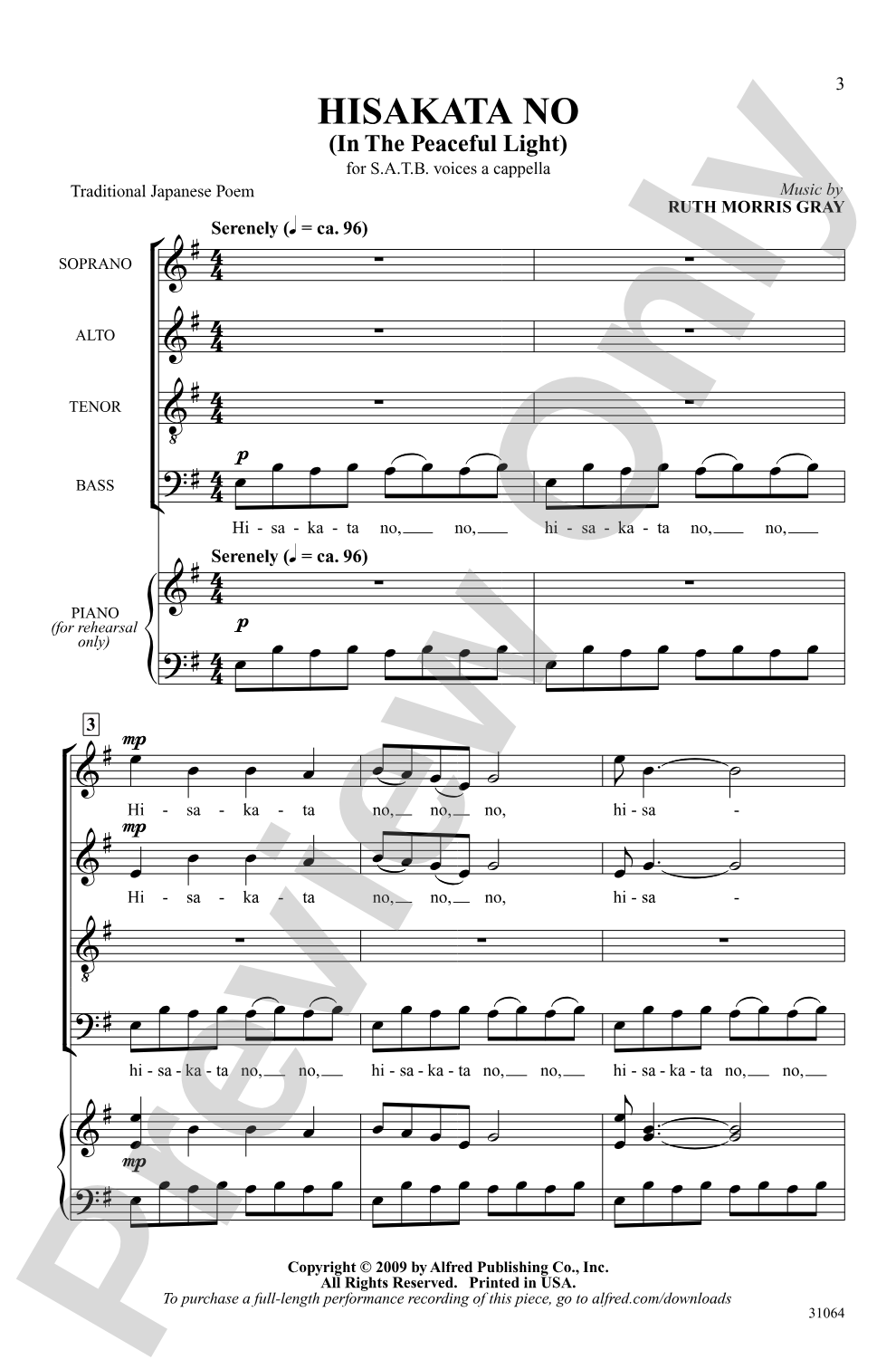
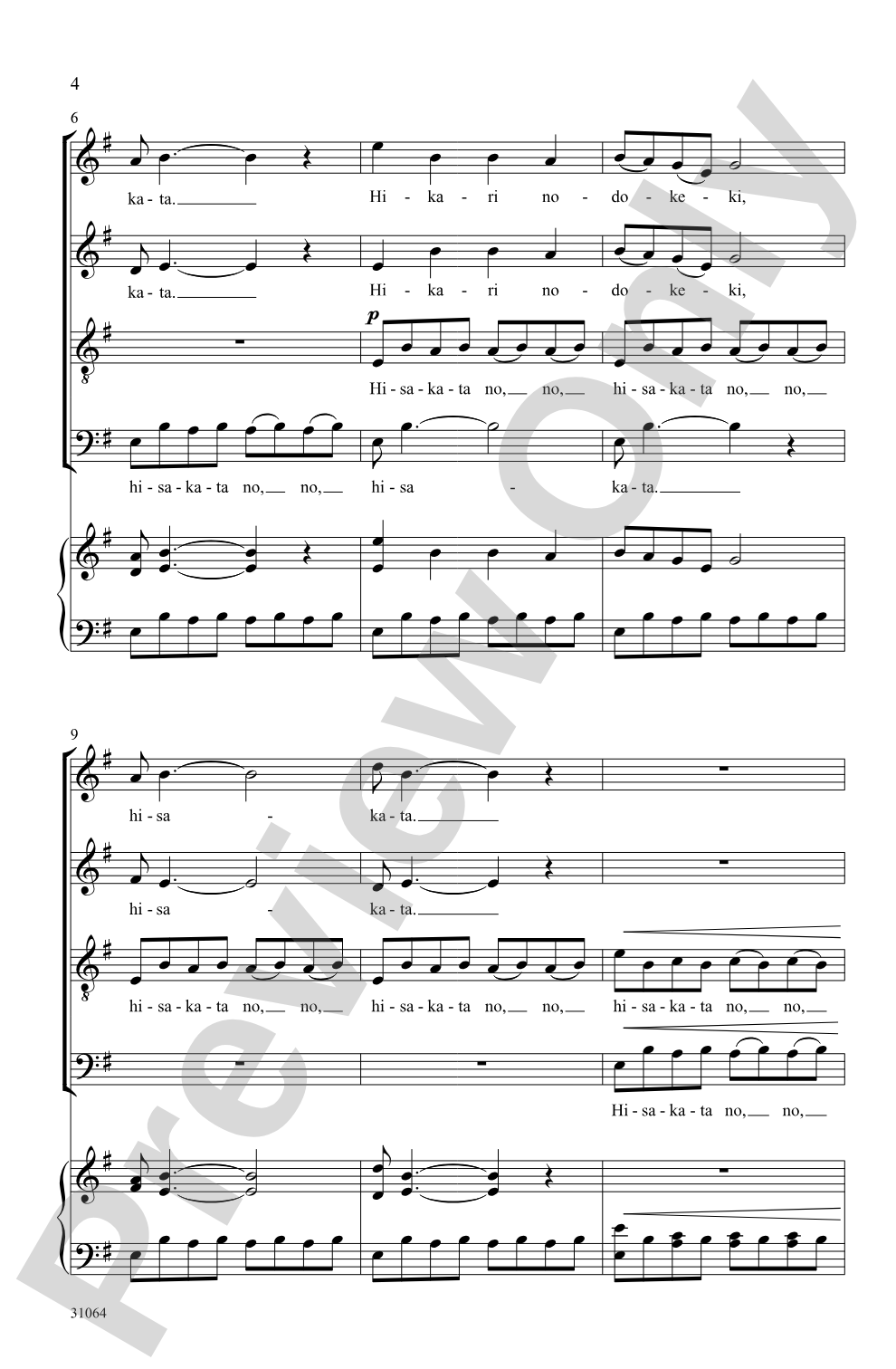
A traditional Japanese poem is set in a twisting and turning repetitive pentatonic fashion in this serene multicultural choral. Contemporary harmonies, sung with straight tone, will challenge and delight all who perform and hear this fresh and haunting masterpiece. Add an optional tonechime or handbell.


Don't just read it, hear it, play along with it, and watch your students grow with it. In MakeMusic Cloud, Hisakata No: SATB a cappella Choral Octavo comes alive with professional accompaniment, adjustable tempo, and built-in practice tools that turn solo practice into real progress.
Open in the Player
Jump straight in and assign it today.
Start Your Free Trial
Open this title and explore the full library in minutes.
Sample Audio
1
Audio File
--:--
0:00
0:00
Sample Video
No sample videos found.
Additional Details
Series:
Lawson-Gould
Publisher:
Alfred Music
Page Count:
16
SKU:
00-PO-0000765
More about this title
About the Composer: Ruth Morris Gray

Ruth Morris Gray has shaped choral music education in California for more than two decades. Since 2004, she has directed choirs at Rosemead High School while maintaining an active composing practice that has yielded over 100 published works. She holds degrees in piano performance and composition from Biola University and a master's degree in music composition from UC Santa Barbara, grounding her work in both classical training and contemporary practice.
Beyond the choir room, Gray pursues a richly creative life. She performs regularly, travels internationally, and finds inspiration in reading and outdoor pursuits with her husband. This combination of disciplined musicianship and curiosity about the world informs the multicultural sensibility that defines much of her compositional voice.
Why we love this
Gray has crafted an arrangement that honors the pentatonic simplicity of traditional Japanese poetry while layering in contemporary harmonic language that keeps singers engaged across all four parts. The optional tonechime or handbell parts offer flexibility without compromising the piece's essential a cappella character. This is the kind of work that appears effortless to the ear but reveals surprising depth in rehearsal.
What to expect
Hisakata No unfolds like a meditation, where a simple Japanese melody loops and transforms through shifting harmonies that feel both ancient and modern. Straight tone singing against contemporary chords creates a serene tension, haunting rather than unsettling. The piece invites listeners into a quiet space that feels both foreign and oddly familiar.
Who it's for
Directors seeking a culturally diverse choral that bridges traditional and contemporary musical language will find this piece accessible yet artistically rewarding. It works equally well for high school and college choirs, as well as community ensembles with solid ensemble singing skills. The sixteen pages and moderate vocal demands make it feasible for groups working toward festival or concert performance.
How to get the most out of it
- Cultivate straight tone throughout, especially in the upper voices where contemporary harmonies sit most exposed. This vocal quality is essential to the piece's haunting character.
- Map out the pentatonic melodic movement with your singers so they understand how the "twisting and turning" phrases relate to one another. Familiarity with the overall shape prevents the repetition from feeling static.
- If adding tonechimes or handbells, bring them in during final rehearsals rather than earlier. Let the voices establish the sound world first, then integrate percussion as an optional layer.
- Pay attention to balance between parts where contemporary harmonies create unexpected tension. These moments reward careful listening from your singers.
How to use it
This octavo shines in a concert that celebrates global music or explores how traditional poetry finds voice across cultures. Program it alongside other multicultural works, or use it as a centerpiece that contrasts with larger, more extroverted repertoire. It also serves as an effective contest or festival selection where artistry and restraint distinguish ensembles from one another.
Skills your students will build
- singing with controlled straight tone in a contemporary harmonic context
- navigating pentatonic melodies and their variations across multiple voice parts
- balancing blend and blend awareness in a cappella writing
- performing secure intonation within non-traditional harmonic progressions
- interpreting text-music relationships in non-English language repertoire