Hine Ma Tov Sheet Music Preview

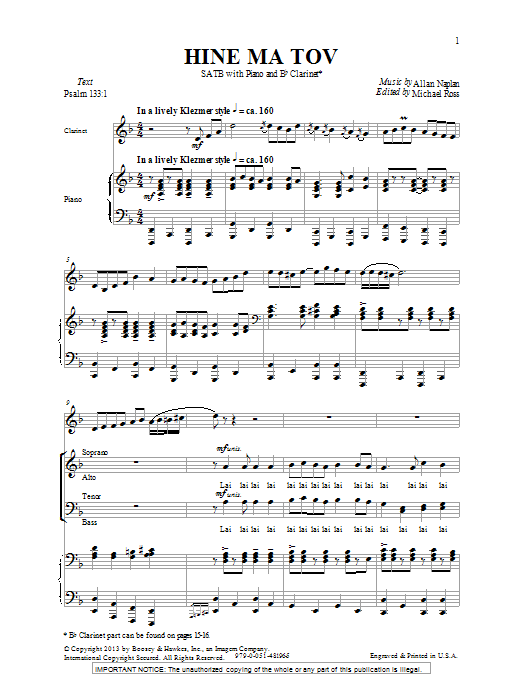
Hine Ma Tov: SATB Choral Octavo

As performed by Allan Naplan

Item: 35-DS00258869

Digital Download
$2.35
Description

Hine Ma Tov: SATB Choral Octavo isn't in MakeMusic Cloud just yet...but it could be. Let us know you'd like to see it, and you'll help shape what comes next. In the meantime, start a free trial and dive into thousands of interactive titles your students can play along with today.

Sample Audio
No sample audio found.
Sample Video
Additional Details
Publisher: Hal Leonard
Page Count: 14
SKU: 35-DS00258869

More about this title

Why we love this

Naplan's setting captures the warmth and spiritual depth of this beloved text without overshadowing the words themselves. The four-part writing sits comfortably for mixed voices while maintaining harmonic interest, making it accessible for community choirs and high school ensembles without sacrificing musicality.

What to expect

Contemplative yet affirming, with the quality of a prayer or blessing sung in community. The harmonic language is accessible and warm, inviting singers into a shared musical expression of unity and gratitude.

Who it's for

Mixed choirs seeking a straightforward, singable sacred work that fits standard concert programming. This octavo works equally well for adult community groups and secondary school choirs looking to expand their repertoire beyond holiday and popular selections.

How to get the most out of it

  • Attend to the text's Hebrew origins by researching the pronunciation and meaning of 'Hine Ma Tov' (how good and pleasant it is). This awareness shapes phrasing and emotional weight.
  • Balance the soprano and alto lines carefully in moments where they diverge; neither voice should dominate the overall harmonic color.
  • Consider the emotional arc across the 14 pages. Build gradually rather than front-loading intensity, allowing the message to unfold naturally.

How to use it

Pair this with other settings of Psalms or biblical texts to create a thematic concert segment. It also stands alone as a meaningful opening or closing number for services, interfaith gatherings, or concerts celebrating diverse musical traditions.

Skills your students will build

  • Maintaining textual clarity and intentionality in accompanied singing
  • Blending four independent vocal lines while preserving harmonic transparency
  • Interpreting sacred music with appropriate emotional restraint and reverence

You May Also Like