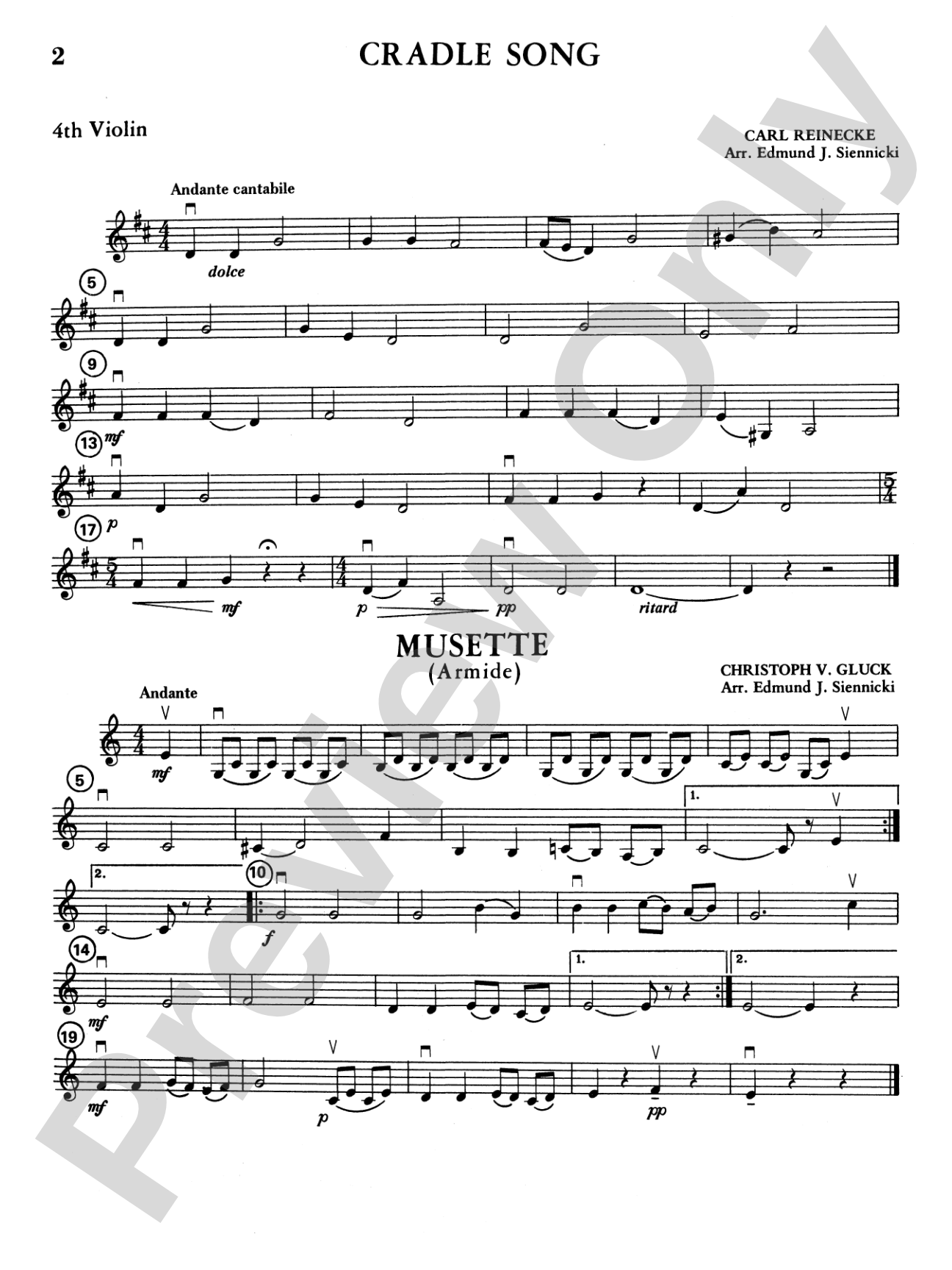
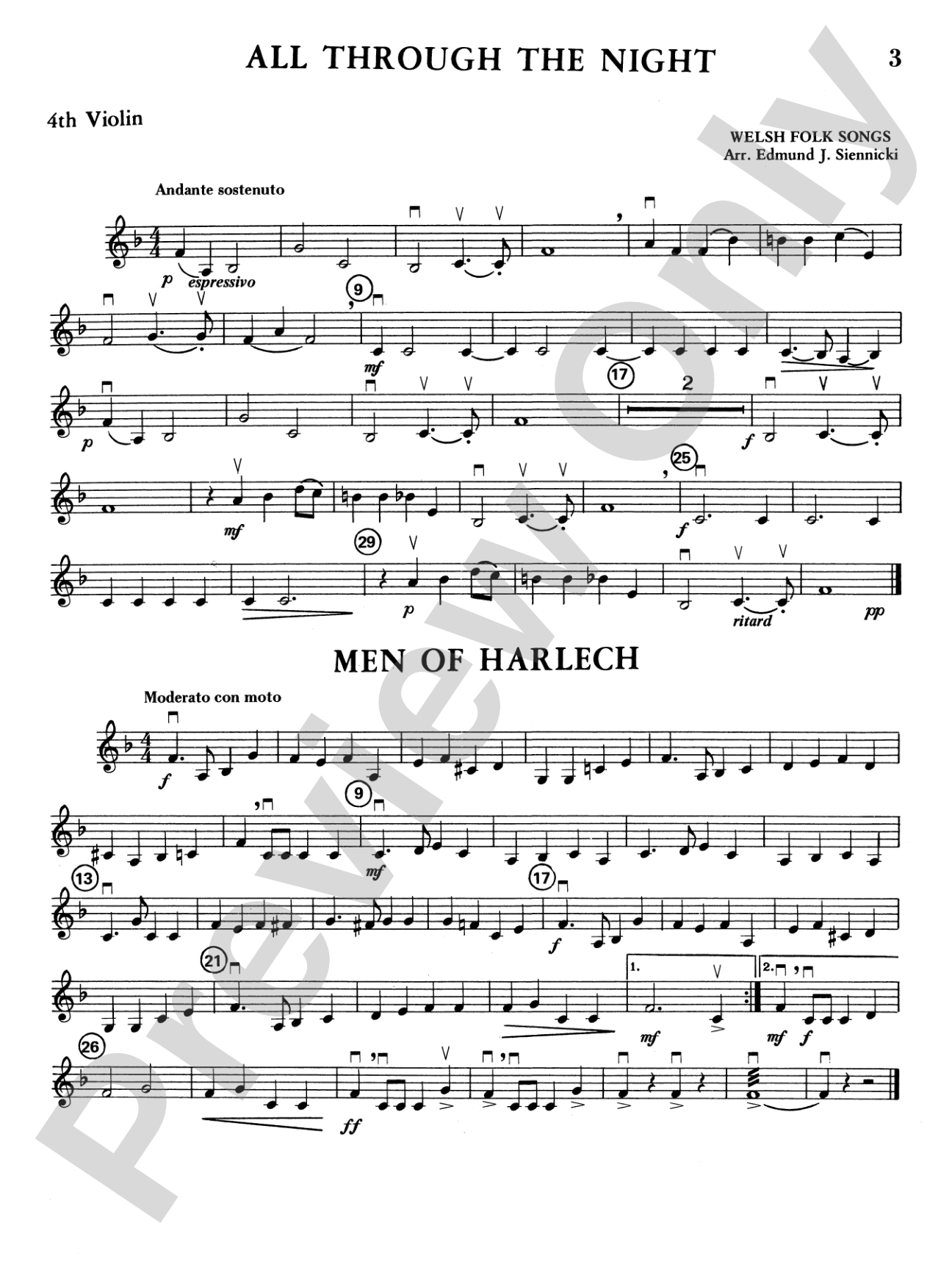
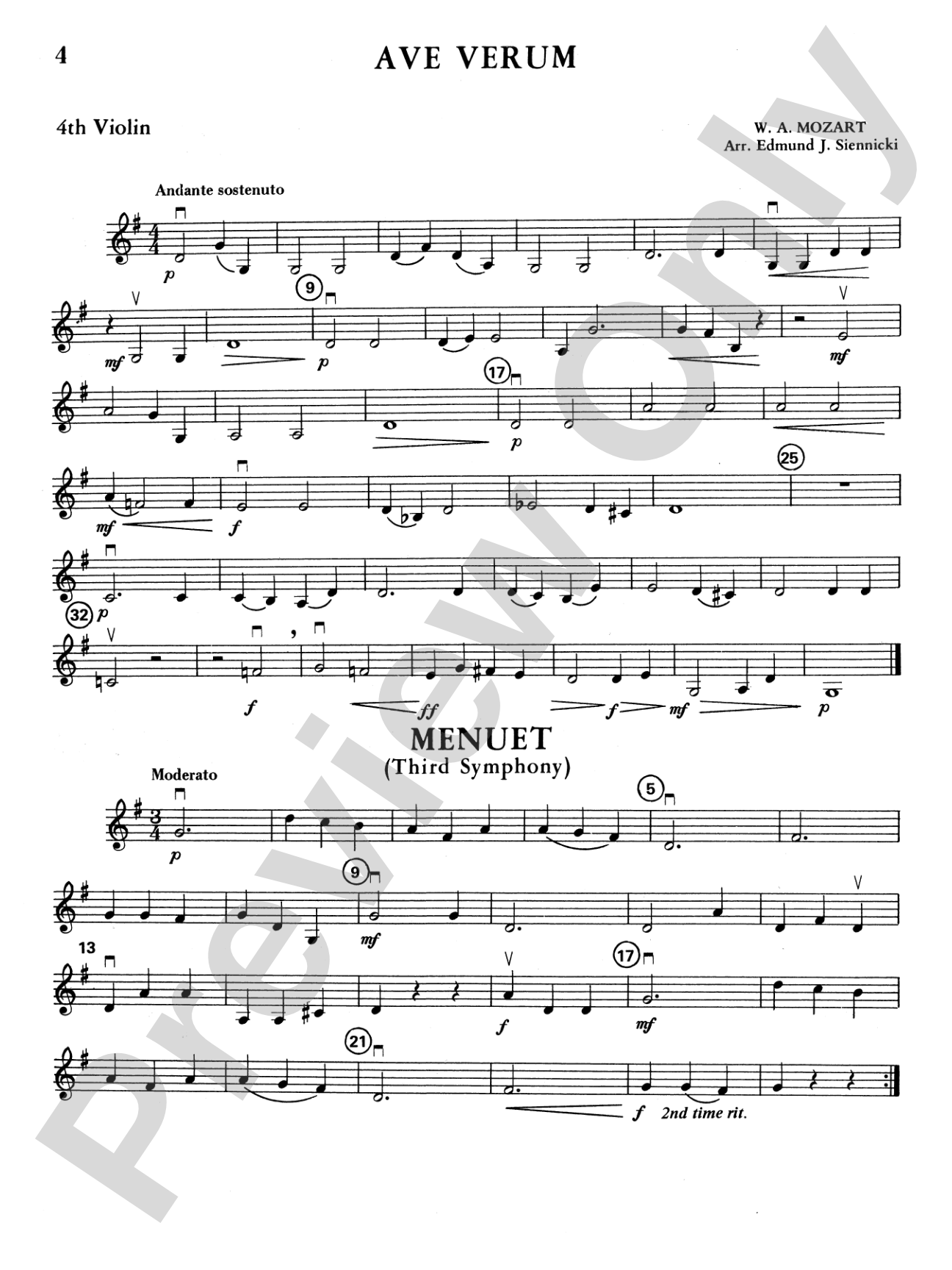
Highland/Etling Violin Quartet Series: Set 1: 4th Violin Sheet Music Preview

Highland/Etling Violin Quartet Series: Set 1: 4th Violin

Arr. Edmund J. Siennicki

Item: 00-PC-0000076_VN4

Digital Download
$10.00
Description
A wide range of selections for grade 3 violin quartet can be found in this five volume series. Titles range from classic themes to folk melodies and Christmas carols.

Highland/Etling Violin Quartet Series: Set 1: 4th Violin isn't in MakeMusic Cloud just yet...but it could be. Let us know you'd like to see it, and you'll help shape what comes next. In the meantime, start a free trial and dive into thousands of interactive titles your students can play along with today.

Sample Audio
No sample audio found.
Sample Video
Additional Details
Series: Highland/Etling Violin Quartet Series
Publisher: Alfred Music
Page Count: 40
SKU: 00-PC-0000076_VN4

More about this title

About the Arranger: Edmund J. Siennicki

Edmund J. Siennicki

Edmund J. Siennicki grew up in Cleveland, Ohio, where a formative conversation with pianist Ignacy Jan Paderewski at age twelve sparked a lifelong commitment to music. He earned his Bachelor's degree from Kent State University, where he composed Fight on for KSU, a piece that remains part of the university's football tradition, and later completed his MA at Teachers College, Columbia University, studying composition with Herbert Elwell and electronic music with Sergio Barroso.

Siennicki's career as a composer, educator, and performer (bassoon and piano) spanned decades across Cleveland junior high schools, Michigan, and Kent State University. His original compositions have won National School Orchestra composition contests and earned him two residencies at the MacDowell Colony. With approximately 200 published works and twenty years of consecutive ASCAP awards, Siennicki continues composing and conducting clinics in schools.

Why we love this

Siennicki's arrangements strike an ideal balance between accessibility and musicality for developing quartets. The mix of classic themes, folk melodies, and seasonal pieces gives you genuine variety across 40 pages, making this set a reliable resource for concert programming, festival preparation, or simply keeping rehearsals engaging throughout the year.

What to expect

Opening these arrangements feels like discovering a well-curated jukebox of familiar musical moments rearranged for four voices. Each piece breathes with clarity and intention, whether it's a beloved holiday melody or a timeless folk tune, delivered in accessible but never condescending voices that let young musicians feel genuinely musical.

Who it's for

Grade 3 violinists playing in quartets who need reliable, musically satisfying literature that isn't overly complex. This set works equally well for school ensemble programs preparing festival repertoire or private studio teachers building chamber musicianship with advanced students.

How to get the most out of it

  • Balance the four voices carefully during tutti passages; ask Violin II to listen closely to Violin I's phrasing rather than playing in strict unison.
  • In folk melody arrangements, lean into the character of each piece by adjusting vibrato width and bow speed to match the style (delicate for gentle themes, broader for energetic selections).
  • Mark challenging rhythmic or intonation spots in rehearsal and isolate those measures as a quartet before playing through entire movements.
  • Use the contest/festival designation as motivation to refine ensemble response time; work on ensemble attacks and releases until they sound like one instrument.

How to use it

Use this series across a full academic year, selecting pieces by season or concert theme. The 40-page volume works as both a performance collection for winter and spring concerts and a festival preparation resource; the variety also makes it ideal for student recitals and end-of-year showcase programs.

Skills your students will build

  • Intonation in four-part harmony with competing voices
  • Phrase shaping and stylistic interpretation (folk, classical, seasonal themes)
  • Ensemble balance and voice independence
  • Reading articulations and dynamic shaping within grade 3 range
  • Rhythmic precision and synchronized attacks/releases

You May Also Like