
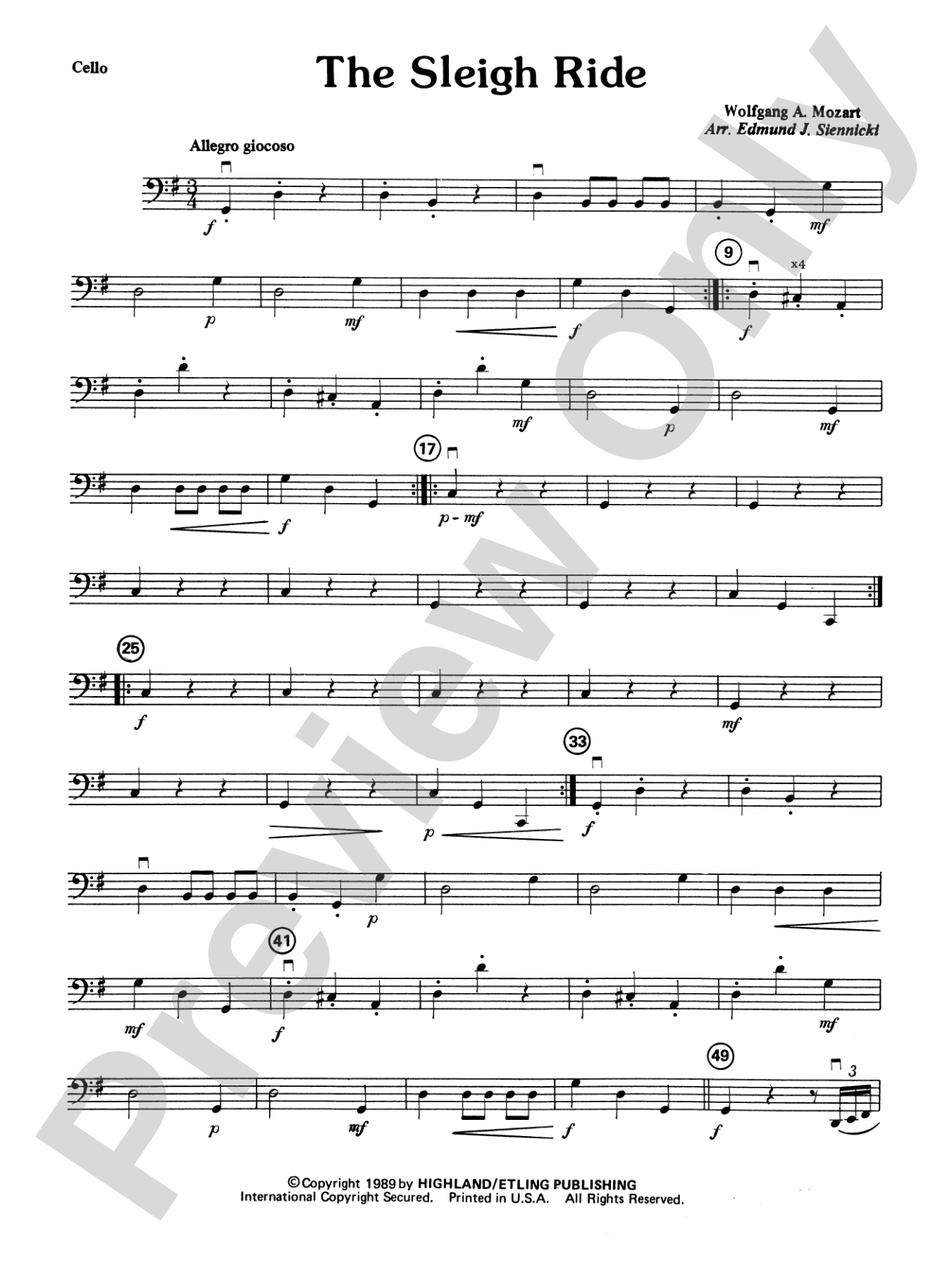
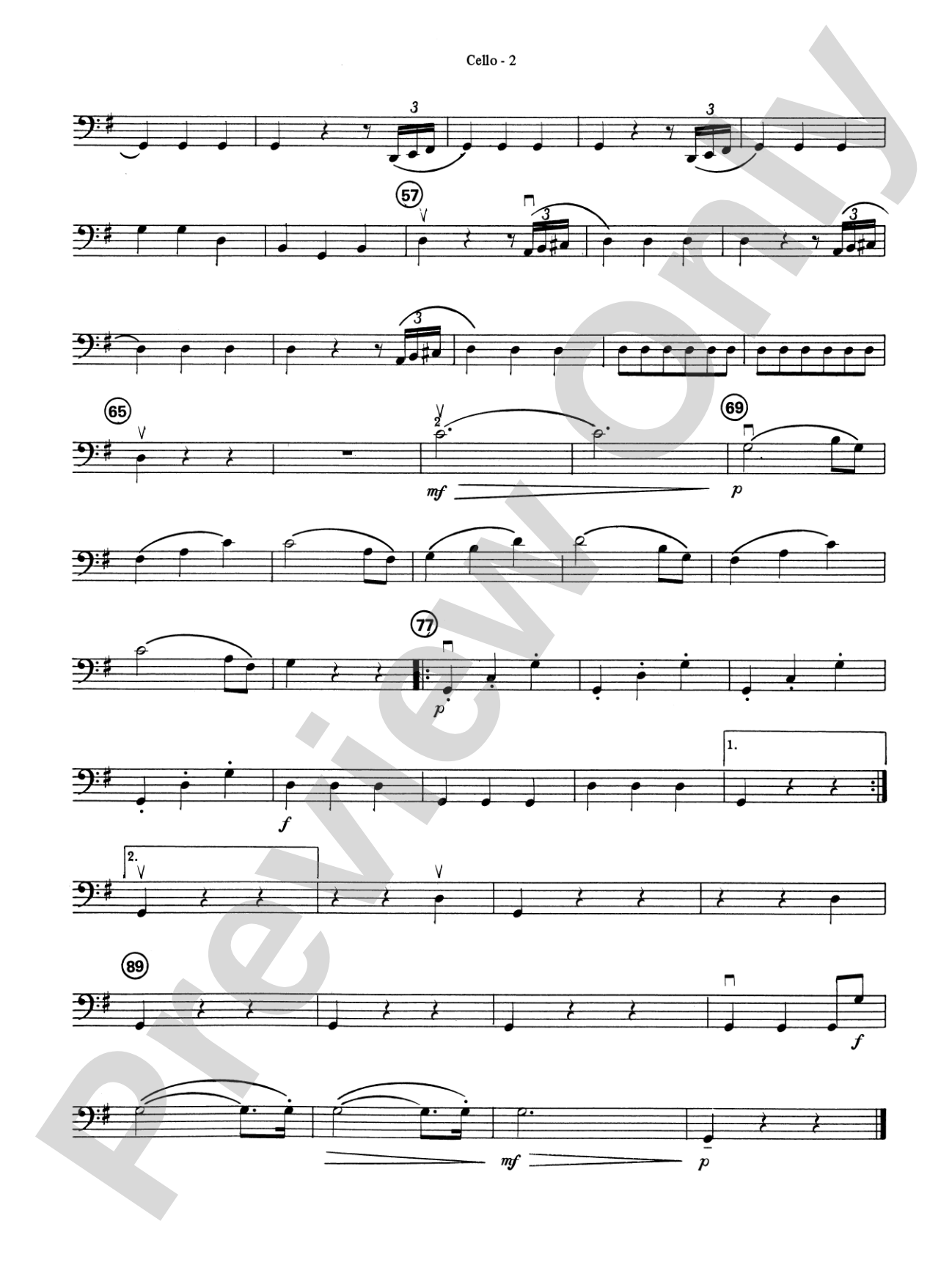
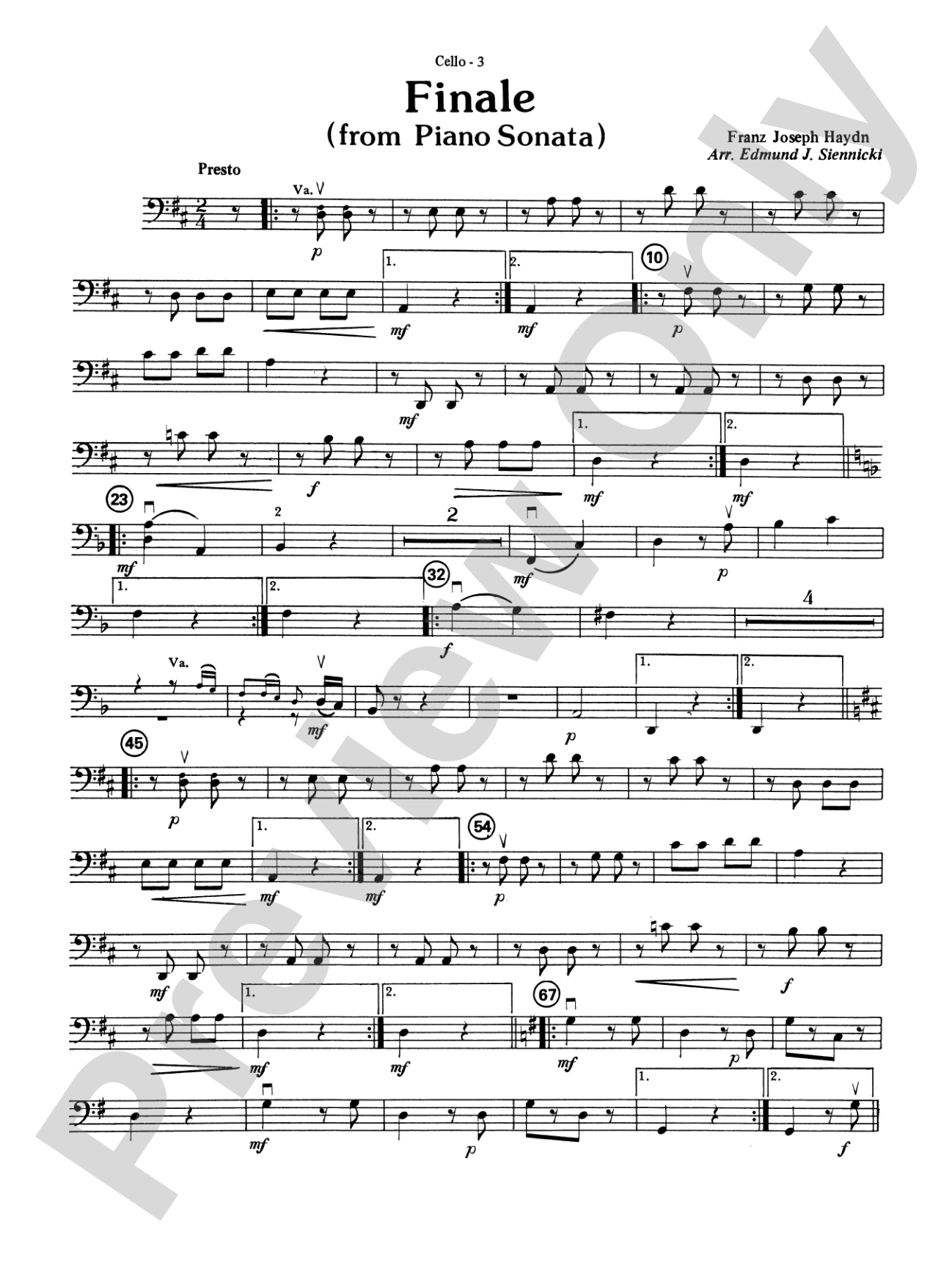

Highland/Etling String Quartet Series: Set 3: Cello
Arr. Edmund J. Siennicki
Item: 00-PC-0000075_VC1
$11.00
Pickup currently not available
Description
A four volume collection of arrangements from grade 3 string quartets. Contains music from the Baroque and Classical eras as well as folk melodies and Christmas carols. A great way to introduce young string players to chamber music playing. Titles: The Sleigh Ride, Mozart * Finale (from Piano Sonata), Haydn * Gavotte (from French Suite No. 5), Diabelli * Santa Lucia * Cockels and Mussels * Silent Night, Gruber * Joy to the World, Handel * Deck the Halls.


Don't just read it, hear it, play along with it, and watch your students grow with it. In MakeMusic Cloud, Highland/Etling String Quartet Series: Set 3: Cello comes alive with professional accompaniment, adjustable tempo, and built-in practice tools that turn solo practice into real progress.
Open in the Player
Jump straight in and assign it today.
Start Your Free Trial
Open this title and explore the full library in minutes.
Sample Audio
No sample audio found.
Sample Video
No sample videos found.
Additional Details
Series:
Highland/Etling String Quartet Series
Publisher:
Alfred Music
Page Count:
60
SKU:
00-PC-0000075_VC1
More about this title
About the Arranger: Edmund J. Siennicki
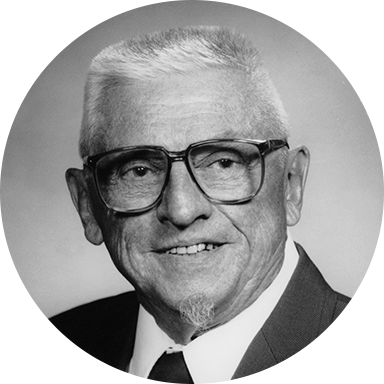
Edmund J. Siennicki's formative moment came at age twelve when he met pianist Ignacy Jan Paderewski, a conversation that shaped his entire musical trajectory. A Cleveland native, Siennicki earned his Bachelor's degree from Kent State University, where he composed Fight on for KSU, a piece still performed at the university's football games. He went on to study at Teachers College, Columbia University, where he earned his MA and worked with composer Herbert Elwell, electronic music pioneer Sergio Barroso, and consultant Vincent Persichetti.
As both performer and composer, Siennicki built a distinguished career balancing creative work with education. He performed professionally on bassoon and piano, won multiple prizes in National School Orchestra composition contests, and served as composer in residence at the MacDowell Colony twice. His teaching spanned Cleveland's junior high schools as well as faculty positions at Michigan and Kent State. With approximately two hundred compositions in print and two decades of consecutive ASCAP awards, Siennicki continues to compose, visit schools, and lead clinics.
Why we love this
This set pairs masterworks from the Baroque and Classical canon with beloved folk and holiday melodies, giving young ensembles access to genuine repertoire without sacrificing age-appropriate difficulty. Siennicki's arrangements sit comfortably in grade 3 territory while preserving the harmonic and structural integrity of the original pieces, so students hear and play real music rather than simplified versions. The mix of concert and festive material makes this set useful across the entire school year.
What to expect
These arrangements feel like discovering that the great composers and folk traditions are actually within reach. Each piece unfolds with clarity and purpose; the Baroque dances step with elegant conviction, Mozart and Haydn sparkle with wit and charm, and the seasonal melodies settle into the ears with warmth and familiarity. There is genuine satisfaction in realizing that young players can handle real music.
Who it's for
String quartets in the early intermediate stage who are ready for genuine chamber music literature but benefit from carefully crafted, accessible arrangements. This set works equally well for school ensembles, community orchestra string sections performing as quartets, and advanced upper elementary programs seeking to build ensemble awareness and listening skills.
How to get the most out of it
- Balance the melodic voices clearly by having the first violin carry the line while second violin and viola maintain transparent accompaniment; this helps the ensemble hear the phrase shape as a unified musical statement.
- Keep the tempo steady and dance-like in the Gavotte and Sleigh Ride; these pieces thrive when the rhythmic pulse feels natural and buoyant rather than metronomic.
- In the Christmas pieces, resist the urge to drag through the slower hymn settings; let the harmonic movement breathe without losing forward momentum.
- Mark dynamic contrasts deliberately during rehearsal so that the ensemble understands when to recede and when to bloom, especially in pieces with folk origins where the melody matters most.
How to use it
Program selections from this set as a bridge between school orchestra and chamber music festivals; the grade 3 difficulty level allows quartets to prepare for competition or performance in a single rehearsal cycle. The Christmas and folk selections make natural January through March programming, while the Classical and Baroque pieces anchor spring chamber concerts or serve as encore material.
Skills your students will build
- Balancing melody and accompaniment within a small ensemble
- Reading quartet score and parts with clarity and independence
- Maintaining steady tempo and ensemble cohesion without a conductor
- Shaping phrases that move across multiple voices in a coordinated way
- Performing Baroque and Classical style conventions (dance rhythms, articulation, phrasing)