
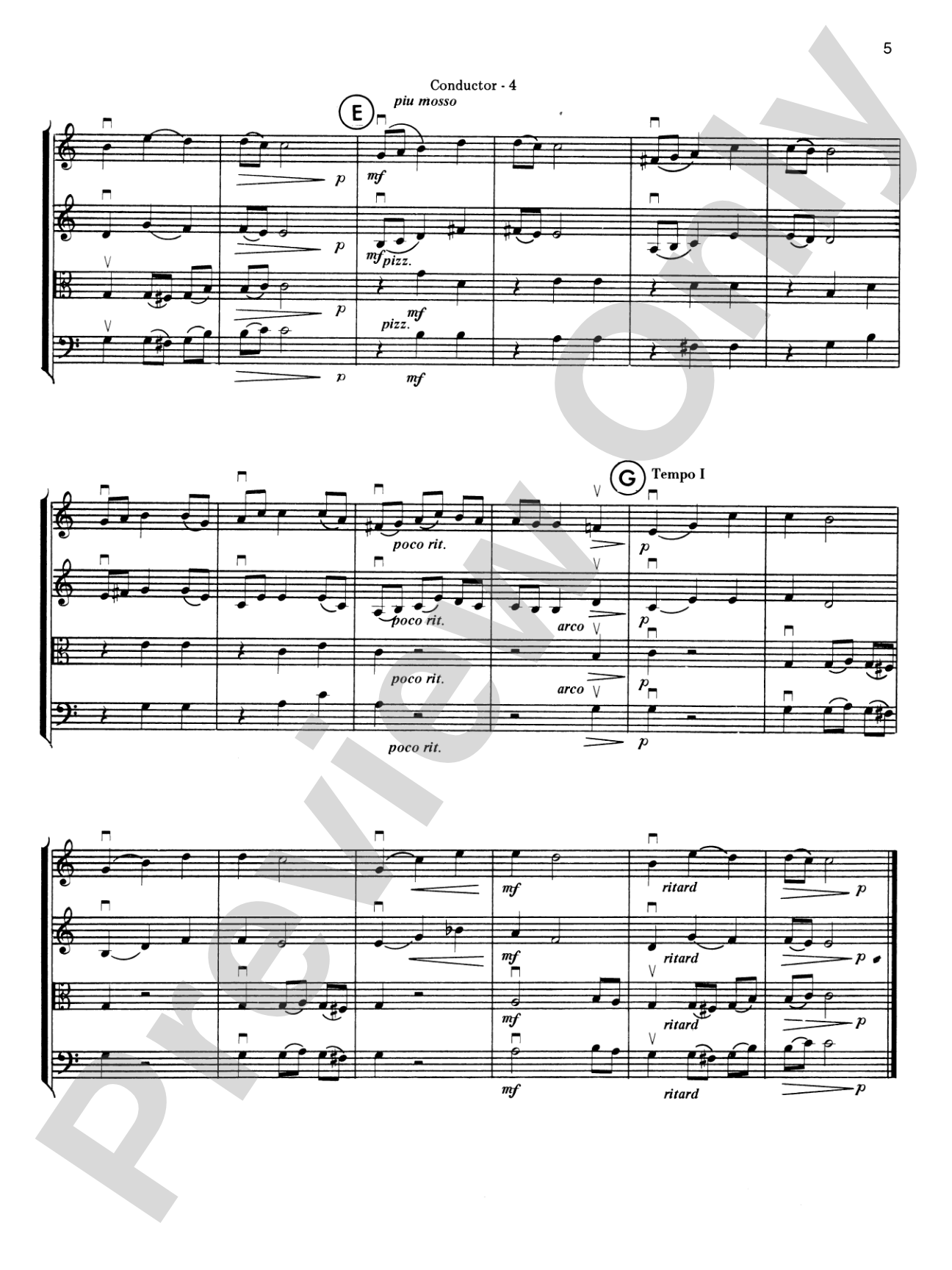
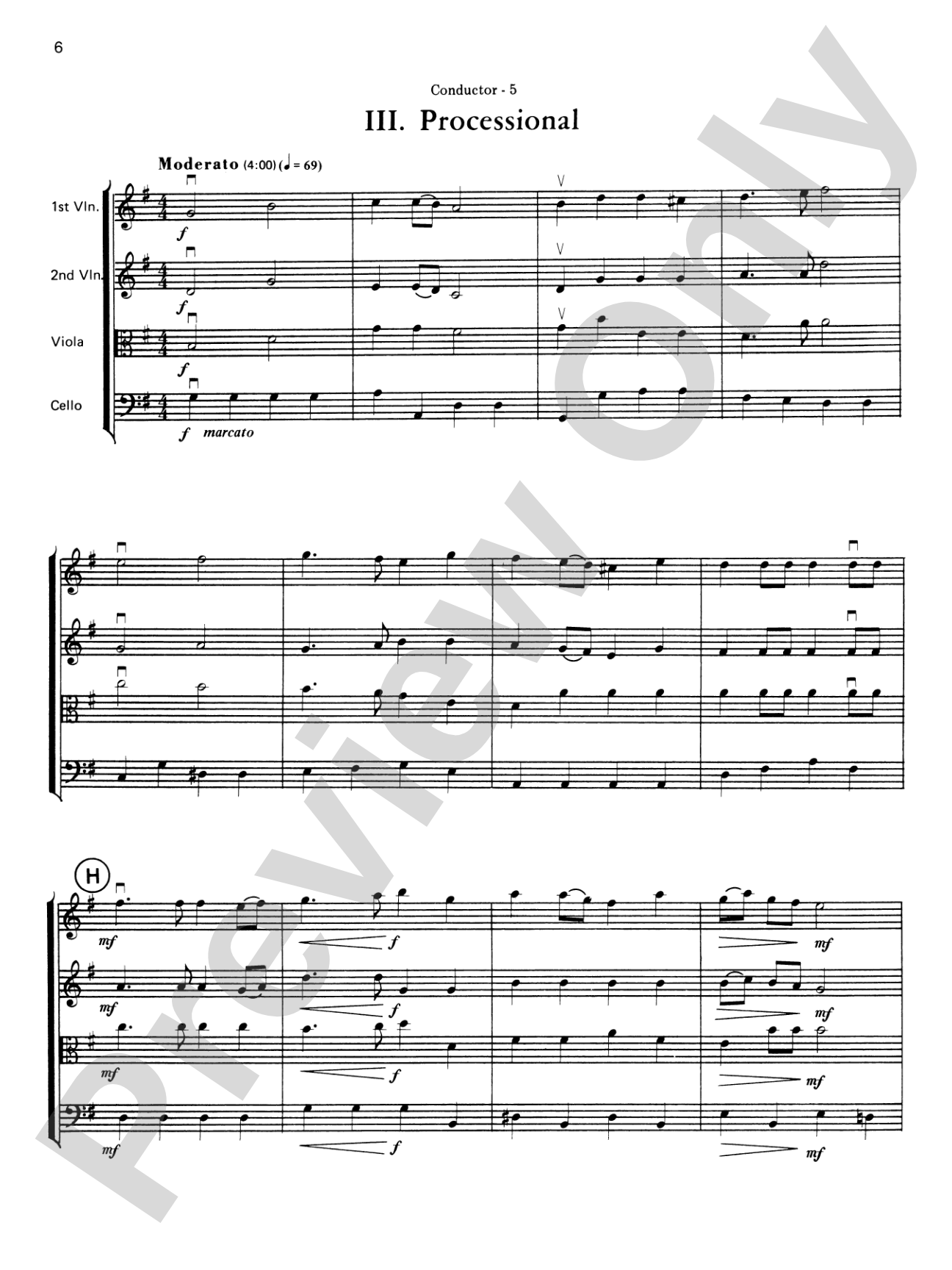
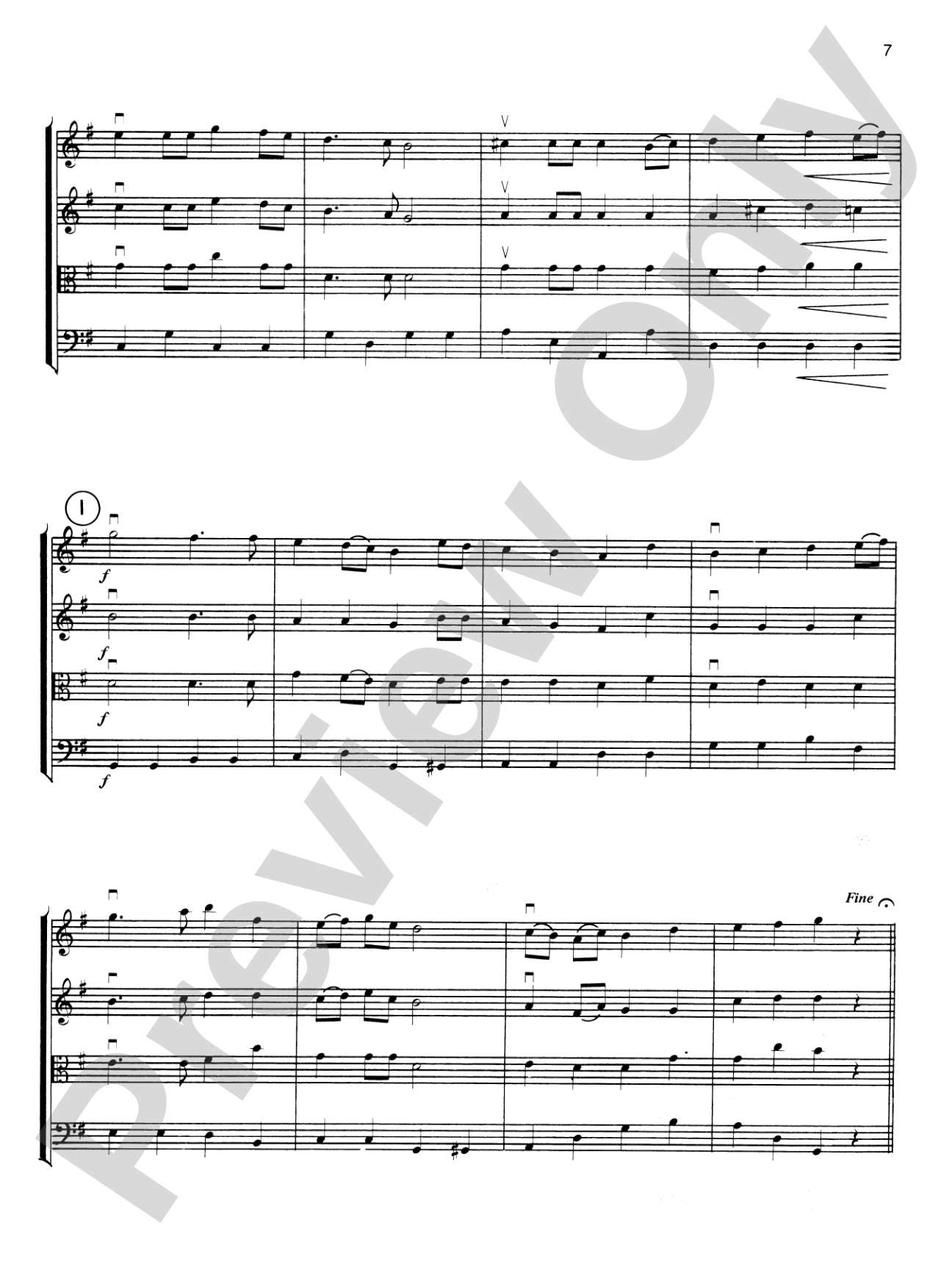
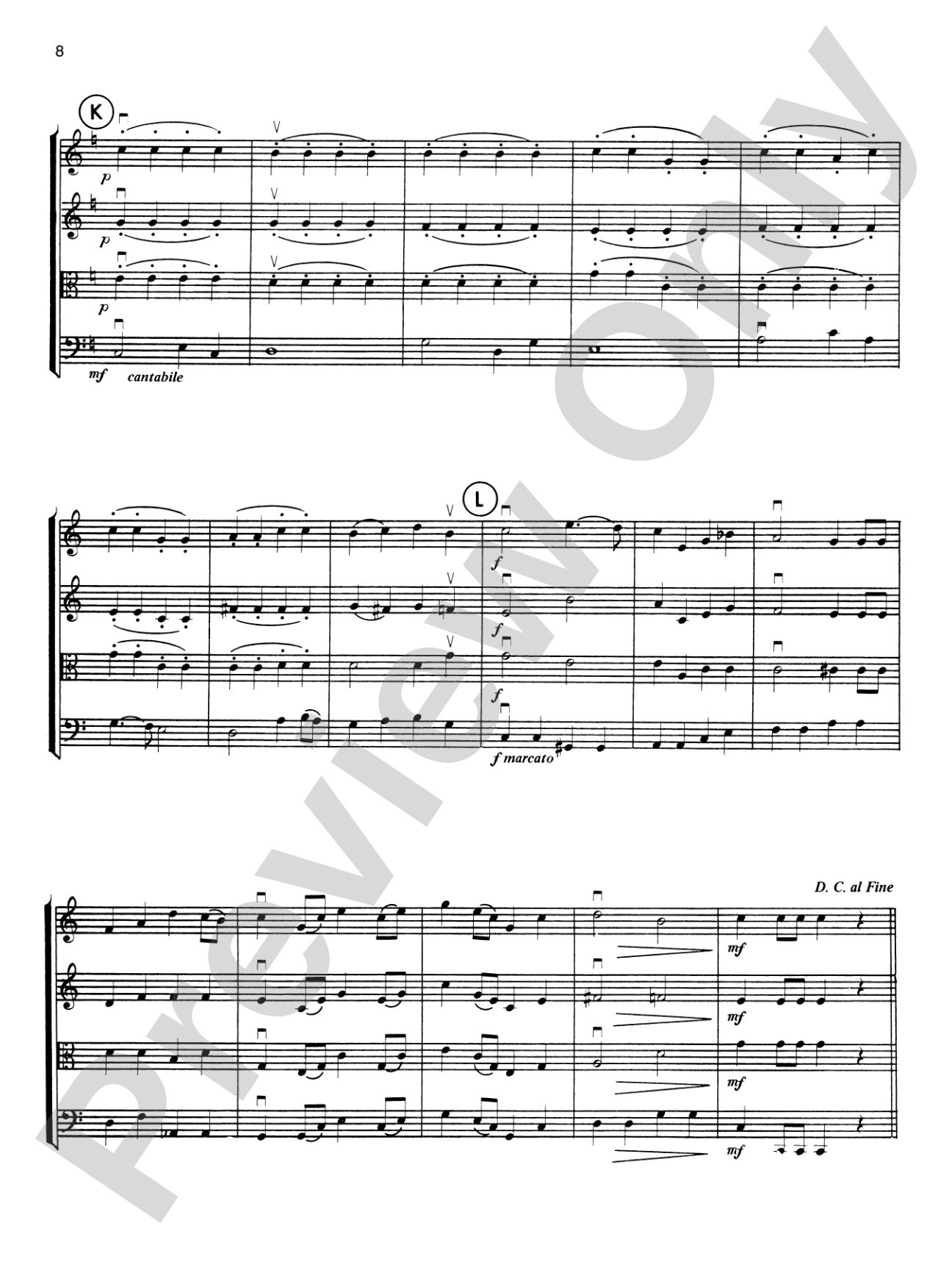
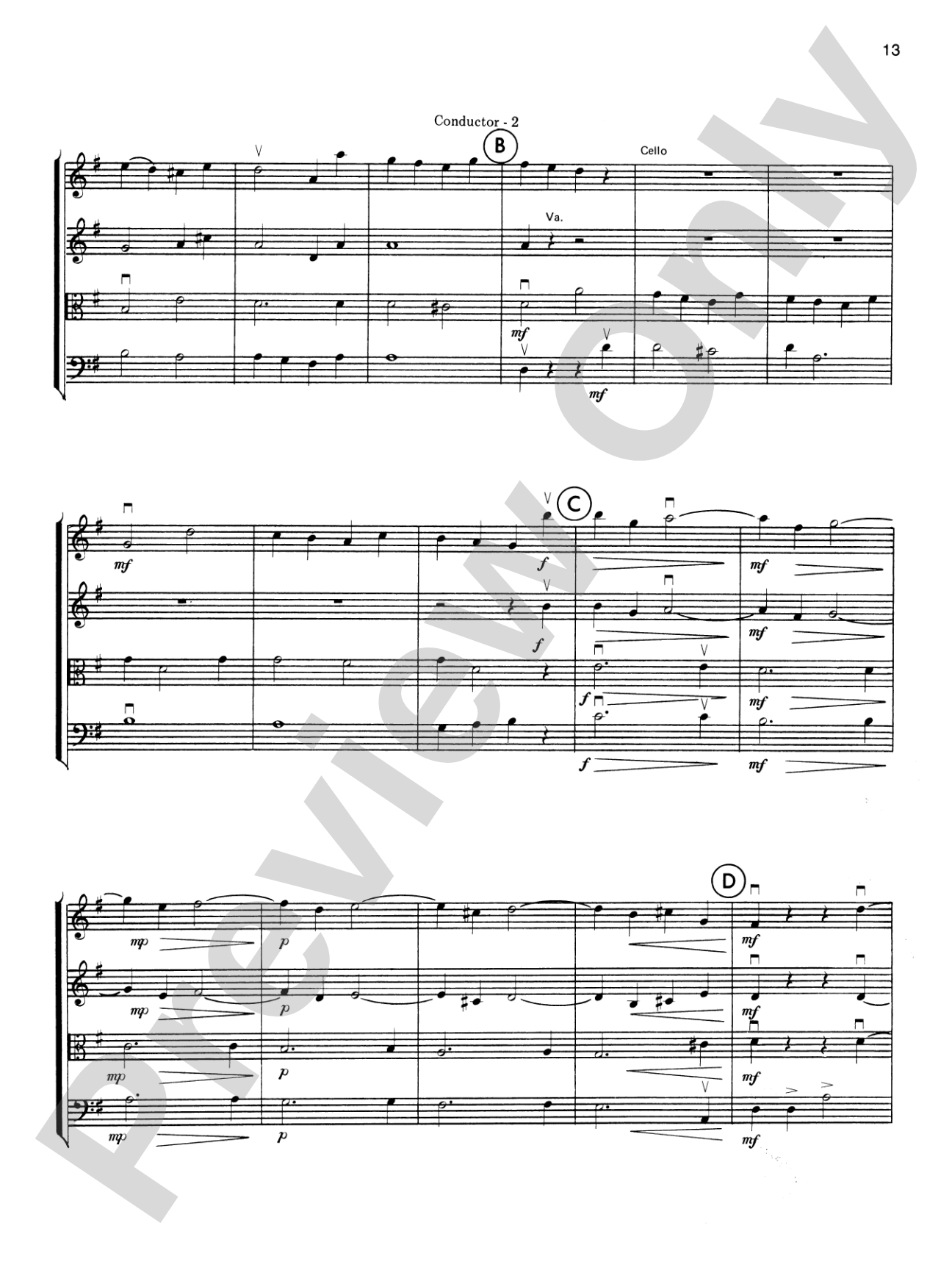
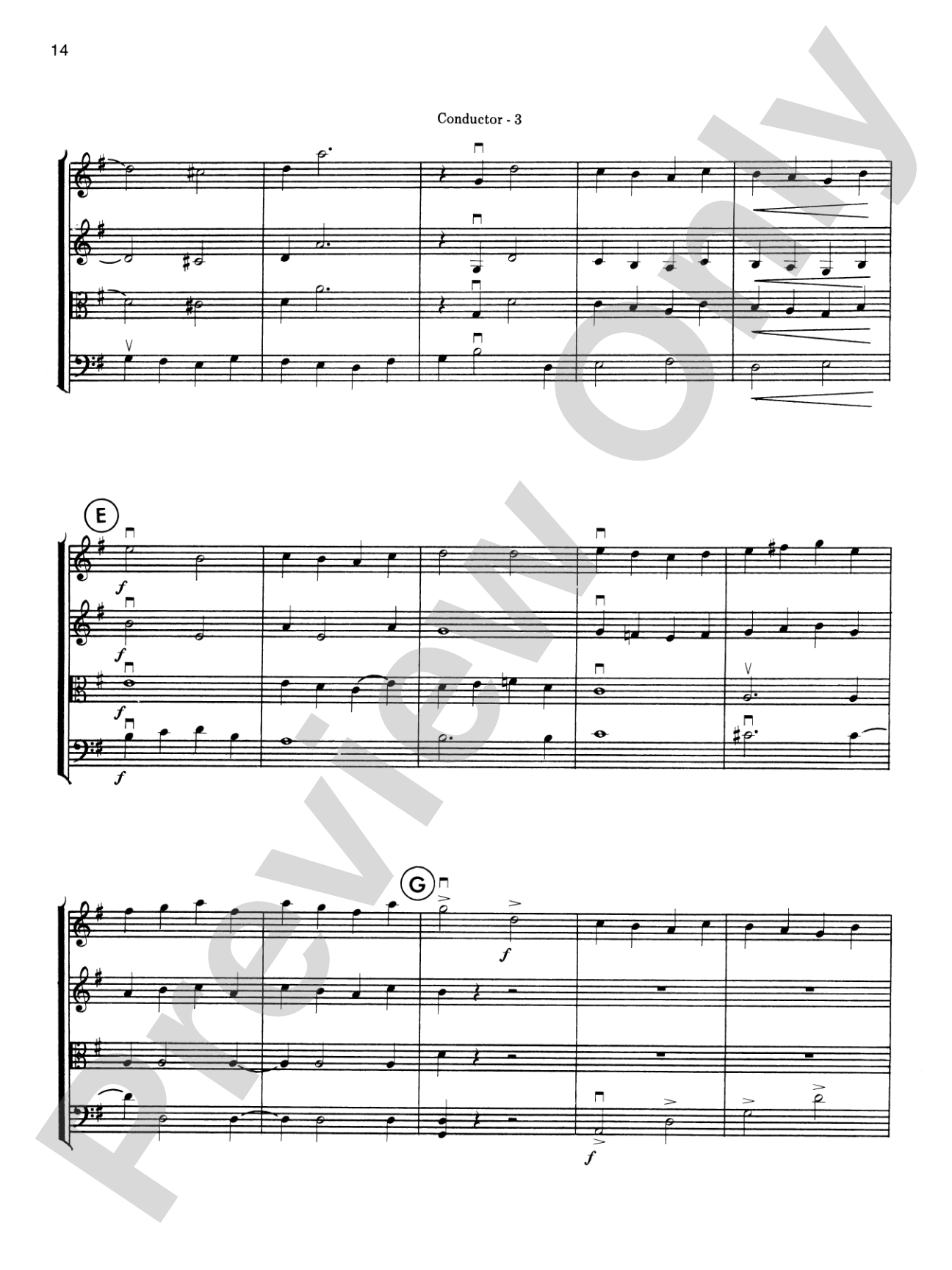
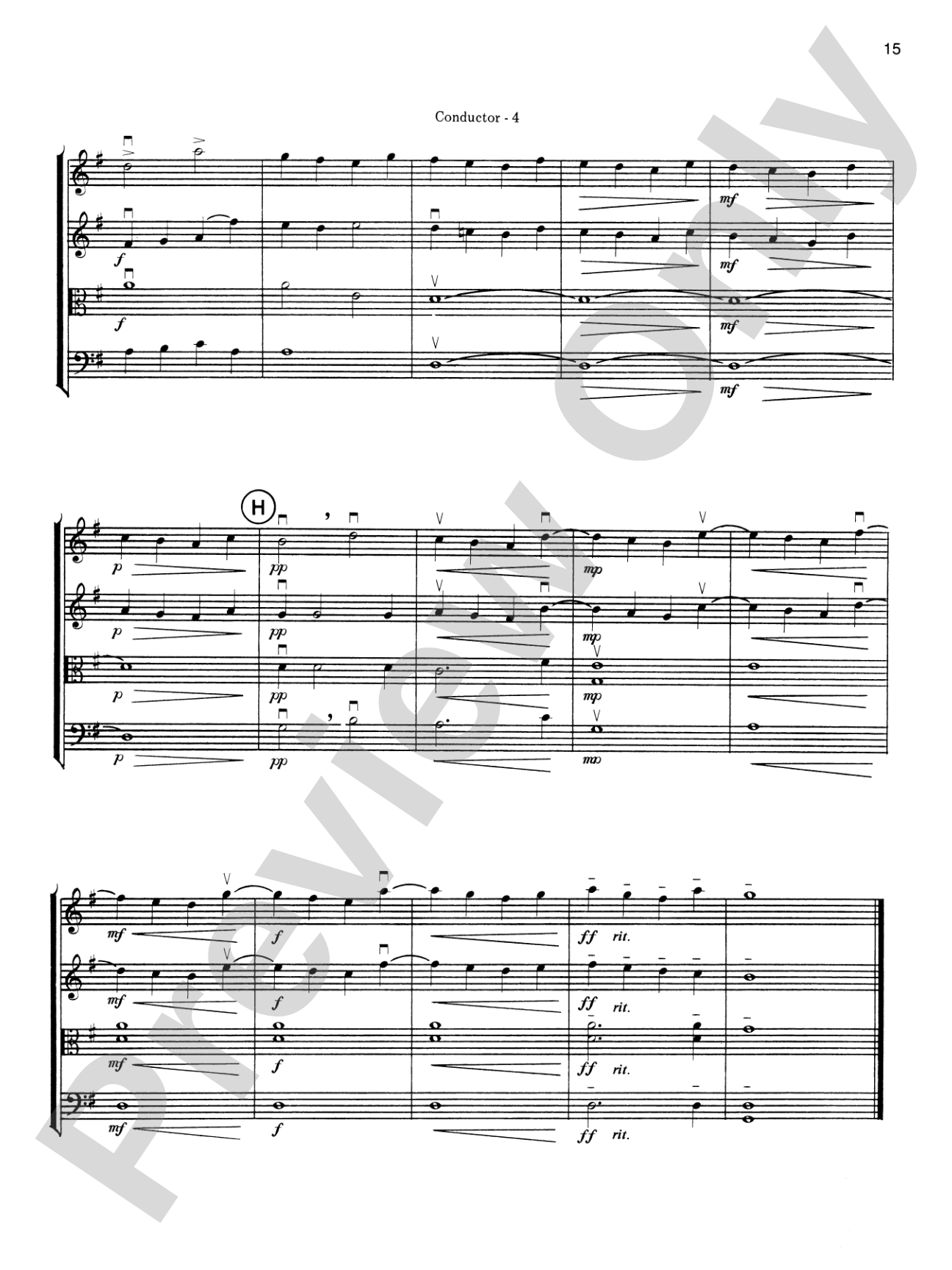
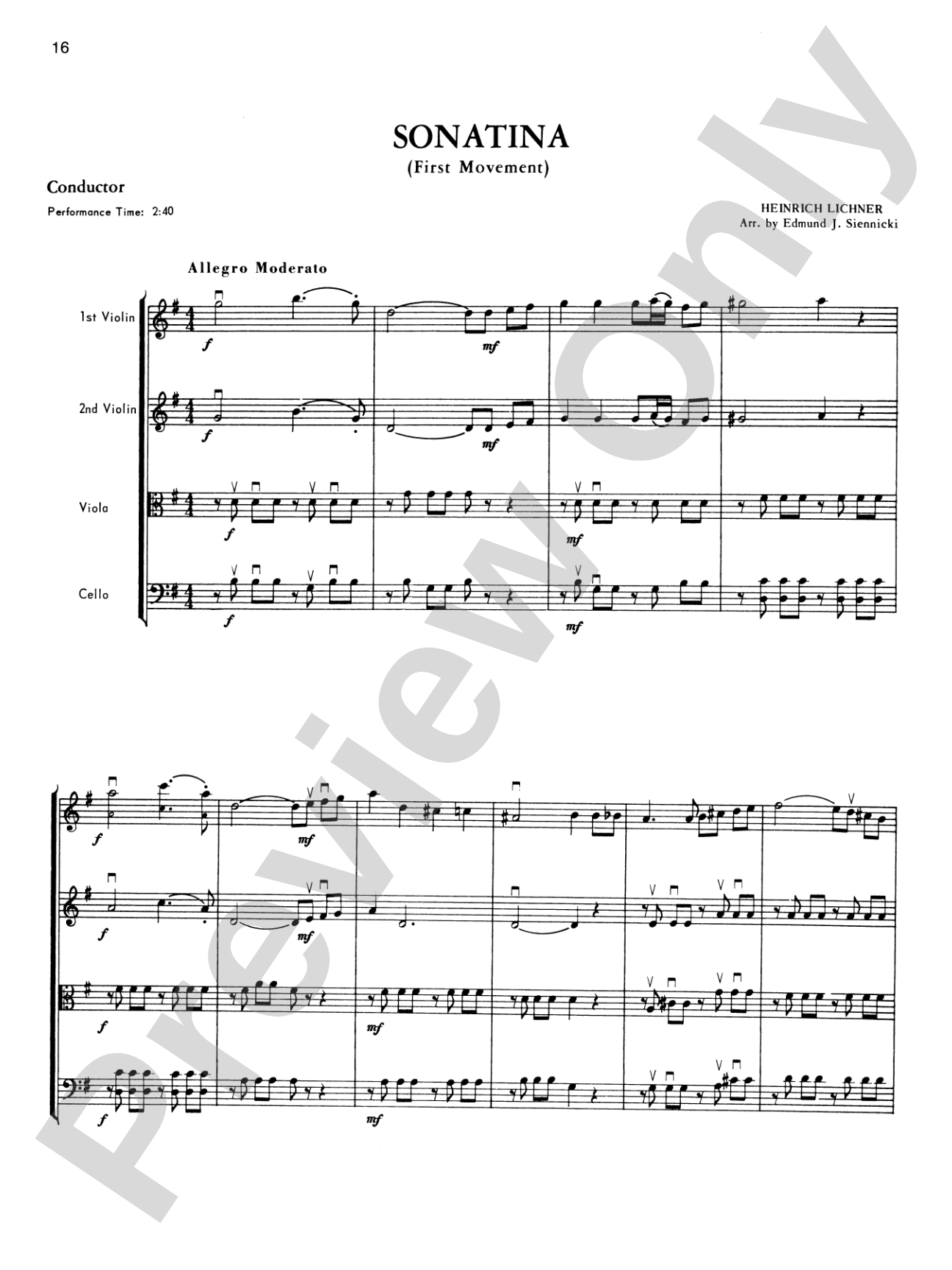
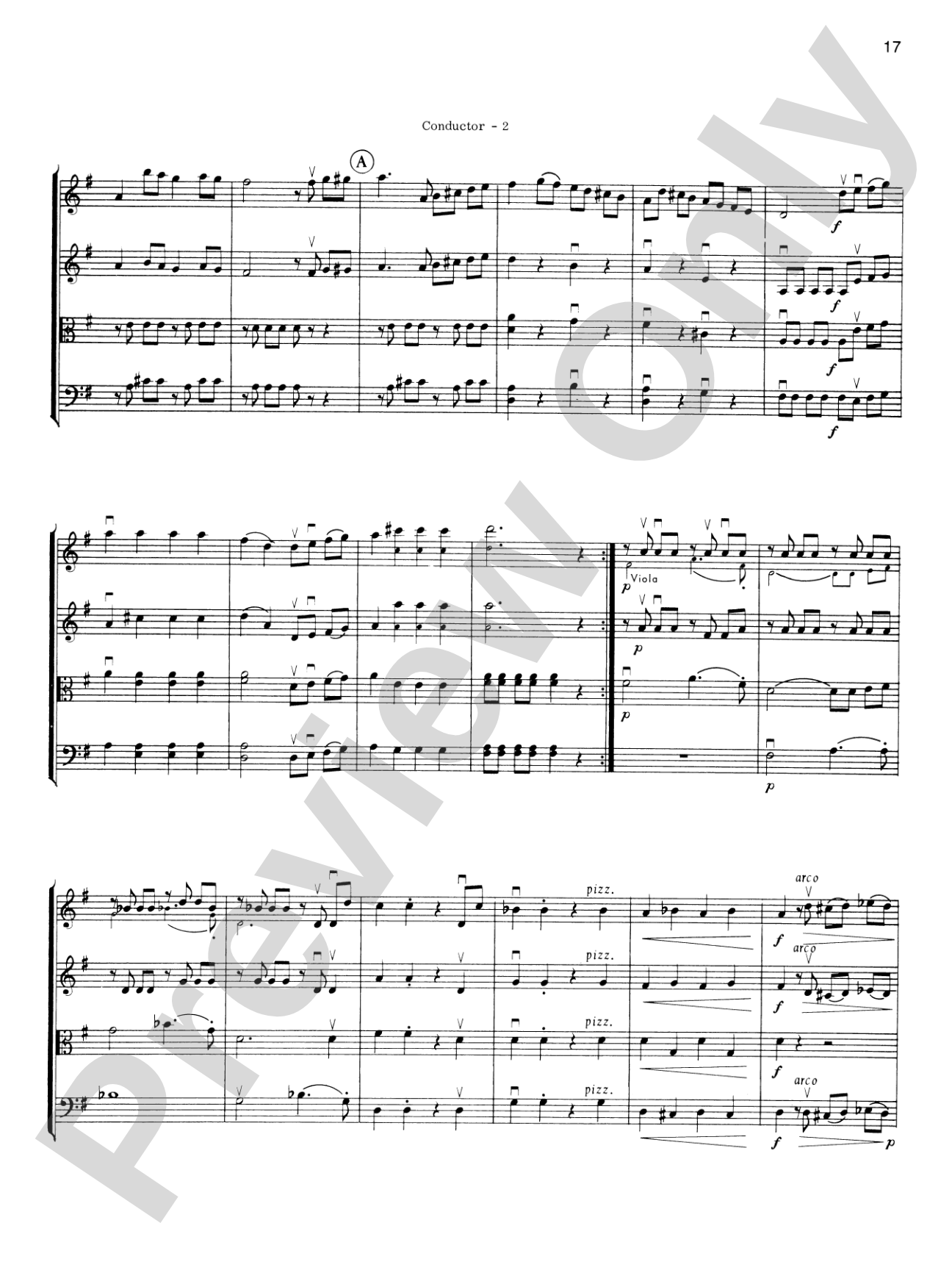
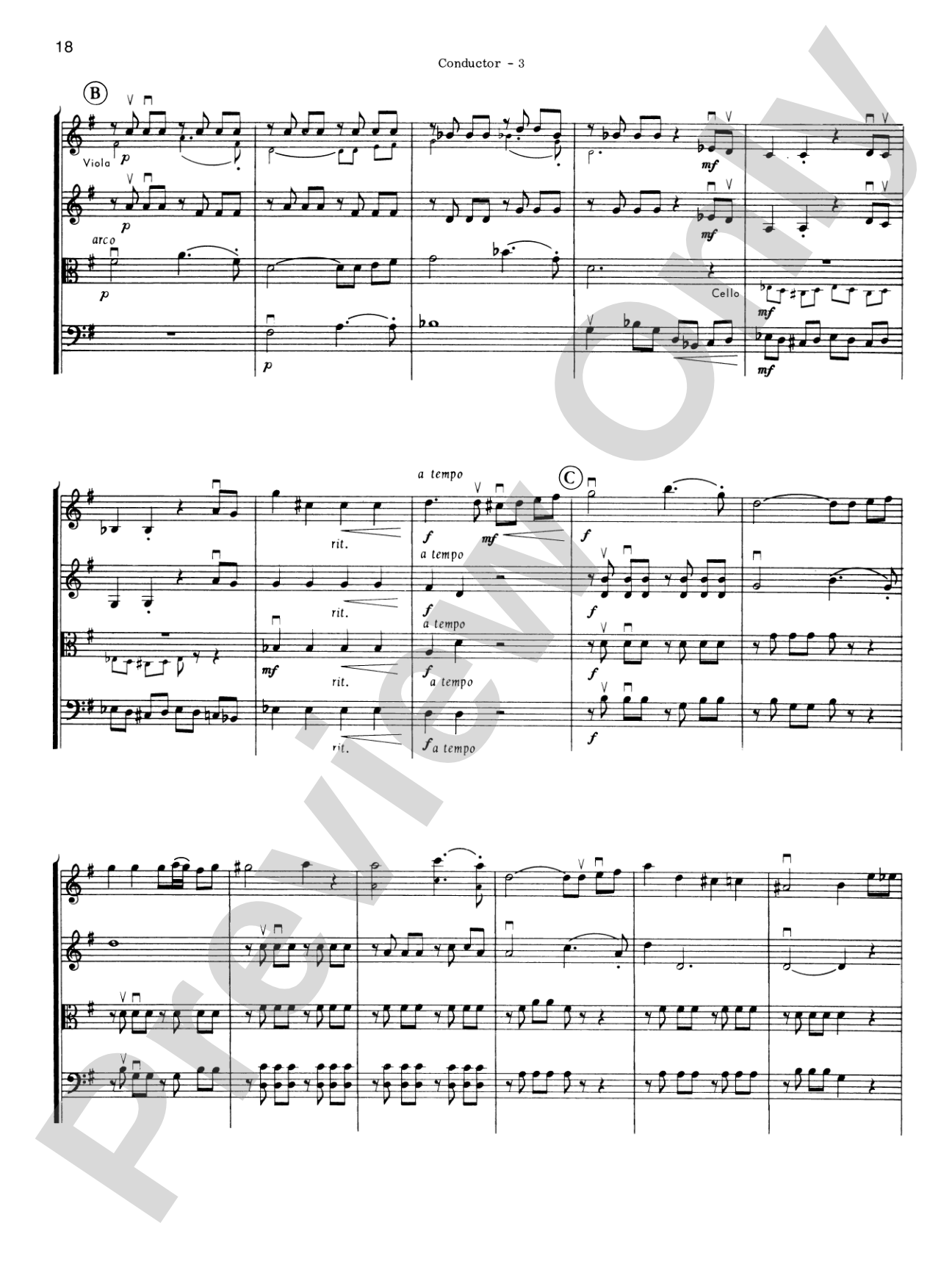
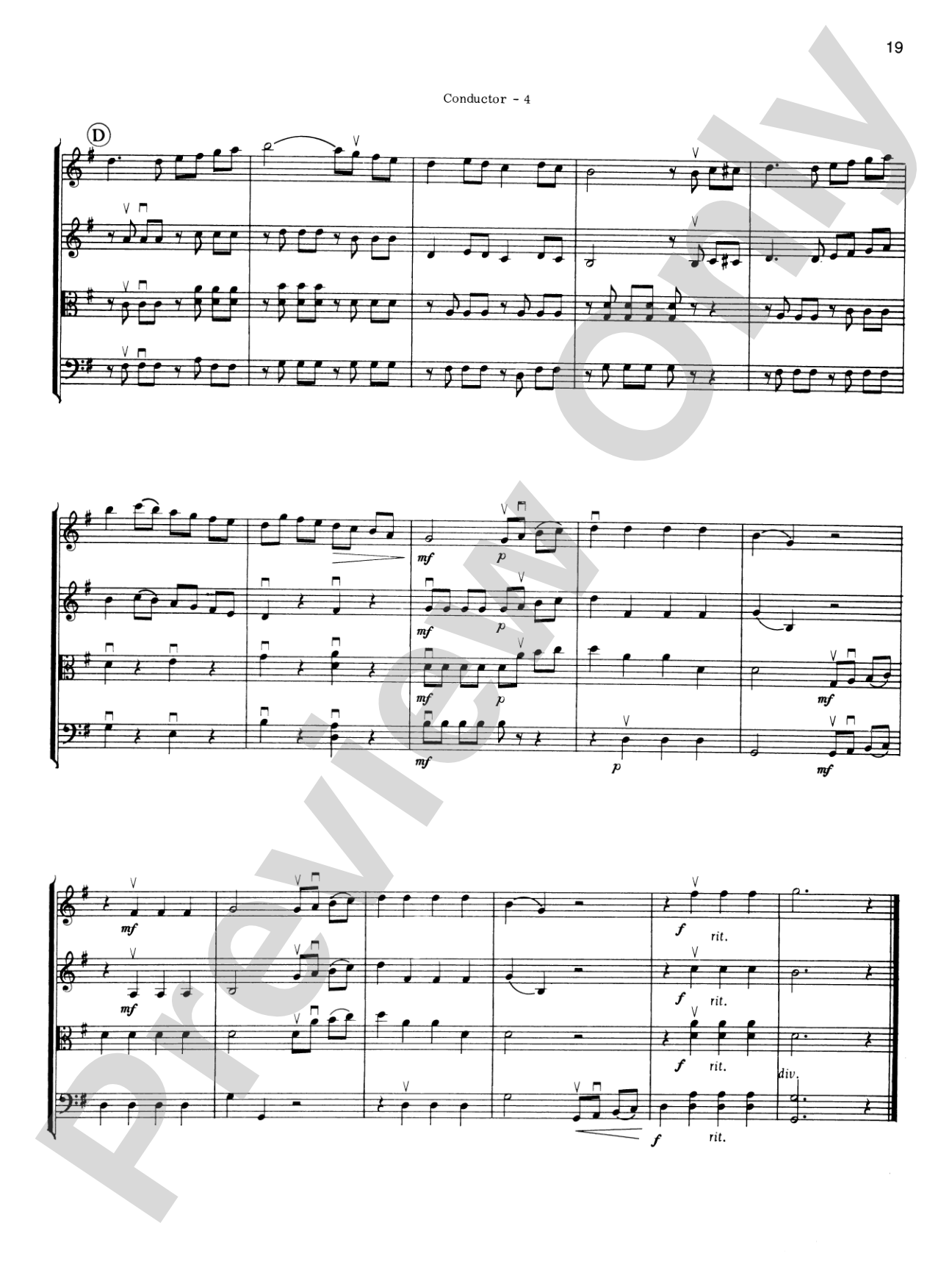
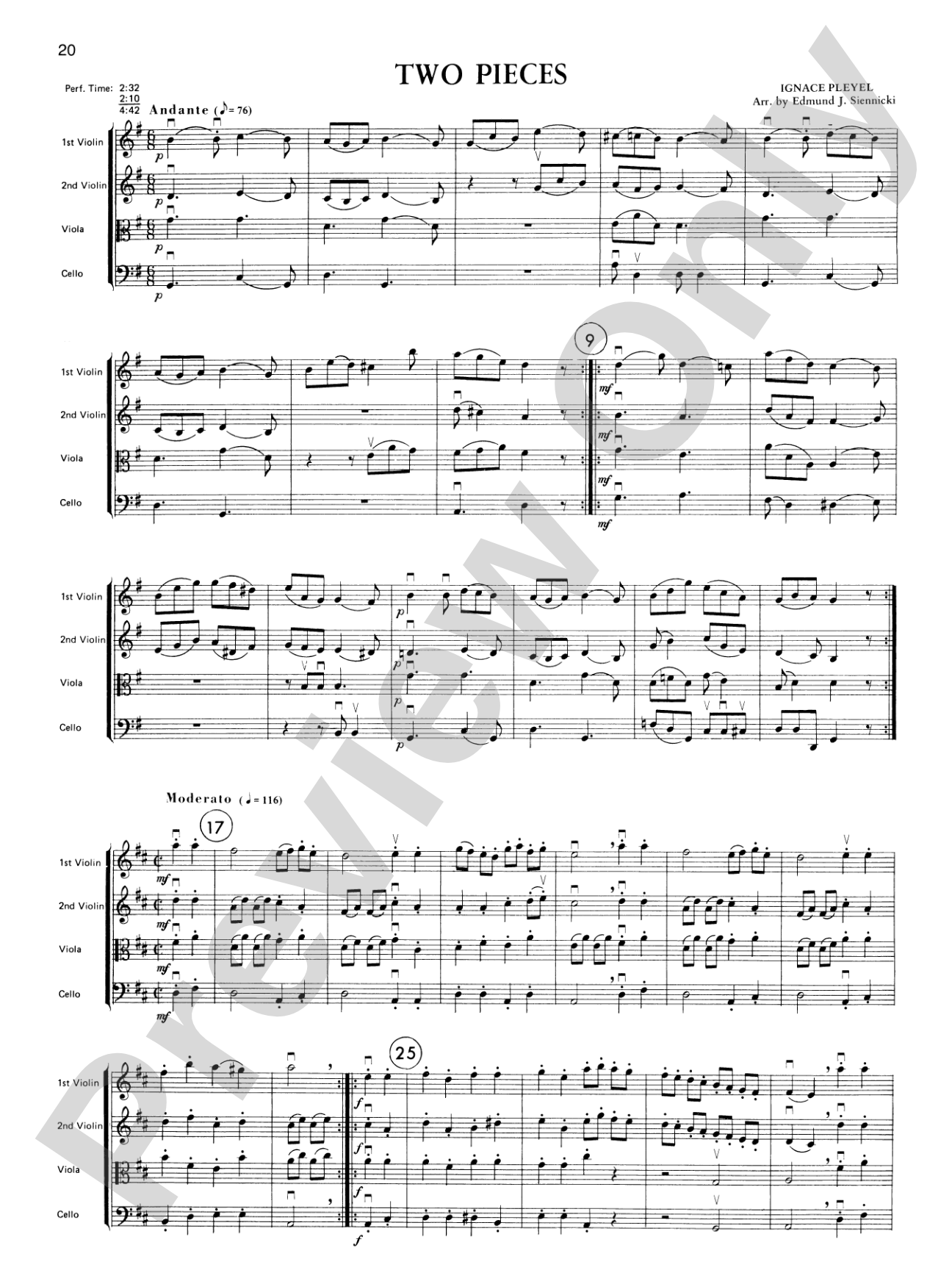
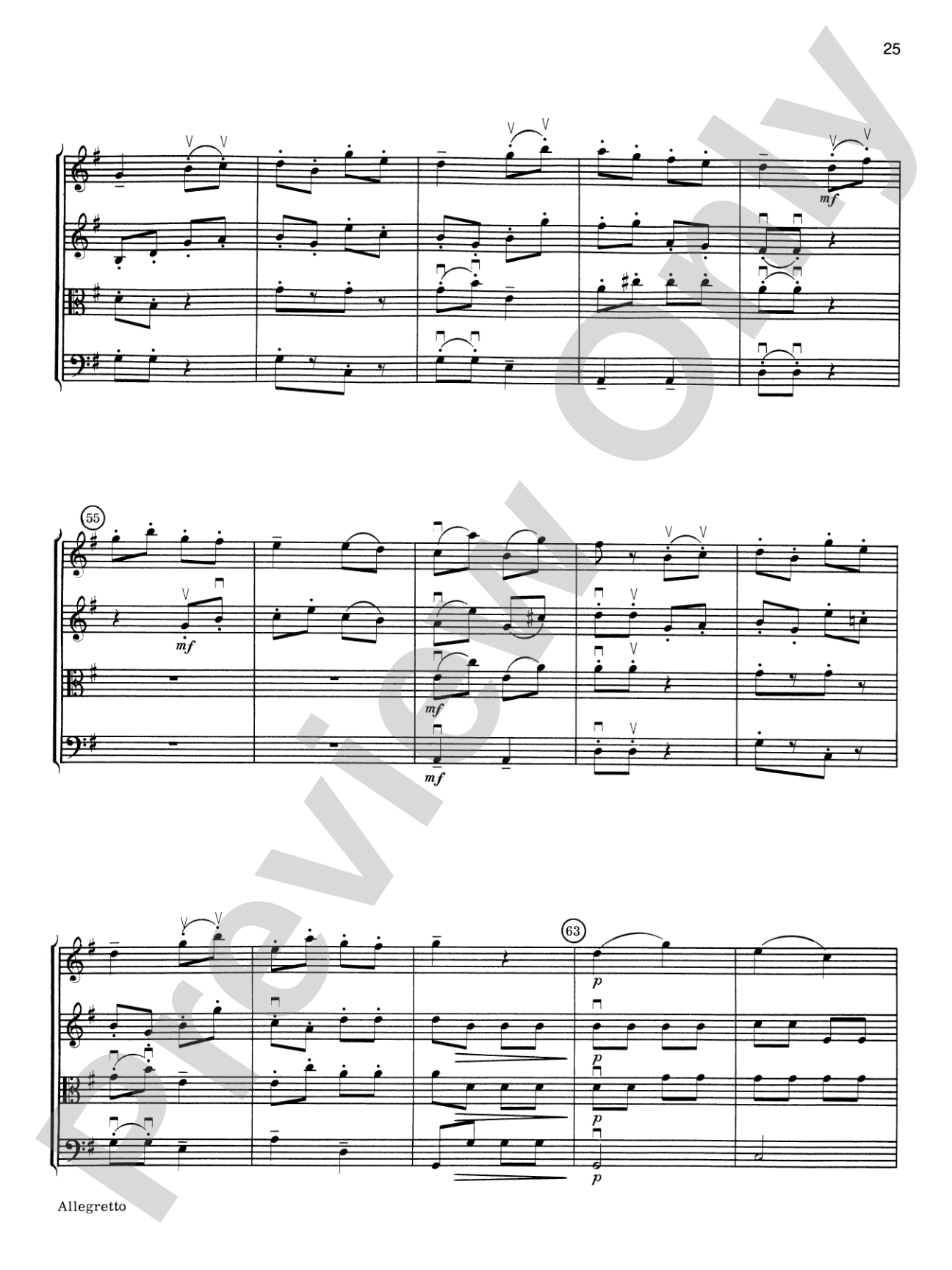
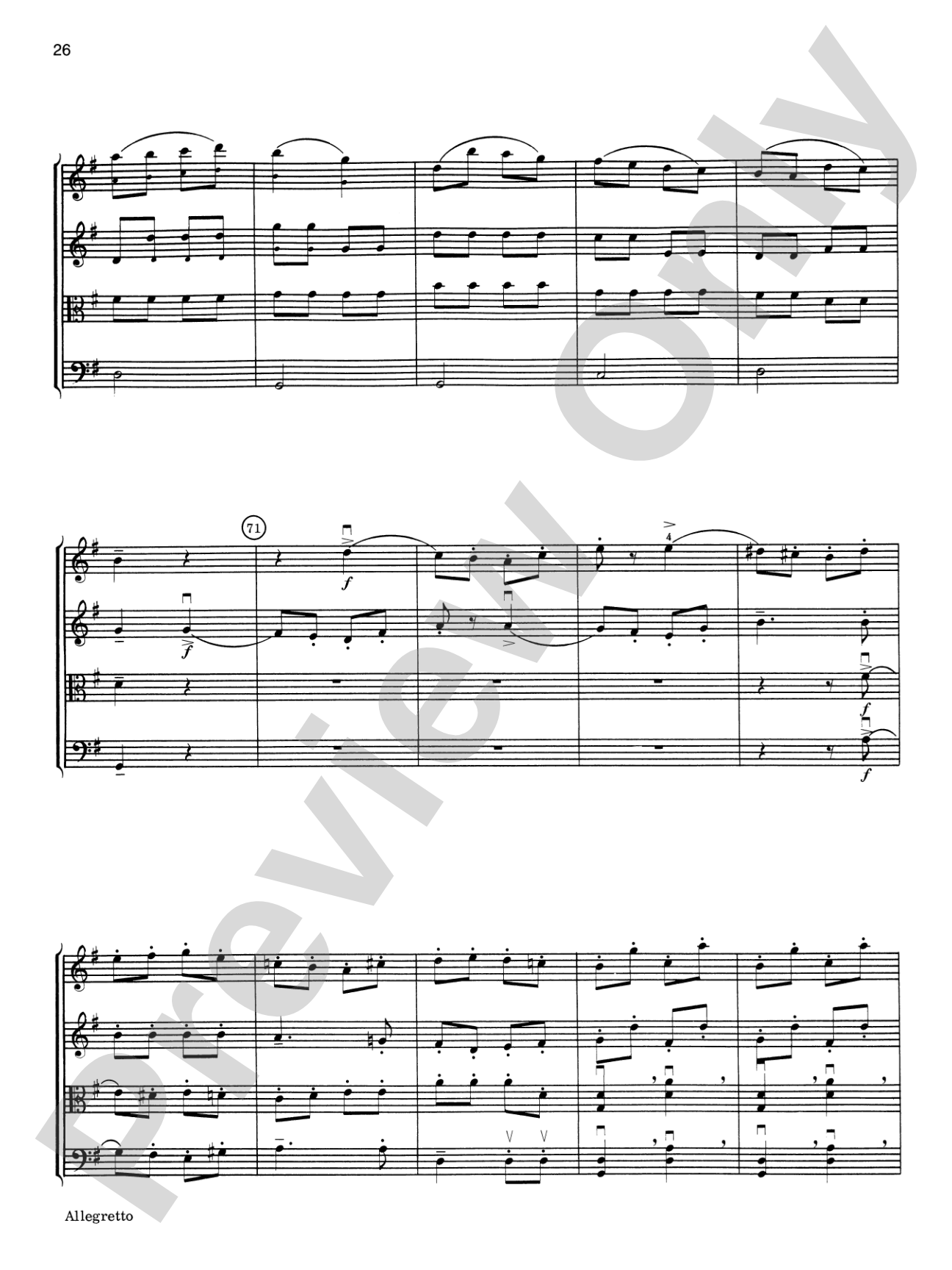
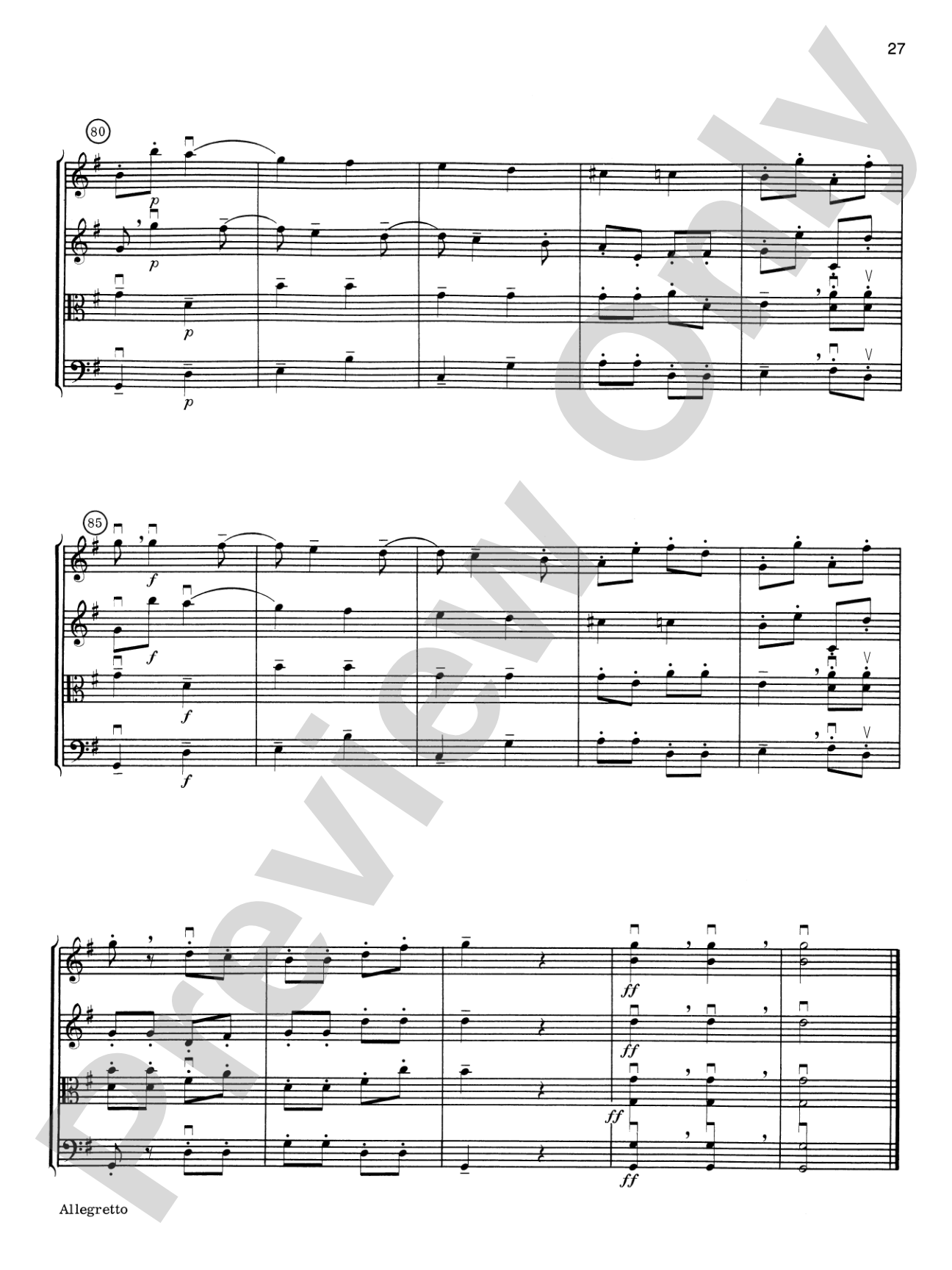
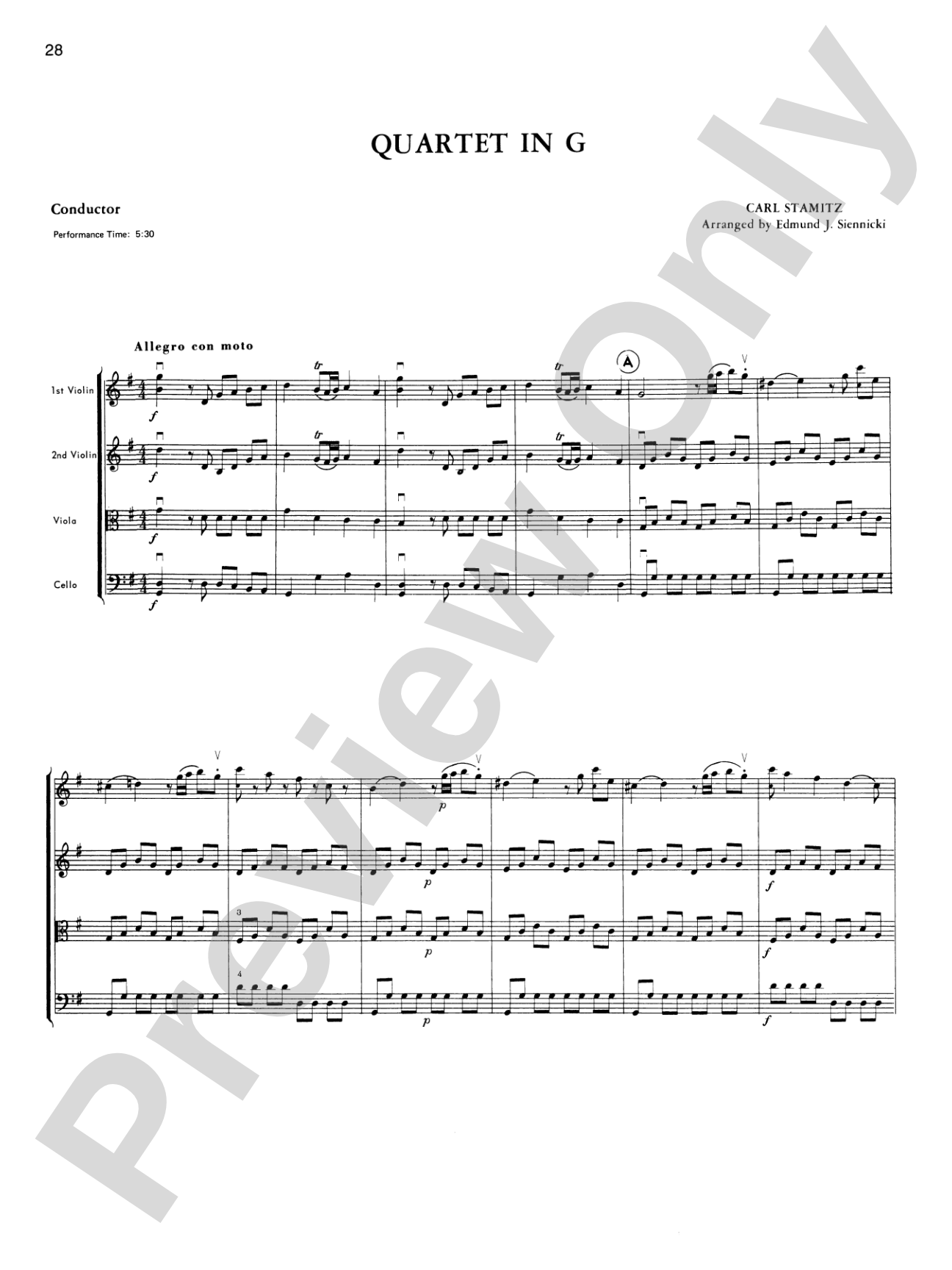
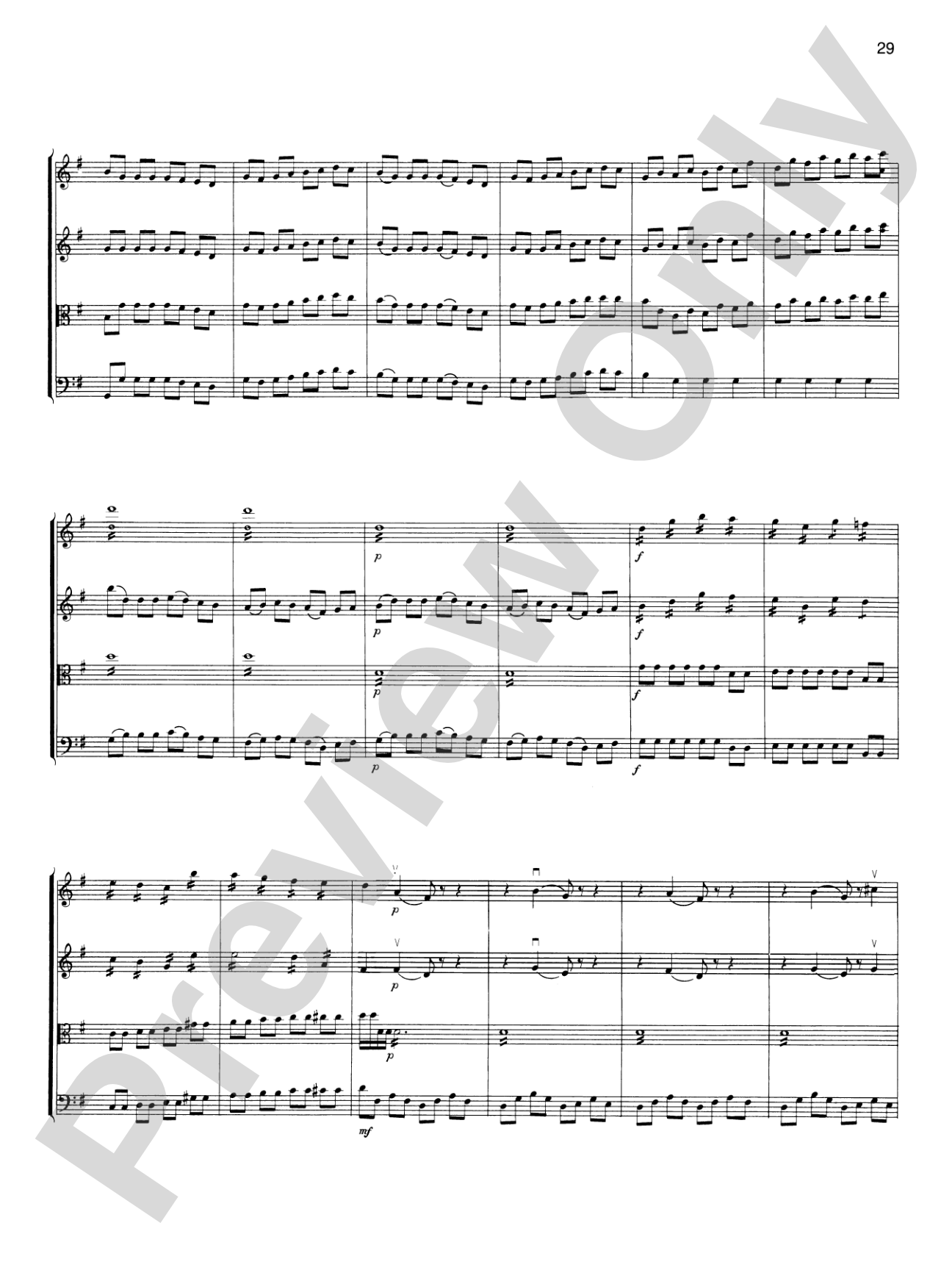
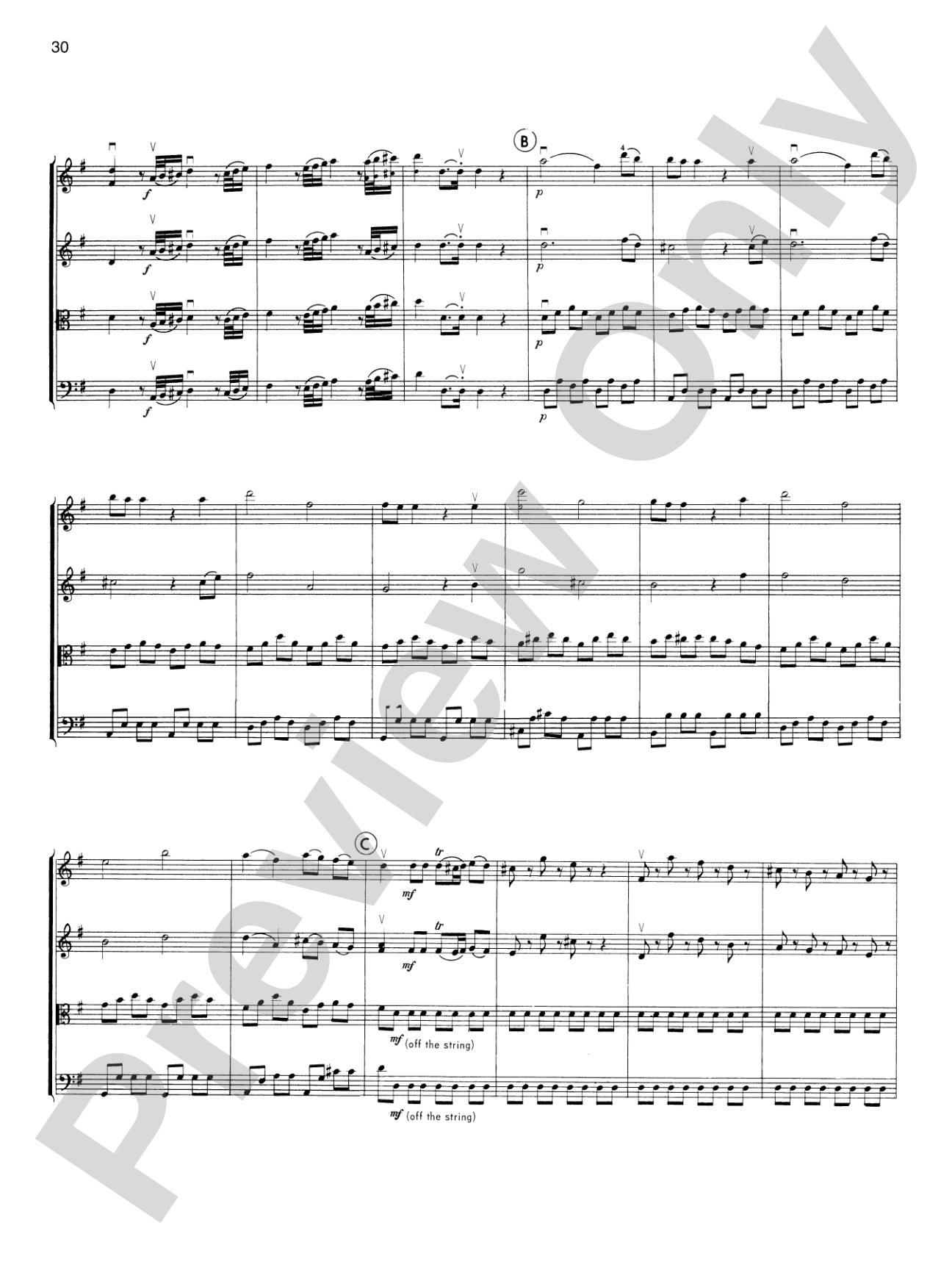
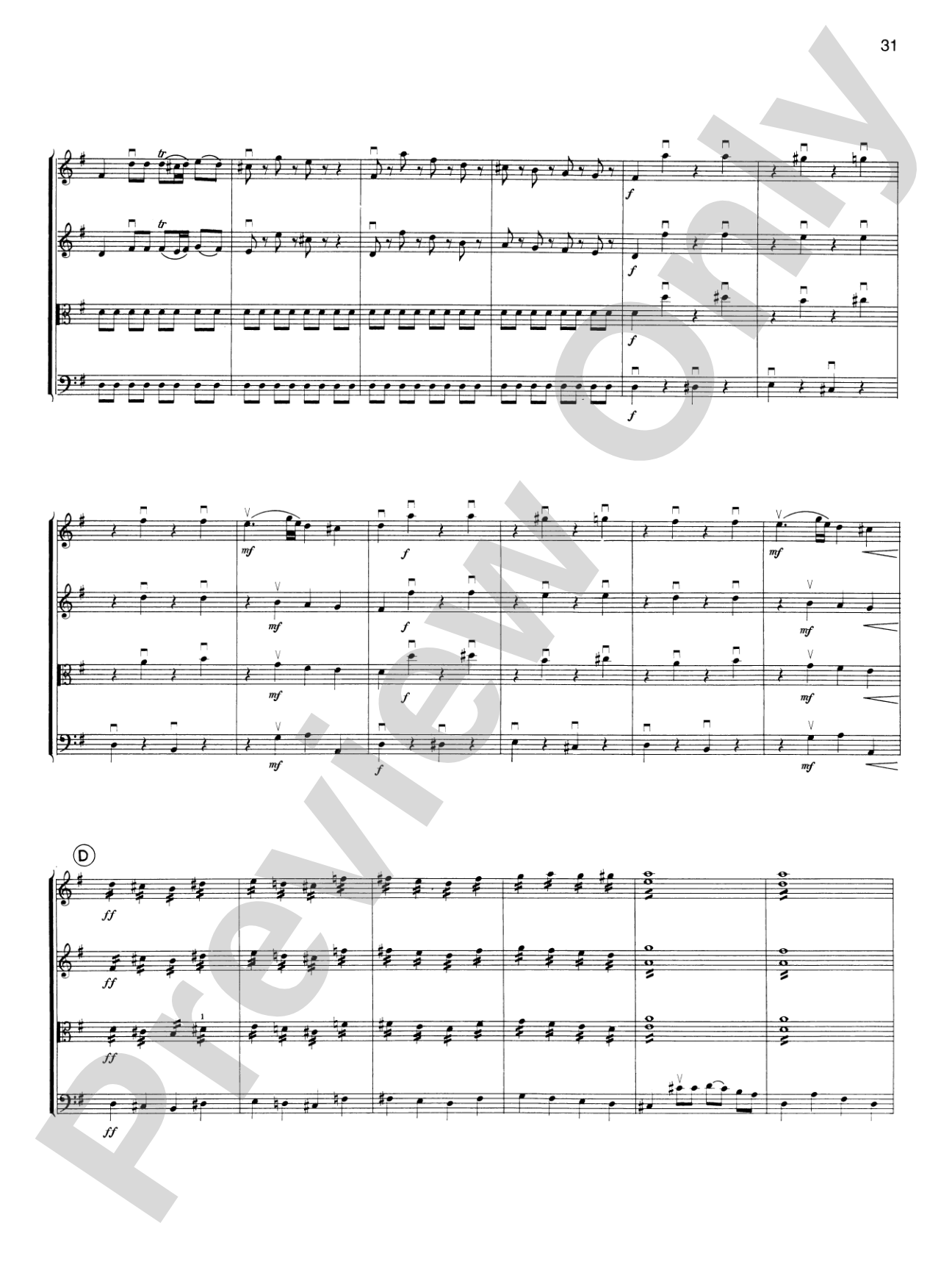
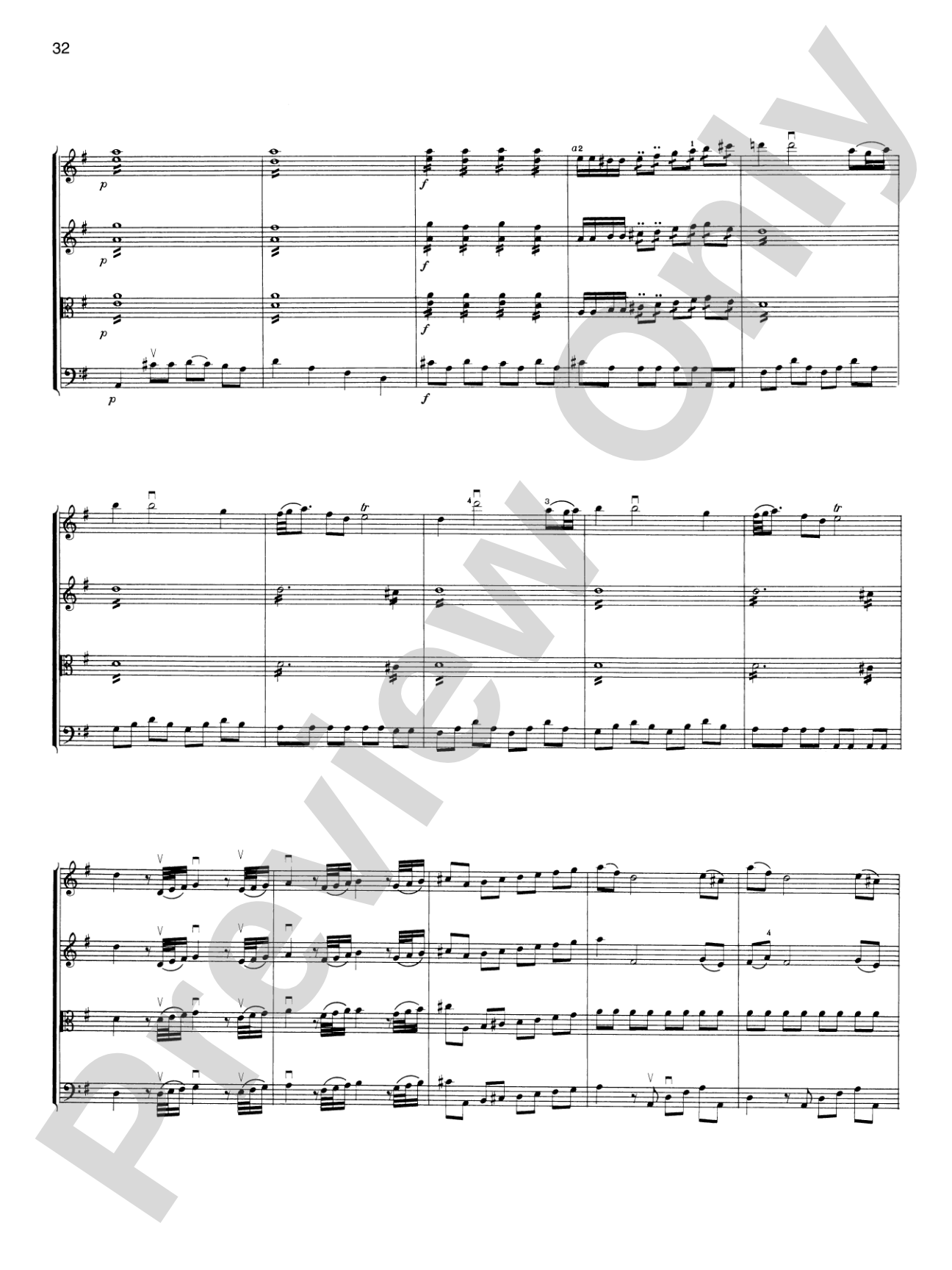
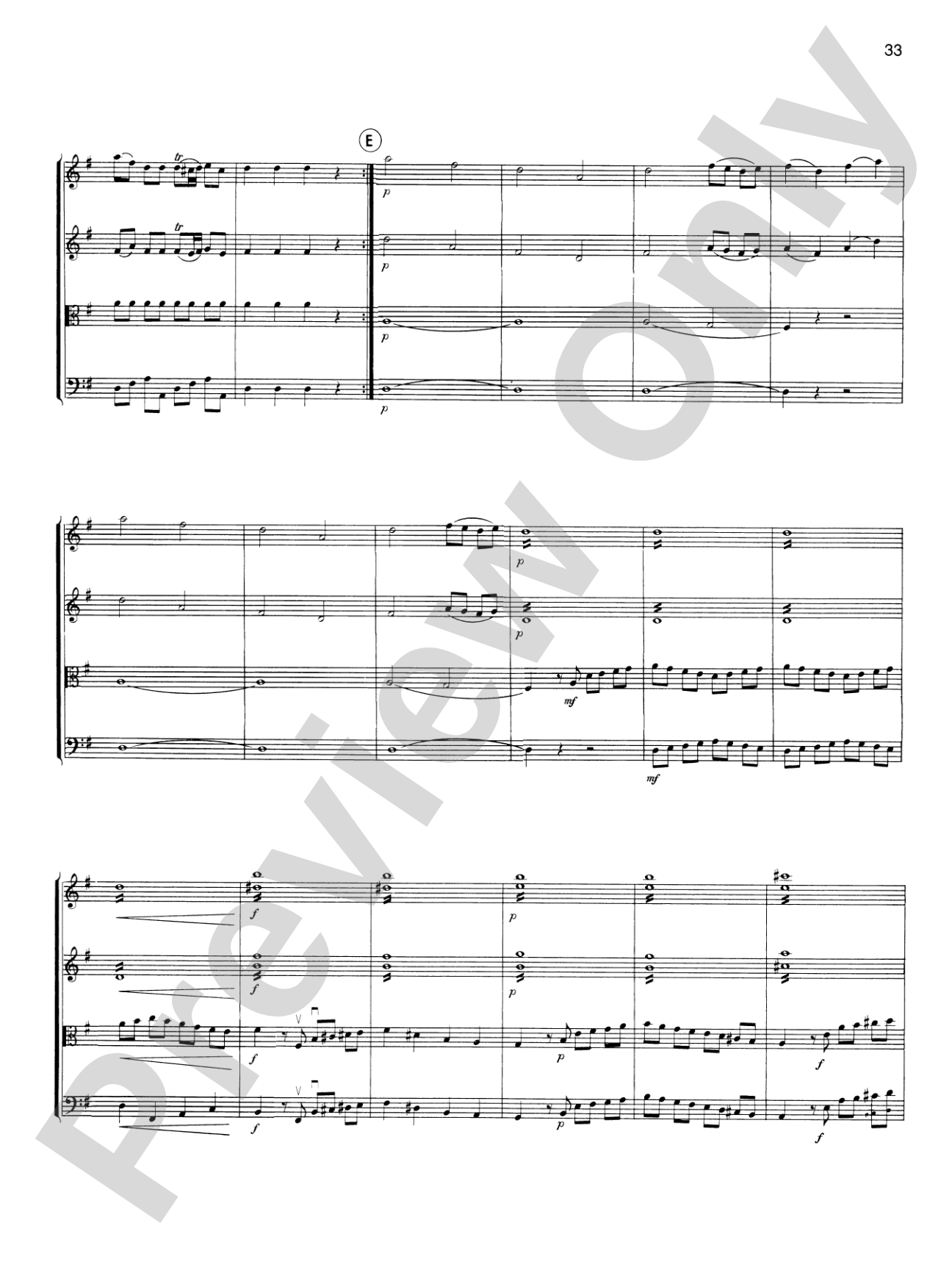
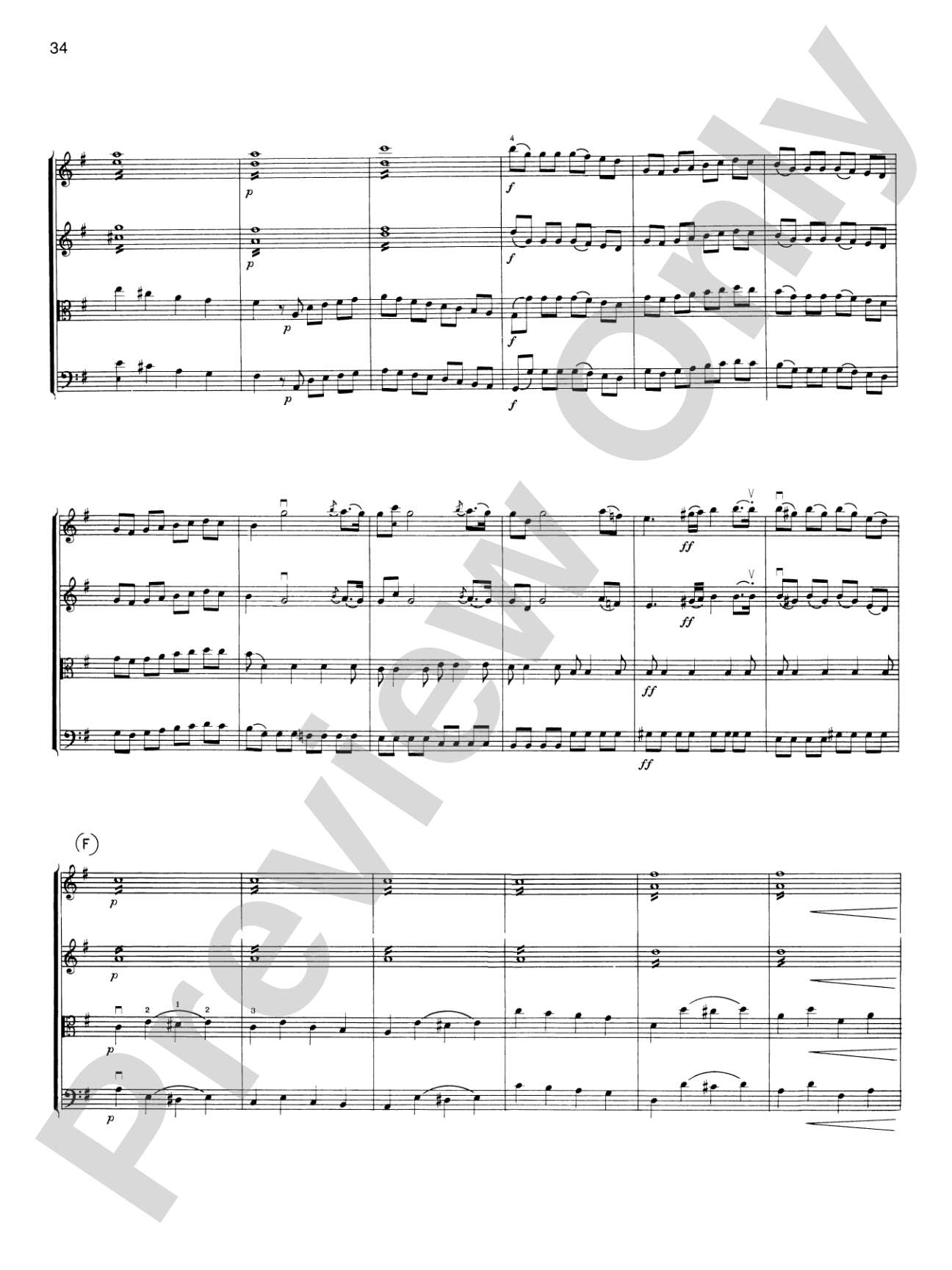
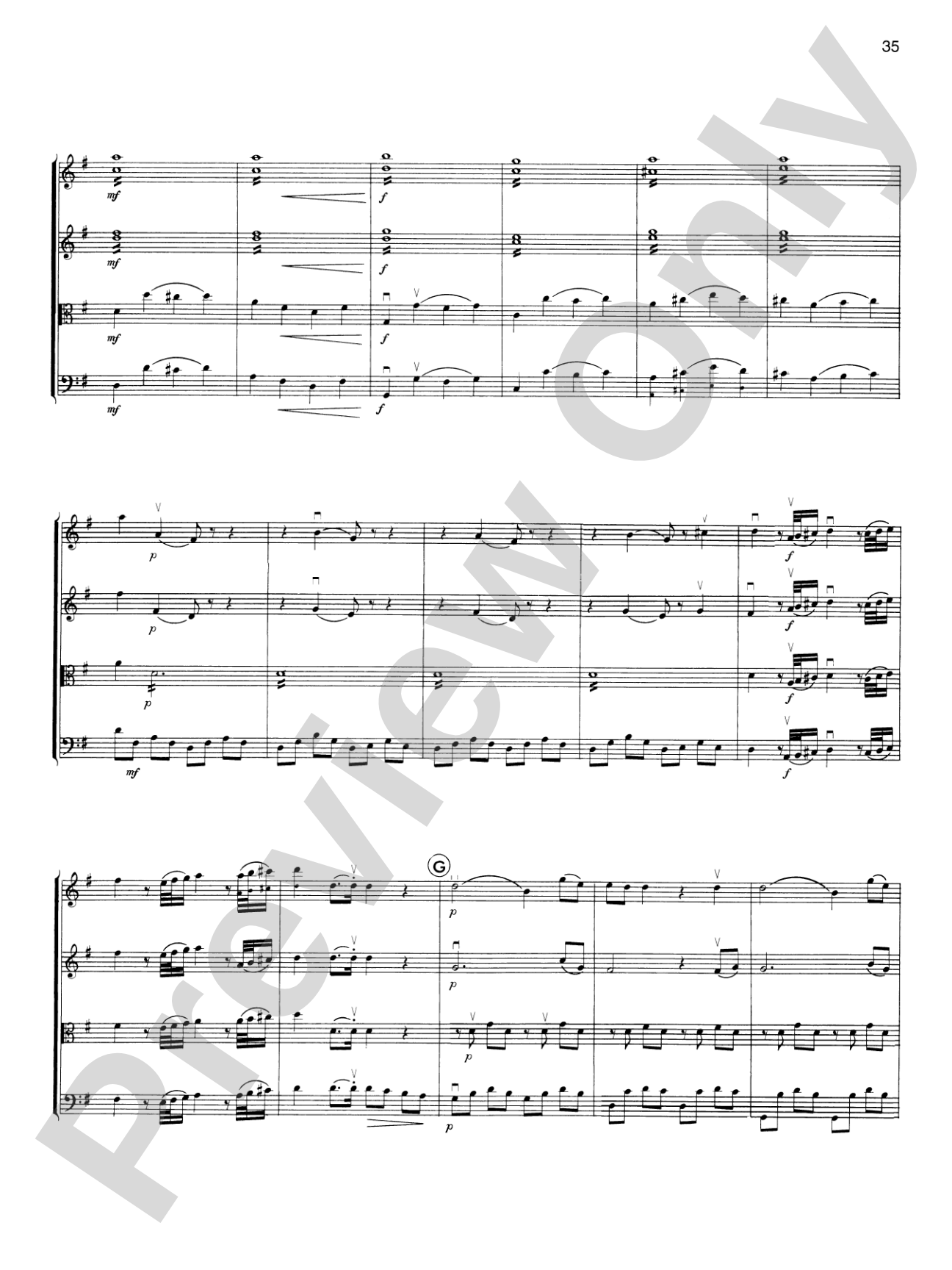
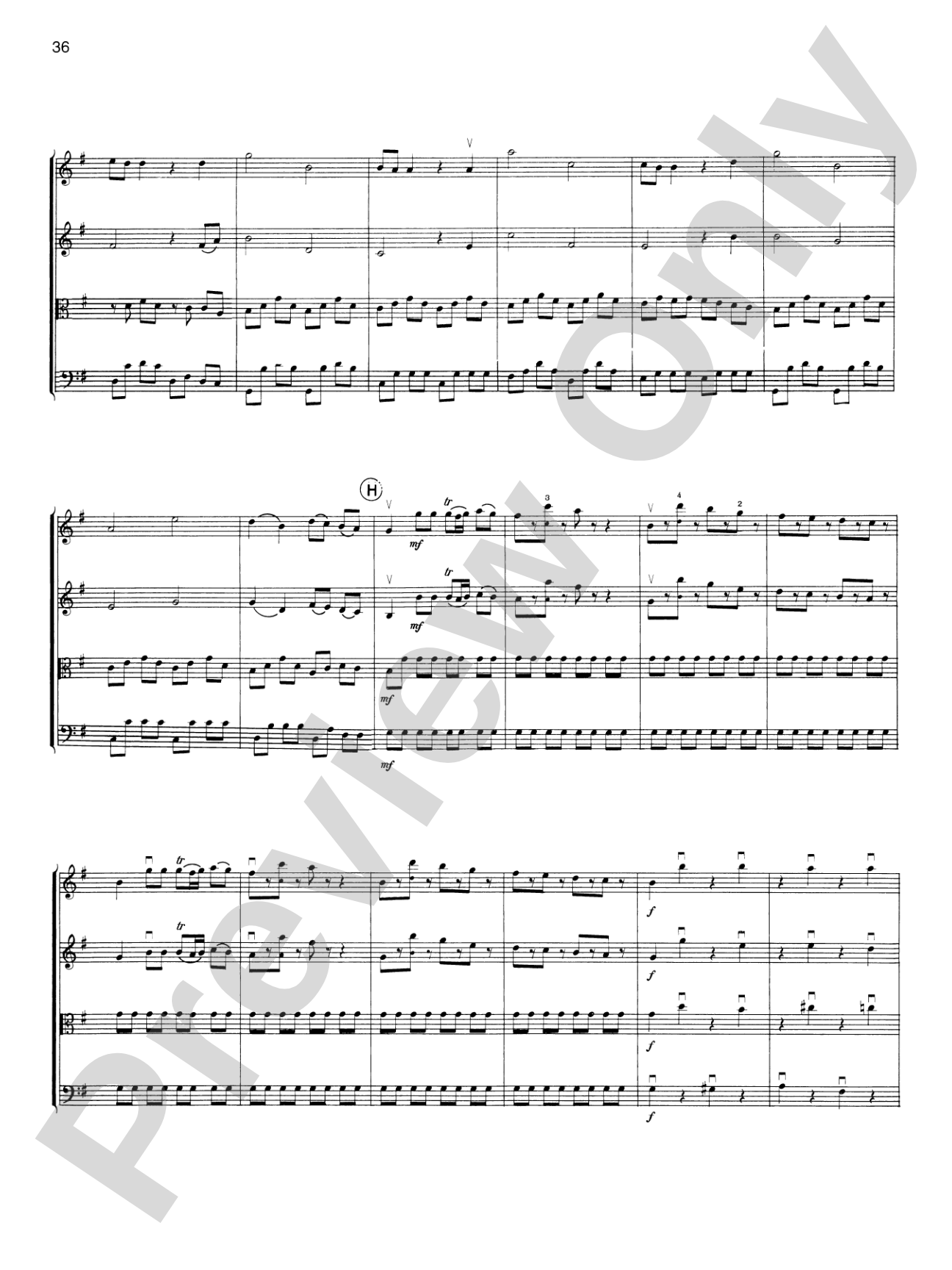
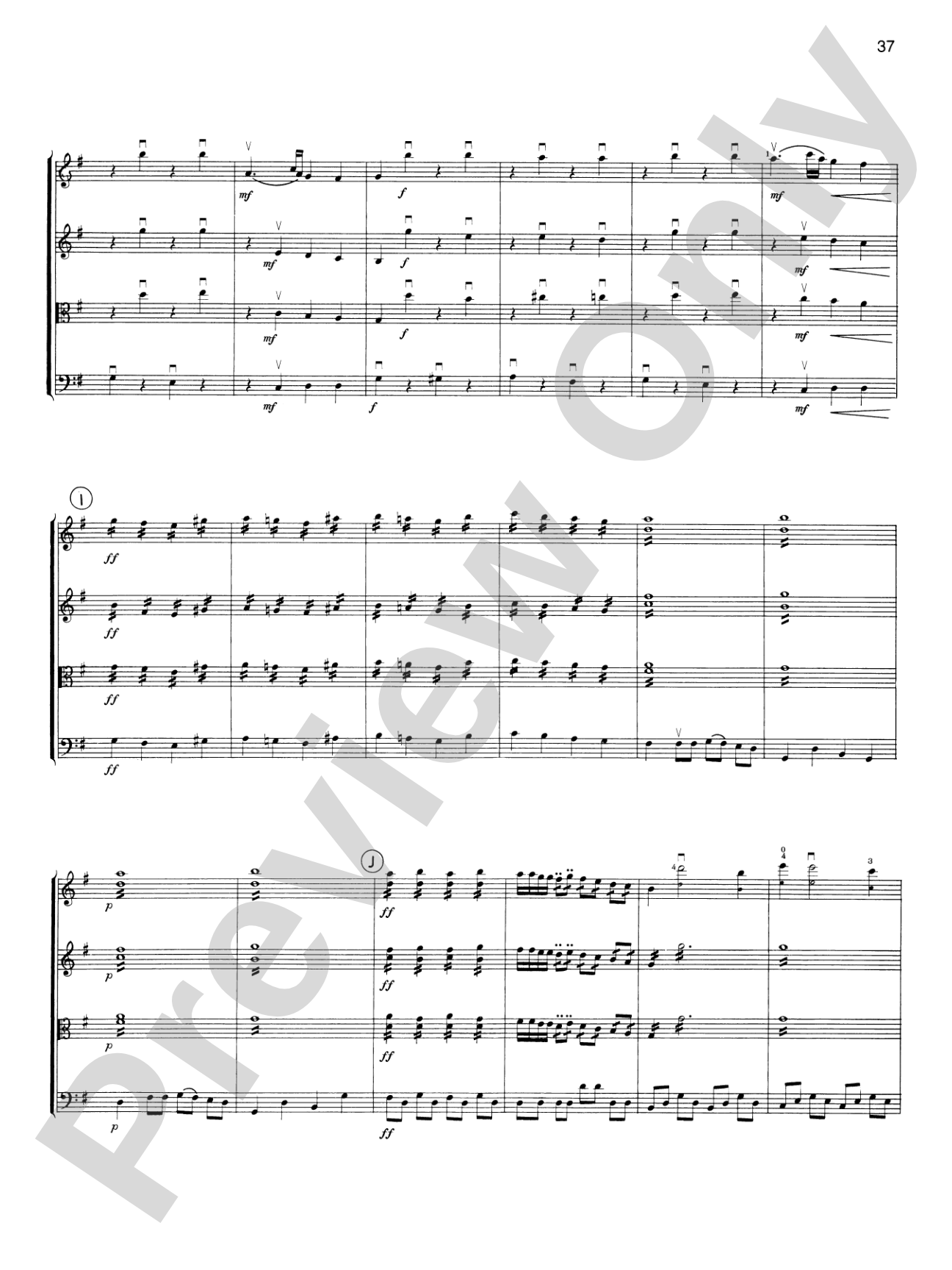
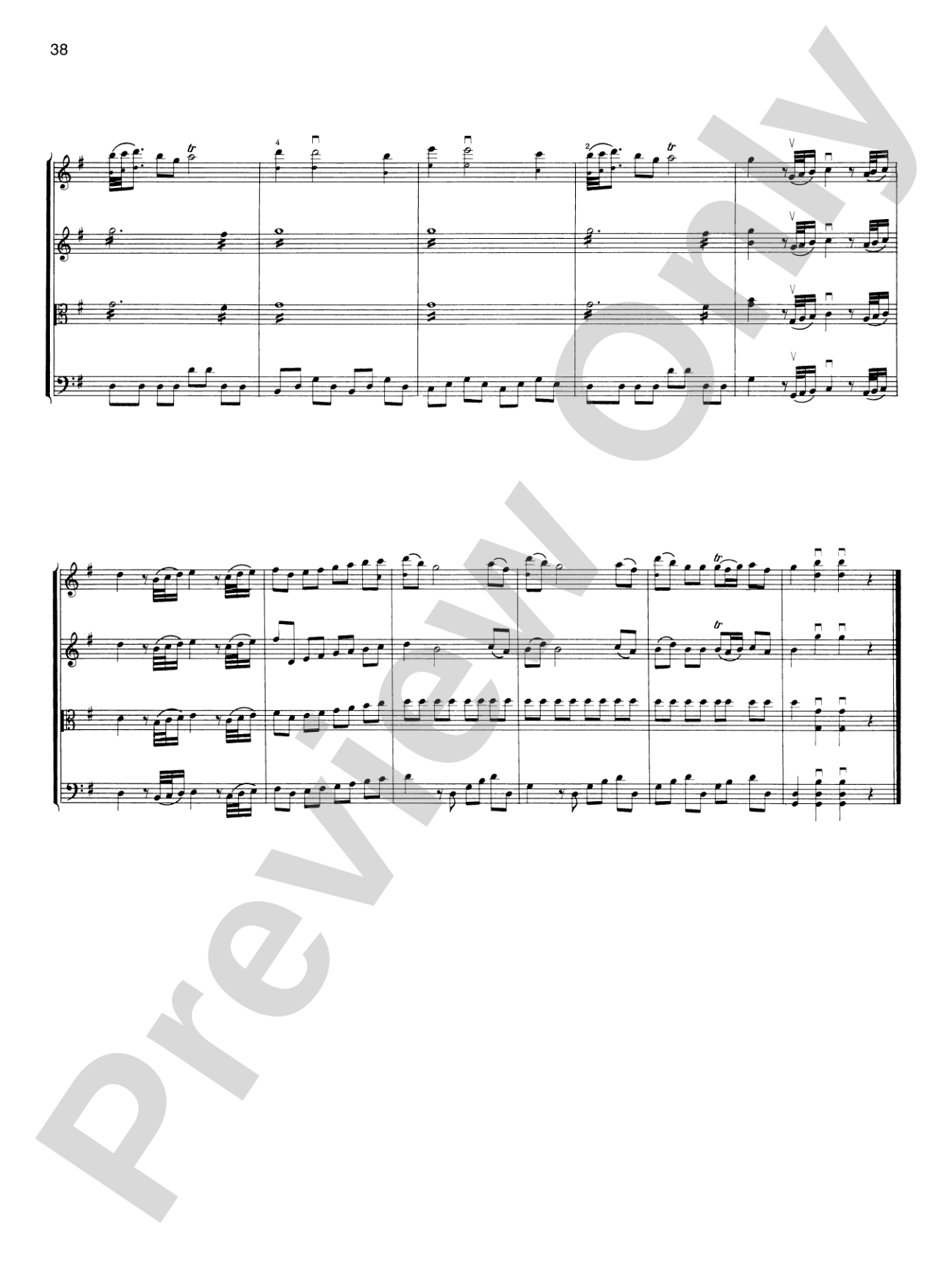



Highland/Etling String Quartet Series: Set 1: Score
Arr. Edmund J. Siennicki
Item: 00-PR-0000069
$10.00
Pickup currently not available
Description
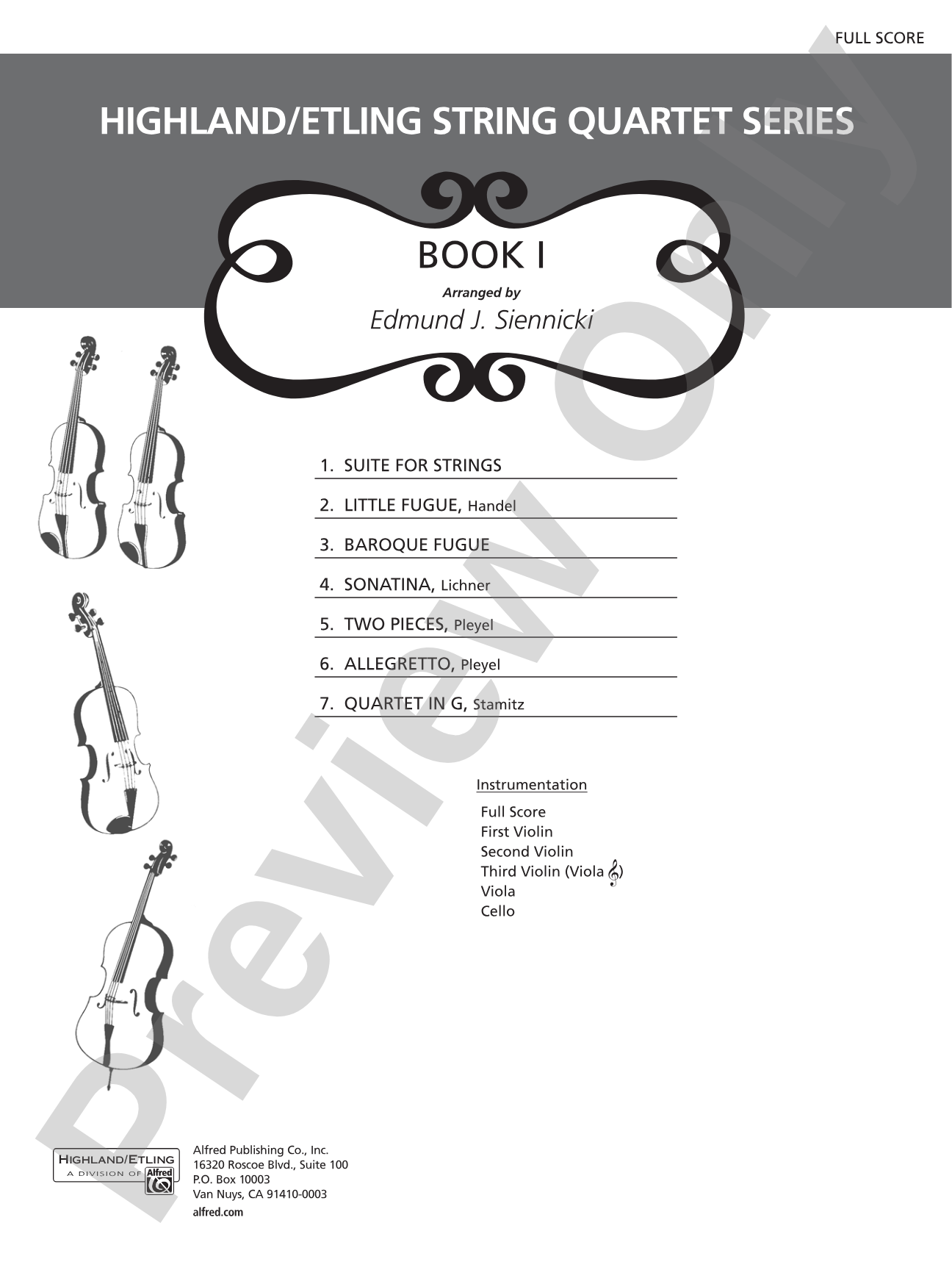
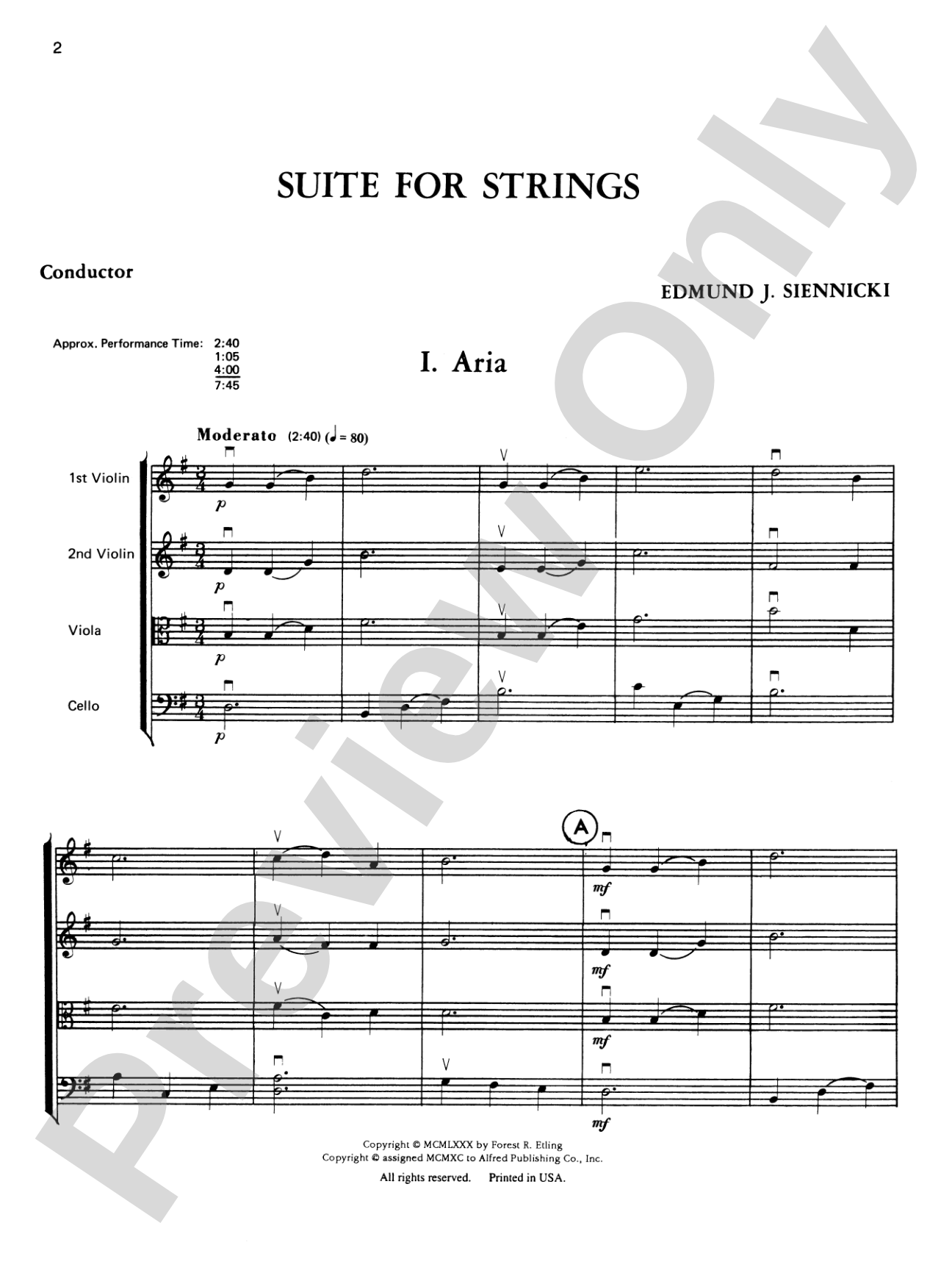
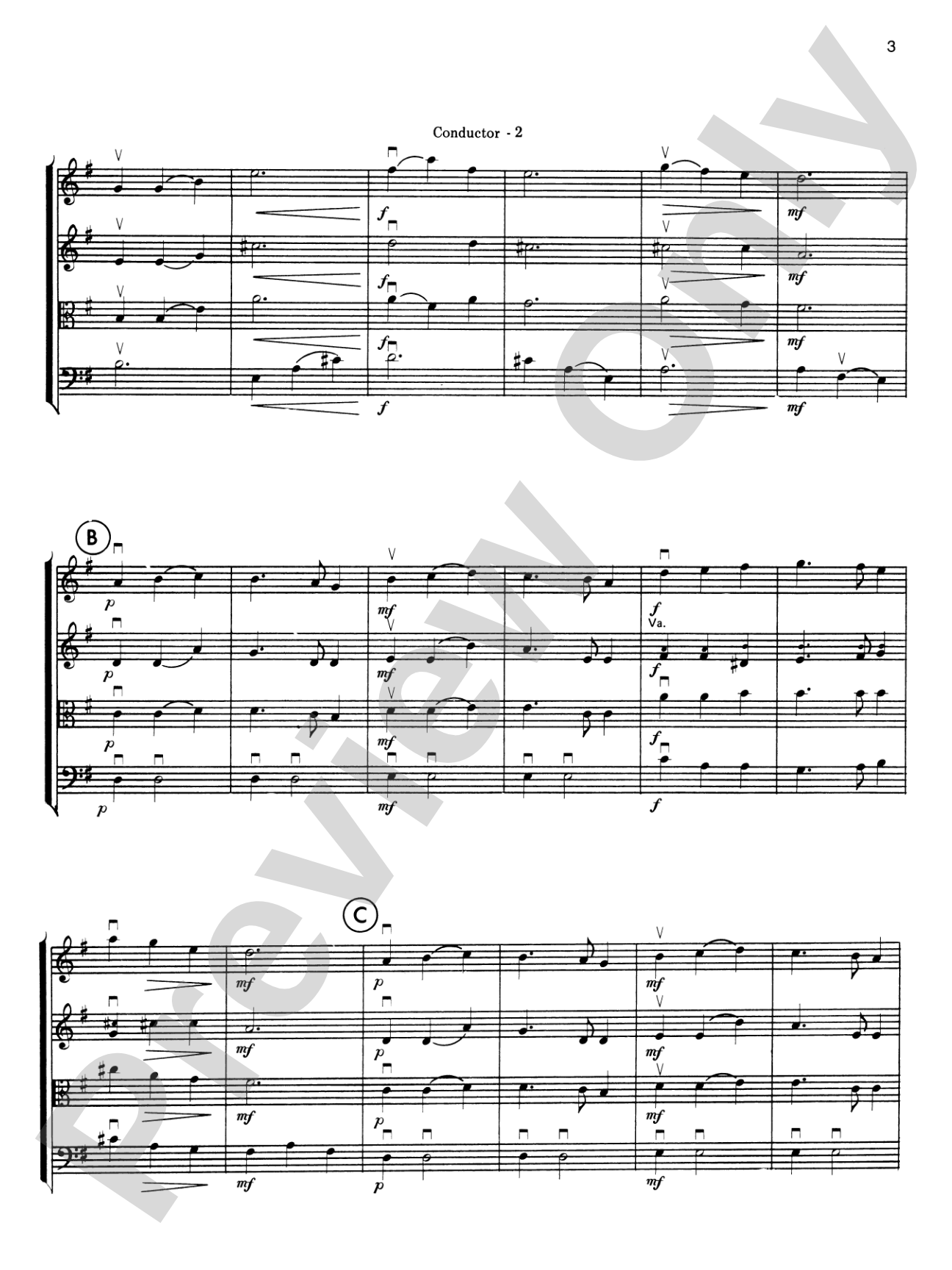
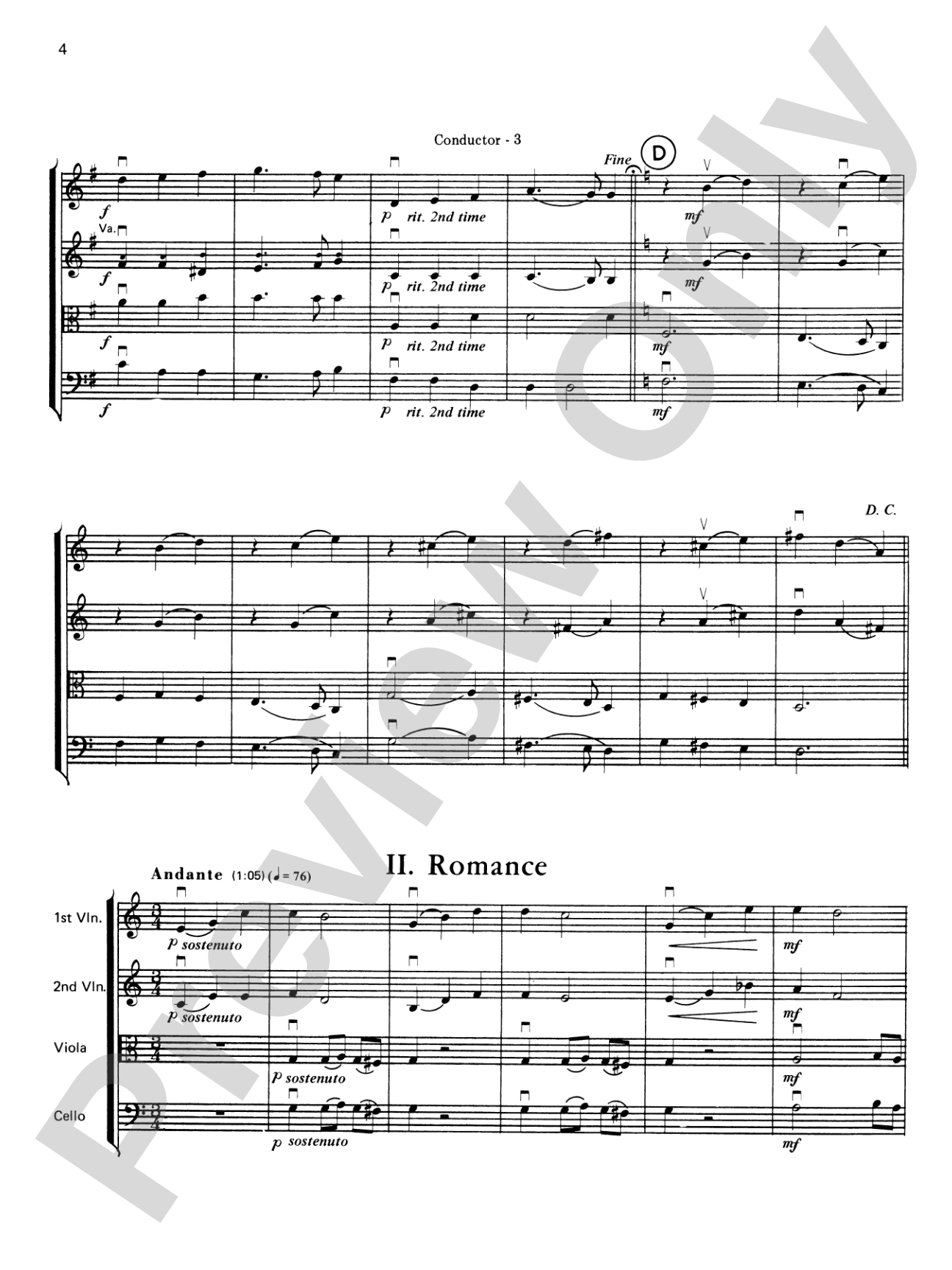
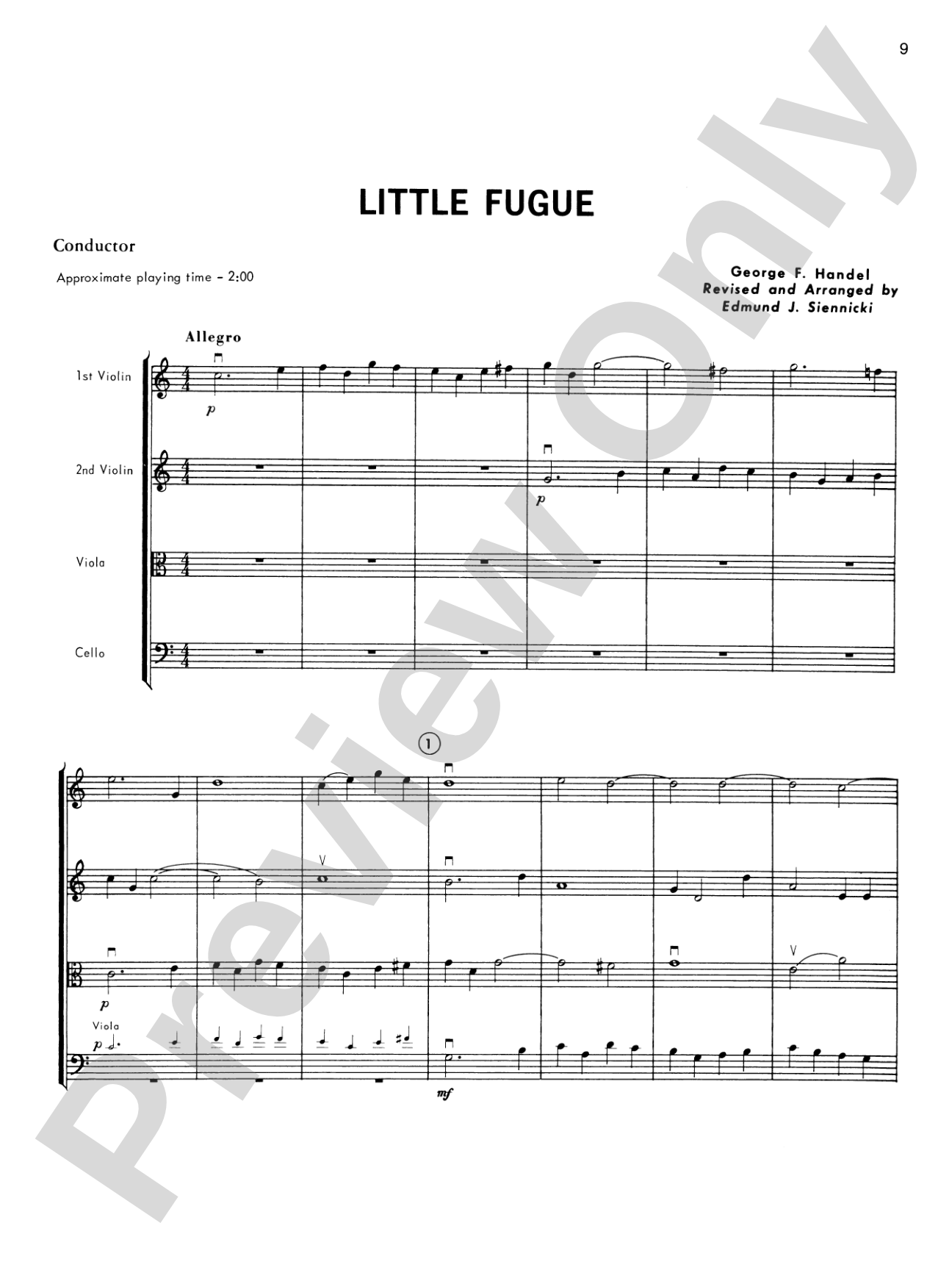
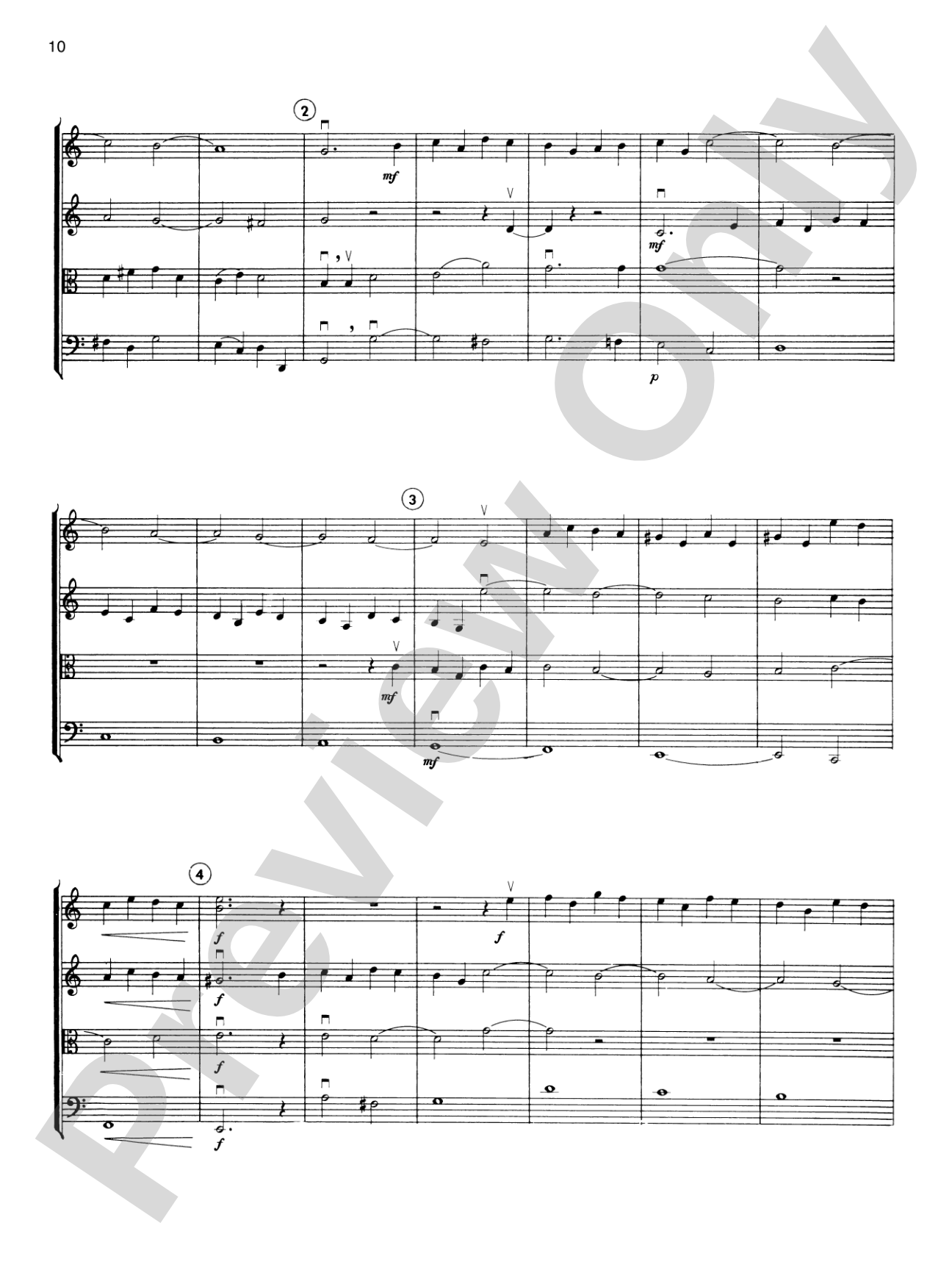
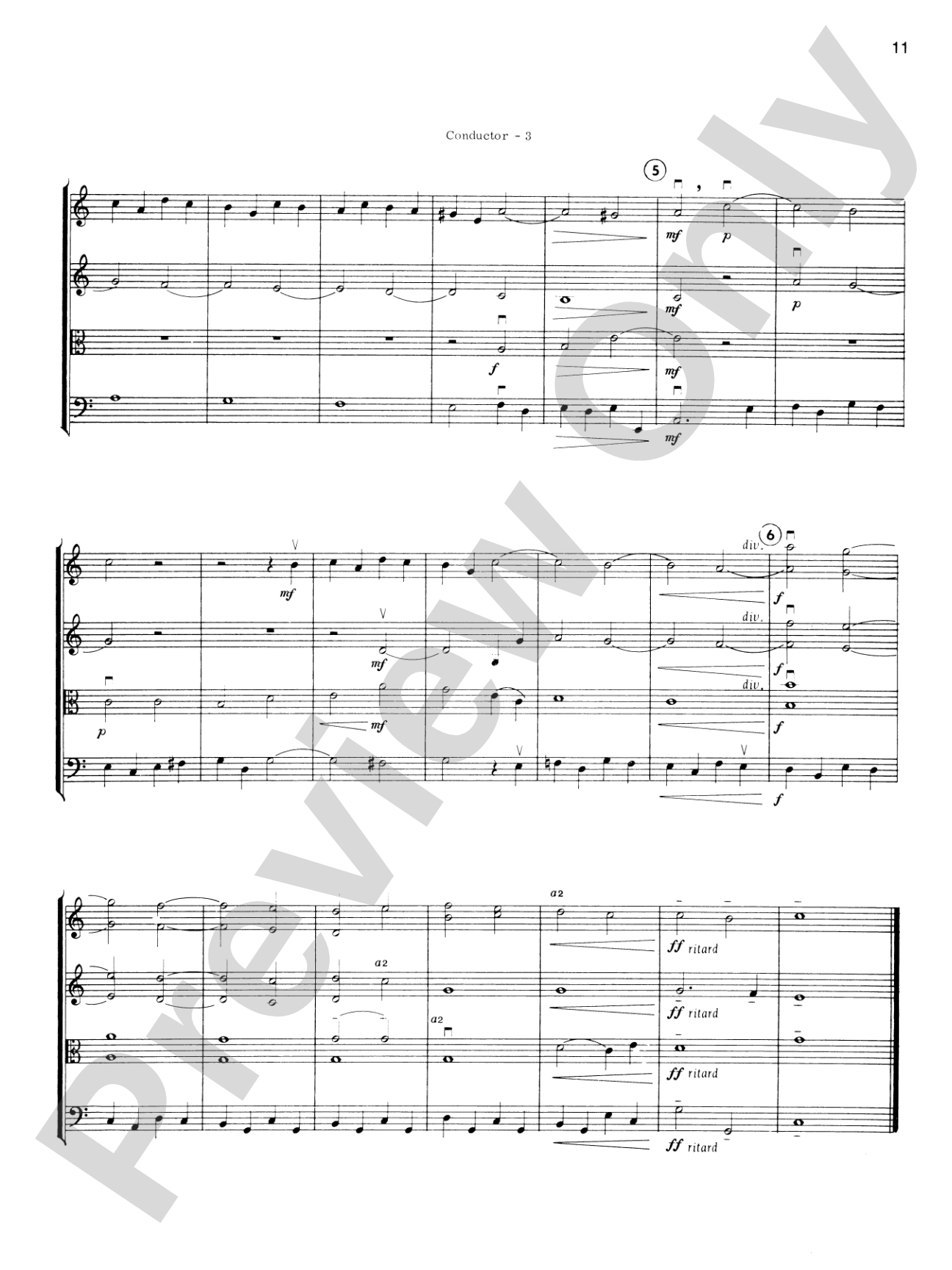
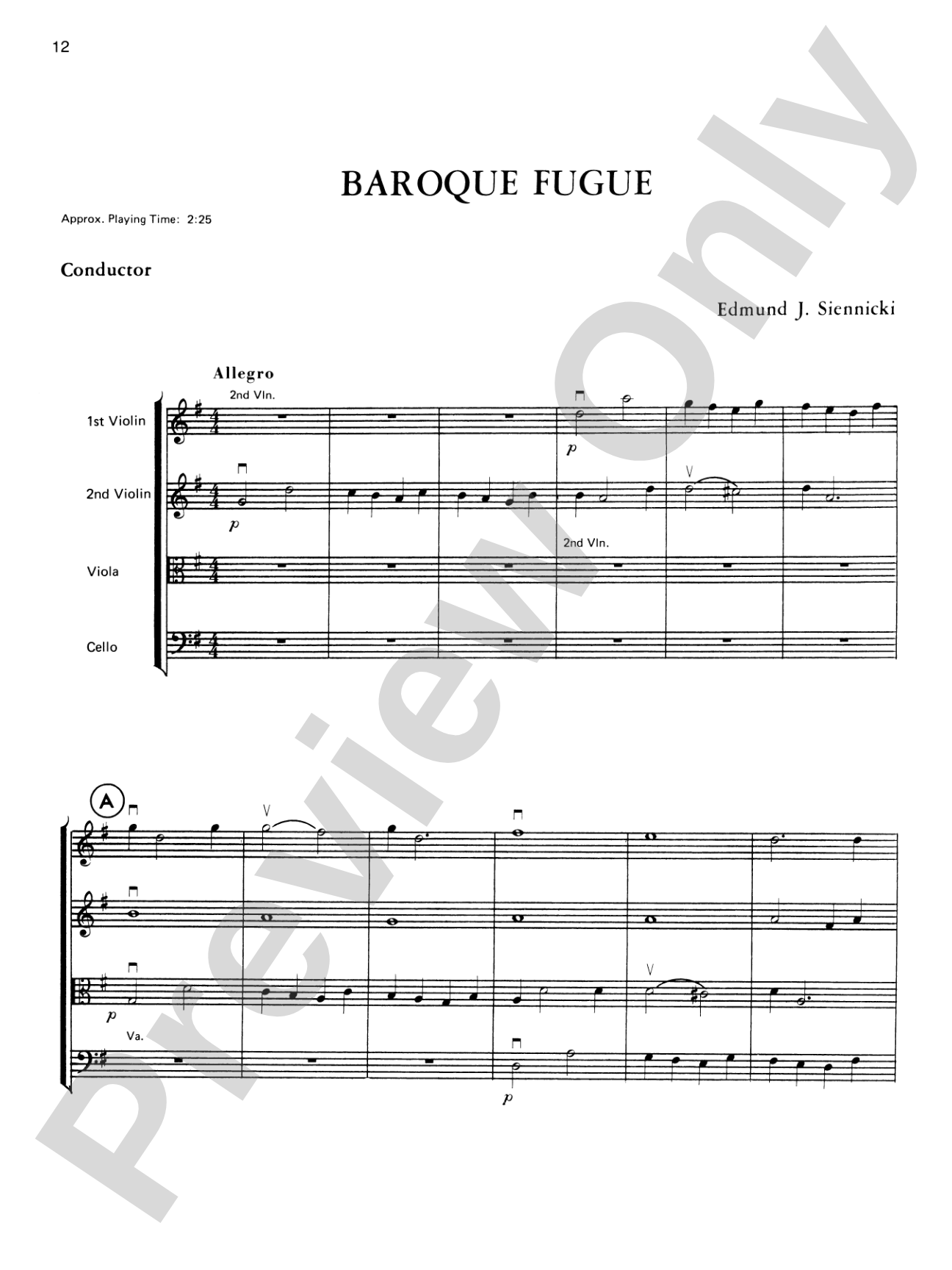
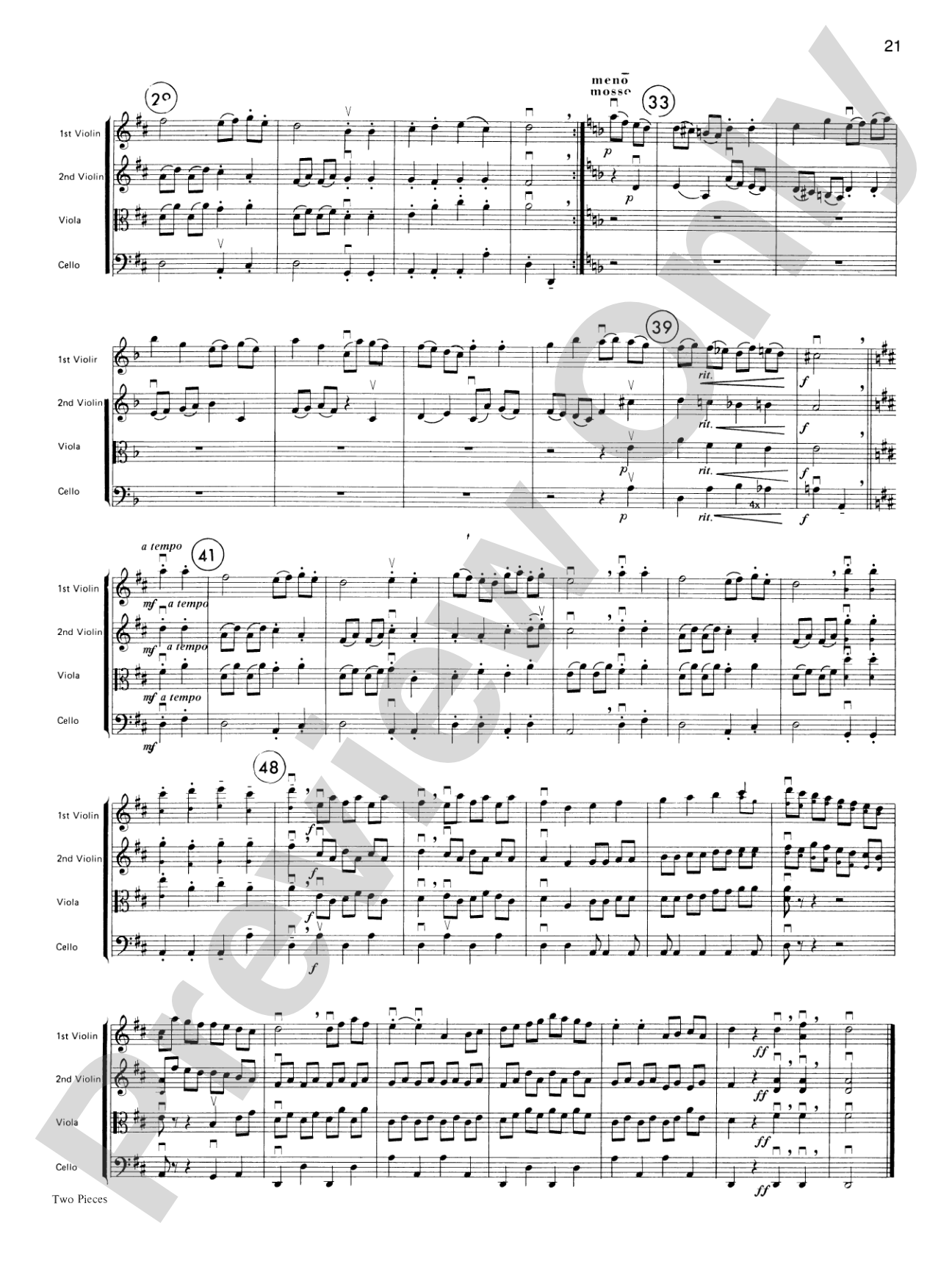
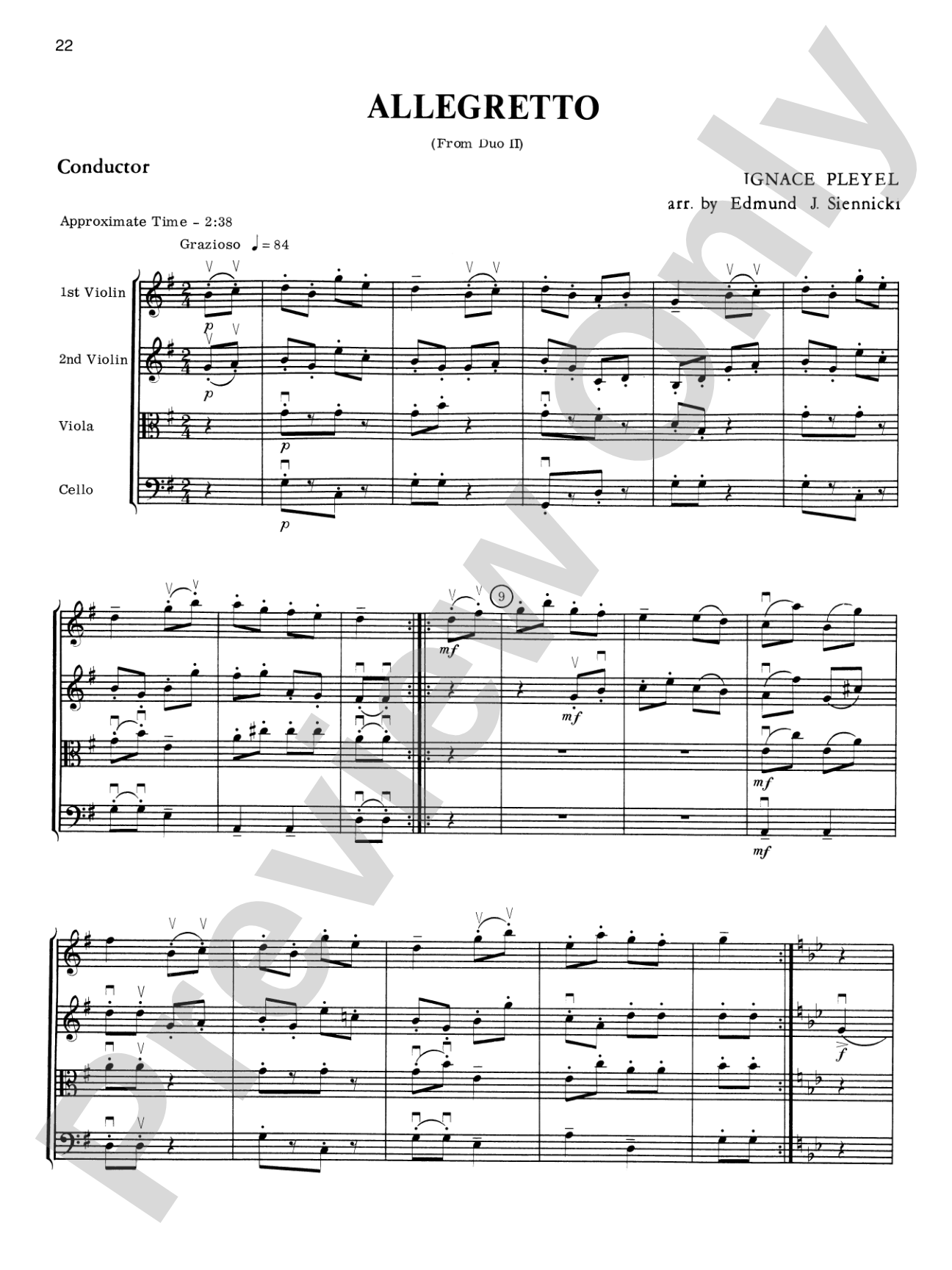
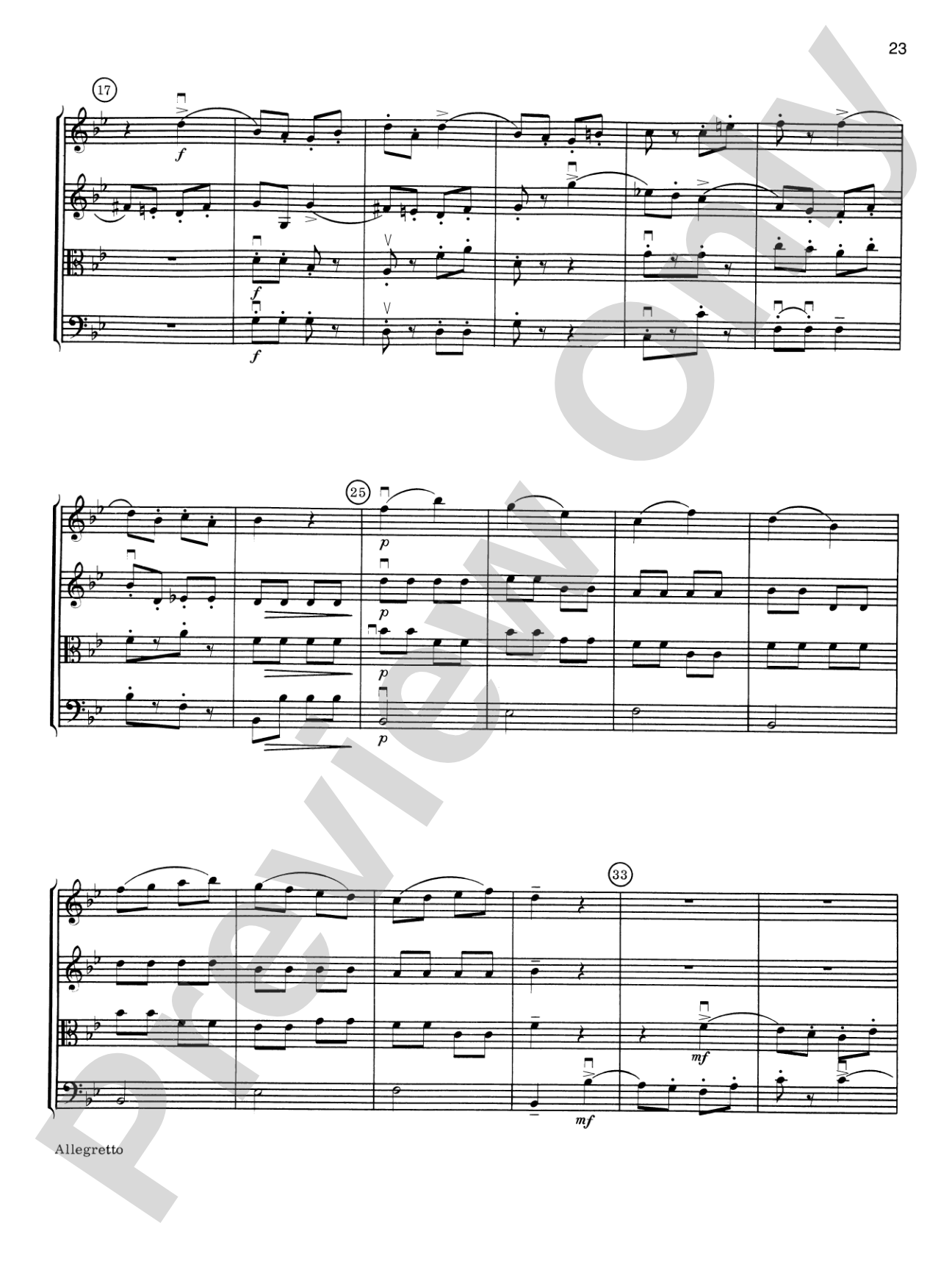
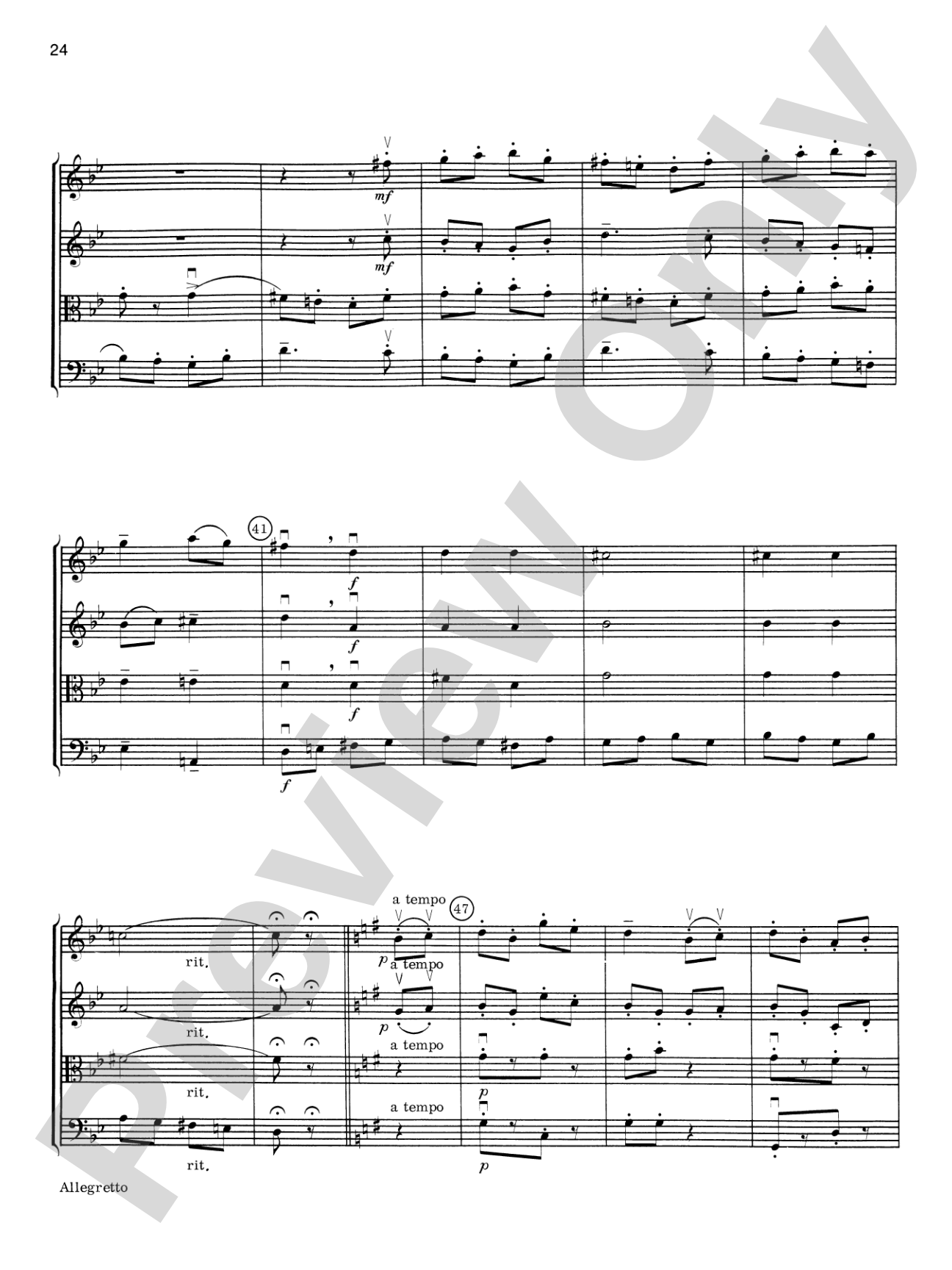
A four volume collection of arrangements from grade 3 string quartets. Contains music from the Baroque and Classical eras as well as folk melodies and Christmas carols. A great way to introduce young string players to chamber music playing. Titles: Suite for Strings * Little Fugue, Handel * Baroque Fugue * Sonatina, Lichner * Two Pieces, Pleyel * Allegretto, Pleyel * Quartet in G, Stamitz. A Federation Festivals 2020-2024 selection.


Don't just read it, hear it, play along with it, and watch your students grow with it. In MakeMusic Cloud, Highland/Etling String Quartet Series: Set 1: Score comes alive with professional accompaniment, adjustable tempo, and built-in practice tools that turn solo practice into real progress.
Open in the Player
Jump straight in and assign it today.
Start Your Free Trial
Open this title and explore the full library in minutes.
Sample Audio
No sample audio found.
Sample Video
No sample videos found.
Additional Details
Series:
Highland/Etling String Quartet Series
Publisher:
Alfred Music
Page Count:
60
SKU:
00-PR-0000069
More about this title
About the Arranger: Edmund J. Siennicki

Edmund J. Siennicki grew up in Cleveland, Ohio, where a chance meeting with pianist Ignacy Jan Paderewski at age 12 set the course for his musical life. He earned his Bachelor's degree from Kent State University, where he composed the university's fight song, still performed at football games today. He went on to study composition with Herbert Elwell and electronic music with Sergio Barroso at Teachers College, Columbia University, while consulting with composer Vincent Persichetti.
As a working musician, Siennicki performed bassoon and piano while building a teaching career primarily in Cleveland's junior high schools and later at Michigan and Kent State University. His compositions have earned prizes in National School Orchestra contests and residencies at the MacDowell Colony. With roughly 200 works in print and two decades of ASCAP awards, he continues to compose, visit schools, and lead clinics.
Why we love this
This collection introduces chamber music through repertoire students recognize and enjoy—Baroque fugues, Classical sonatas, folk tunes, and carols—rather than abstract exercises. Siennicki's arrangements sit squarely in Grade 3 territory without oversimplifying the texture or voice-leading, giving young quartets real ensemble challenges alongside accessible material. The Federation Festivals selection honors this work's proven success in rehearsal rooms and competition rounds.
What to expect
Moving through this collection feels like a guided tour of Western music's foundations. You start with the architectural precision of Baroque counterpoint, shift into the elegance of Classical form, then find yourself grounded in folk melodies and carols that sing naturally under the fingers. The music never condescends; it simply meets students where they are and shows them how much artistry lives at this level.
Who it's for
String quartet ensembles at the Grade 3 level who are ready to explore chamber music beyond method books but need material with real musical substance. Directors introducing quartets to festivals and competitions will find repertoire that balances approachability with legitimacy.
How to get the most out of it
- Balance the inner voices in the fugal passages by asking violins II and viola players to voice their lines as if each one leads somewhere, not accompanies. Fugal counterpoint collapses when anyone treats their part as filler.
- Bring out the character of each piece's era by listening for harmonic rhythm. Baroque movements pulse differently than Classical ones; let your ensemble discover where phrases breathe and where they press forward.
- Mark intonation trouble spots in rehearsal (often at unison or octave doublings) and return to them weekly. Young players are still developing their ear for ensemble pitch, and repetition across weeks cements better habits than solving it in one session.
- Use the diversity of styles as a strength. Switch between pieces frequently during rehearsals to keep focus sharp and show students how the same musical tools create wildly different moods.
How to use it
Pair individual pieces or full quartets with chamber music workshops or social events where audiences expect to hear string quartets. The mix of eras and styles also works well for a concert series built around thematic exploration—say, "Baroque to Present" or "Folk Traditions Reimagined." Because these arrangements are festival-selected, they're ready to deploy in competition rotations or as supplementary repertoire alongside student solo repertoire.
Skills your students will build
- Reading and playing independent quartet parts with clear voice leading
- Intonation in ensemble, particularly at unisons and octave doublings
- Listening for balance among four equal voices in fugal textures
- Phrasing and shaping in both Baroque and Classical formal structures
- Responding to different harmonic rhythms and stylistic expectations across eras