Higher Ground Sheet Music Preview

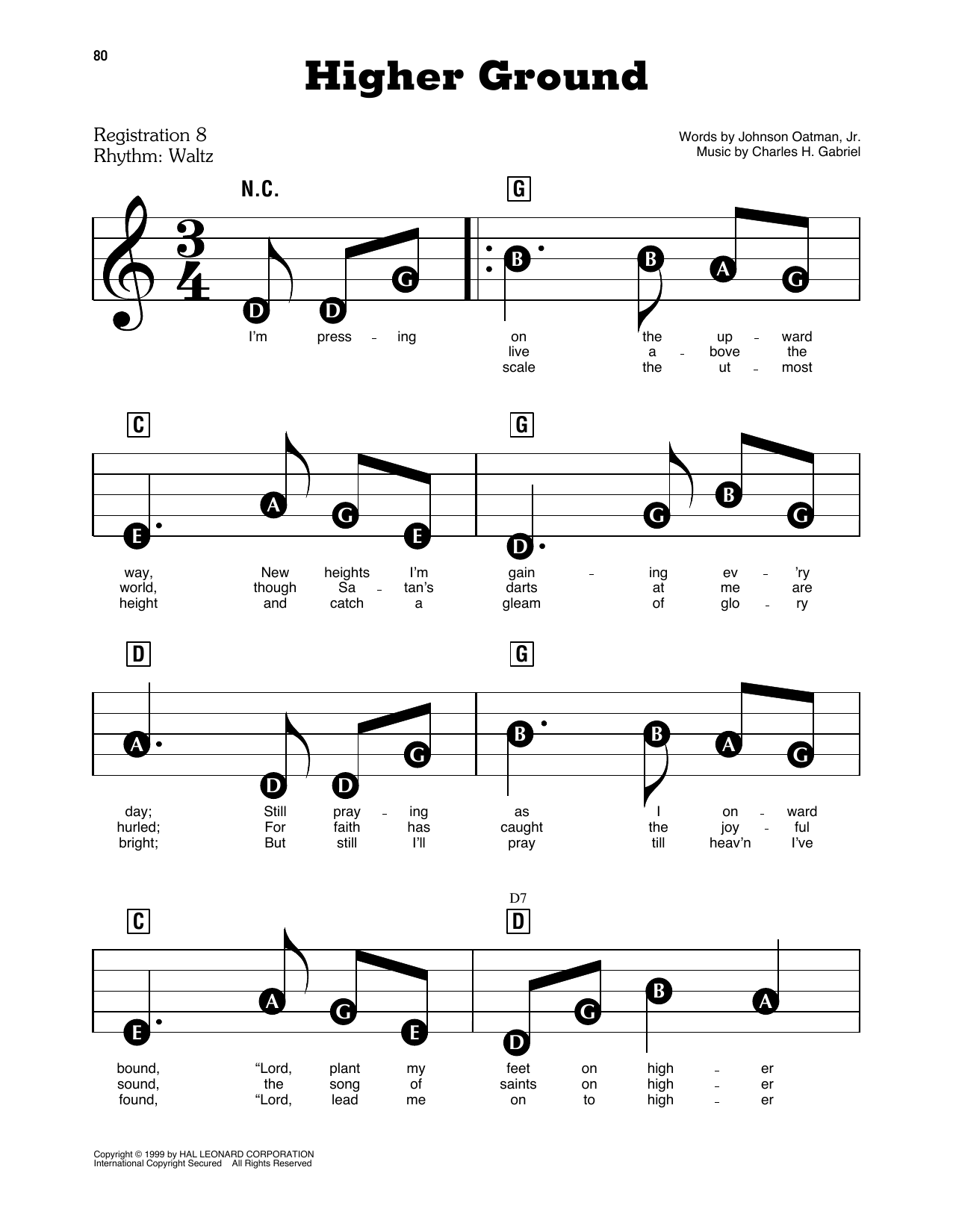
Higher Ground: E-Z Play Today

As performed by Johnson Oatman, Jr.

Item: 35-DS00449790

Digital Download
$4.99
Description

Higher Ground: E-Z Play Today isn't in MakeMusic Cloud just yet...but it could be. Let us know you'd like to see it, and you'll help shape what comes next. In the meantime, start a free trial and dive into thousands of interactive titles your students can play along with today.

Sample Audio
No sample audio found.
Sample Video
Additional Details
Publisher: Hal Leonard
Page Count: 2
SKU: 35-DS00449790

More about this title

About the Artist: Johnson Oatman, Jr.

Johnson Oatman, Jr. (1856–1922) was a prolific American hymn writer and composer who shaped Protestant sacred music during the late 19th and early 20th centuries. His compositions, including the enduring hymn "Count Your Blessings," reflect a gift for memorable melodies paired with spiritually direct texts that resonated across denominations and worship traditions.

Why we love this

This arrangement strips the hymn to its essential vocal melody and harmonic framework, making it accessible for pianists at all levels while preserving the uplifting character that has made this tune a cornerstone of American gospel music. The E-Z Play format honors the piece's democratic spirit without compromising its dignity.

What to expect

Steady, purposeful, and affirming. The melody carries an inherent optimism that invites reflection without demanding virtuosity. There is warmth in the harmonic support and a sense of forward motion that feels both restful and encouraging.

Who it's for

Church pianists, music directors seeking keyboard arrangements for congregational singing, and intermediate piano students exploring American sacred repertoire. This works equally well for solo performance or as accompaniment to vocalists and choir.

How to get the most out of it

  • Let the melody sing clearly by maintaining a steady, unhurried tempo that allows the text to land naturally with each phrase.
  • Balance the left hand accompaniment as genuine support rather than rhythmic filler; hymn accompaniment works best when it feels grounded and unhurried.
  • Find moments of gentle dynamic shape within each verse to sustain listener attention across multiple repetitions of the melody.

How to use it

Use this as a prelude or offertory in worship settings, or program it as a standalone piano piece in recitals featuring American hymn traditions. It also serves well as pedagogical material for students learning to accompany singers with sensitivity and clarity.

Skills your students will build

  • Playing hymn accompaniments with appropriate harmonic weight and pacing
  • Sight-reading simple figured bass and lead-sheet notation
  • Accompanying vocals while maintaining consistent rhythmic foundation
  • Interpreting and shaping melodic lines within sectional phrases

You May Also Like