
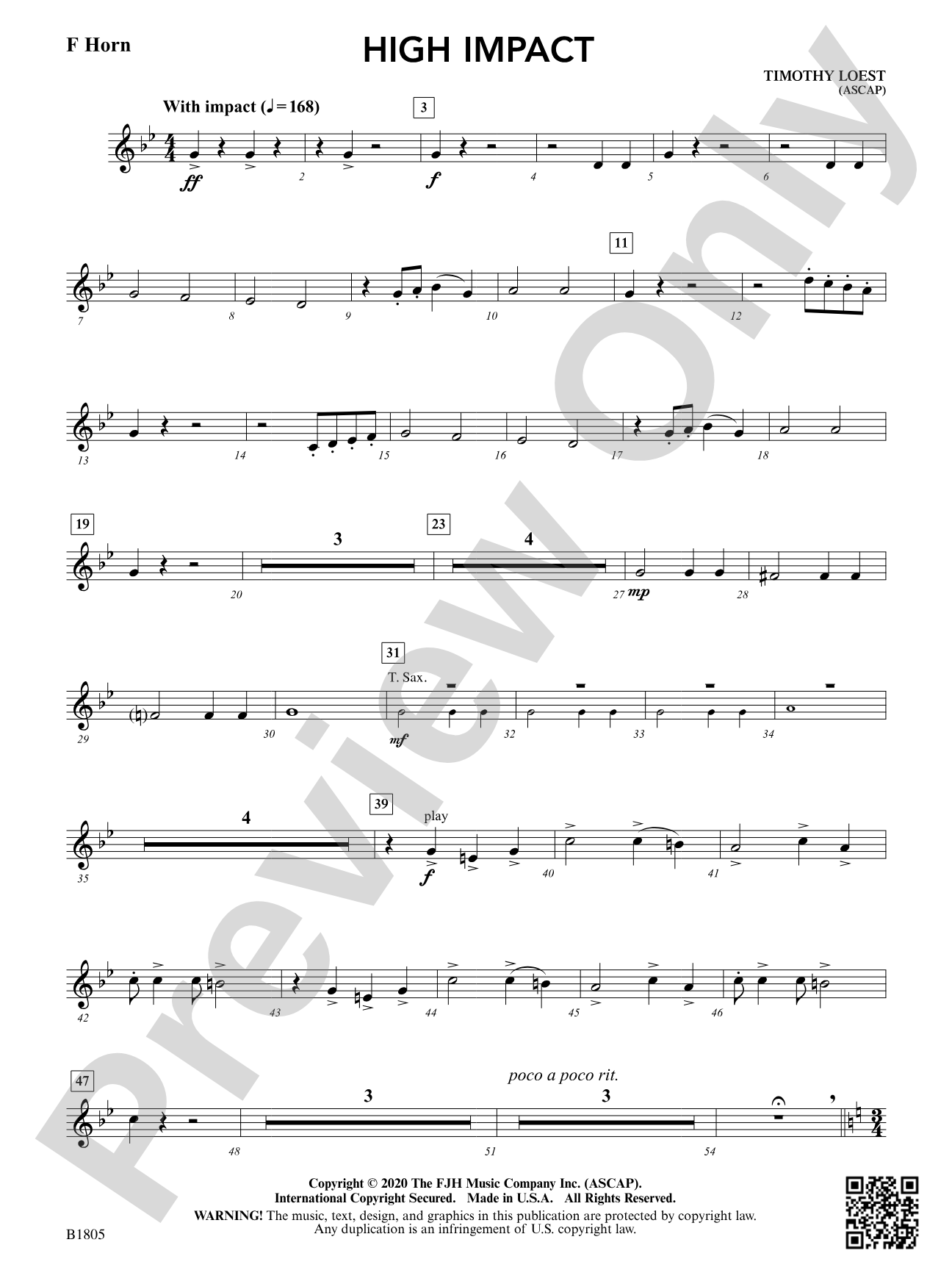

High Impact: F Horn
By Timothy Loest
Grade: 2
Item: 98-PC-DB1805_H1
$7.00
Pickup currently not available
Description
Hook your audience with this high impact, ear-catching thriller. Explosive, fast-paced themes are juxtaposed with slower, dreamlike material in this incredibly approachable work. A perfect concert opener, this work is equally suited to close out any performance. Defiantly bold with an unforgettable, cinematic sound!


High Impact: F Horn isn't in MakeMusic Cloud just yet...but it could be. Let us know you'd like to see it, and you'll help shape what comes next. In the meantime, start a free trial and dive into thousands of interactive titles your students can play along with today.
Request This Title
Tell us you want it.
Start Your Free Trial
Explore everything that's ready to play right now.
Sample Audio
1
Audio File
--:--
0:00
0:00
Sample Video
Additional Details
Series:
FJH Young Band
Publisher:
The FJH Music Company, Inc.
SKU:
98-PC-DB1805_H1
More about this title
About the Composer: Timothy Loest

Timothy Loest brings three decades of classroom experience to every composition he writes. His works for young band reach performers across the globe, and his contributions to music education extend far beyond the concert stage; he has shaped pedagogical approaches through collaborations on best-selling method series including Measures of Success and Warm-ups and Beyond. In 2017, his composition Cloud Gate drew over 5,000 listeners at Chicago's Millennium Park, and that same year he received the Illinois Grade School Music Association's Cloyd Myers Memorial Award for Excellence in Music Education.
Loest's music has crossed into popular media, appearing on network television programs from The Tonight Show Starring Jimmy Fallon to Good Morning America. He earned his Bachelor of Music Education degree with high honors from Illinois State University and his Master of Music degree from Northwestern University, and he founded Fanfare Music Press in 2022 to publish compositions and arrangements of the highest caliber for band. ASCAP member and frequent commission composer, Loest continues to write with deep understanding of what young musicians need to grow as artists and ensemble members.
Why we love this
This is Loest at his most cinematically minded. High Impact delivers exactly what concert programming demands at the Grade 2 level: music that grabs ears instantly and sustains interest through smart contrast. The juxtaposition of explosive themes against slower, atmospheric passages gives your band genuine dramatic range without requiring advanced technical chops, making it an ideal closer that audiences actually remember leaving the concert hall.
What to expect
High Impact moves between two distinct musical worlds. The explosive passages crackle with forward momentum and urgency; the slower sections drift into something almost hypnotic, creating space and atmosphere. Together, they build a thrilling sense of dramatic tension that feels sophisticated and contemporary, yet remains within reach of developing musicians.
Who it's for
Concert band directors seeking a showstopping opener or closer for Grade 2 ensembles. This work suits festival and contest contexts equally well, and it gives young musicians a genuine taste of modern cinematic writing without overwhelming technical demands.
How to get the most out of it
- Let the explosive sections breathe. These fast-paced themes need air and separation from the slower material to land their full impact; resist the urge to rush through transitions.
- Shape the dreamlike passages with dynamic restraint and sensitive voice leading. This slower music earns its power through clarity and focus, not volume.
- Use the conductor score to map the dramatic arc clearly for your ensemble. Loest's juxtaposition is intentional, so marking rehearsal spots and section transitions helps musicians understand the architecture.
- Balance the cinematic quality with your band's technical abilities. Emphasize precision and ensemble blend over pushing for complexity; Grade 2 players will deliver impact through unity and confidence.
How to use it
Open your concert with this piece to establish energy and command attention from the first downbeat. Alternatively, close a program with it to leave your audience with memorable, cinematic impact. Either way, position it where you want the strongest statement. The balanced technical demands make it an excellent vehicle for demonstrating what your program can achieve across a range of musical styles.
Skills your students will build
- Contrast and dynamic shaping between fast and slow material
- Ensemble precision at varied tempos and articulations
- Reading cinematic musical language and dramatic arc
- Balancing technical demands with expressive storytelling