High Flying: 1st Violin Sheet Music Preview

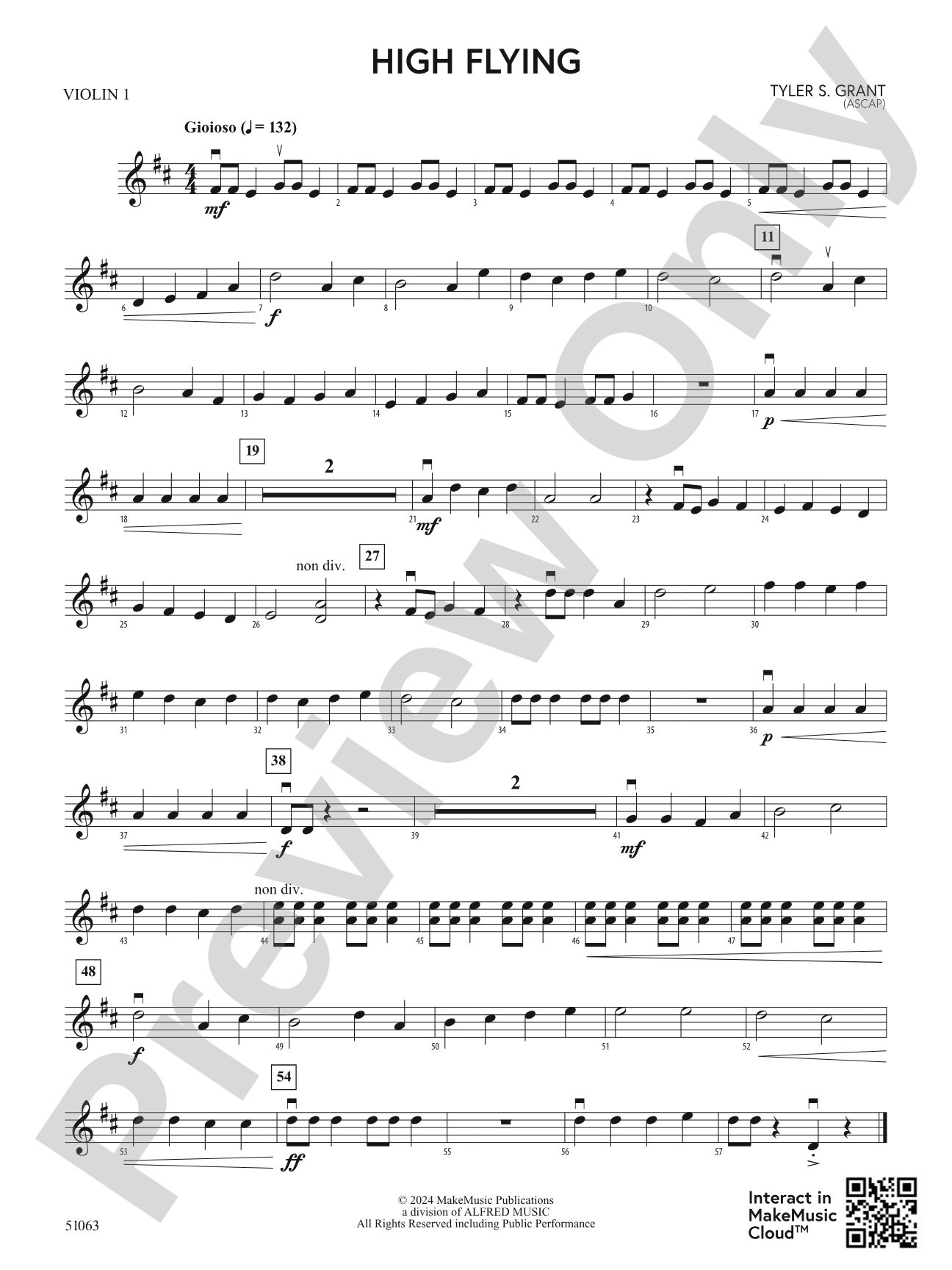
High Flying: 1st Violin

By Tyler S. Grant

Grade: 1

Item: 00-PC-0019261_VN1

Digital Download
$3.00
Description
Embrace the feeling of gliding through the clear blue skies in this riveting work by Tyler S. Grant! High Flying features sweeping melodic lines that convey freedom and weightlessness while a powerful rhythmic ostinato provides boundless energy and excitement. A great work to showcase your developing students! (1:45)

Don't just read it, hear it, play along with it, and watch your students grow with it. In MakeMusic Cloud, High Flying: 1st Violin comes alive with professional accompaniment, adjustable tempo, and built-in practice tools that turn solo practice into real progress.

Sample Audio
0:00
0:00
Sample Video
Additional Details
Series: MakeMusic Developing Strings
Publisher: MakeMusic Publications
SKU: 00-PC-0019261_VN1

More about this title

About the Composer: Tyler S. Grant

Tyler S. Grant

Tyler S. Grant has built a prolific career as a composer, arranger, and conductor whose music appears regularly on all-state and honor ensemble programs across North America. His works have been performed at prestigious venues including Carnegie Hall, The Midwest Clinic, and the Macy's Thanksgiving Day Parade, and his composition Panoramic Fanfare won the Dallas Wind Symphony's 2014 "Call for Fanfares" Competition.

Beyond the concert hall, Grant maintains an active schedule as a clinician and guest conductor, having worked with over 100 school instrumental music programs across 15 states. He holds a bachelor's degree in instrumental music education from the University of Alabama, where he studied conducting with Professor Randall Coleman, and has contributed to multiple educational publications and podcasts on music pedagogy and repertoire.

Why we love this

Grant crafts an effortless melodic narrative that works beautifully at Grade 1 without sacrificing musical substance. The pairing of soaring lines with driving rhythmic momentum gives developing orchestras a genuine sense of accomplishment and musical purpose, making this an excellent choice for building ensemble confidence alongside technical growth.

What to expect

High Flying captures the exhilaration of unrestricted movement through space. Sweeping violin lines drift and soar while a relentless rhythmic pulse keeps the energy aloft, creating a work that feels both free-floating and driven, like the thrill of catching an updraft.

Who it's for

Grade 1 string orchestras and developing string programs looking for repertoire that sounds mature and engaging. This work suits ensembles ready to balance multiple musical textures and explore larger-scale phrasing without overwhelming technical demands.

How to get the most out of it

  • Balance the sweeping melodic lines by having first violins lead with a singing tone while second violins and violas provide gentle harmonic support, allowing the main voice to float naturally.
  • Lock in the rhythmic ostinato across the lower voices and cellos so the energy feels propulsive rather than choppy; this foundation lets the melody soar above it.
  • Shape the phrasing in longer arcs rather than stopping at barlines; this reinforces the sensation of flight and weightlessness that defines the piece.
  • Draw out dynamic contrasts subtly to avoid dragging the pulse; the feeling of freedom comes from maintaining forward motion even at softer dynamics.

How to use it

Position this as a centerpiece for a concert exploring nature or flight themes, or use it as a spring festival selection where its uplifting character and accessible difficulty level create a memorable moment. The 1:45 duration makes it ideal for pacing a longer concert program or fitting easily into a multi-piece student showcase.

Skills your students will build

  • Sustaining long melodic lines with consistent tone and vibrato
  • Coordinating rhythmic ostinatos across multiple voice parts
  • Balancing melody and accompaniment textures
  • Shaping larger musical phrases and arcs
  • Maintaining ensemble rhythmic stability under changing dynamics

You May Also Like