
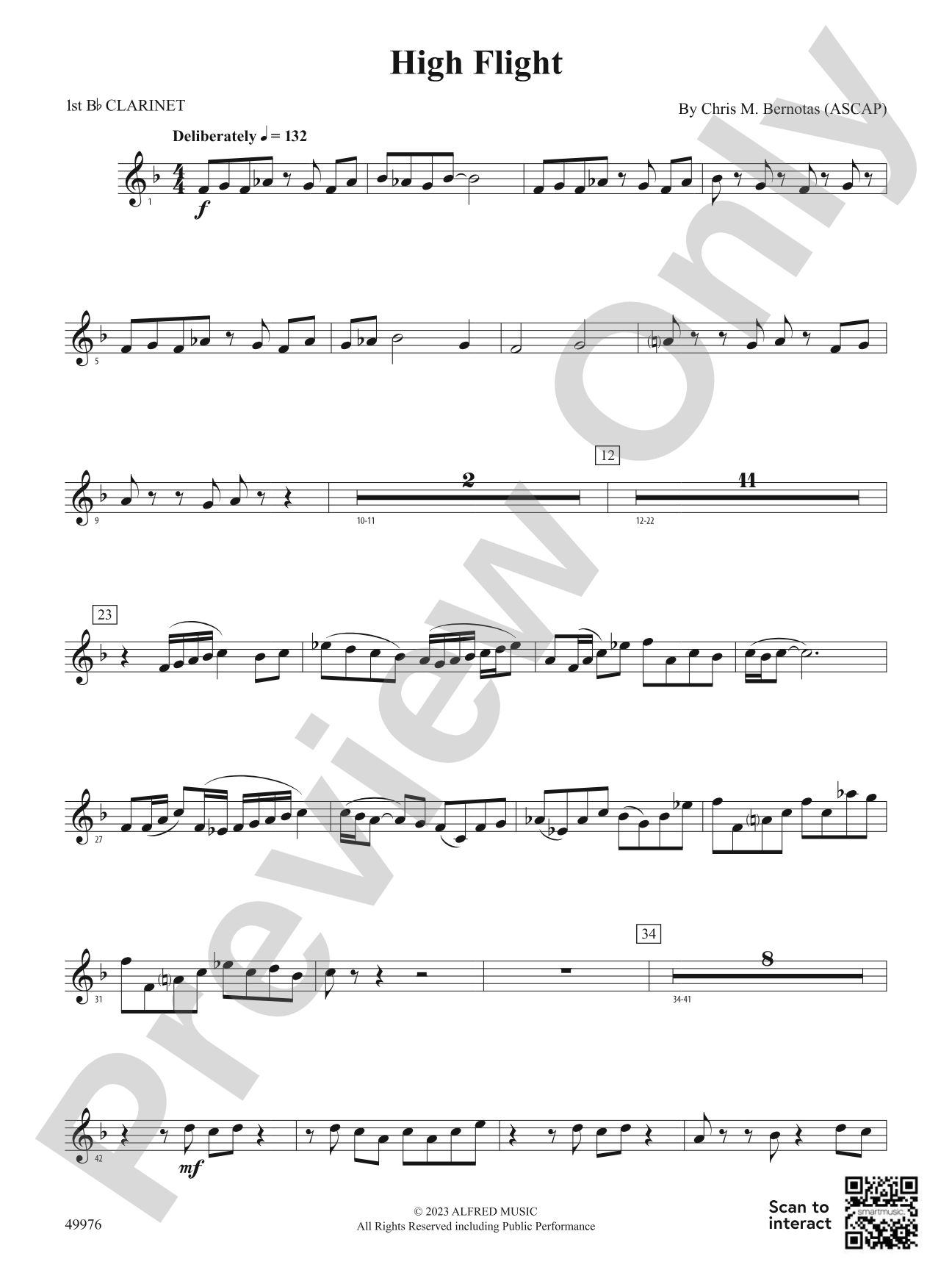

High Flight: 1st B-flat Clarinet
By Chris M. Bernotas
Grade: 3
Item: 00-PC-0019038_C1
$3.00
Pickup currently not available
Description
This exciting overture by Chris M. Bernotas shares a title with the poem that inspired it, High Flight. The poem by John Gillespie Magee embodies the spirit to explore and dance freely in the sky. This piece offers students many musical opportunities and challenges and is the perfect selection for a contest, concert opener, or closer. (3:50)


Don't just read it, hear it, play along with it, and watch your students grow with it. In MakeMusic Cloud, High Flight: 1st B-flat Clarinet comes alive with professional accompaniment, adjustable tempo, and built-in practice tools that turn solo practice into real progress.
Open in the Player
Jump straight in and assign it today.
Start Your Free Trial
Open this title and explore the full library in minutes.
Sample Audio
1
Audio File
--:--
0:00
0:00
Sample Video
Additional Details
Series:
Young Symphonic
Publisher:
Alfred Music
SKU:
00-PC-0019038_C1
More about this title
About the Composer: Chris M. Bernotas

Chris M. Bernotas brings over 25 years of experience as a composer, conductor, and music educator to his work with bands and orchestras. Currently serving as Director of Instrumental Publications for Alfred Music, he has shaped music education resources used by programs across the globe. His compositions balance accessibility with musical substance, making them equally valuable in the rehearsal room and on the concert stage.
Bernotas draws his compositional voice from direct classroom experience. He has worked extensively with student ensembles at all levels and regularly serves as guest conductor and clinician for honor groups and workshops. This foundation in pedagogy means his scores address real teaching challenges while demanding genuine musicianship from performers. He has co-authored multiple educational resources including the Sound Innovations and Sound Artistry series, reinforcing his commitment to materials that serve both teacher and student.
Why we love this
Bernotas has crafted an overture that delivers on multiple fronts: it opens or closes a concert with immediate impact, it engages students with a literary foundation (Magee's poem), and it offers legitimate musical challenges without overwhelming a Grade 3 ensemble. The programmatic approach gives directors a natural talking point about music and text while keeping the score playable and rewarding.
What to expect
High Flight captures the exhilaration and freedom evoked by Magee's poem about flight. The music dances through its three-minute-fifty-second span with bright orchestration and moments of soaring lyricism, mixing excitement with breathing room. It conveys upward motion and expansive joy without losing the emotional depth that makes the text memorable.
Who it's for
Grade 3 concert bands seeking a repertoire piece that works equally well as a contest selection or concert feature. Directors who want their students to engage with an actual literary source and experience how music can interpret text will find this overture a strong choice. Ensembles looking for an opener or closer that makes a strong musical statement without excessive difficulty will benefit from Bernotas's clear writing and structured design.
How to get the most out of it
- Build clarity in the opening material before adding layered countermelody; students will hear the architecture better when each voice establishes its own line confidently.
- Use the 3:50 duration as a rehearsal benchmark; if sections are dragging noticeably past this timing, tighten transitions and tempo relationships rather than pushing individual passages faster.
- Balance the lyrical moments against the energetic sections by ensuring sustained tones don't lose forward momentum; breath management across phrases will prevent the piece from feeling static.
How to use it
This overture serves perfectly as a concert opener, immediately energizing the audience and the ensemble. It also works well as a closing piece that leaves listeners with a sense of achievement and forward momentum. Consider pairing it with slower, more introspective selections to create program contrast, or use it as the anchor selection in a contest program where you need a strong, confident opener.
Skills your students will build
- Phrasing and legato playing across varied articulations
- Balancing multiple melodic lines in a mixed texture
- Maintaining steady pulse through tempo and style shifts
- Dynamic control in lyrical sections
- Ensemble entrances and transitions