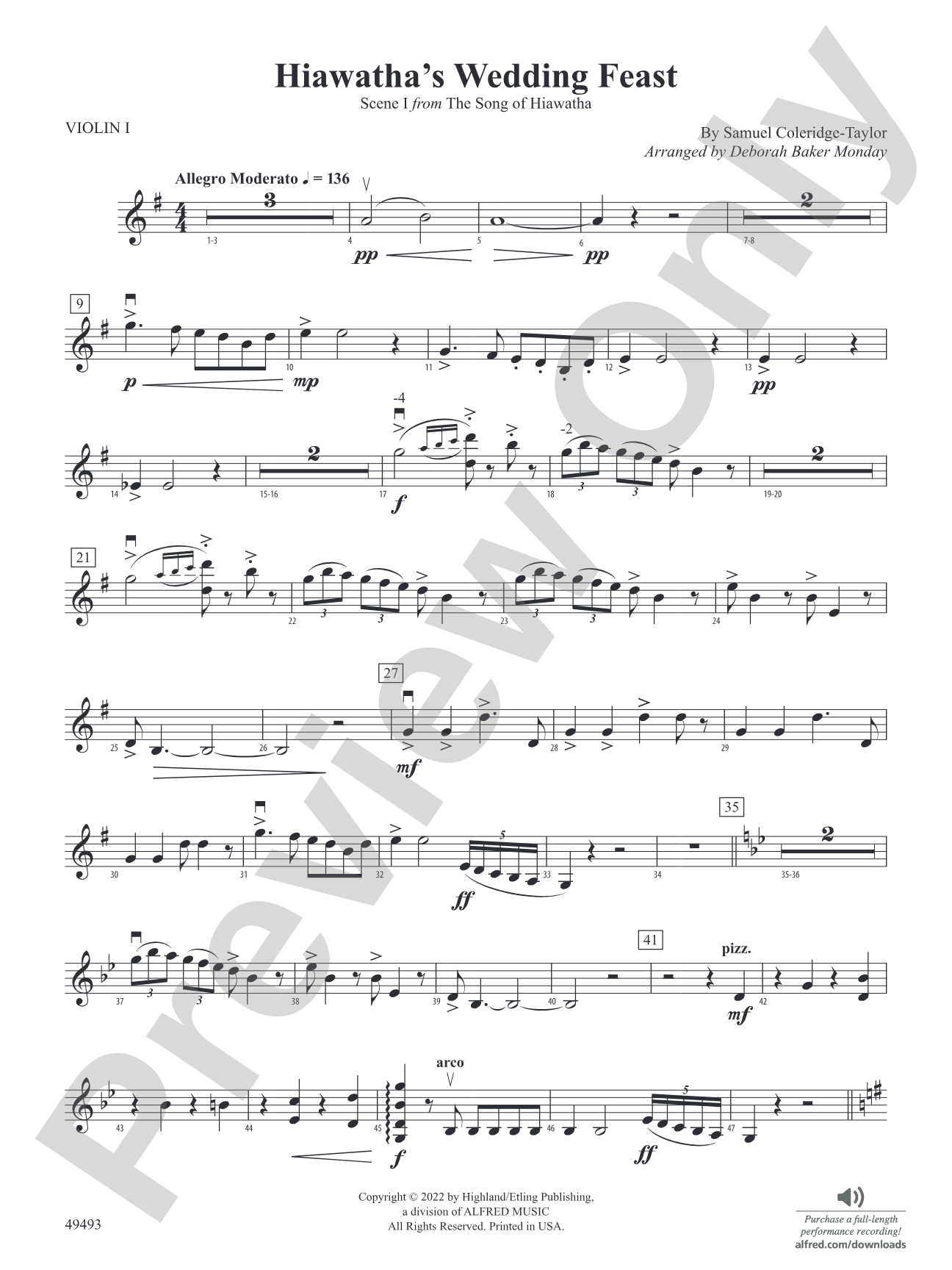
Hiawatha's Wedding Feast: 1st Violin Sheet Music Preview

Hiawatha's Wedding Feast: 1st Violin

Scene I from The Song of Hiawatha

By Samuel Coleridge-Taylor / arr. Deborah Baker Monday

Grade: 3

Item: 00-PC-0018867_VN1

Digital Download
$5.99
Description
This stunning arrangement of Hiawatha's Wedding Feast by Deborah Baker Monday brings the music of Samuel Coleridge-Taylor to your string orchestra. Appropriately and brilliantly scored, your students will be challenged as they learn this wonderful work, based on Longfellow's epic poem, "The Song of the Hiawatha." (4:00)

The PerformancePlus+ series is an innovative addition to the ever-expanding MakeMusic Cloud interactive library. These engaging selections are presented with educational resources designed to enrich the rehearsal process and create outstanding performances. Including:
  • Assignment, recording, and assessment tools within MakeMusic Cloud
  • Piece-specific exercises focused on skills and techniques
  • Educational tips and suggestions to support learning

Available in print and digital formats.

Don't just read it, hear it, play along with it, and watch your students grow with it. In MakeMusic Cloud, Hiawatha's Wedding Feast: 1st Violin comes alive with professional accompaniment, adjustable tempo, and built-in practice tools that turn solo practice into real progress.

Sample Audio
0:00
0:00
Sample Video
Additional Details
Series: Highland/Etling String Orchestra - PerformancePlus+
Publisher: Alfred Music
SKU: 00-PC-0018867_VN1

More about this title

About the Composer: Samuel Coleridge-Taylor

Samuel Coleridge-Taylor (1875-1912) was a British composer of mixed heritage whose work bridged the Victorian and early modern eras. Though his life was cut short at thirty-seven, he left behind a substantial catalogue of orchestral, choral, and chamber music that earned him international recognition and performances across Europe and North America. His gifts for melody and orchestration made him a commanding figure in British concert life, and educators continue to program his arrangements and original works because they combine musical substance with accessibility.

Why we love this

Deborah Baker Monday's arrangement captures the grandeur of Coleridge-Taylor's score while remaining well-suited to developing string orchestras. The piece sits at Grade 3 with enough musical sophistication to feel like a real masterwork, not a simplified version. Programming it signals to students that they're tackling literature that matters.

What to expect

Lyrical and stately, with moments of ceremony and brightness that reflect the wedding celebration at the poem's heart. The orchestration draws rich colors from the string section, creating an intimate yet grand sound that feels both Romantic and distinctly British.

Who it's for

String orchestra programs at the intermediate level seeking substantial repertoire that challenges students without overwhelming them. Directors building concert programs that include literary connections will appreciate the Longfellow connection and the storytelling potential of the work.

How to get the most out of it

  • Shape the melodic lines with long-breathed phrasing; resist the urge to chop at bar lines, especially in the sustained singing passages that anchor the work.
  • Balance tutti moments carefully so that inner voices remain audible and the texture stays transparent rather than muddy, which is essential at this orchestration level.
  • Use the PerformancePlus+ exercises to isolate any rhythmic or intonation challenges before full rehearsal, then return to the full score with greater confidence.

How to use it

This works beautifully as a feature piece on a concert exploring narrative and program music, paired with other literary-inspired works. At just over four minutes, it's substantial enough to anchor the first half of a program without requiring an extended rehearsal time commitment.

Skills your students will build

  • Sustained legato playing across multiple measures
  • Ensemble balance and transparency in multi-voiced textures
  • Reading and executing articulation markings that shape phrasing
  • Intonation in slower tempos and sustained passages
  • Historical awareness of British Romantic-era orchestration

You May Also Like