Hey, Big Daddy (Junior's Aria) Sheet Music Preview

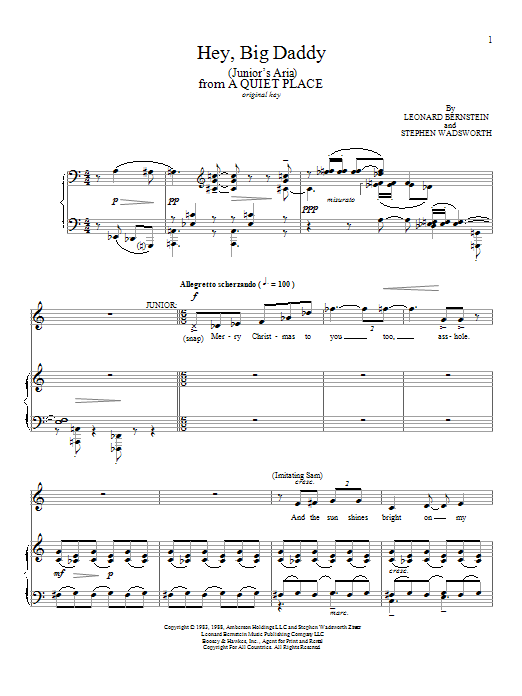
Hey, Big Daddy (Junior's Aria): Piano Vocal

As performed by Leonard Bernstein / As performed by Stephen Wadsworth Zinsser

Item: 35-DS00249214

Digital Download
$5.99

One moment…

One moment…

Description

Hey, Big Daddy (Junior's Aria): Piano Vocal isn't in MakeMusic Cloud just yet...but it could be. Let us know you'd like to see it, and you'll help shape what comes next. In the meantime, start a free trial and dive into thousands of interactive titles your students can play along with today.

Sample Audio
No sample audio found.
Sample Video
Additional Details
Publisher: Hal Leonard
Page Count: 6
SKU: 35-DS00249214

More about this title

About the Artist: Leonard Bernstein

Leonard Bernstein (1918–1990) reshaped American musical theater by bringing symphonic ambition and harmonic sophistication to the Broadway stage. His works demand singers who can navigate complex vocal writing with theatrical commitment, making his scores essential training ground for serious vocalists.

Why we love this

Bernstein's vocal writing here sits at the intersection of operatic legit singing and character work, giving singers material that builds real technique while staying dramatically alive. The piano part is thoroughly composed rather than accompanying, creating a genuine partnership between singer and pianist that makes rehearsals genuinely collaborative.

What to expect

Intimate and searching, with the kind of harmonic sophistication that makes you listen closely to every note. Bernstein's orchestral sensibility translates into a piano part that's lush but never overwhelming, creating space for the voice to project intention.

Who it's for

Vocalists preparing audition material or performance pieces who want music that challenges both their technique and their dramatic instincts. Voice teachers looking for contemporary classical repertoire that builds legit singing skills within theatrical context.

How to get the most out of it

  • Shape the phrasing through the harmonic rhythm rather than just the lyrical melody; Bernstein's voice leading rewards singers who listen to what the piano is doing underneath.
  • Approach the text with specificity about Junior's emotional state. Character clarity will help you navigate the vocal demands without overextending.
  • Coordinate with your pianist on the tempo relationships between sections. The accompaniment contains important structural markers that anchor the vocal line.

How to use it

Include this on a recital alongside other American art song and musical theater standards to show a singer's range across genres. It works particularly well in a program exploring contemporary approaches to character singing or in a concert celebrating American composers.

Skills your students will build

  • navigating complex harmonic progressions written for voice
  • coordinating dramatic intention with sustained vocal technique
  • reading and responding to sophisticated piano accompaniment
  • balancing legit classical technique with theatrical character work

You May Also Like