
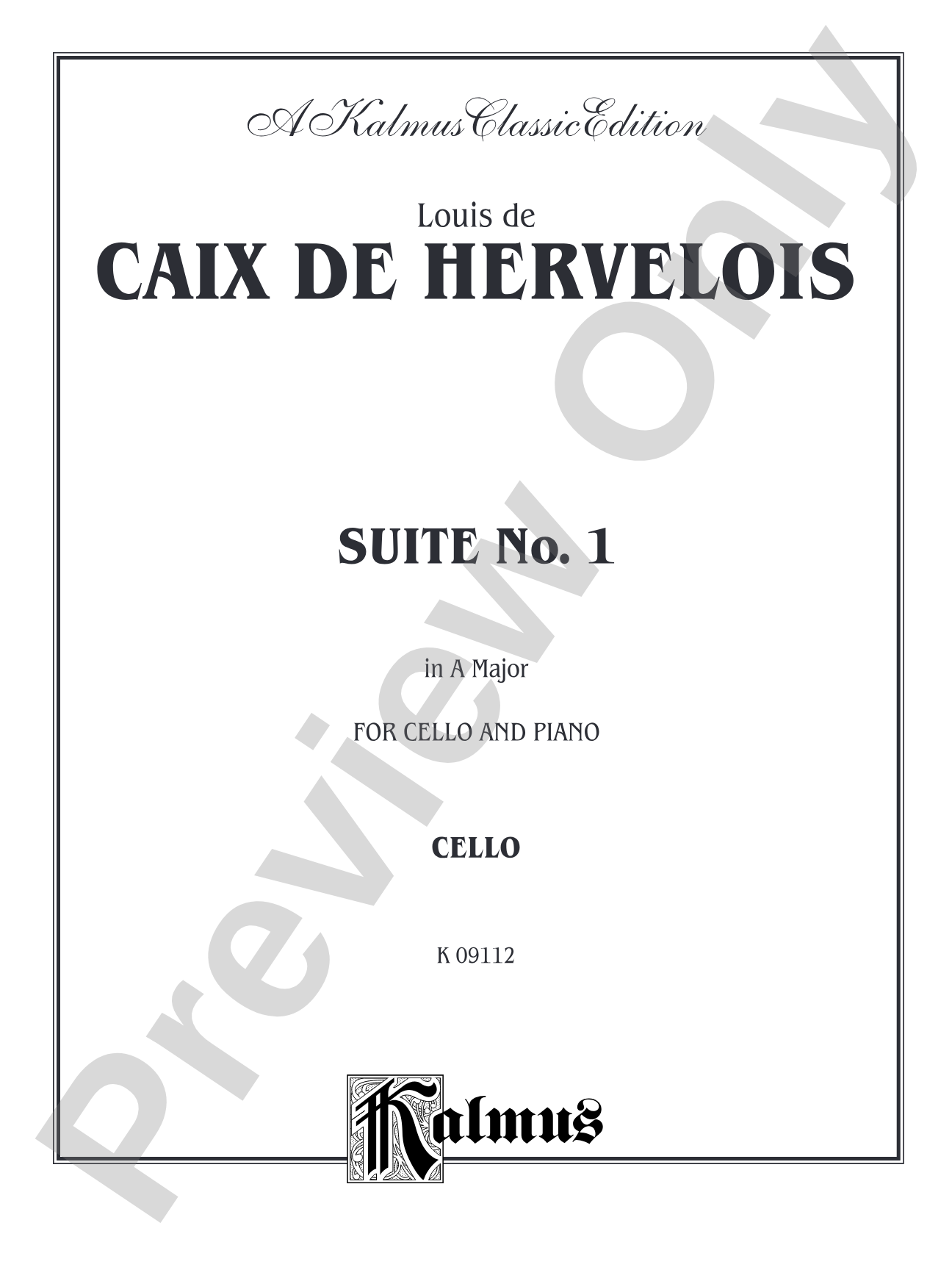
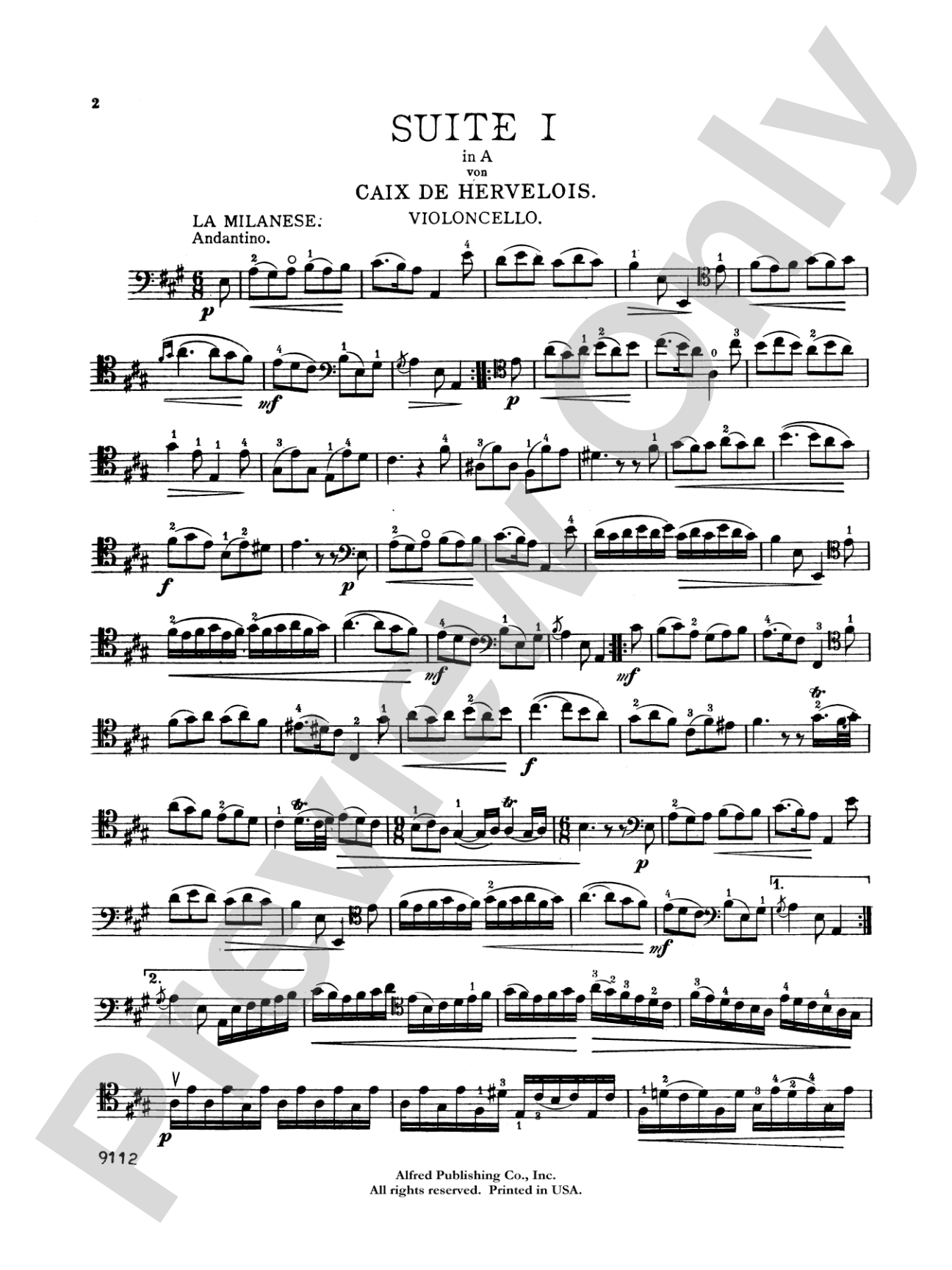
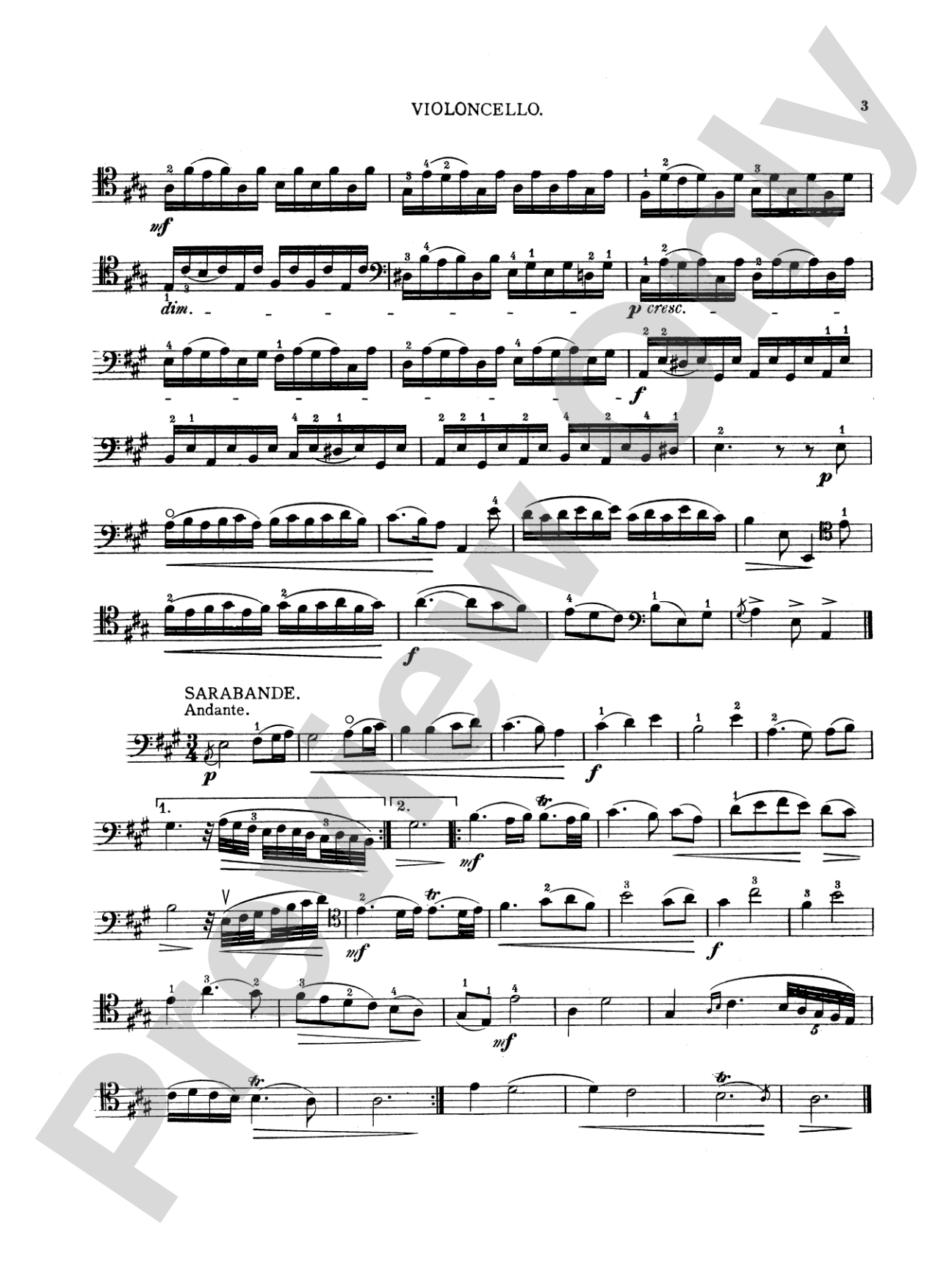
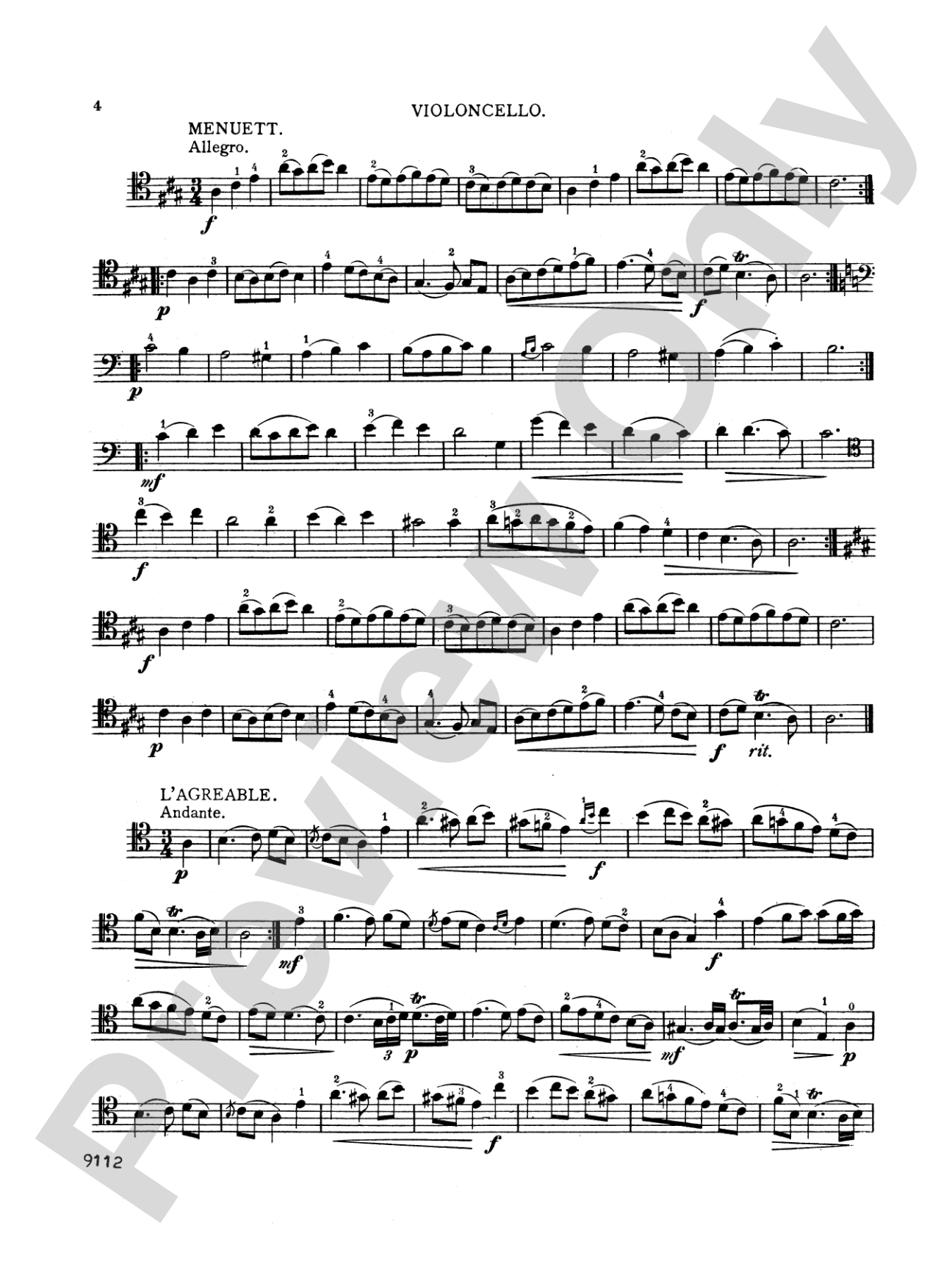
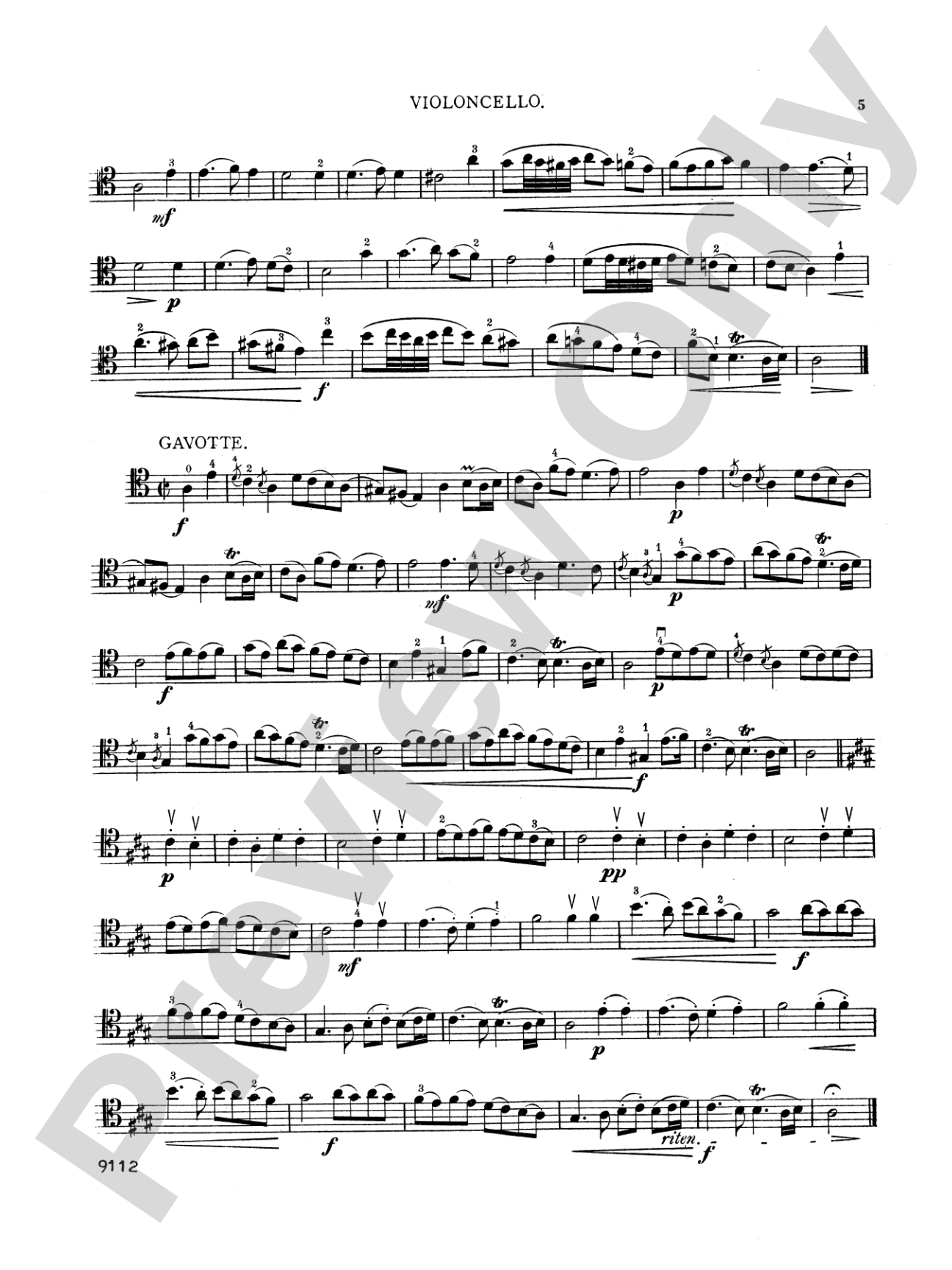




Hervelois: Suite No. 1 in A Major: Cello
By Louis de Caix de Hervelois
Item: 00-PK-0003686

$9.99
Pickup currently not available
Buy Extra Parts (Digital PDF Download)
| Product | Price | Quantity |
|---|---|---|
| Hervelois: Suite No. 1 in A Major | $3.99 | |
| Hervelois: Suite No. 1 in A Major | $3.99 |
Parts Added to Cart!
Related Items
Suite No. 1 in A Major: Cello |
$9.95
|
View |
Description


Don't just read it, hear it, play along with it, and watch your students grow with it. In MakeMusic Cloud, Hervelois: Suite No. 1 in A Major: Cello comes alive with professional accompaniment, adjustable tempo, and built-in practice tools that turn solo practice into real progress.
Open in the Player
Jump straight in and assign it today.
Start Your Free Trial
Open this title and explore the full library in minutes.
Sample Audio
No sample audio found.
Sample Video
No sample videos found.
Additional Details
Series:
Kalmus Edition
Publisher:
Alfred Music
Page Count:
24
SKU:
00-PK-0003686
More about this title
About the Composer: Louis de Caix d'Hervelois
Louis de Caix d'Hervelois (1670-1760) was a French Baroque composer and viol player whose sophisticated chamber works earned him recognition across Europe. Active in Paris during the reign of Louis XIV, he composed primarily for strings and keyboard, contributing significantly to the development of the French suite and dance forms that defined the late Baroque aesthetic.
Why we love this
This suite sits at the sweet spot between accessible Baroque writing and genuine musical substance. The individual movements offer cellist and pianist alike the chance to explore French style without the interpretive complexity of more demanding Baroque sonatas, making it ideal for advancing students who want to sound accomplished without drowning in technical difficulty.
What to expect
Elegant and refined, with the courtly grace characteristic of French Baroque music. The writing emphasizes melodic beauty and formal clarity, inviting players into the world of 18th-century salon music where refinement and ornament serve the underlying harmonic architecture.
Who it's for
This suite works well for intermediate to advanced cellists preparing for recitals, contests, or festivals where Baroque repertoire is featured or valued. It also suits cellists exploring French Baroque styles or building a recital program that spans multiple eras and national traditions.
How to get the most out of it
- Shape phrases with gentle dynamic inflection rather than dramatic contrast; the French suite tradition favors clarity of line over bold expression.
- Work out the rhythmic feel of any dance movements (likely allemande, courante, sarabande, or gigue) with your pianist before rehearsing full tempo; style depends on rhythmic precision and ensemble cohesion.
- Balance the cello's melodic voice against the keyboard part; Baroque accompaniments often carry structural weight, not simply fill in harmony.
- Attend to articulation consistency between printed bowings and the pianist's note articulation so the ensemble reads as unified.
How to use it
Program this as a complete four-movement or multi-movement suite in a recital setting, or select individual movements to pair with works from other eras. It also programs well alongside other French Baroque chamber works or as a bridge piece in concerts that move between Renaissance and Classical repertoire.
Skills your students will build
- Baroque style and ornamentation practices in French tradition
- Sustained legit melodic playing with fine dynamic control
- Coordination with keyboard accompaniment in a formal suite structure
- Reading and interpreting period-appropriate articulation and bowing marks
- Awareness of dance forms and their characteristic rhythmic profiles