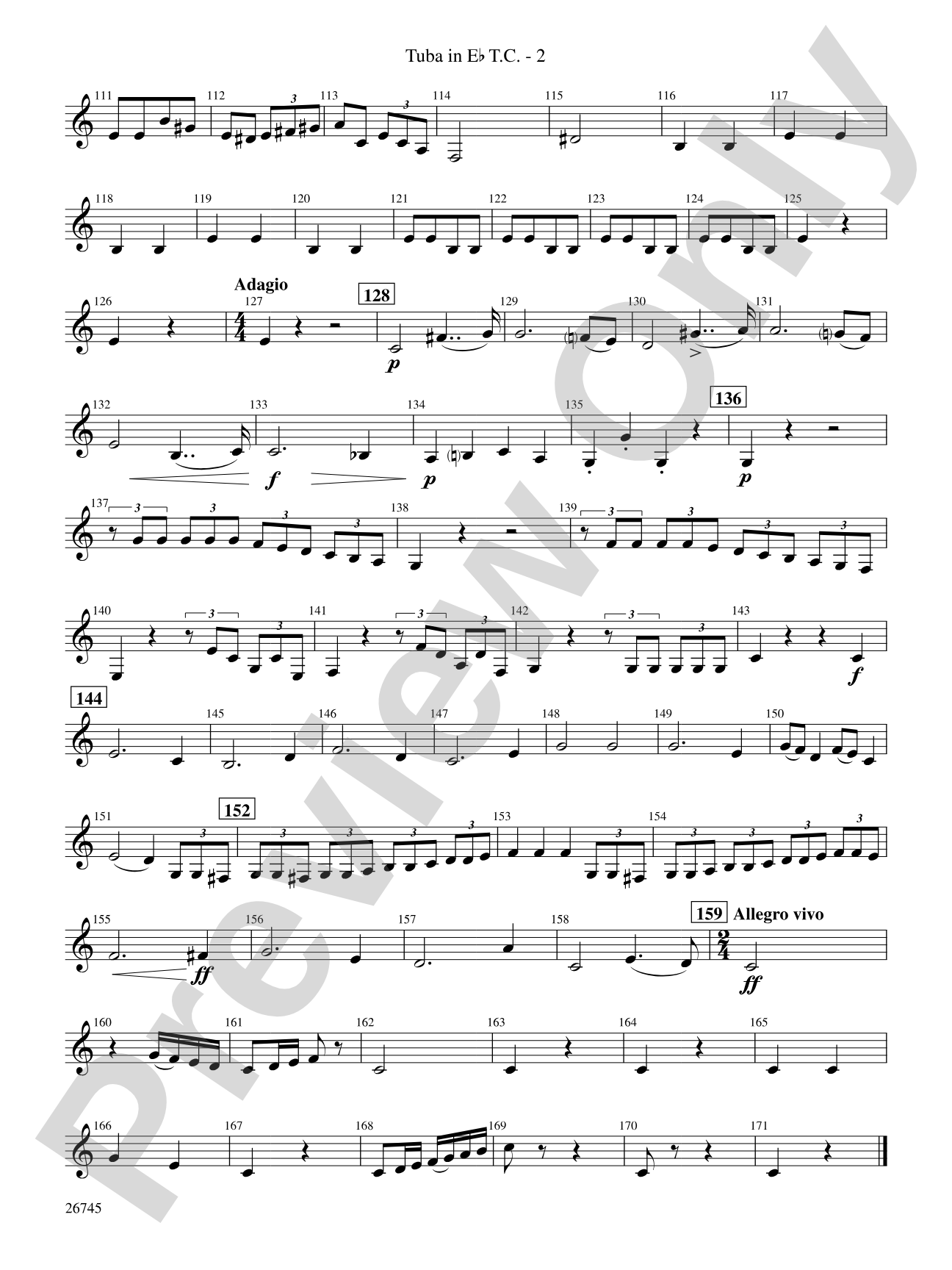
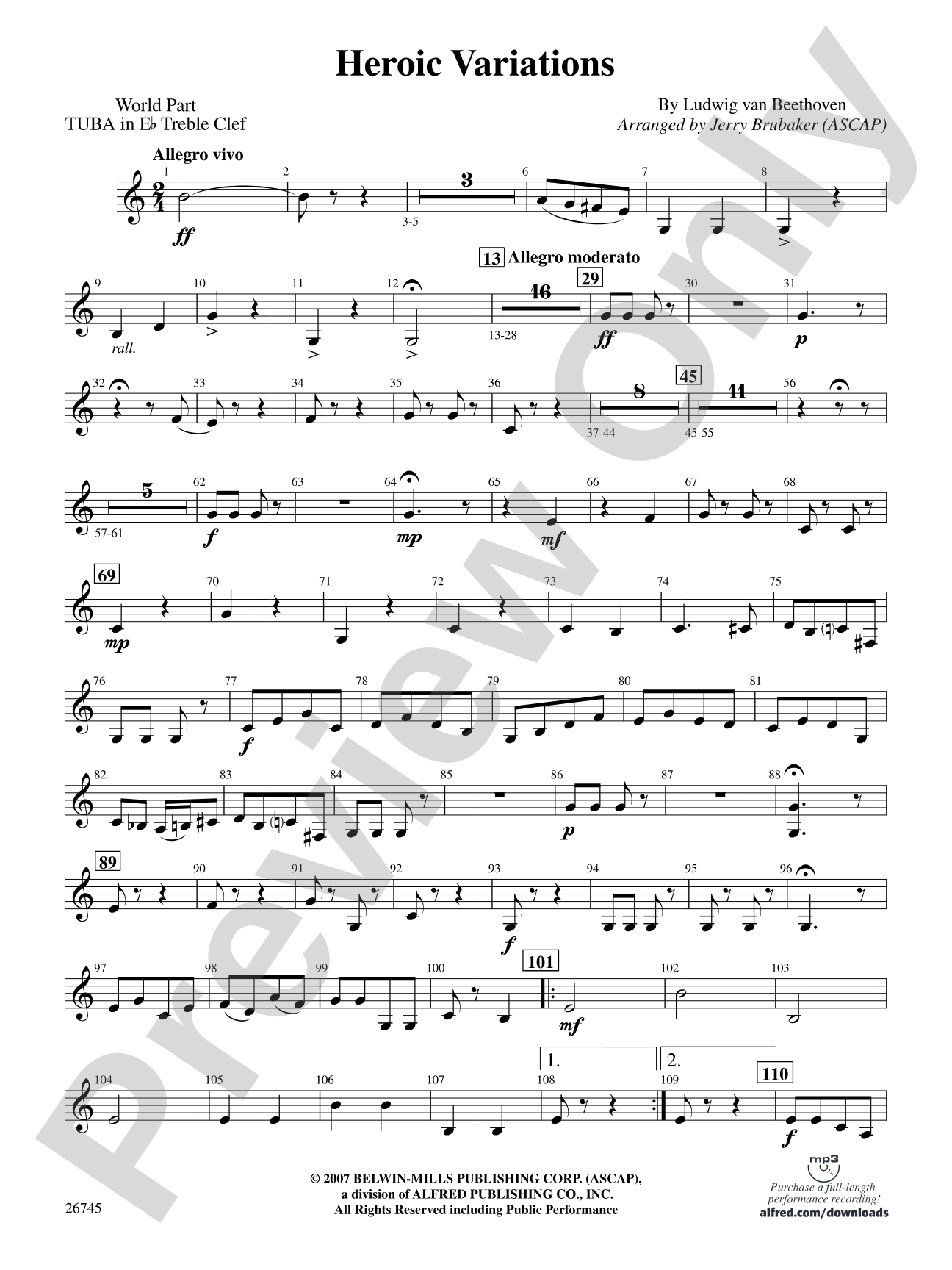
Heroic Variations: (wp) E-flat Tuba T.C. Sheet Music Preview

Heroic Variations: (wp) E-flat Tuba T.C.

By Ludwig van Beethoven / arr. Jerry Brubaker

Grade: 3 (Medium Easy)

Item: 00-PC-0001207_wpTBETC

Digital Download
$3.00
Description
From one of Beethoven's most famous works, Eroica Symphony, this arrangement has been crafted by Jerry Brubaker at the concert level. This work is a wonderful addition to the repertoire, permitting the opportunity to introduce the classical style to your ensemble. A grandiose musical statement! This title is available in MakeMusic Cloud.

Don't just read it, hear it, play along with it, and watch your students grow with it. In MakeMusic Cloud, Heroic Variations: (wp) E-flat Tuba T.C. comes alive with professional accompaniment, adjustable tempo, and built-in practice tools that turn solo practice into real progress.

Sample Audio
0:00
0:00
Sample Video
Additional Details
Series: Belwin Concert Band
Publisher: Alfred Music
Page Count: 175
SKU: 00-PC-0001207_wpTBETC

More about this title

About the Composer: Ludwig van Beethoven

Ludwig van Beethoven (1770-1827) stands as the bridge between Classical and Romantic music, a composer whose works redefined what instrumental music could express. His symphonies expanded the orchestra's emotional range and structural possibilities, establishing templates that influenced generations of composers. For music educators, Beethoven represents the pinnacle of craft: rigorous formal structure paired with profound artistic vision, making his works essential touchstones in any serious ensemble's development.

Why we love this

This arrangement opens the Eroica Symphony to concert bands at a Grade 3 level, making one of the Romantic era's most significant works accessible without sacrificing its architectural integrity. Jerry Brubaker's skillful scoring preserves Beethoven's heroic themes and developmental logic while sitting comfortably within the technical and musical reach of advancing ensembles. Programming this signals to your audience and students that classical mastery belongs in concert band repertoire.

What to expect

Dignified and purposeful. The opening theme announces itself with quiet determination, gradually gathering weight and conviction as it unfolds. Energy pulses beneath the surface even in softer passages; this is music about human striving and heroic resolve, voiced through Beethoven's gift for making simple gestures carry tremendous weight.

Who it's for

Conductors leading mid-level concert bands ready to engage with major Classical and Romantic works. This arrangement serves ensembles with solid fundamentals who want to expand their musical vocabulary beyond Grade 3 novelty pieces and experience the formal rigor that defines European concert music tradition.

How to get the most out of it

  • Shape the primary theme with long, sustained lines in the brass and woodwinds; resist the impulse to overarticulate Beethoven's stately rhythms.
  • Balance the texture carefully during thematic exchanges between sections. The Eroica's power comes from clarity of voice, not dynamic excess.
  • Approach the variations with structural awareness. Each restatement of the theme shifts character and orchestration; rehearse these transitions as intentional departures rather than repetitions.
  • Lock the rhythmic foundation early. Beethoven's Classical framework depends on precise ensemble coordination, especially in the accompaniment patterns supporting the main melody.

How to use it

Position this as a concert centerpiece rather than an opening or filler work. Its Grand Classical scope and thematic richness reward an audience's full attention, and pairing it with lighter contemporary pieces creates meaningful programming contrast. Festivals and competitions welcome this level of repertoire for bands demonstrating musical maturity.

Skills your students will build

  • Recognizing and playing Classical form (sonata structure, thematic variation, and development)
  • Balancing sustained melodic lines against accompaniment textures
  • Executing smooth transitions between dynamic and timbral shifts
  • Reading and maintaining rhythmic precision in Classical meters and figures
  • Understanding orchestration through Beethoven's approach to voice doubling and sectional dialogue

You May Also Like