
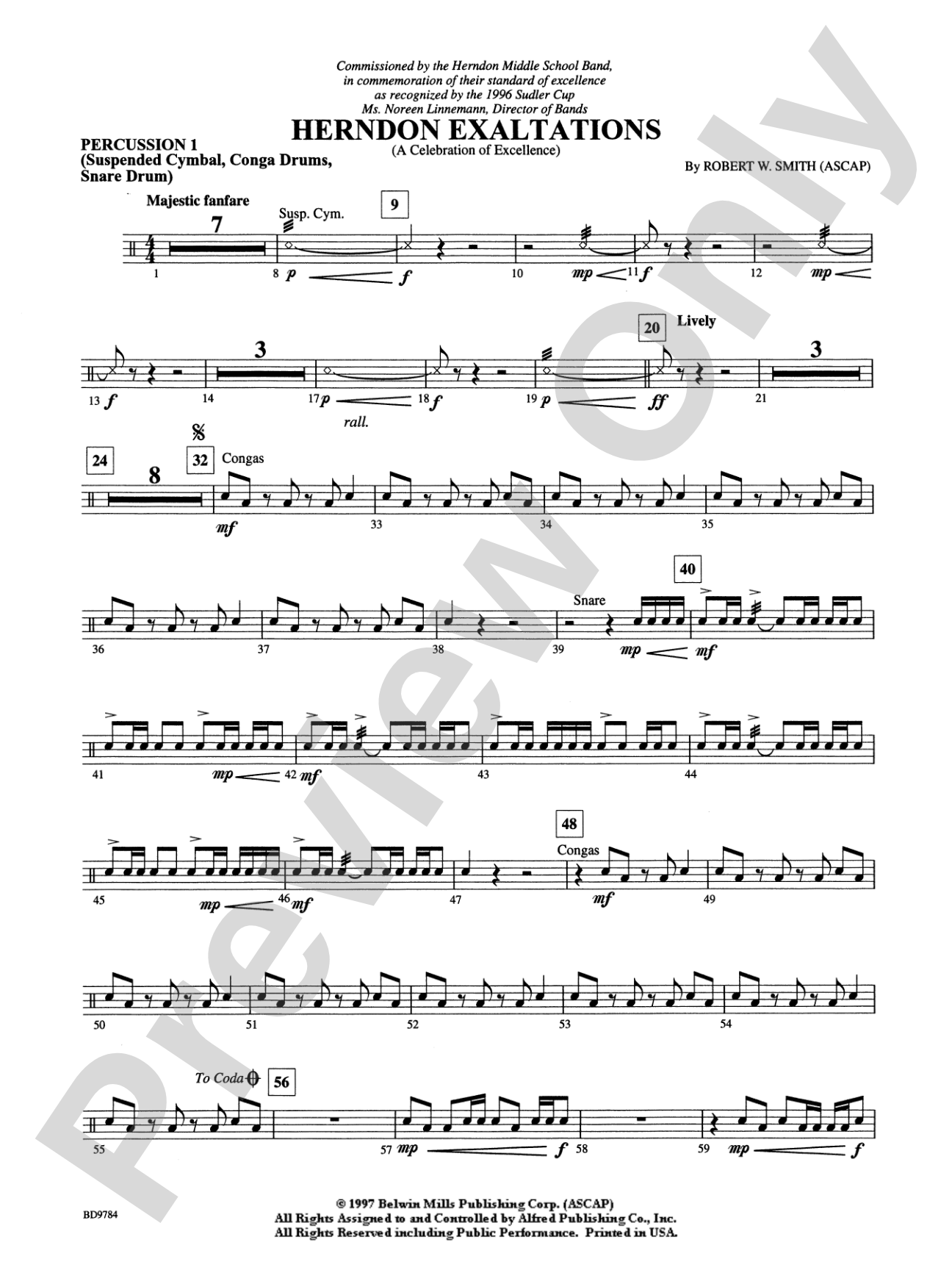

Herndon Exaltations (A Celebration of Excellence): 1st Percussion
By Robert W. Smith
Grade: 2 (Easy)
Item: 00-PC-0002073_PC1
$5.99
Pickup currently not available
Description
The opening statement, with fanfare flourish, grows as we are led into development that propels with vigor and force. The composer's legendary use of percussion and the total involvement of every instrumentalist has never been more pronounced. Gyrating ostinatos weave an almost hypnotic blanket, and the colors and timbral changes are myriad. This exceptional work sounds far more difficult than it plays! (duration 5:48)


Don't just read it, hear it, play along with it, and watch your students grow with it. In MakeMusic Cloud, Herndon Exaltations (A Celebration of Excellence): 1st Percussion comes alive with professional accompaniment, adjustable tempo, and built-in practice tools that turn solo practice into real progress.
Open in the Player
Jump straight in and assign it today.
Start Your Free Trial
Open this title and explore the full library in minutes.
Sample Audio
1
Audio File
--:--
0:00
0:00
Sample Video
No sample videos found.
Additional Details
Series:
Belwin Young Band
Publisher:
Alfred Music
Page Count:
326
SKU:
00-PC-0002073_PC1
More about this title
About the Composer: Robert W. Smith

Robert W. Smith is among today's most performed composers of concert band and orchestral music in America. His catalog exceeds 400 published works, with a substantial majority appearing under the Alfred Music imprint. He holds a Bachelor of Music Education from Troy State University in Alabama and a Master of Music from the University of Miami. Smith's compositions and arrangements have traveled far beyond the concert hall; his music has underscored Olympic ceremonies, appeared in major network broadcasts, accompanied the Macy's Thanksgiving Day Parade telecast, and sounded across venues ranging from Presidential welcoming ceremonies to opening day at Dodger Stadium.
As both composer and conductor, Smith has maintained an active presence on the international stage, leading performances and clinics across the United States, Canada, Japan, Australia, and throughout Europe. His symphonic works, including The Divine Comedy and The Odyssey, have found audiences across North America, Europe, Asia, and Australia. His skillful treatments of developing ensembles, notably works like The Tempest, have become foundational repertoire in band programs worldwide.
Why we love this
Smith understands the balance between accessibility and musical substance that Grade 2 directors need. The piece delivers genuine excitement and rhythmic drive without requiring advanced technical facility, and the orchestration ensures every section stays engaged throughout. Students hear themselves contributing to something that genuinely sounds polished and professional, which builds confidence and ensemble pride.
What to expect
Exaltations opens with declarative brass fanfares that immediately set a celebratory tone, then shifts into driving, rhythmic sections where hypnotic patterns build momentum. The orchestration creates vivid timbral shifts and colorful moments that remind players and audiences alike that Grade 2 music can be genuinely exciting.
Who it's for
This work suits Grade 2 concert bands ready to explore writing that sounds mature without excessive technical demand. Directors seeking festival or contest material at this level will find both musical substance and the kind of inspired orchestration that keeps students engaged.
How to get the most out of it
- Lock the rhythmic foundation early. The gyrating ostinatos are the backbone of this work; spend rehearsal time ensuring the rhythm section commits to steady, unwavering pulse before adding melodic layers on top.
- Embrace the dynamic range fully. The writing moves from bold fanfare statements to moments of subtler timbral interplay; resist the temptation to play everything at volume, and let the contrasts breathe.
- Balance the percussion voices carefully. Smith's writing distributes rhythmic responsibility throughout the percussion section, so each player needs to understand whether they're providing pulse, color, or accent in any given moment.
- Shape the fanfare opening with forward energy but clarity. Begin with confidence and allow the piece to build its own momentum rather than forcing the tempo or dynamics.
How to use it
Schedule this as a concert highlight rather than a warm-up piece; its five-and-a-half-minute span and energetic character make it an ideal centerpiece for a festival program or spring concert. Pair it with contrasting repertoire to show the band's range, or program it as part of a thematic set exploring fanfare-based works.
Skills your students will build
- Maintaining steady pulse within rhythmic ostinatos and repeated patterns
- Reading and executing dynamic contrasts across different instrumental families
- Understanding how orchestration and timbral color convey musical intent
- Responding to conductor cues that shape fanfare passages with clarity and energy
- Balancing individual part responsibility within ensemble context