Heritage March: 2nd Trombone Sheet Music Preview

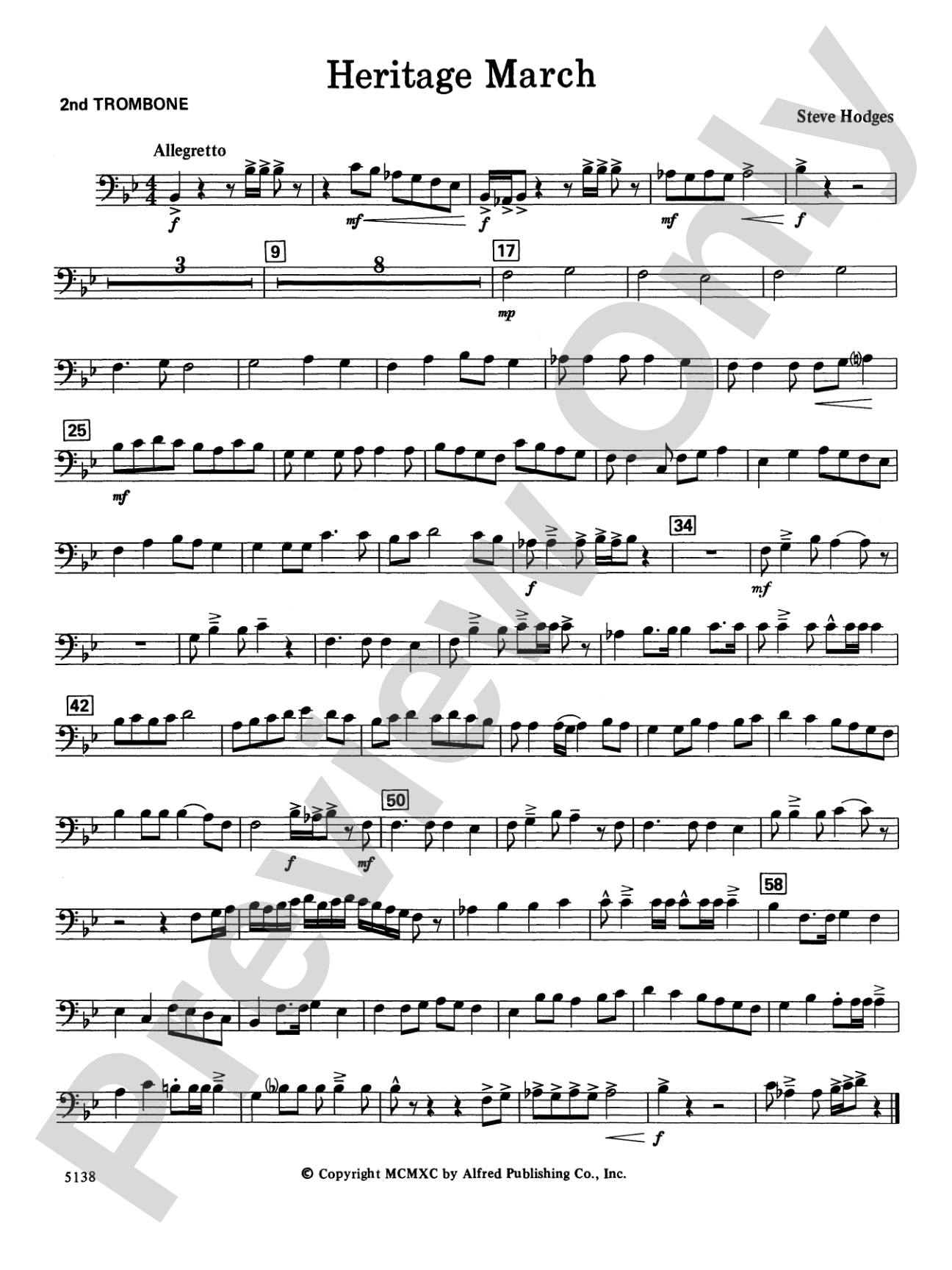
Heritage March: 2nd Trombone

By Steve Hodges

Grade: 3 (Medium)

Item: 00-PC-0001873_TN2

Digital Download
$3.00
Description
The warm, brassy introduction to this enjoyable march selection will make an excellent first impression on your audience! A crisp percussion break sets the tone and tempo for the work, and leads to a light countermelody played by clarinets who are then joined by the full band for the main theme. A very effective performance. (Grade 3)

Don't just read it, hear it, play along with it, and watch your students grow with it. In MakeMusic Cloud, Heritage March: 2nd Trombone comes alive with professional accompaniment, adjustable tempo, and built-in practice tools that turn solo practice into real progress.

Sample Audio
No sample audio found.
Sample Video
Additional Details
Series: Growing Band Series
Publisher: Alfred Music
Page Count: 140
SKU: 00-PC-0001873_TN2

More about this title

About the Composer: Steve Hodges

Steve Hodges

Steve Hodges holds degrees from Western Oregon University (B.S.) and Central Washington University (M.A. in Music Education). After four decades directing bands, choirs, and ensembles across public schools at every level, he transitioned to a prolific composing career that has produced over 120 concert band works published by Alfred Music, along with choral arrangements for Staff Music and Shawnee Press.

His compositions have been performed internationally and at prestigious festivals and state conventions. Schools and honor bands in Virginia, Iowa, Winnipeg, British Columbia, Oregon, Washington, and North Carolina have commissioned his work; his music has also been featured on TBS and ESPN broadcasts. A member of ASCAP, Hodges resides in The Dalles, Oregon, where he remains active in community music alongside his wife, Teddie, and stays connected with five children and ten grandchildren, several of whom now perform his compositions in their own school bands.

Why we love this

Hodges understands what makes a march work at the Grade 3 level: accessible ranges, clear structural logic, and moments that give every section something memorable to play. The warm brass opening catches the ear immediately, while the countermelody in the clarinets provides the kind of musical reward that keeps student musicians engaged during rehearsal and invested at performance.

What to expect

Warmth and directness. The brassy introduction feels inviting rather than bombastic, setting a tone that says the band is secure and organized. As the percussion break lands and the main theme emerges, there's a sense of momentum and clarity that builds engagement without losing the accessible character established at the outset.

Who it's for

Grade 3 concert bands seeking a well-crafted march that delivers strong musical effect without excessive technical demand. This works equally well for ensembles early in their year as they build confidence and for established groups wanting a confident opener or thoughtful closer on their concert program.

How to get the most out of it

  • Emphasize the crisp articulation in the percussion break to establish the march's forward momentum and clarity of character before the main theme enters.
  • Balance the light countermelody in the clarinets so it cuts through without overpowering the ensemble when the full band joins for the main theme.
  • Shape the warm brass introduction with enough dynamic space to let the ensemble hear the difference between that opening moment and the sections that follow, creating a sense of architectural design.

How to use it

Program this as a concert opener to establish band presence and energy while allowing the ensemble to settle into performance mode. It also serves well as a bridge piece between more demanding works, offering performers and audience alike a moment of clear, satisfying musical accomplishment.

Skills your students will build

  • Balanced articulation in marcato passages
  • Independent countermelody reading while listening to surrounding parts
  • Sustained dynamic control across longer phrases
  • Ensemble intonation in transition sections between themes

You May Also Like