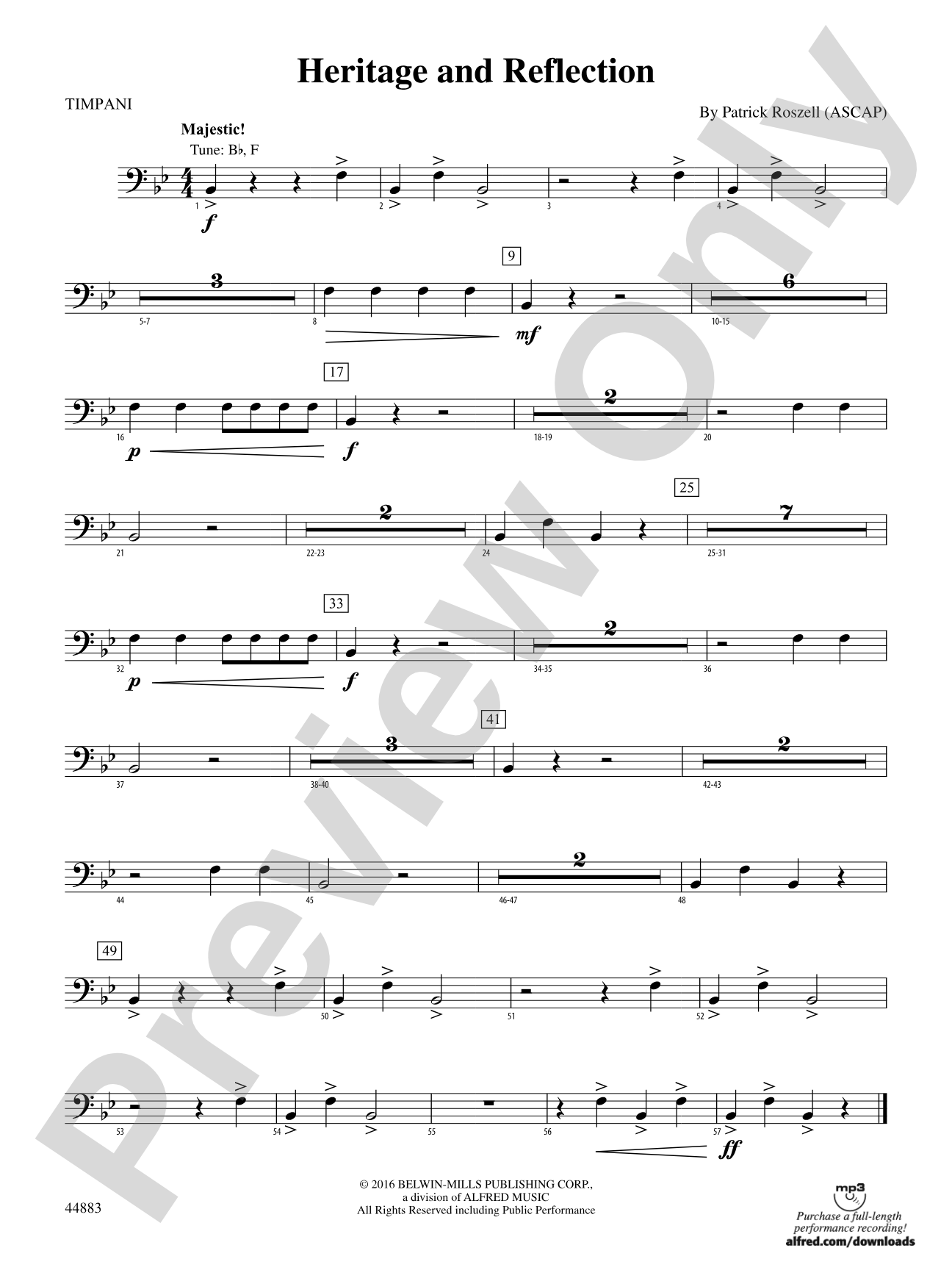
Heritage and Reflection: Timpani Sheet Music Preview

Heritage and Reflection: Timpani

By Patrick Roszell

Grade: 0.5 (Very Easy)

Item: 00-PC-0017380_TMP

Digital Download
$3.00
Description
Playable at the end of the first year, this bright overture will introduce your students to differing articulations that are commonly used in the march style. A glorious opening statement of the melody is developed to explore the foundations of this historic traditional band genre all within the confines of the parameters of the series. Bold music for teaching and performance. (1:45)

Don't just read it, hear it, play along with it, and watch your students grow with it. In MakeMusic Cloud, Heritage and Reflection: Timpani comes alive with professional accompaniment, adjustable tempo, and built-in practice tools that turn solo practice into real progress.

Sample Audio
0:00
0:00
Sample Video
Additional Details
Series: Belwin Very Beginning Band
Publisher: Alfred Music
Page Count: 132
SKU: 00-PC-0017380_TMP

More about this title

Why we love this

Patrick Roszell has designed this overture to do real teaching work without sacrificing musical substance. The march style gives you a natural framework for addressing articulation with clarity and purpose, and students respond to music that sounds like a real band, not a simplified exercise. At 1:45, it sits in the sweet spot where young players build confidence without fatigue.

What to expect

Bright and purposeful, with the ceremonial dignity of a march that earns its place in the band tradition. The opening statement announces something worth saying, and the development unfolds with clarity and confidence, offering students a window into the heritage of the concert band itself.

Who it's for

First-year concert band students ready to tackle traditional band repertoire with real musical substance. Directors seeking materials that teach articulation and phrasing without stepping outside the technical grasp of developing musicians.

How to get the most out of it

  • Shape the opening melody statement with careful attention to the articulation markings. These distinctions between tongued and slurred passages are the core learning, so bring them to the foreground in rehearsal rather than treating them as incidental.
  • Balance the development sections so the melodic line remains the primary voice. As the harmonic support thickens, remind your band that clarity comes from deliberate listening, not from adding dynamic volume.
  • Establish a steady march tempo early and hold it throughout. Young conductors often rush into the developed sections; a steady hand will keep the piece grounded and your students anchored.

How to use it

Program this as the centerpiece of a concert celebrating your band's first season or as the opening number for a fall festival appearance. Its uplifting character makes it an ideal complement to lighter fare, or pair it with a slower, more lyrical work to demonstrate your students' emerging range.

Skills your students will build

  • Recognizing and executing differing articulation styles within march style conventions
  • Balancing melody and accompaniment in a multi-voice texture
  • Sustaining steady tempo through developmental sections
  • Responding to basic conducting gestures in a traditional band arrangement

You May Also Like