Heritage: 2nd E-flat Alto Saxophone Sheet Music Preview

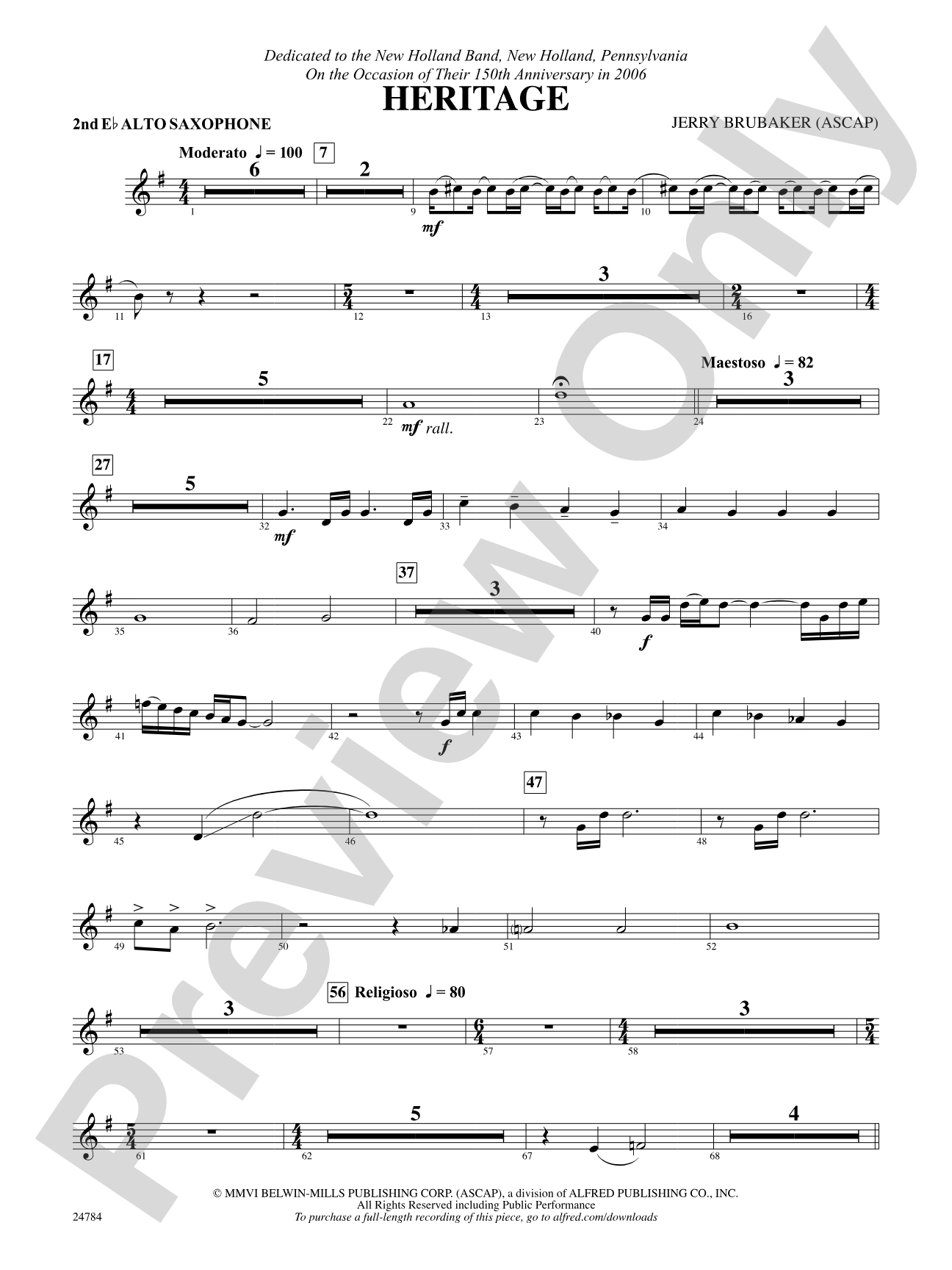
Heritage: 2nd E-flat Alto Saxophone

By Jerry Brubaker

Grade: 4 (Medium)

Item: 00-PC-0000918_AX2

Digital Download
$3.00
Description
Heritage was composed by Jerry Brubaker for the 150th anniversary of the New Holland Band of New Holland, Pennsylvania. This is an organization that has a rich musical heritage dating back to 1856! The work is loosely based upon several Pennsylvania Dutch folk songs. The piece begins with a fanfare that sets up a majestic march. There is a hymn-like slower section which echoes the devout nature of the people of Lancaster county. The very festive rhythmic development section is sure to please the percussion section. This work was designed to have universal audience appeal and is a must for any symphonic band program!

Don't just read it, hear it, play along with it, and watch your students grow with it. In MakeMusic Cloud, Heritage: 2nd E-flat Alto Saxophone comes alive with professional accompaniment, adjustable tempo, and built-in practice tools that turn solo practice into real progress.

Sample Audio
0:00
0:00
Sample Video
Additional Details
Series: Belwin Symphonic Band
Publisher: Alfred Music
SKU: 00-PC-0000918_AX2

More about this title

About the Composer: Jerry Brubaker

Jerry Brubaker

Jerry Brubaker is an accomplished composer and arranger whose works span concert band, wind ensemble, and choral literature. His compositional approach balances accessibility with musical substance, creating pieces that engage both performers and audiences across diverse concert settings.

Why we love this

Brubaker roots this piece in genuine cultural material, using Pennsylvania Dutch folk melodies to build something that feels both locally resonant and universally moving. The structural arc from fanfare to march to hymn to rhythmic celebration gives conductors multiple moods to shape and the band multiple musical worlds to inhabit, making it rewarding to prepare and satisfying to perform.

What to expect

Heritage moves through distinct emotional landscapes. The opening fanfare radiates formal grandeur, the march strides with purposeful energy, and the hymn section settles into quiet dignity before the rhythmic finale bursts into communal celebration. It feels like a musical journey through festival tradition and cultural pride.

Who it's for

This work serves concert and festival programs at the Grade 4 level, fitting bands that have secure fundamentals and can balance technical clarity with expressive playing. It works equally well for anniversary celebrations and regular concert programming, offering the kind of substantial middle-ground repertoire that builds ensemble maturity without overwhelming developing players.

How to get the most out of it

  • Shape the opening fanfare with clear articulation and dynamic control; the majestic quality depends on precision rather than simply playing loud.
  • Balance the hymn-like section by bringing out the lyrical inner voices while maintaining harmonic support in the lower voices, creating warmth without cloudiness.
  • Let the percussion shine in the rhythmic development without rushing; lock the ensemble's subdivisions to the drums to maintain the driving energy.
  • Mark phrase endings clearly across the entire band during rehearsal so that the folk-song melodic material breathes naturally rather than getting buried by harmonic textures.

How to use it

Consider pairing this as the centerpiece of a program exploring folk traditions or American musical heritage. Its moderate length and audience-friendly character make it an excellent choice for community concert programs, especially where you want to program something substantive that doesn't demand advanced technical demands from your ensemble.

Skills your students will build

  • Balancing fanfare articulation with sustained ensemble cohesion
  • Shaping lyrical hymn-like passages with appropriate phrase length and dynamic restraint
  • Coordinating rhythmic precision across sections during syncopated and developmental passages
  • Listening for and maintaining stylistic consistency when ensemble parts move between march rhythms and folk melodic material

You May Also Like