Here's To Life Sheet Music Preview

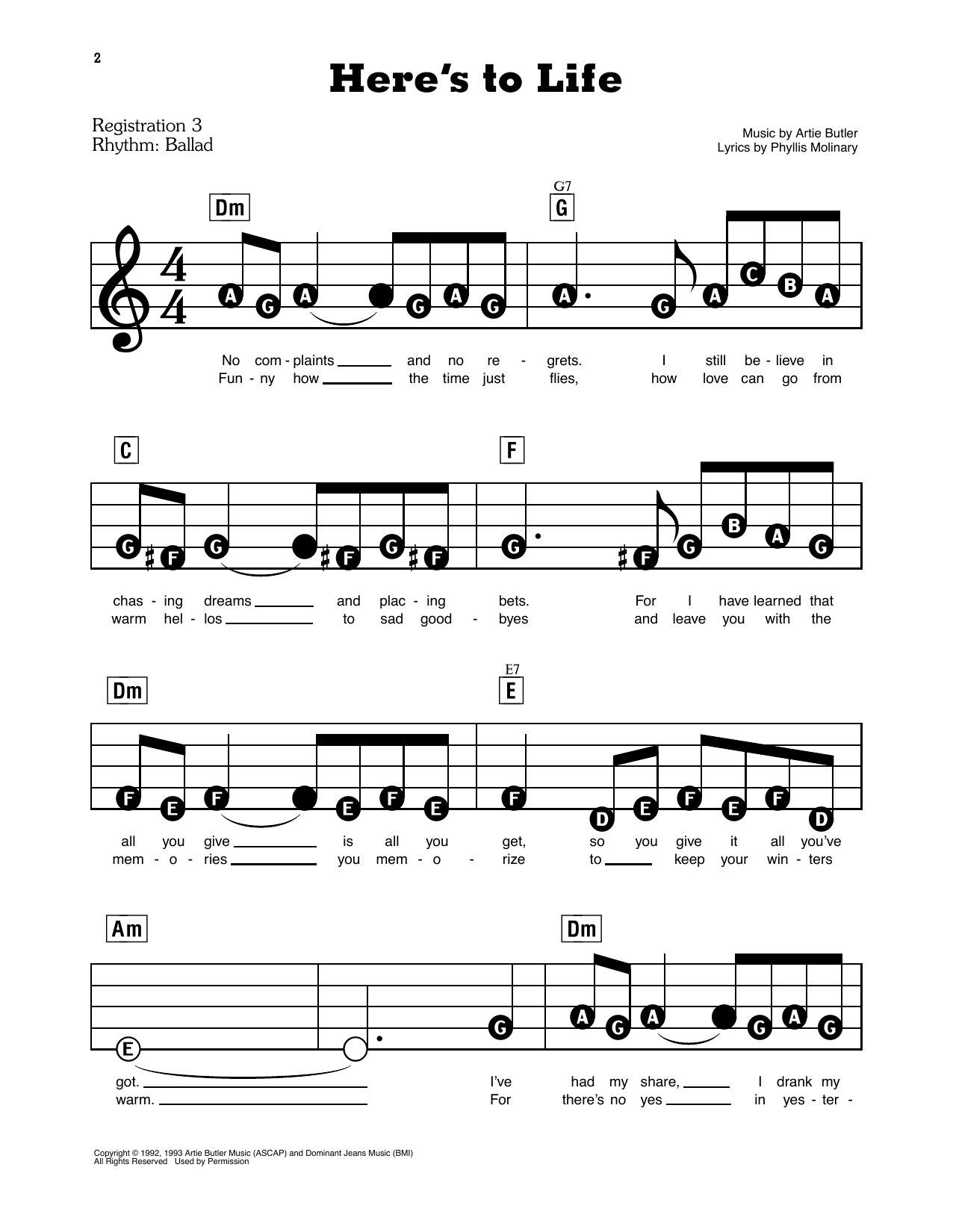
Here's To Life: E-Z Play Today

As performed by Barbra Streisand

Item: 35-DS01046530

Digital Download
$4.99

One moment…

Description

Here's To Life: E-Z Play Today isn't in MakeMusic Cloud just yet...but it could be. Let us know you'd like to see it, and you'll help shape what comes next. In the meantime, start a free trial and dive into thousands of interactive titles your students can play along with today.

Sample Audio
No sample audio found.
Sample Video
Additional Details
Publisher: Hal Leonard
Page Count: 4
SKU: 35-DS01046530

More about this title

About the Artist: Barbra Streisand

Barbra Streisand's interpretive approach to the American songbook has shaped how generations of musicians understand jazz standards and vocal-driven arrangements. Her technical command of phrasing, dynamics, and emotional restraint within the pop and jazz idioms makes her interpretations essential reference points for understanding how to bring depth to familiar material.

Why we love this

Streisand's recording of this standard captures the sophistication and warmth that makes jazz piano transcriptions worth teaching. The four-page format keeps the arrangement accessible while maintaining the harmonic richness and expressive freedom that draw musicians back to this repertoire repeatedly.

What to expect

This arrangement carries the reflective warmth of a late-night conversation; the harmonic language speaks quietly but with genuine affection. There's an ease to the phrasing that masks sophisticated jazz voicings, creating an atmosphere of intimate reflection rather than virtuosic display.

Who it's for

Piano students and teachers exploring the American songbook who want an authentic Streisand interpretation without the commitment of a full vocal score. Suitable for advanced intermediate pianists working toward jazz fluency and stylistic maturity.

How to get the most out of it

  • Honor the rubato in the melody line; the beauty of this standard emerges through slight timing adjustments that reflect the lyrical content rather than metronomic precision.
  • Balance accompaniment texture with the vocal line's prominence. The supporting figures should enhance rather than compete with the melody.
  • Explore the space between harmonic changes. Standards like this reward pianists who lean into the silence and listen to how chords resonate before moving forward.
  • Pay attention to the recorded interpretation for dynamic shaping, but allow your own voice to emerge through tempo choices and touch.

How to use it

Feature this as a solo piano moment in a jazz or standards-focused recital, or use it alongside other Streisand interpretations to demonstrate how arrangement and artistic choice shape a familiar tune. It works equally well as an encore or as part of a broader exploration of how classical pianists approach contemporary repertoire.

Skills your students will build

  • Interpreting jazz voicings and extended harmonies
  • Balancing melody prominence with accompaniment texture
  • Executing rubato and expressive timing in a notated context
  • Understanding stylistic conventions of mid-20th-century popular music arrangements

You May Also Like