Here It Goes Again Sheet Music Preview

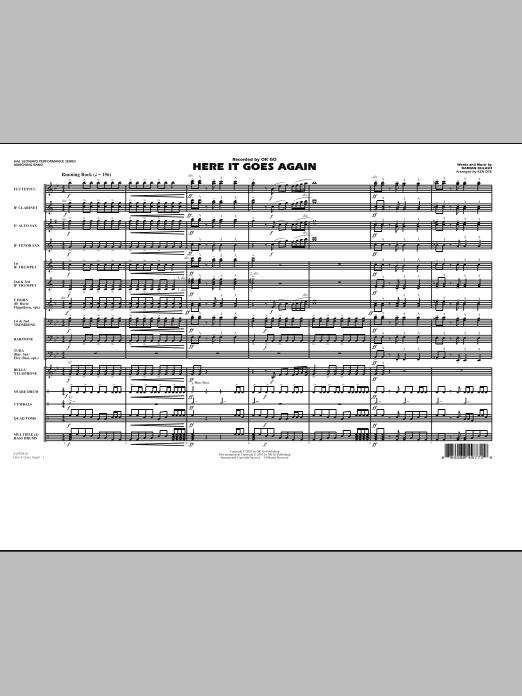
Here It Goes Again: Marching Band Conductor Score & Parts

By Damian Kulash / As performed by OK Go / Arranged by Ken Dye

Grade: 4

Item: 35-PK00147479

Digital Download
$65.00

One moment…

Description
A few years ago, the group OK Go created a YouTube sensation with their "treadmill song" and accompanying video. The innovative Notre Dame Band then created their own version for the field, complete with treadmills! Here is that exciting arrangement by Ken Dye as performed by Notre Dame.

Here It Goes Again: Marching Band Conductor Score & Parts isn't in MakeMusic Cloud just yet...but it could be. Let us know you'd like to see it, and you'll help shape what comes next. In the meantime, start a free trial and dive into thousands of interactive titles your students can play along with today.

Sample Audio
No sample audio found.
Sample Video
Additional Details
Publisher: Hal Leonard
SKU: 35-PK00147479

More about this title

About the Composer: Damian Kulash

Damian Kulash is the lead vocalist and primary creative force behind OK Go, the Chicago-based indie rock band known for pushing the boundaries of music video production and live performance. His songwriting balances infectious melodies with rhythmic sophistication, creating hooks that stick while maintaining genuine musical substance. In education settings, Kulash's work demonstrates how contemporary popular music can command the same musical respect and analytical attention traditionally reserved for other genres.

Why we love this

Ken Dye's marching band arrangement captures the propulsive energy of the original while building in the kind of structural clarity and ensemble layering that makes contemporary pop work brilliantly on the field. Directors appreciate how this piece communicates immediately to both performers and audiences; there's no learning curve for recognition, which means your students' hard work gets instant payoff. The synchronized visual element (those treadmills) becomes part of the musical storytelling rather than a gimmick, giving your visual staff genuine collaboration with the music.

What to expect

The arrangement pulses with infectious momentum. You hear the original's rock edge come through in the ensemble sound while still maintaining the clarity and precision marching bands deliver. There's a real sense of fun and forward motion that keeps both the band and the audience engaged from start to finish.

Who it's for

Marching bands at the Grade 4 level looking to program something that resonates with student musicians and captures audience attention without sacrificing musical integrity. This works equally well for groups seeking contemporary repertoire that appeals across generations or for programs wanting to bridge the gap between what students hear outside school and what they perform on the field.

How to get the most out of it

  • Nail the pocket early in rehearsals. The groove relies on rhythmic precision across the entire ensemble, so lock the feel before worrying about dynamic shaping or individual articulation.
  • Emphasize the contrast between the driving verses and any exposed moments in the arrangement. These breath points let the audience lean in and reset their listening.
  • Work the visual coordination independently from the music first if treadmills or props are involved. Clean up the movement away from stands so performers can execute both without cognitive overload.

How to use it

Program this mid-season when your ensemble has built foundational ensemble cohesion but still has time to develop the synchronized precision this piece demands. It pairs well in a show that mixes contemporary pop with other styles, or it can anchor a program built around music that blurs genre lines. This is also an excellent choice for community performances where you want the audience singing along and fully invested in what your students are doing.

Skills your students will build

  • Rhythmic pocket and groove maintenance
  • Ensemble balance in rock idiom
  • Simultaneous coordination of music and movement
  • Articulation clarity in syncopated rhythmic contexts
  • Listening for and responding to sectional cues

You May Also Like