
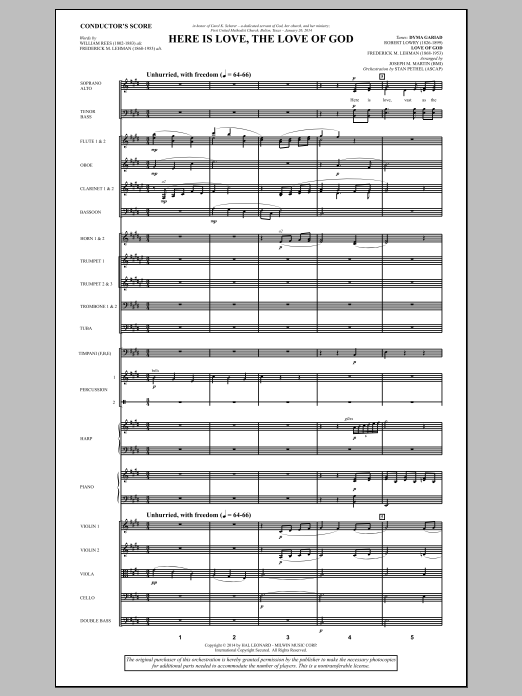

Here Is Love, the Love of God: Choral Instrumental Pak
As performed by Frederick M. Lehman / Arranged by Joseph Martin
Item: 35-PK00291153
$75.00
Pickup currently not available
Buy Extra Parts (Digital PDF Download)
Parts Added to Cart!
Description
Uses: General, Communion, Lent ¶ßScripture:ß Romans 8:38, John 3:16, Jeremiah 31:3, I John 3:1
Two stunning musical and lyrical testaments to God's eternal and matchless love are joined in this creative choral arrangement. Musically similar, the songs flow seamlessly and gracefully together with rich vocal part-writing and idiomatic piano writing. An orchestration adds a lush option for churches with instrumental resources. Stunning!


Here Is Love, the Love of God: Choral Instrumental Pak isn't in MakeMusic Cloud just yet...but it could be. Let us know you'd like to see it, and you'll help shape what comes next. In the meantime, start a free trial and dive into thousands of interactive titles your students can play along with today.
Request This Title
Tell us you want it.
Start Your Free Trial
Explore everything that's ready to play right now.
Sample Audio
No sample audio found.
Sample Video
No sample videos found.
Additional Details
Publisher:
Hal Leonard
SKU:
35-PK00291153
More about this title
About the Artist: Frederick M. Lehman
Frederick M. Lehman (1868-1953) was a prolific American hymn writer and composer whose devotional texts and melodies shaped congregational singing across denominational lines. His gift lay in crafting lyrics that distill profound theological truths into language that ordinary singers could embrace, pairing them with melodies both memorable and singable.
Lehman's "Here Is Love, Vast as the Ocean" stands among the most enduring expressions of divine love in Christian hymnody. Composed early in his career, the hymn has been arranged, recorded, and performed countless times, testament to its emotional resonance and theological depth. For music educators and church musicians, Lehman's work demonstrates how strong text and strong tune together create something that sustains across generations.
Why we love this
Joseph Martin's arrangement honors Lehman's original gift while expanding it. By joining two expressions of divine love with musical and lyrical coherence, he creates a longer, more substantial anthem that unfolds rather than declares. The optional orchestration means this works equally well in intimate chapel settings or fully resourced worship spaces, making it genuinely practical for different church contexts.
What to expect
Warm and assured, like sitting in candlelight during a moment of genuine spiritual reflection. The arrangement unfolds with gentle inevitability, its rich vocal harmonies and flowing piano work creating space for meaning to settle in rather than rush past.
Who it's for
Church choirs seeking substantial anthem material for communion services or Lenten seasons, particularly those with flexible instrumentation. Music directors looking for a single piece that sounds complete and theologically grounded without demanding excessive rehearsal time.
How to get the most out of it
- Balance the vocal lines carefully in the opening phrases. Rich part-writing can blur clarity if any section overwhelms; rehearse each line singing alone first, then bring them in gradually to hear how they layer.
- If using the orchestration, invest rehearsal time in how voices and instruments hand off melodic material. The lush instrumental writing works best when it supports rather than competes with what singers are doing.
- Shape the text collaboratively with your singers. These lyrics deserve honest emotional commitment; ask what "God's eternal and matchless love" means to each section so the singing carries conviction rather than surface prettiness.
How to use it
Anchor a communion service or spring worship series with this piece as a centerpiece anthem. It pairs naturally with congregational hymn singing and works equally well as a standalone meditation or as bookend material surrounding a spoken liturgical element.
Skills your students will build
- Sustaining long phrases with consistent tone quality and proper breath management
- Balancing four or more independent vocal lines without losing harmonic blend
- Responding to text inflection and emotional shape while maintaining musical accuracy
- Coordinating with instrumental accompaniment using both visual and aural cues