
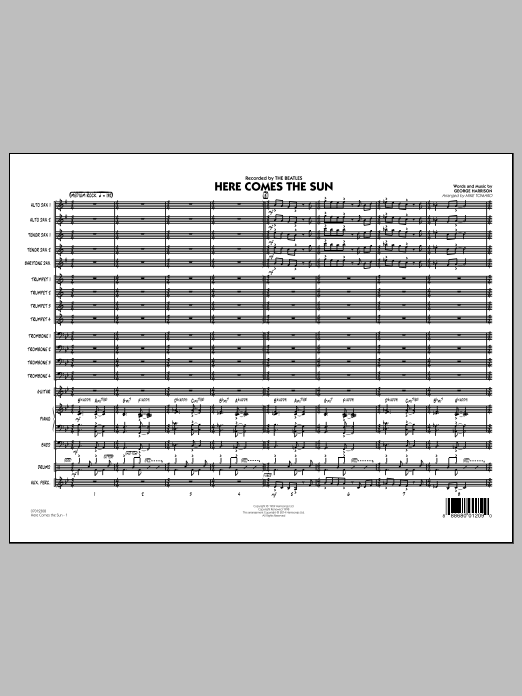

Here Comes the Sun: Jazz Ensemble Conductor Score & Parts
As performed by The Beatles / Arranged by Mike Tomaro
Grade: 4
Item: 35-PK00296879
$50.00
Pickup currently not available
Buy Extra Parts (Digital PDF Download)
| Product | Price | Quantity |
|---|---|---|
| Here Comes the Sun - Conductor Score (Full Score) | $7.50 | |
| Here Comes the Sun - Alto Sax 1 | $6.00 | |
| Here Comes the Sun - Alto Sax 2 | $6.00 | |
| Here Comes the Sun - Tenor Sax 1 | $6.00 | |
| Here Comes the Sun - Tenor Sax 2 | $6.00 | |
| Here Comes the Sun - Baritone Sax | $6.00 | |
| Here Comes the Sun - Trumpet 1 | $6.00 | |
| Here Comes the Sun - Trumpet 2 | $6.00 | |
| Here Comes the Sun - Trumpet 3 | $6.00 | |
| Here Comes the Sun - Trumpet 4 | $6.00 | |
| Here Comes the Sun - Trombone 1 | $6.00 | |
| Here Comes the Sun - Trombone 2 | $6.00 | |
| Here Comes the Sun - Trombone 3 | $6.00 | |
| Here Comes the Sun - Trombone 4 | $6.00 | |
| Here Comes the Sun - Guitar | $6.00 | |
| Here Comes the Sun - Piano | $6.00 | |
| Here Comes the Sun - Bass | $6.00 | |
| Here Comes the Sun - Drums | $6.00 | |
| Here Comes the Sun - Aux Percussion | $6.00 | |
| Here Comes the Sun - Solo Sheet | $6.00 |
Parts Added to Cart!
Description
This is probably George Harrison's most famous contribution to the illustrious catalog of recordings by The Beatles! Mike Tomaro maintains the general flavor of the distinctive original and takes the opportunity to dress it up a bit for jazz ensemble. A classy new shine on a familiar gem!


Here Comes the Sun: Jazz Ensemble Conductor Score & Parts isn't in MakeMusic Cloud just yet...but it could be. Let us know you'd like to see it, and you'll help shape what comes next. In the meantime, start a free trial and dive into thousands of interactive titles your students can play along with today.
Request This Title
Tell us you want it.
Start Your Free Trial
Explore everything that's ready to play right now.
Sample Audio
No sample audio found.
Sample Video
No sample videos found.
Additional Details
Publisher:
Hal Leonard
SKU:
35-PK00296879
More about this title
About the Artist: The Beatles
The Beatles revolutionized popular music across the 1960s, moving from infectious pop singles to increasingly sophisticated compositional and recording work. Their catalog remains central to music education because it demonstrates how accessible melodies can contain genuine harmonic depth and structural invention; teachers across genres use their songs to engage students in analyzing songwriting, production choices, and the relationship between lyrical and musical development.
Why we love this
Mike Tomaro's arrangement respects the song's iconic melodic hook while adding the kind of harmonic color and ensemble interplay that makes jazz versions feel like fresh discoveries rather than retreads. This Grade 4 setting works perfectly for groups that want to program something their audiences genuinely know and love, but played with enough sophistication to remind students why this song has endured for over 50 years.
What to expect
Sunlit and warm. The arrangement maintains the original's optimistic character while introducing the sophisticated harmonies and textures that define contemporary jazz ensemble writing. There's intelligence here without pretense, making this feel like a conversation between the songwriting tradition students know and the ensemble craft they're developing.
Who it's for
Jazz ensemble directors looking for repertoire that connects with audiences while advancing their students' reading and ensemble skills. High school and college groups at the Grade 4 level will find this accessible without being simplistic, allowing musicians to focus on style, balance, and the particular colors that jazz arranging brings to familiar material.
How to get the most out of it
- Protect the original melody's simplicity in the exposition. The arrangement's sophistication will shine more brightly if the tune comes through clean and unhurried at first.
- Bring out the harmonic reimagining in the middle section. This is where Tomaro's arrangement earns its place; let your musicians hear how the reharmonization transforms the emotional color without abandoning the source material.
- Balance brightness with restraint in the ensemble passages. Jazz ensemble voicings can muddy quickly; articulate cleanly and leave air in the texture so the arrangement's details register.
- Let rhythm section players feel the pocket rather than racing the tempo. This song's appeal depends on an easy, confident groove that feels inevitable rather than driven.
How to use it
Perfect as a concert opener or closer that bridges classical concert aesthetics with popular music literacy. Pair it with other rock or pop standards in a jazz ensemble context, or use it as the centerpiece of a program exploring how great melodies survive arrangement and reinterpretation across different musical traditions.
Skills your students will build
- Jazz style interpretation and swing articulation
- Reading jazz voicings and harmonic substitutions
- Balancing solo lines with ensemble backgrounds
- Listening across full ensemble texture for blend and balance
- Understanding how arrangement choices reshape familiar material