
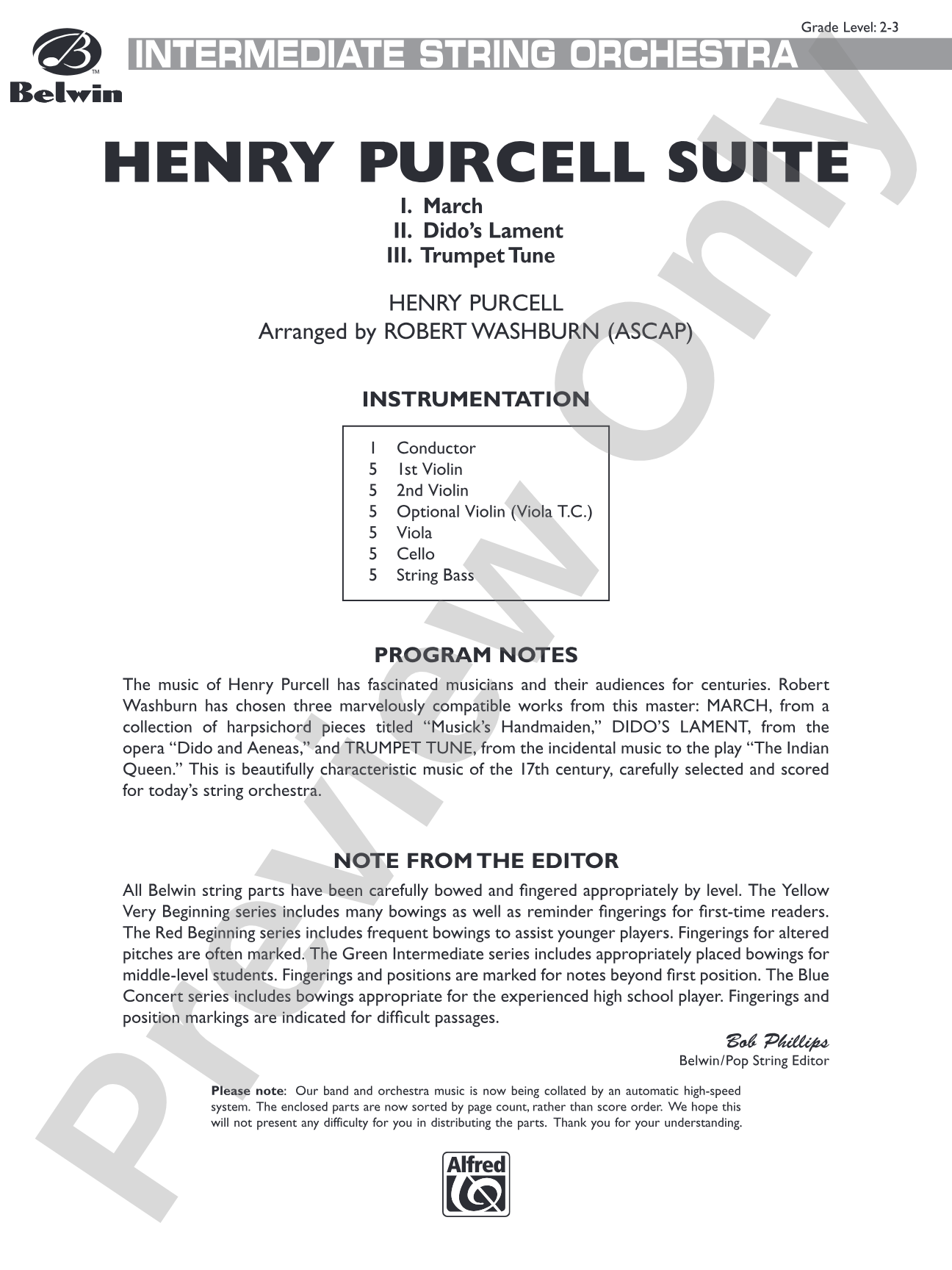

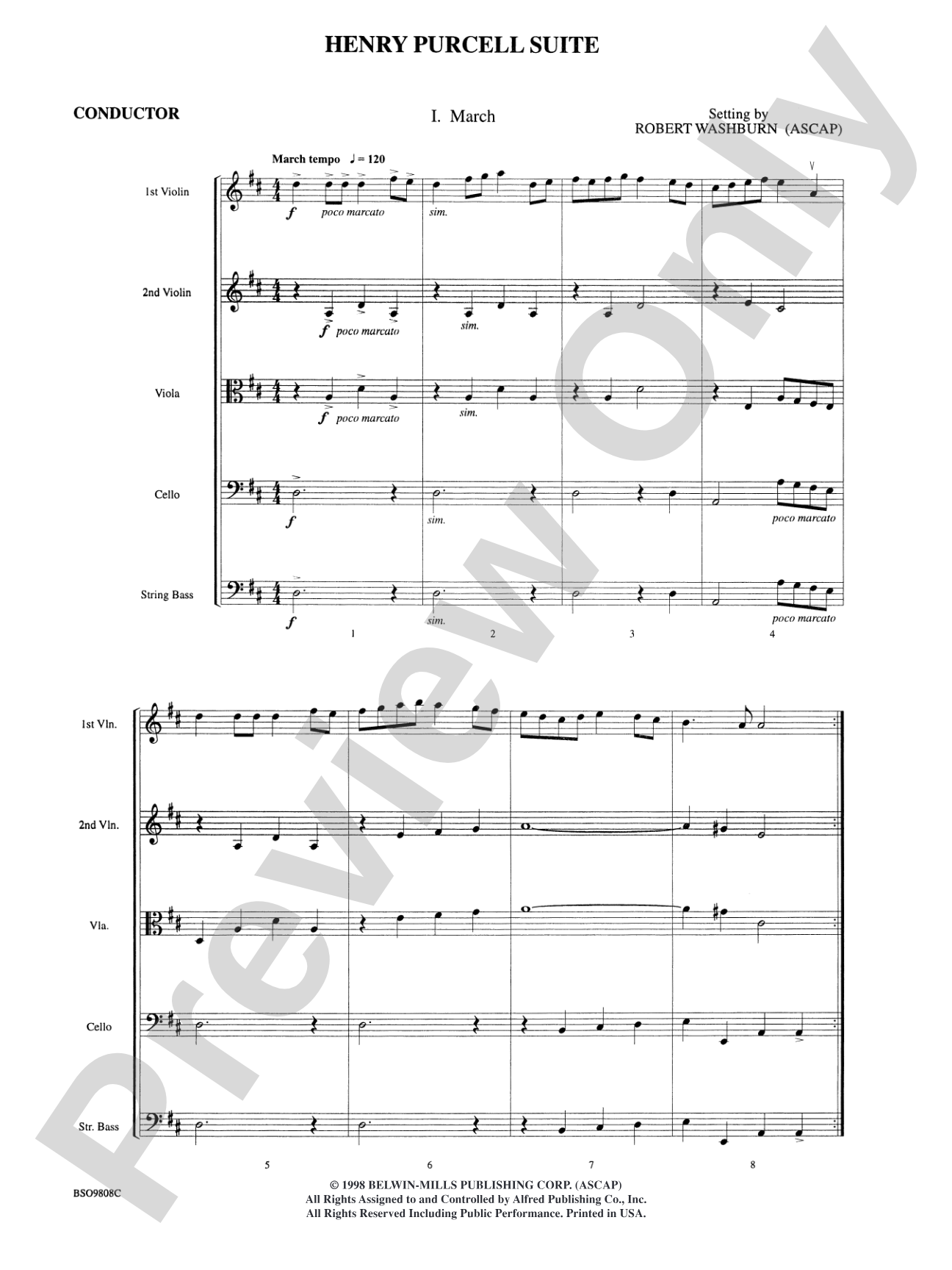
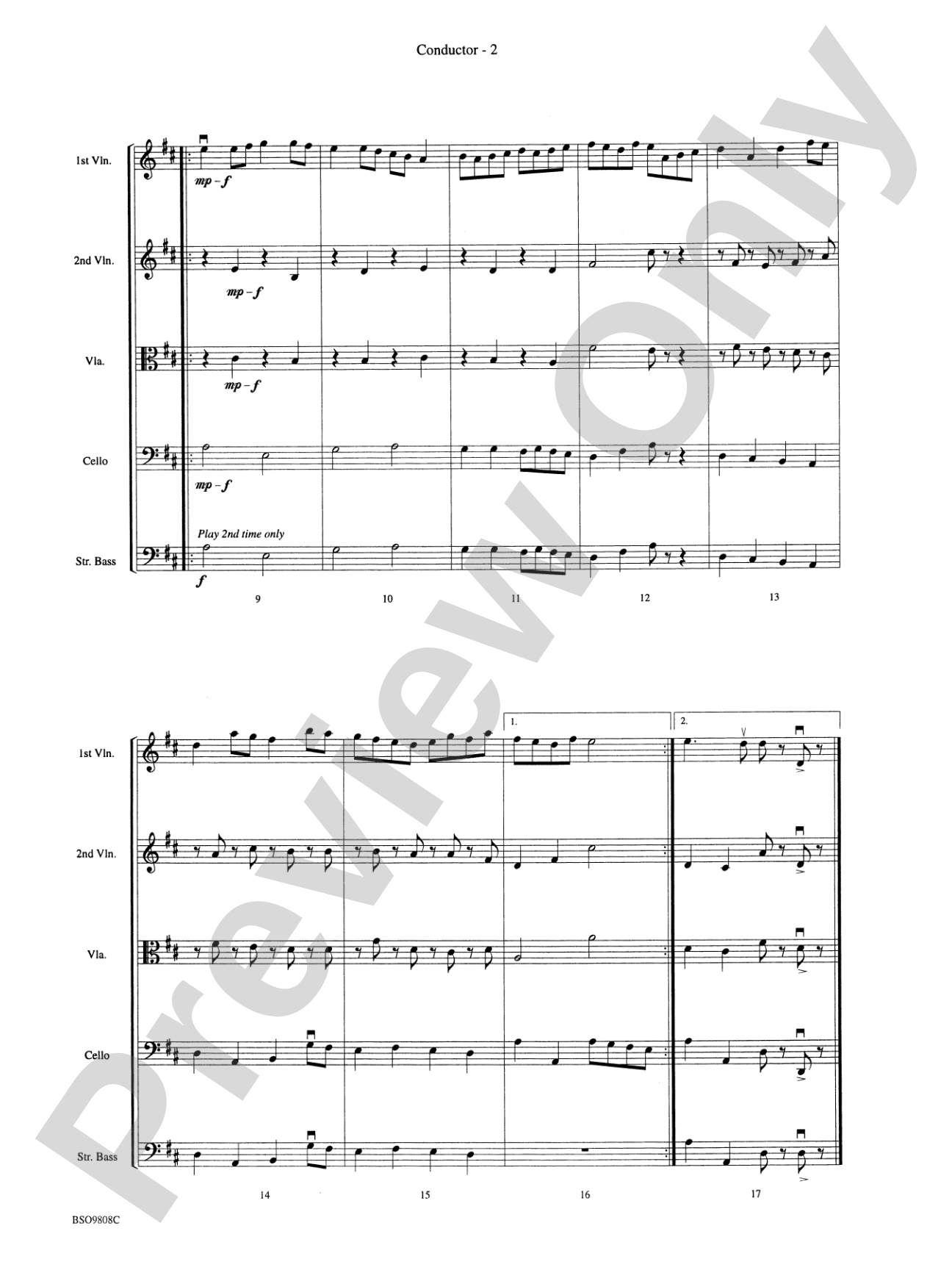
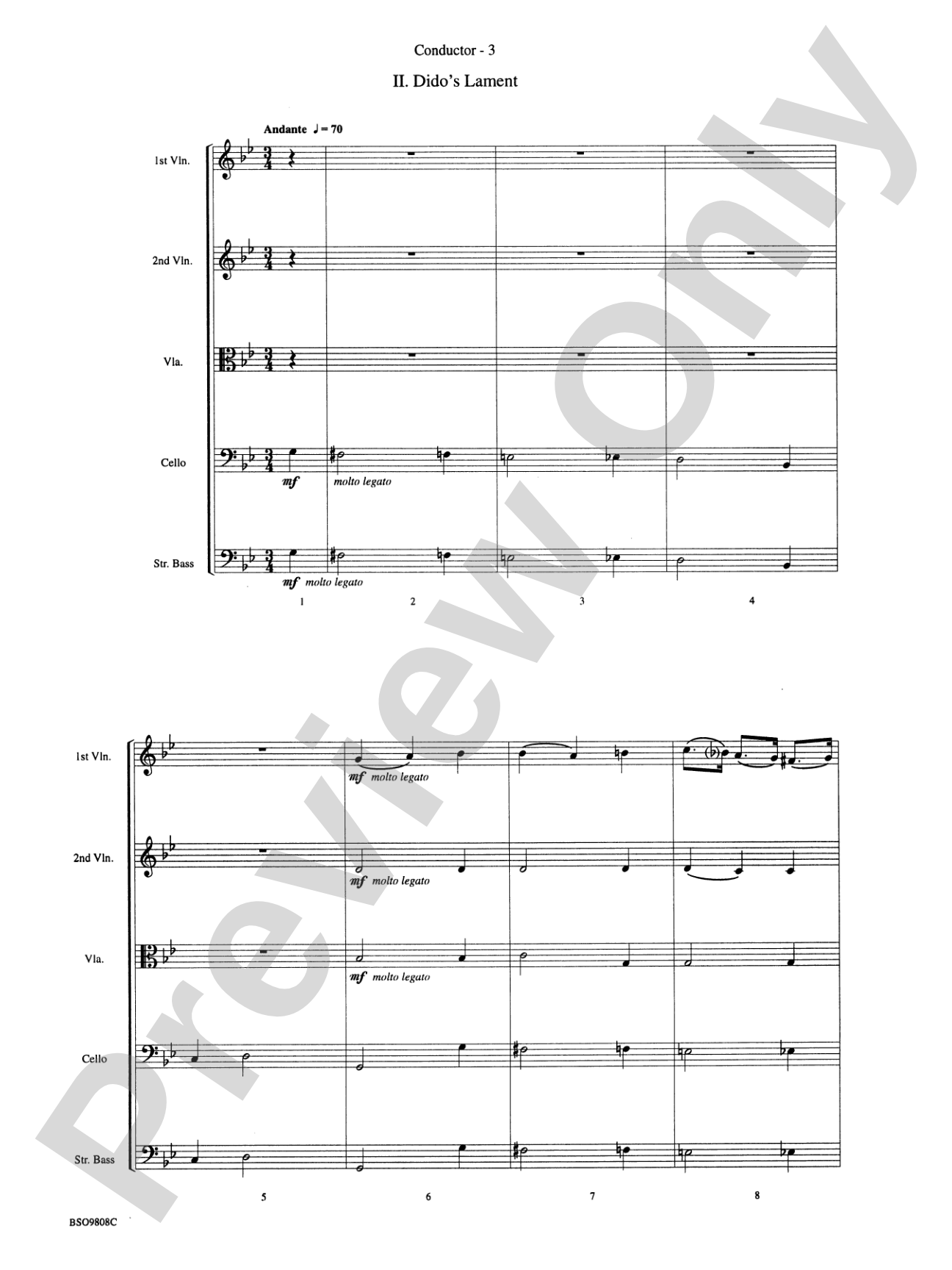
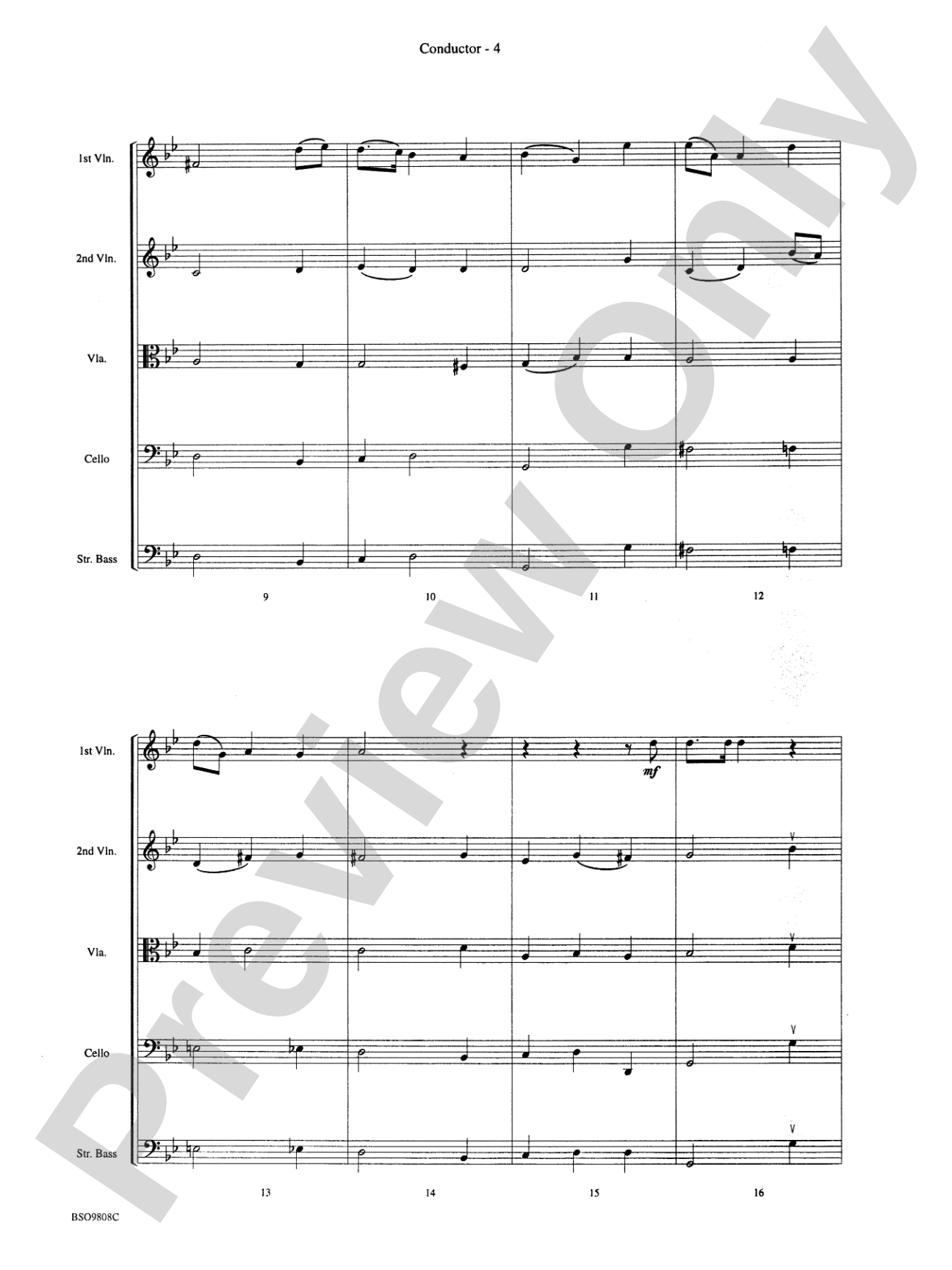
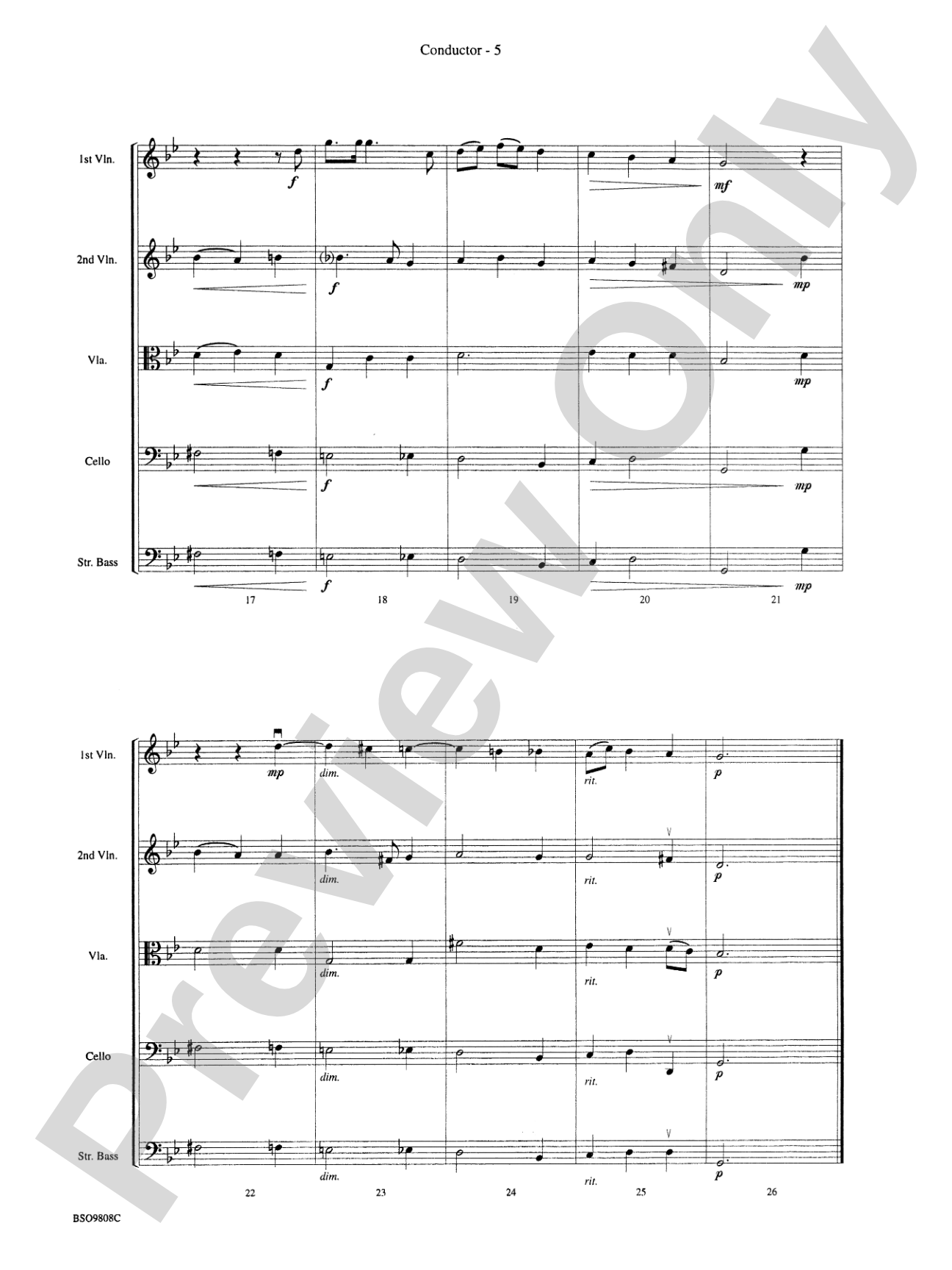
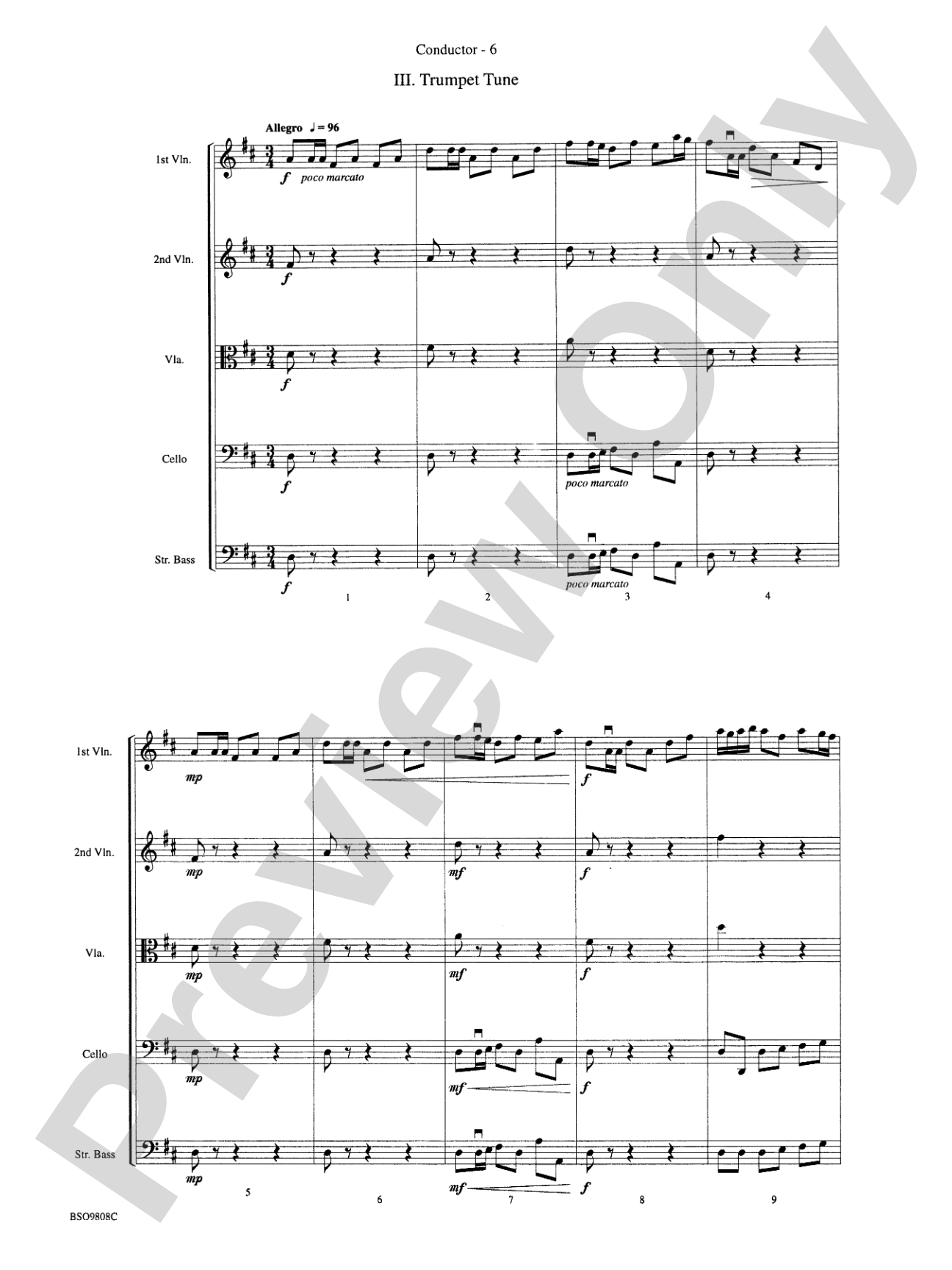
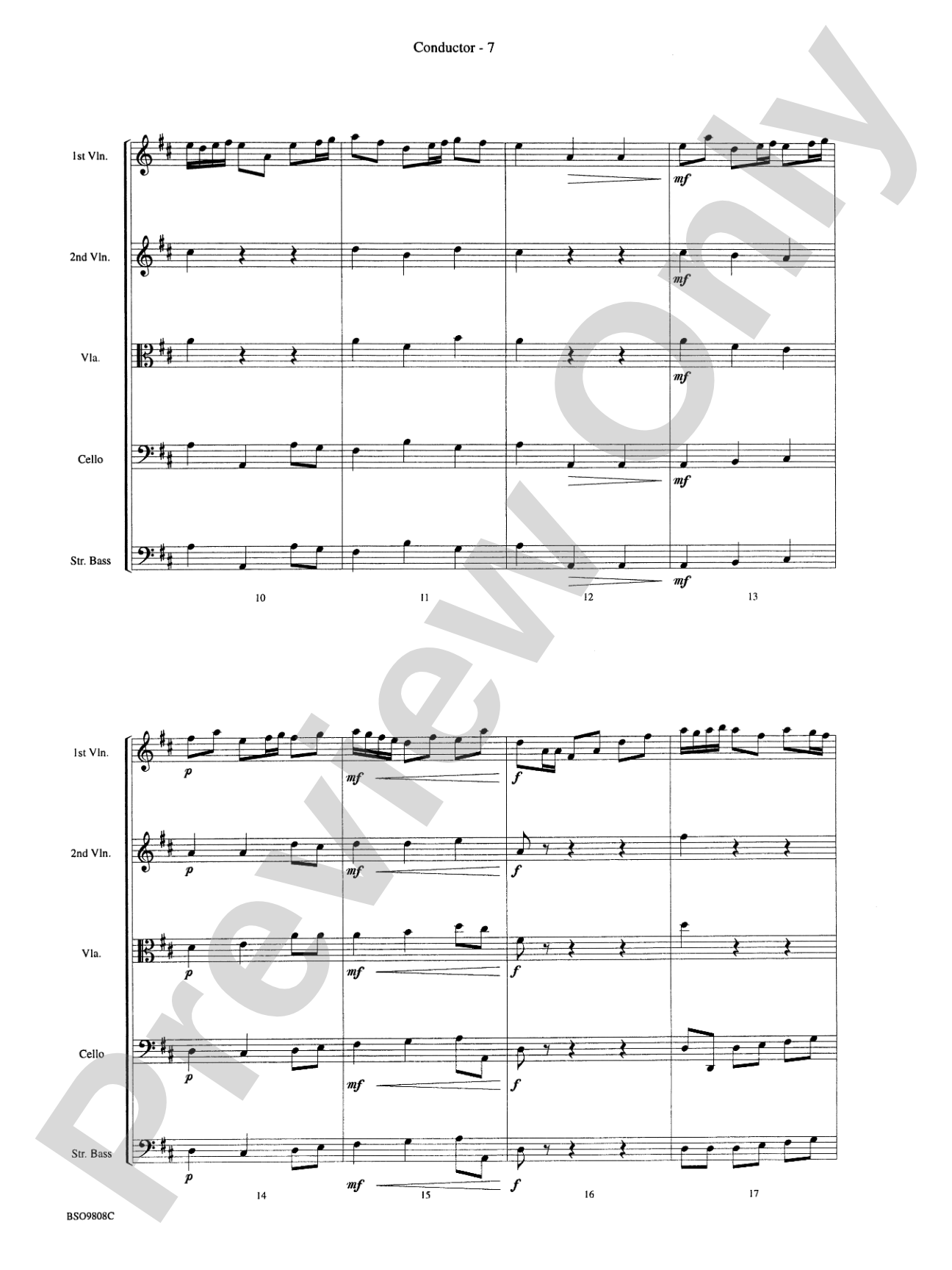
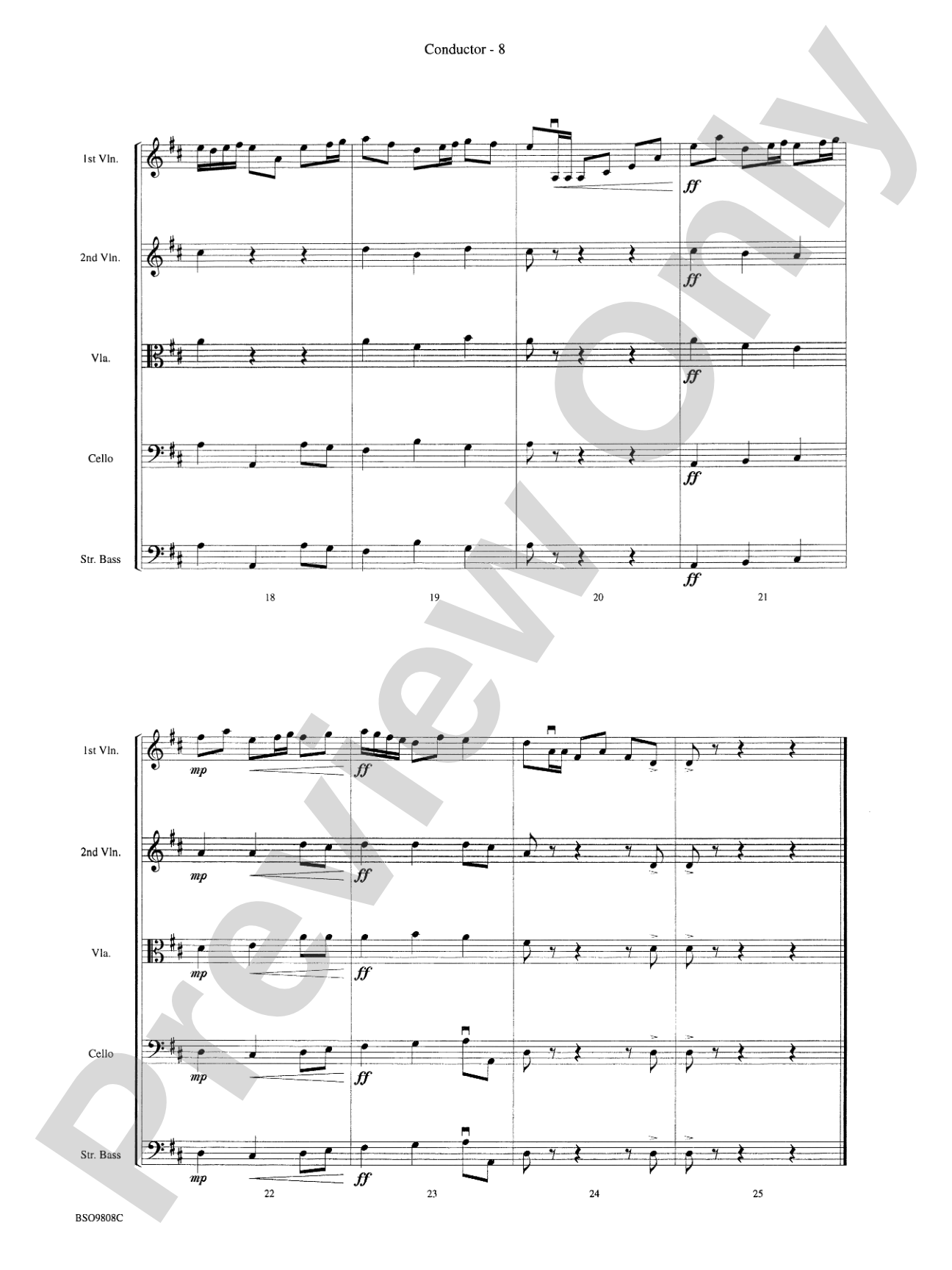



Henry Purcell Suite: String Orchestra Conductor Score & Parts
1. March 2. Dido's Lament 3. Trumpet Tune
By Henry Purcell / arr. Robert Washburn
Grade: 2.5
Item: 00-PK-0002284

$45.00
Pickup currently not available
Buy Extra Parts (Digital PDF Download)
| Product | Price | Quantity |
|---|---|---|
| Henry Purcell Suite: Score | $7.00 | |
| Henry Purcell Suite: 1st Violin | $5.99 | |
| Henry Purcell Suite: 2nd Violin | $5.99 | |
| Henry Purcell Suite: 3rd Violin (Viola [TC]) | $5.99 | |
| Henry Purcell Suite: Viola | $5.99 | |
| Henry Purcell Suite: Cello | $5.99 | |
| Henry Purcell Suite: String Bass | $5.99 |
Parts Added to Cart!
Description
The music of Henry Purcell has fascinated musicians and their audiences for centuries. Robert Washburn has chosen three marvelously compatible works from this master: March, from a collection of harpsichord pieces titled Musick's Handmaiden, Dido's Lament, from the opera Dido and Aeneas, and Trumpet Tine, from the incidental music to a play The Indian Queen. This is beautifully characteristic music of the 17th Century, carefully selected and scored for today's string orchestras. (3:21)


Don't just read it, hear it, play along with it, and watch your students grow with it. In MakeMusic Cloud, Henry Purcell Suite: String Orchestra Conductor Score & Parts comes alive with professional accompaniment, adjustable tempo, and built-in practice tools that turn solo practice into real progress.
Open in the Player
Jump straight in and assign it today.
Start Your Free Trial
Open this title and explore the full library in minutes.
Sample Audio
1
Audio File
--:--
0:00
0:00
Sample Video
No sample videos found.
Additional Details
Series:
Belwin Intermediate String Orchestra
Publisher:
Alfred Music
Page Count:
30
SKU:
00-PK-0002284
More about this title
About the Arranger: Robert Washburn
Robert Washburn is a composer and arranger with deep expertise in making substantial repertoire accessible to developing ensembles. His work with the Belwin Intermediate String Orchestra series demonstrates a refined understanding of how to preserve the character and integrity of historical masterworks while respecting the technical constraints of secondary-level players.
Why we love this
Washburn's selection here is genuinely thoughtful. Rather than settling for a single Purcell extract, he threads together three contrasting movements that let students experience the breadth of his output: ceremonial grandeur, operatic pathos, and theatrical vigor. The scoring respects both the original idioms and what's playable for Grade 2.5 strings, which means your students get real Baroque texture without impossible passage work.
What to expect
Elegant and purposeful. The March establishes a stately ceremonial mood; Dido's Lament pulls you into intimate sorrow with its falling harmonic progressions; the Trumpet Tine closes the arc with spirited, dance-like energy. Across these twenty minutes, you hear Purcell's gift for melody and his command of emotional gesture.
Who it's for
Directors building festival programs at the intermediate level who want to program something substantial and historically grounded. String orchestras ready to engage with Baroque idiom but still developing technical facility will find the range of expression in these three movements both musically rewarding and technically manageable.
How to get the most out of it
- Shape the March with clear articulation on the quarter-note pulse; this ceremonial music depends on rhythmic precision and steady forward motion.
- Allow Dido's Lament room to breathe. The chromatic descent and harmonic language ask for patient phrasing and warm, connected tone from your first violins.
- Balance the Trumpet Tine so the melodic line reads clearly over the accompaniment; Baroque counterpoint relies on hearing each voice's independence.
- Use the three movements to contrast tempos and character in rehearsal. The tonal shift from March to Lament to the liveliness of the finale is the suite's greatest asset.
How to use it
Open a concert with the March to establish a classical frame, then position Dido's Lament as a contrasting emotional centerpiece before moving to contemporary or lighter fare. The three-movement structure also makes this ideal for festival performance, where judges appreciate seeing a young orchestra command period style across contrasting moods.
Skills your students will build
- Baroque bowing conventions and articulation style
- Phrasing in arched melodic lines with chromatic movement
- Balancing independent voices in polyphonic textures
- Tempo control and rhythmic steadiness in processional music
- Expressive range across contrasting character pieces