
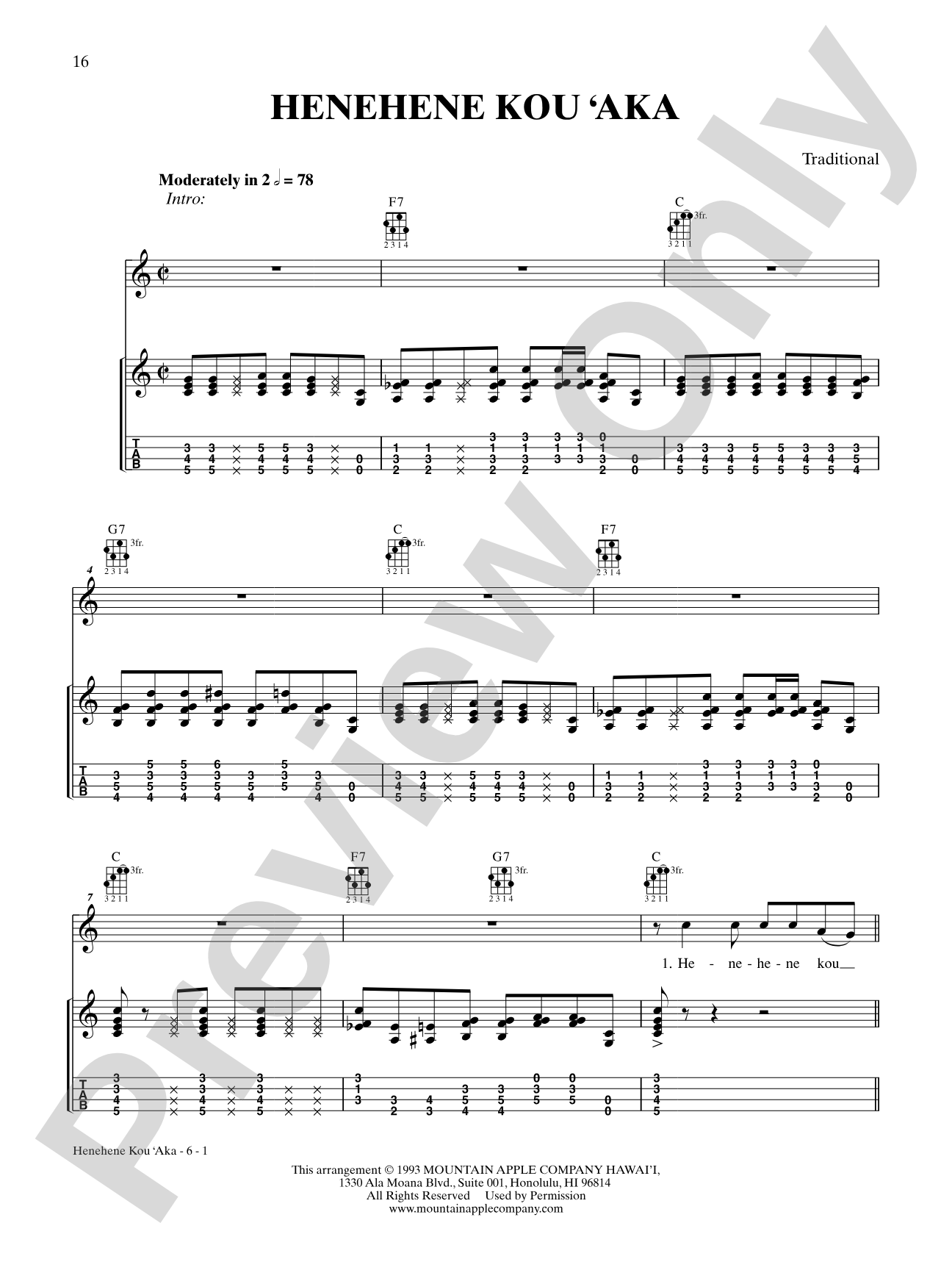
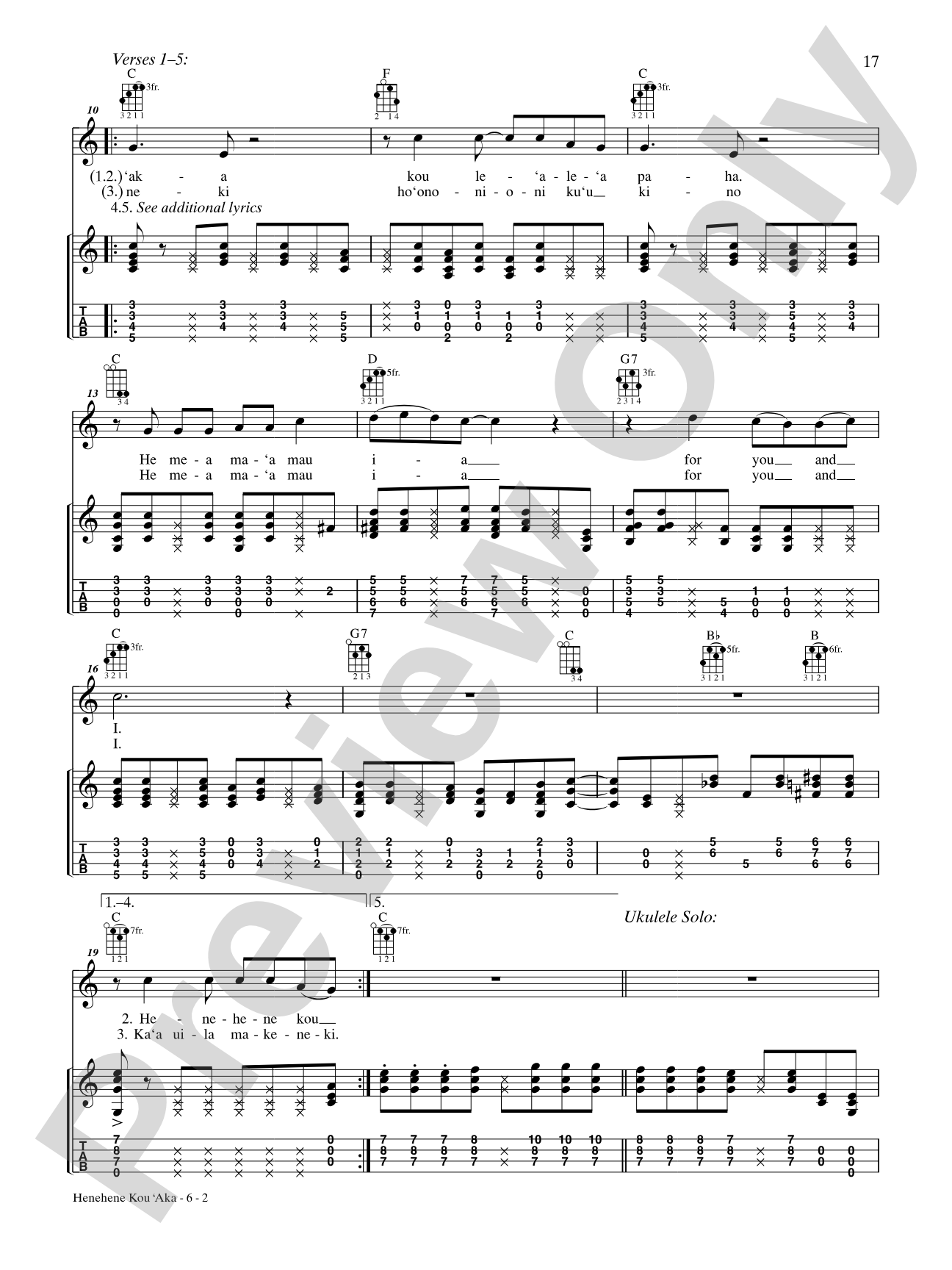

Henehene Kou 'Aka: Ukulele TAB
Israel "Iz" Kamakawiwo'Ole
Item: 00-PS-0013310
$5.99
Pickup currently not available
Related Items
The Wind Beneath My Wings/He Hawai'i Au: Ukulele TAB |
$5.99
|
View | |
Hawai'I 78: Ukulele TAB |
$4.99
|
View | |
Na Ka Pueo/Keyhole Hula: Ukulele TAB |
$4.99
|
View | |
Panini Puakea: Ukulele TAB |
$4.99
|
View | |
Kuhio Bay: Ukulele TAB |
$4.99
|
View | |
'Ama 'Ama: Ukulele TAB |
$4.99
|
View | |
Ka Huila Wai: Ukulele TAB |
$4.99
|
View | |
Ulili E: Ukulele TAB |
$4.99
|
View | |
A Hawaiian Like Me: Ukulele TAB |
$4.99
|
View | |
Iz: The Ukulele Songbook: Ukulele TAB Book |
$19.99
|
View |
Description
The current worldwide appreciation of ukulele music can easily be traced to one man, Israel "Iz" Kamakawiwo'ole. Israel's music conveys joy and hope and is loved the world over. When writing the book From the Corner of His Eye, author Dean Koontz found inspiration in Iz's music, stating, "I hope that the reader finds pleasure in my story equal to the joy and consolation that I found in the voice, the spirit, and the heart of Israel Kamakawiwo'ole." Tragically, Iz passed away at the age of 38 in 1997. The state flag of Hawaii was flown at half mast as he lay in state at the Hawaiian capitol building. He was the third person in Hawaiian history to be bestowed this honor. Ten thousand people attended his funeral and thousands gathered to witness as his ashes were scattered at Makua Beach. This songbook contains 13 songs transcribed for ukulele exactly as Iz performed them. Titles: 'Ama'ama * Hawai'i '78 * A Hawaiian Like Me * Henehene Kou 'Aka * Ka Huila Wai * Ka Pua U'i * Keyhole Hula (Kauoha Mai) * Kuhio Bay * Na Ka Pueo * Over the Rainbow/What a Wonderful World * Panini Puakea * 'Ulili E * White Sandy Beach * The Wind Beneath My Wings/He Hawai'i Au.


Henehene Kou 'Aka: Ukulele TAB isn't in MakeMusic Cloud just yet...but it could be. Let us know you'd like to see it, and you'll help shape what comes next. In the meantime, start a free trial and dive into thousands of interactive titles your students can play along with today.
Request This Title
Tell us you want it.
Start Your Free Trial
Explore everything that's ready to play right now.
Sample Audio
No sample audio found.
Sample Video
No sample videos found.
Additional Details
Publisher:
Alfred Music
Page Count:
64
SKU:
00-PS-0013310
More about this title
Why we love this
This collection captures the exact voicings and arrangements that made Iz's interpretations iconic, preserving not just the melodies but the spirit of how he played them. For ukulele students, learning directly from transcriptions of a master musician builds both technical facility and cultural understanding. The mix of traditional Hawaiian songs, standards, and medleys gives players immediate access to repertoire that actually sounds like something worth playing.
What to expect
Warmth, sincerity, and joy radiate from these pages. Whether you're playing a gentle traditional melody or a reimagined standard, there's an underlying sense of gratitude and connection to place that feels both deeply personal and universally inviting.
Who it's for
Ukulele players with intermediate reading skills who want to connect with genuine Hawaiian musical traditions and the legacy of one of the instrument's most influential voices. This book serves teachers introducing cultural repertoire and students eager to learn arrangements rooted in authentic performance practice rather than generic instruction.
How to get the most out of it
- Study the rhythmic phrasing in Iz's strum patterns; his approach to timing and syncopation is as important as the notes themselves.
- Pay attention to chord voicings and inversions throughout the book. Iz often voiced chords in ways that create warmth and depth rather than taking the shortest fingering.
- Let the dynamics breathe naturally. These songs aren't about speed or technical flash; they're about conveying the emotion behind the melody.
- Listen to Iz's original recordings alongside your practicing. Hearing how he approaches dynamics, rubato, and vocal phrasing (even when playing instrumental passages) will deepen your interpretation.
How to use it
Program a recital featuring two or three selections from this book alongside other world music traditions to honor cultural diversity. These songs also work beautifully in informal performance contexts like community gatherings or benefit concerts where the emotional resonance of the music matters more than technical difficulty.
Skills your students will build
- Reading ukulele TAB and standard notation together
- Interpreting Hawaiian musical phrasing and rhythm
- Executing open and closed chord voicings specific to ukulele
- Adapting picking and strumming patterns from transcribed performances
- Building repertoire based on authentic artist interpretations