
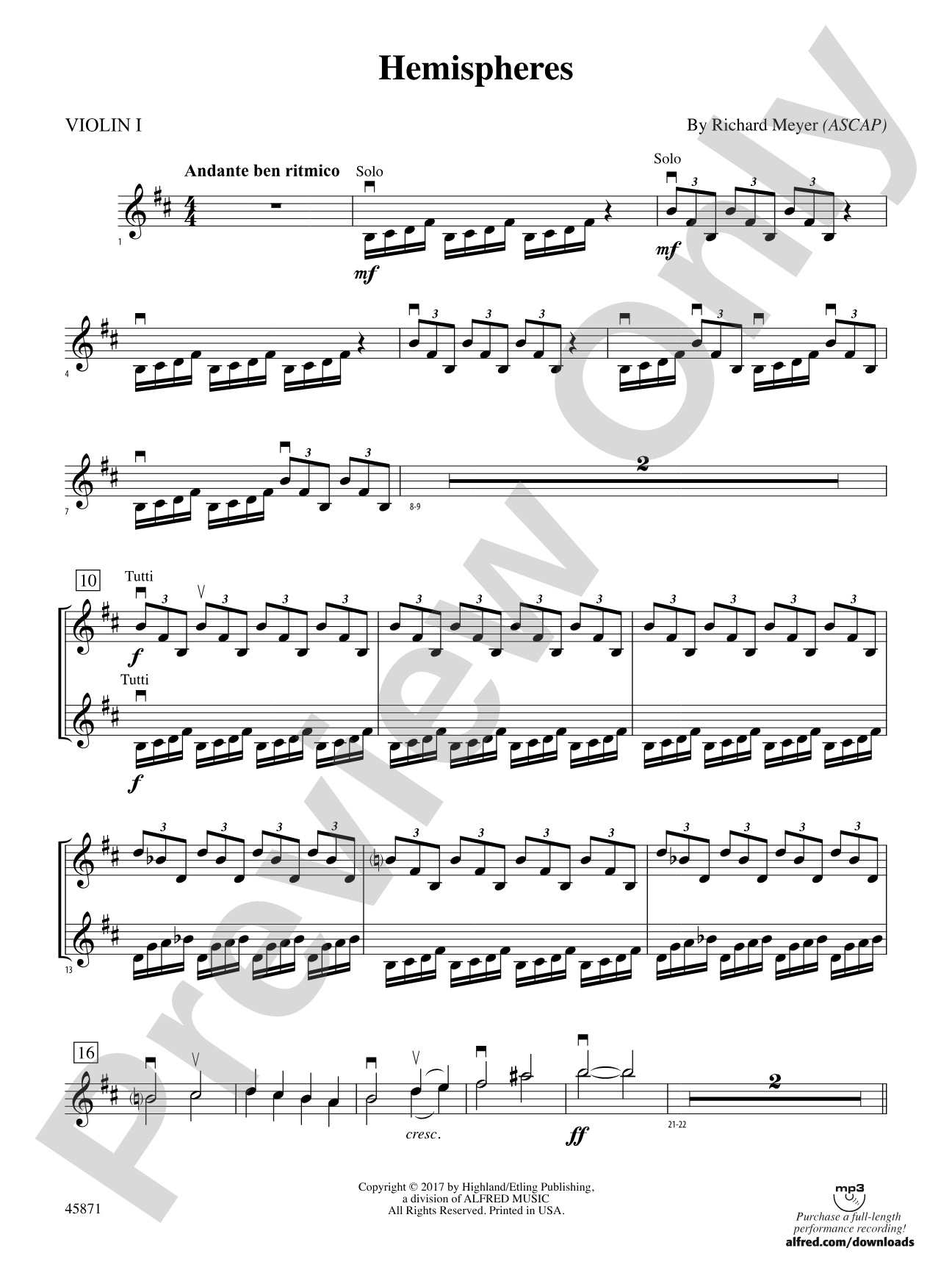
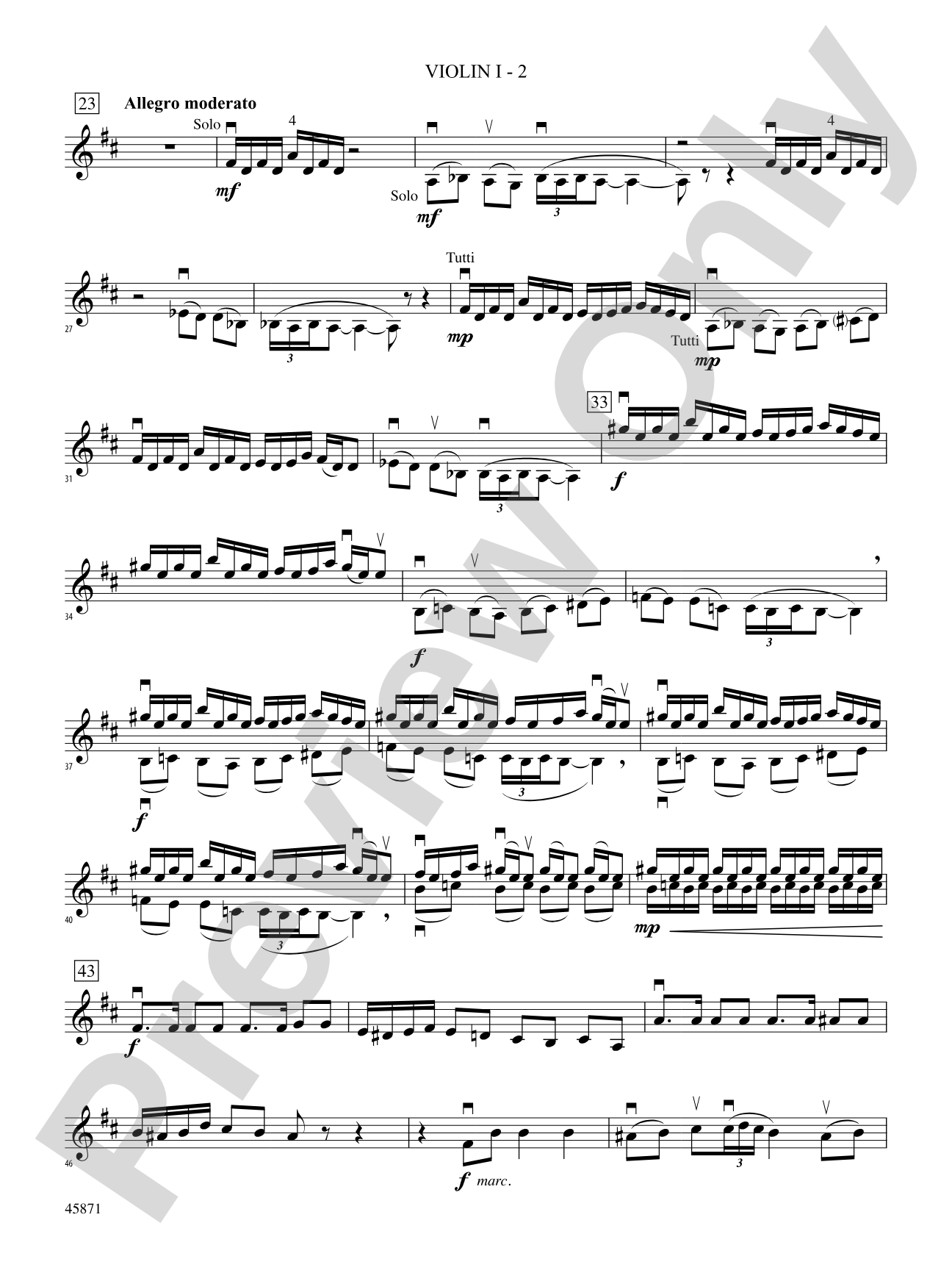

Hemispheres: 1st Violin
By Richard Meyer
Grade: 4
Item: 00-PC-0017669_VN1
$5.99
Pickup currently not available
Description
This multi-cultural piece explores world music using a unique and exciting format. Two side-by-side orchestras share one conductor, with one group performing traditional American songs and the other playing folk songs from the Middle East. A total of eight songs are presented as each section from the two orchestras is featured. As the piece unfolds, what emerges is not only a tapestry of beautiful music, but an intense commentary on the power of music to unite diverse cultures. Whether you split your orchestra in two or combine with another orchestra, Hemispheres by Richard Meyer is sure to educate your students and your audience.
A suggested seating chart is included. Also playable by one orchestra in a traditional set-up.


A suggested seating chart is included. Also playable by one orchestra in a traditional set-up.
Don't just read it, hear it, play along with it, and watch your students grow with it. In MakeMusic Cloud, Hemispheres: 1st Violin comes alive with professional accompaniment, adjustable tempo, and built-in practice tools that turn solo practice into real progress.
Open in the Player
Jump straight in and assign it today.
Start Your Free Trial
Open this title and explore the full library in minutes.
Sample Audio
1
Audio File
--:--
0:00
0:00
Sample Video
Additional Details
Series:
Highland/Etling String Orchestra
Publisher:
Alfred Music
Page Count:
208
SKU:
00-PC-0017669_VN1
More about this title
About the Composer: Richard Meyer
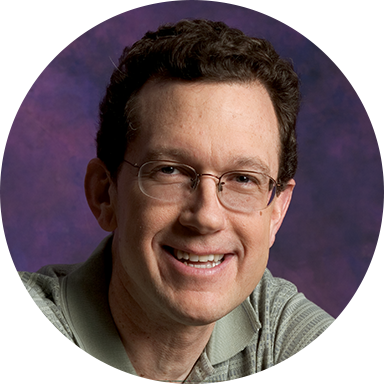
Richard Meyer built his reputation over 35 years teaching string students across elementary, middle, and high school levels in California public schools. At Oak Avenue Intermediate School in Temple City, he transformed a program of 29 students into 200 strong musicians while simultaneously directing the city's elementary string initiative. His work earned national recognition when he launched the "Giving Bach" program in 2009, an innovative series of interactive concerts designed to serve special needs and underserved students throughout Southern California.
Beyond the classroom, Meyer has conducted the Pasadena Youth Symphony Orchestra for 16 years, leading international tours to Vienna, Australia, Canada, and major U.S. cities. He has been a featured clinician at the A.S.T.A. National Conference, Texas Orchestra Directors' Association Conference, and university string workshops, while guest-conducting All-State and Honor Orchestras across multiple states. As a composer and arranger, Meyer has published over 190 works and served 16 years as string editor for Alfred Publishing Company, co-authoring the String Explorer Series and other widely-used string resources.
Why we love this
Meyer's conceptual boldness here sets this apart from typical Grade 4 repertoire. Two orchestras sharing a single conductor while exploring cultural dialogue through music demands real leadership skills from your musicians and creates a genuinely fresh concert experience for your audience. The flexibility to perform as one orchestra in traditional setup means you can program this regardless of your ensemble size, making it accessible yet artistically ambitious.
What to expect
Hemispheres unfolds like a musical conversation between two distinct worlds. American folk traditions and Middle Eastern melodies take turns sharing the stage, each bringing their own character and warmth, before gradually discovering common ground. The result feels both educational and genuinely moving, creating a moment where your audience experiences music not as separate traditions, but as evidence of human connection.
Who it's for
String orchestra directors at the middle school and upper elementary levels who want to move beyond conventional repertoire and explore music's power as a bridge between cultures. This works equally well for programs large enough to split into two orchestras and those performing as a single unit.
How to get the most out of it
- Establish a clear visual cue system with your conducting gesture so both orchestras stay synchronized when performing simultaneously. Meyer's seating chart provides the foundation, but your gesture clarity becomes the lifeline for ensemble cohesion.
- Prepare your students to listen across the room, not just to their own section. When two orchestras interweave, musicians must track both their own line and the parallel group's material to understand the dialogue Meyer is creating.
- Rehearse the transition moments between solo orchestras and combined sections separately before bringing them together. These shifts demand precision and confidence from your musicians.
How to use it
Program this as a concert centerpiece where you want to make a statement about your orchestra's musical scope and social consciousness. It works powerfully in festival settings where the novel format captures judges' attention, or as a springboard for interdisciplinary learning alongside world history or cultural studies units in your school.
Skills your students will build
- Reading and performing authentic folk melodies from American and Middle Eastern traditions
- Listening and responding to a conductor's gesture while maintaining ensemble coordination across multiple instrumental groups
- Balancing independent musicianship with collaborative listening when performing alongside a parallel orchestra
- Interpreting programmatic content and understanding how musical selections convey cultural meaning