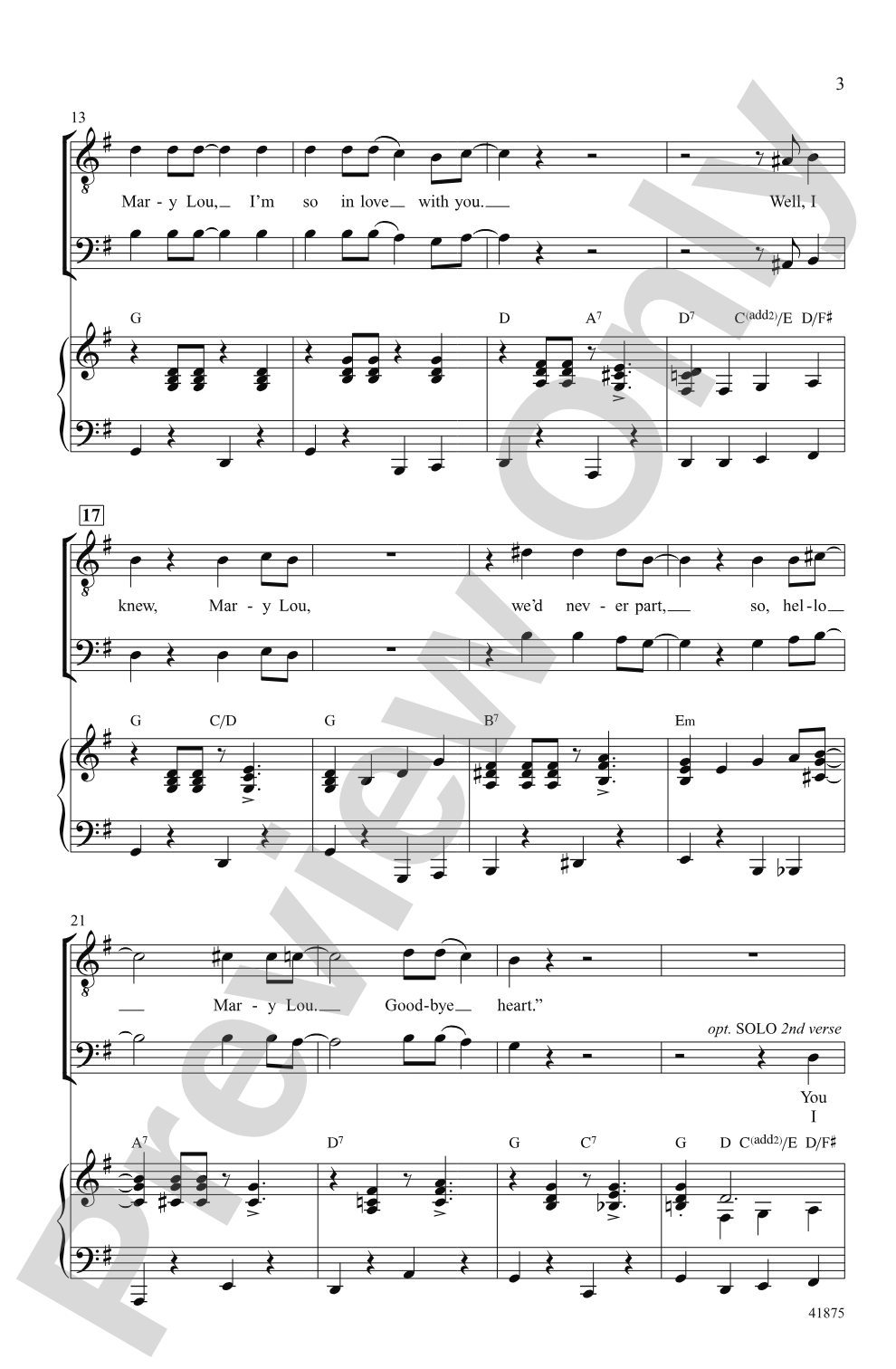
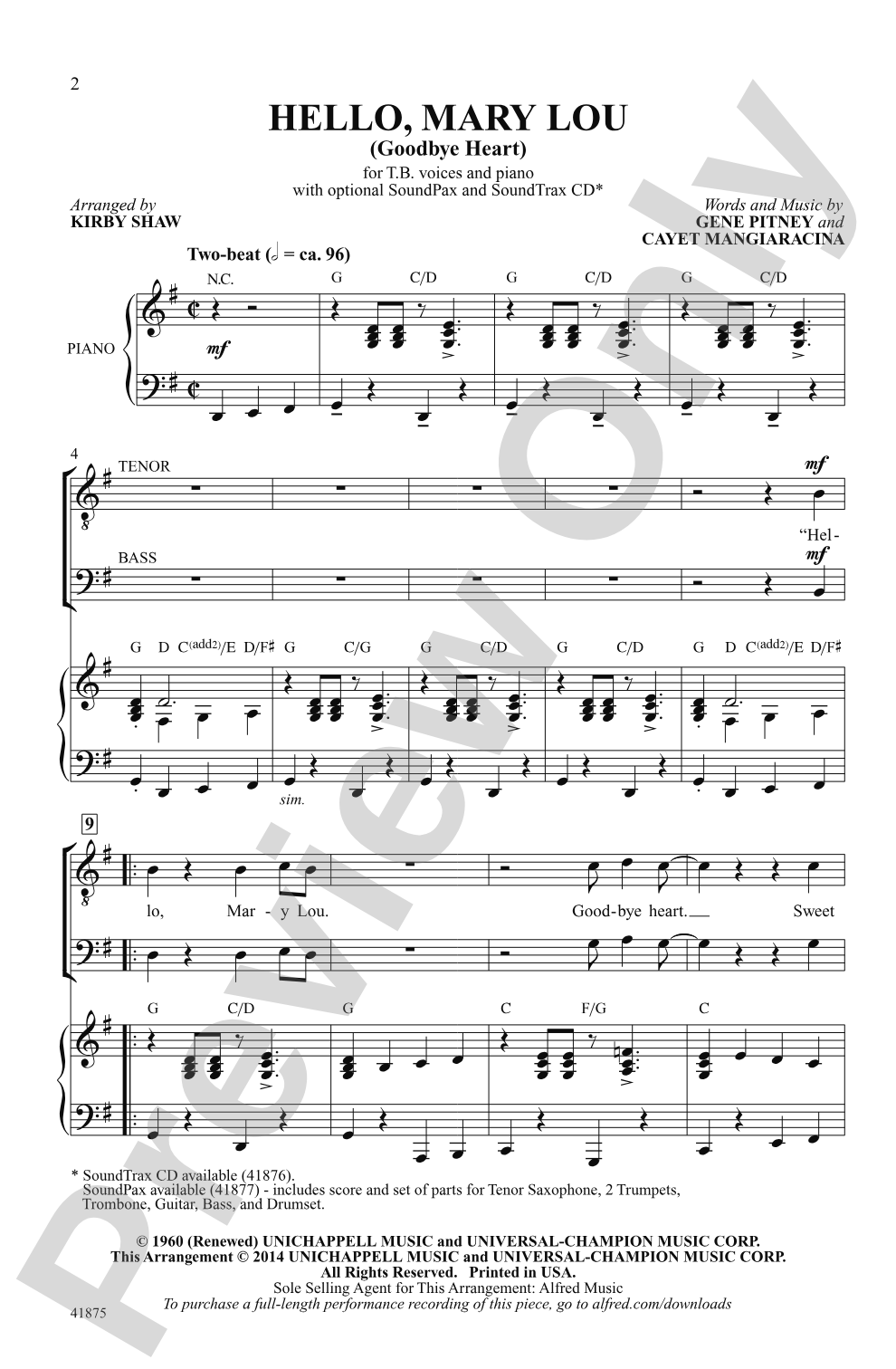
Hello, Mary Lou Sheet Music Preview

Hello, Mary Lou: TB Choral Octavo

(Goodbye Heart)

Words and music by Gene Pitney and Cayet Mangiaracina / arr. Kirby Shaw

Item: 00-PO-0001998

Digital Download
$1.95

Minimum order quantity: 20 copies

One moment…

Description
Ricky Nelson landed on the Billboard Hot 100 with this B-side single from 1961. Great voice-leading and fun harmonies guarantee success for guys of any age.

Hello, Mary Lou: TB Choral Octavo isn't in MakeMusic Cloud just yet...but it could be. Let us know you'd like to see it, and you'll help shape what comes next. In the meantime, start a free trial and dive into thousands of interactive titles your students can play along with today.

Sample Audio
0:00
0:00
Sample Video
Additional Details
Series: Alfred Pop Choral Series
Publisher: Alfred Music
Page Count: 8
SKU: 00-PO-0001998

More about this title

About the Composer: Gene Pitney

Gene Pitney (1941-2006) was a prolific singer-songwriter and producer who built a career writing hits for other artists while maintaining his own recording presence. Beyond "Hello, Mary Lou," he penned chart success for Roy Orbison, Ricky Nelson, and countless others, demonstrating a gift for crafting memorable melodies and vocal-friendly arrangements that remain teachable and engaging decades later.

Why we love this

Kirby Shaw's voicing transforms this 1961 hit into an arrangement that actually sits well for male voices without sacrificing the song's charm or harmonic sophistication. The balance between accessibility and genuine musical interest means your singers learn real voice-leading while having genuine fun with a tune they may already know.

What to expect

Upbeat and affectionate without being saccharine. The melody bounces with personality; the harmonies add warmth and sophistication underneath. Singers and audiences alike recognize the nostalgic appeal of this 1960s gem, but Shaw's arranging keeps it fresh and genuinely musical.

Who it's for

Male or TB choir singers at the intermediate level and up who want a pop standard with actual harmonic substance. Soloists and small ensembles can also lift this from the larger octavo, and it works equally well for concert audiences and casual performance settings.

How to get the most out of it

  • Shape the phrase endings with care; the natural bounce of the melody can flatten into rushed territory if the rhythm section doesn't anchor the harmonic movement.
  • Blend the inner voices cleanly, especially where the harmonies stack. Good tuning in the second part makes the whole arrangement sing.
  • Keep the recorded accompaniment as a reference during early rehearsals, but pull back the tempo slightly in live performance to let your singers' voices breathe through the phrase turns.

How to use it

Program this mid-set as a crowd-pleaser that bridges classical or jazz choral standards with the lighter side of your season. It also works as an encore or as part of a pop or American songbook concert, especially when paired with other accessible hits from the same era.

Skills your students will build

  • Voice leading across TB and extended voicings (TTB, TBB, TTBB options)
  • Balancing melody and harmony in pop-style arrangements
  • Phrasing and rhythmic precision in syncopated melodic figures
  • Part independence and blend in close-voiced chords

You May Also Like