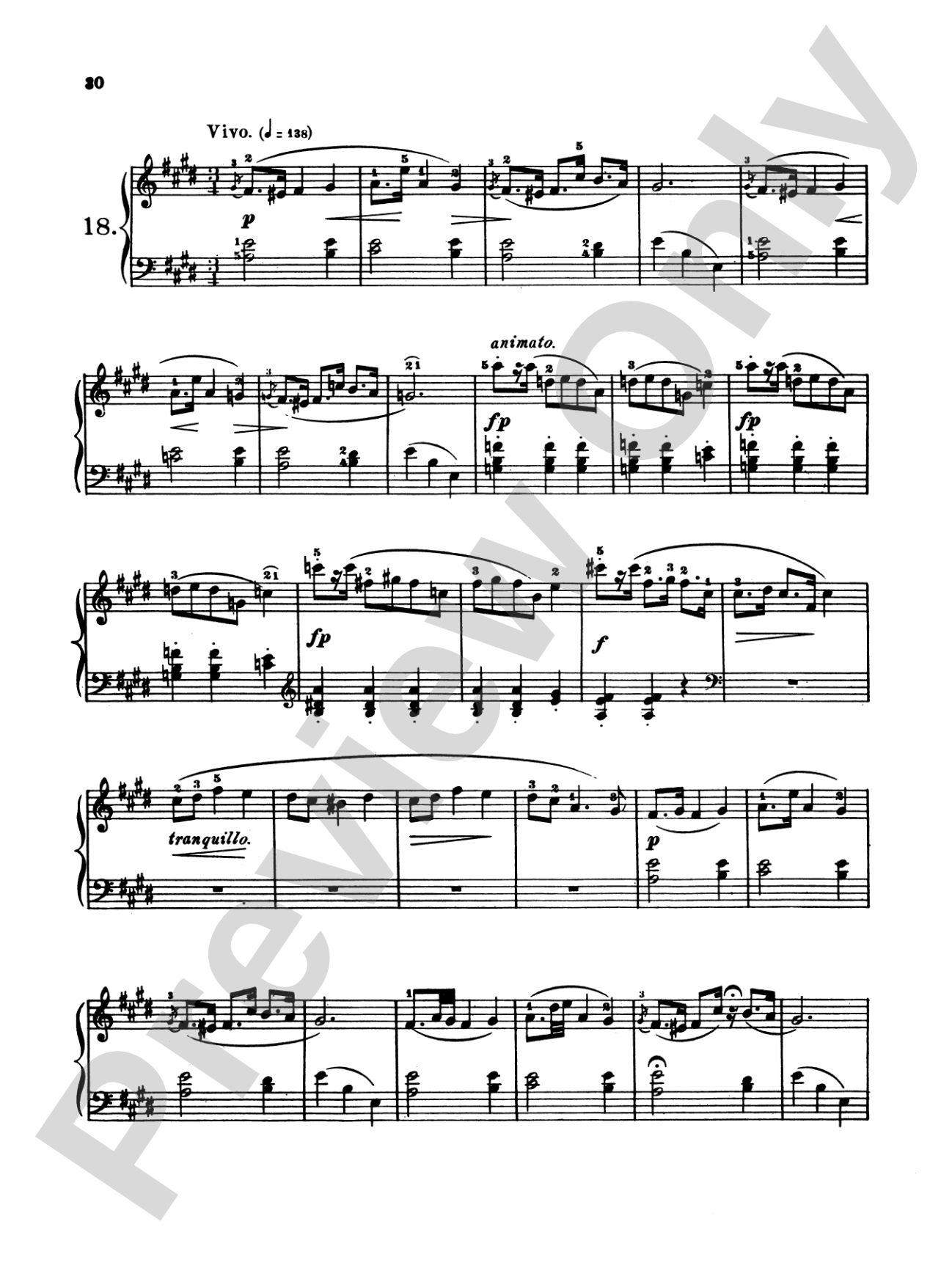
Heller: Twenty-four Piano Studies for Rhythm and Expression (Op. 125) Sheet Music Preview

Heller: Twenty-four Piano Studies for Rhythm and Expression (Op. 125)

By Stephen Heller

Level: Intermediate / Advanced

Item: 00-PC-0007806

Digital Download
$0.99
Description
A collection of intermediate to advanced exercises for piano, composed by Stephen Heller.

Don't just read it, hear it, play along with it, and watch your students grow with it. In MakeMusic Cloud, Heller: Twenty-four Piano Studies for Rhythm and Expression (Op. 125) comes alive with professional accompaniment, adjustable tempo, and built-in practice tools that turn solo practice into real progress.

Sample Audio
No sample audio found.
Sample Video
Additional Details
Series: Kalmus Edition
Publisher: Alfred Music
Page Count: 48
SKU: 00-PC-0007806

More about this title

About the Composer: Stephen Heller

Stephen Heller (1813–1888) was an Austrian pianist and composer whose prolific output shaped Romantic-era pedagogy. Though less celebrated than his contemporaries Liszt and Chopin, Heller earned respect as a thoughtful craftsman whose études balanced technical demands with genuine musical substance. His works remain staples in conservatory curricula, valued for their musicality and structural clarity.

Heller's approach to composition reflected his training under Carl Czerny and his deep study of Bach. Rather than writing exercises that felt mechanical, he embedded lyrical melodies and harmonic sophistication into every piece. This philosophy defined Op. 125, a collection that treats rhythm and expression as intertwined artistic concerns rather than separate technical problems.

Why we love this

Heller's Op. 125 stands apart because these études refuse to be mere finger drills. Each study targets a distinct musical and technical challenge while maintaining an internal narrative arc, so students develop rhythm and expression in tandem rather than treating them as mechanical checkboxes. The Kalmus Edition makes these 48 pages accessible and affordable, giving advanced intermediate pianists exactly what they need to deepen their interpretive voice.

What to expect

These études breathe with Romantic lyricism beneath their technical scaffolding. You'll encounter lyrical melodies that recall art song, harmonic language that shifts between major and minor with introspective grace, and rhythmic patterns that move from straightforward to genuinely intricate. The collection feels less like an obstacle course and more like a series of small character pieces that happen to be excellent for your fingers.

Who it's for

Advanced intermediate to early advanced pianists working toward conservatory entrance exams or serious competition preparation will find sustained value across all twenty-four studies. Teachers seeking études that develop both technical security and musical maturity can assign these strategically throughout a student's progression rather than as supplementary drills.

How to get the most out of it

  • Map out the harmonic rhythm before focusing on individual fingers; Heller's expressions often hinge on how you shape chord progressions rather than note-by-note articulation.
  • Experiment with tempo flexibility within each study's character marking; Heller wrote these assuming the pianist would breathe and shape phrasing, not maintain metronomic rigidity.
  • Listen for where rhythmic precision serves the musical idea versus where a slight rubato enhances expression; Heller's titles hint at what matters most in each piece.

How to use it

Assign individual studies as recital openers or encores when they match a student's current technical focus and interpretive growth. Alternatively, integrate select pieces into a studio progression so that students encounter them at precisely the moment they're ready to explore rubato, voice leading, and harmonic color with genuine musical purpose.

Skills your students will build

  • Controlling rhythm within expressive contexts (varying tempo subtly without losing pulse)
  • Voicing chords to highlight harmonic progression and create color
  • Coordinating hand independence across changing rhythmic relationships
  • Shaping legato lines that sing above accompaniment figures
  • Reading and interpreting Romantic-era expression markings and their interaction with technical demands

You May Also Like