
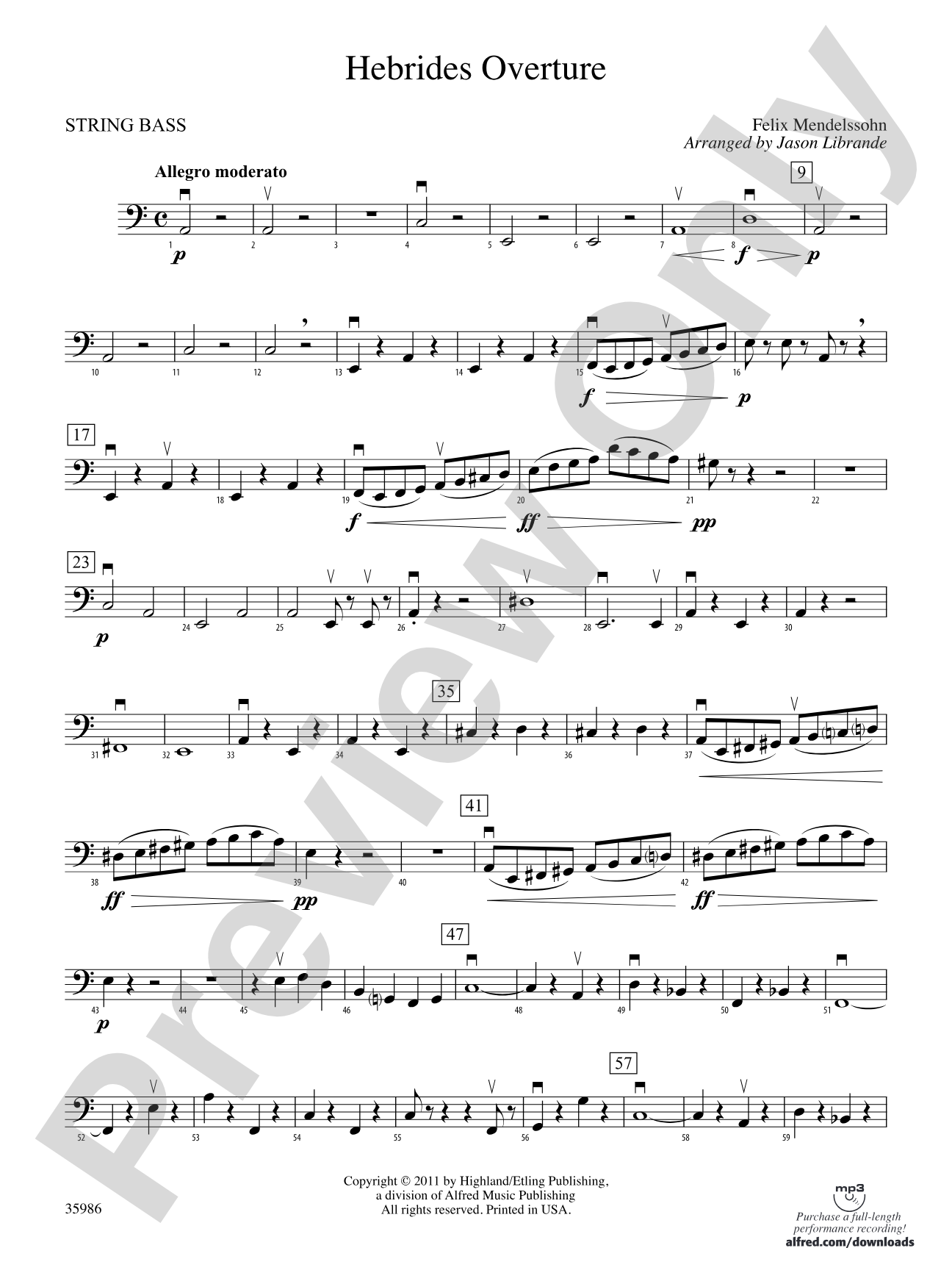

Hebrides Overture: String Bass
By Felix Mendelssohn / arr. Jason Librande
Grade: 4
Item: 00-PC-0015061_SB
$5.99
Pickup currently not available
Description
Finally for string orchestra! Mendelssohn's masterpiece requires skill in bow control, advanced rhythms, and dynamic range, making it a staple of full orchestra competition literature. Now string orchestras can enjoy this repertoire for contest or any concert performance. The creative use of ostinato and lyrical melodies are sure to captivate audiences and adjudicators alike as they hear the sounds and sights of the ocean represented in music. (4:00)


Don't just read it, hear it, play along with it, and watch your students grow with it. In MakeMusic Cloud, Hebrides Overture: String Bass comes alive with professional accompaniment, adjustable tempo, and built-in practice tools that turn solo practice into real progress.
Open in the Player
Jump straight in and assign it today.
Start Your Free Trial
Open this title and explore the full library in minutes.
Sample Audio
1
Audio File
--:--
0:00
0:00
Sample Video
Additional Details
Series:
Highland/Etling String Orchestra
Publisher:
Alfred Music
Page Count:
124
SKU:
00-PC-0015061_SB
Instrumentation:
string
More about this title
About the Composer: Felix Mendelssohn
Felix Mendelssohn (1809-1847) stands as one of the Romantic era's most prolific and gifted composers, equally skilled in orchestral works, chamber music, and choral literature. His concert overtures set the standard for the genre, combining structural clarity with rich harmonic language and vivid programmatic storytelling. Mendelssohn's influence on music education remains profound; his works appear across concert halls and competitions worldwide and continue to challenge and inspire young musicians at every level.
Beyond composition, Mendelssohn was a conductor, pianist, and mentor who deeply understood the capabilities of each instrument and ensemble. His meticulous approach to orchestration and his gift for memorable melody made his music accessible without sacrificing sophistication. For string players and orchestras in particular, his works demand both technical precision and interpretive maturity.
Why we love this
Librande's orchestration captures every dramatic moment of the original without sacrificing playability at the Grade 4 level. String orchestras rarely have access to this caliber of repertoire in competitive contexts, and this arrangement opens the door to a work that adjudicators and audiences recognize instantly as a masterwork. The balance between technical challenge and musical reward makes rehearsals genuinely satisfying.
What to expect
Hebrides Overture sweeps listeners through shifting moods of the Scottish seascape. The journey opens with a restless, driving accompaniment figure that evokes churning waters, then unfolds into soaring, cantabile melodies that capture both the grandeur and solitude of the ocean. The work's architecture builds from intimate chamber textures to full, surging ensemble climaxes, leaving performers and audiences alike with a sense of having witnessed something both tumultuous and profoundly beautiful.
Who it's for
String orchestras at the Grade 4 level who are competing or programming a substantial concert work. This is ideal for ensembles that have developed solid intonation, rhythmic independence, and the maturity to sustain long phrases. Directors seeking repertoire that meets competitive standards while remaining within reach of a focused, well-rehearsed group will find this indispensable.
How to get the most out of it
- Shape the opening ostinato with consistent bow contact and weight; let the figure breathe rhythmically without rushing even as it builds in intensity.
- Approach the lyrical passages with phrase-based bowing rather than measure-based. Listen across the strings to blend sustained lines, and allow the melody to float above the accompaniment.
- Control dynamic contrast deliberately. Mendelssohn's writing requires the ensemble to move from intimacy to power; mark your own scores to identify where each section peaks.
- Lock the rhythmic figures in your rhythm section (cellos and basses) before layering in the melodic content. Precision in the foundation frees the violins to focus on line and tone.
How to use it
This works brilliantly as a competition centerpiece or as the anchor of a concert dedicated to Romantic era orchestral literature. Consider pairing it with shorter, contrasting works to let audiences absorb the emotional arc of the overture without fatigue. Programming it in the second half of a concert allows time for careful rehearsal final run-throughs while keeping the performance fresh.
Skills your students will build
- Sustained bow control across long, cantabile phrases
- Navigation of complex rhythmic figures and syncopation
- Dynamic shaping within ostinato and accompaniment patterns
- Sectional balance between melody, countermelody, and harmonic foundation
- Collaborative listening and ensemble blend across changing textures
- Expressive interpretation of programmatic content through instrumental color