Hebraic Elegy for Two Violas Cover Image

Hebraic Elegy for Two Violas: Viola, Duo, Conductor Score & Parts

$12.00 USD
Sale price  $12.00 USD Regular price 
Skip to product information
Hebraic Elegy for Two Violas Cover Image

Hebraic Elegy for Two Violas: Viola, Duo, Conductor Score & Parts

By Amy Barlowe

Item: 36-BSMCHM117

$12.00
Shipped

One moment…

Description
Written by Amy Barlowe as a tribute to her late father, HEBRAIQUE ELEGIE is a hypnotic duo for two violas with a haunting and beautiful melody. This challenging and expressive duet is for advanced violists. Versions for violin duo and viola duo are available from the publlisher.

Hebraic Elegy for Two Violas: Viola, Duo, Conductor Score & Parts isn't in MakeMusic Cloud just yet...but it could be. Let us know you'd like to see it, and you'll help shape what comes next. In the meantime, start a free trial and dive into thousands of interactive titles your students can play along with today.

Sample Pages

No sample pages found.

Sample Audio
No sample audio found.
Sample Video
Additional Details
Series: Black Squirrel Music - LudwigMasters
Publisher: Keiser Productions, Inc.
ISBN10: 8-89-270463-X
ISBN13: 979-8-89-270463-2
UPC: 659359651014
SKU: 36-BSMCHM117
Instrumentation: Viola Duo

More about this title

About the Composer: Amy Barlowe
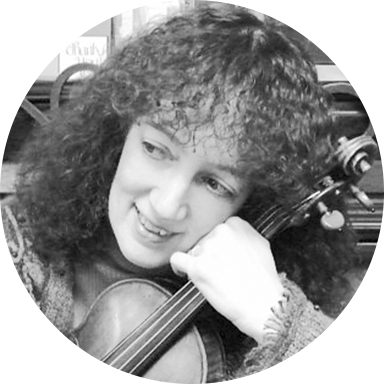
Amy Barlowe

Amy Barlowe is a violinist and composer trained at Juilliard School, where she studied with Ivan Galamian and Margaret Pardee and worked extensively with chamber music mentors including Josef Gingold and Samuel Rhodes. Her performance career spans solo recitals and chamber music across North America and major concert halls, earning praise for her musicianship and instrumental mastery. In 1988, she co-founded Duo [AB]2 with her husband Alan Bodman, recording for the Medici and Azica labels and earning recognition from American Record Guide for their flawless tonal production.

Barlowe's compositional output includes works for strings and piano, orchestral arrangements (notably of Schindler's List, endorsed by John Williams and published by Hal Leonard), an opera ballet, and a Requiem Mass. Her viola duos have appeared on recordings released by Koch International. She has taught violin at Willamette University as an Associate Professor and held faculty positions at Juilliard Pre-College, New York's School for Strings, and multiple summer festivals. Currently, she serves on the artist and faculty roster of the Meadowmount School of Music and the Ohio Conservatory.

Why we love this

Barlowe writes from lived experience and deep string knowledge, crafting a piece that honors both the instrument and the human need to express grief through music. Advanced violists will find a score that demands expressive maturity and technical control without sacrificing lyrical beauty. The hypnotic quality of the writing makes this equally powerful in concert or as a profound rehearsal moment.

What to expect

A intimate conversation between two instruments, marked by haunting melodic lines that feel both ancient and achingly contemporary. The piece draws the listener inward, creating a meditative space where every note carries weight and intention. The viola's natural warmth becomes an instrument of profound emotional expression.

Who it's for

Advanced violists seeking challenging and emotionally substantial repertoire that rewards refined musicianship. This duet works beautifully for recital partnerships, chamber music ensembles needing a powerful standalone work, or advanced private students ready to explore expressive depth.

How to get the most out of it

  • Balance the parts so the melody emerges clearly while the accompanying viola remains present; this is ensemble music, not a solo with accompaniment.
  • Work the intonation meticulously in the high passages where the viola's vulnerability is most exposed.
  • Establish a steady internal pulse before rehearsal so you can breathe together and shape phrases as one voice, even when your lines diverge.
  • Let silence and space breathe between phrases; the haunting quality depends on what you don't play as much as what you do.

How to use it

Program this as a compelling solo work in a chamber concert or viola recital, where its emotional depth can anchor an entire program. It also serves as a meaningful closing piece for a concert section, leaving audiences in reflection rather than applause.

Skills your students will build

  • Sustained vibrato control and tonal production in high register
  • Ensemble intonation and balance in close-interval writing
  • Phrase shaping and breath coordination between independent melodic lines
  • Expressive interpretation and emotional transparency in lyrical playing

You May Also Like