
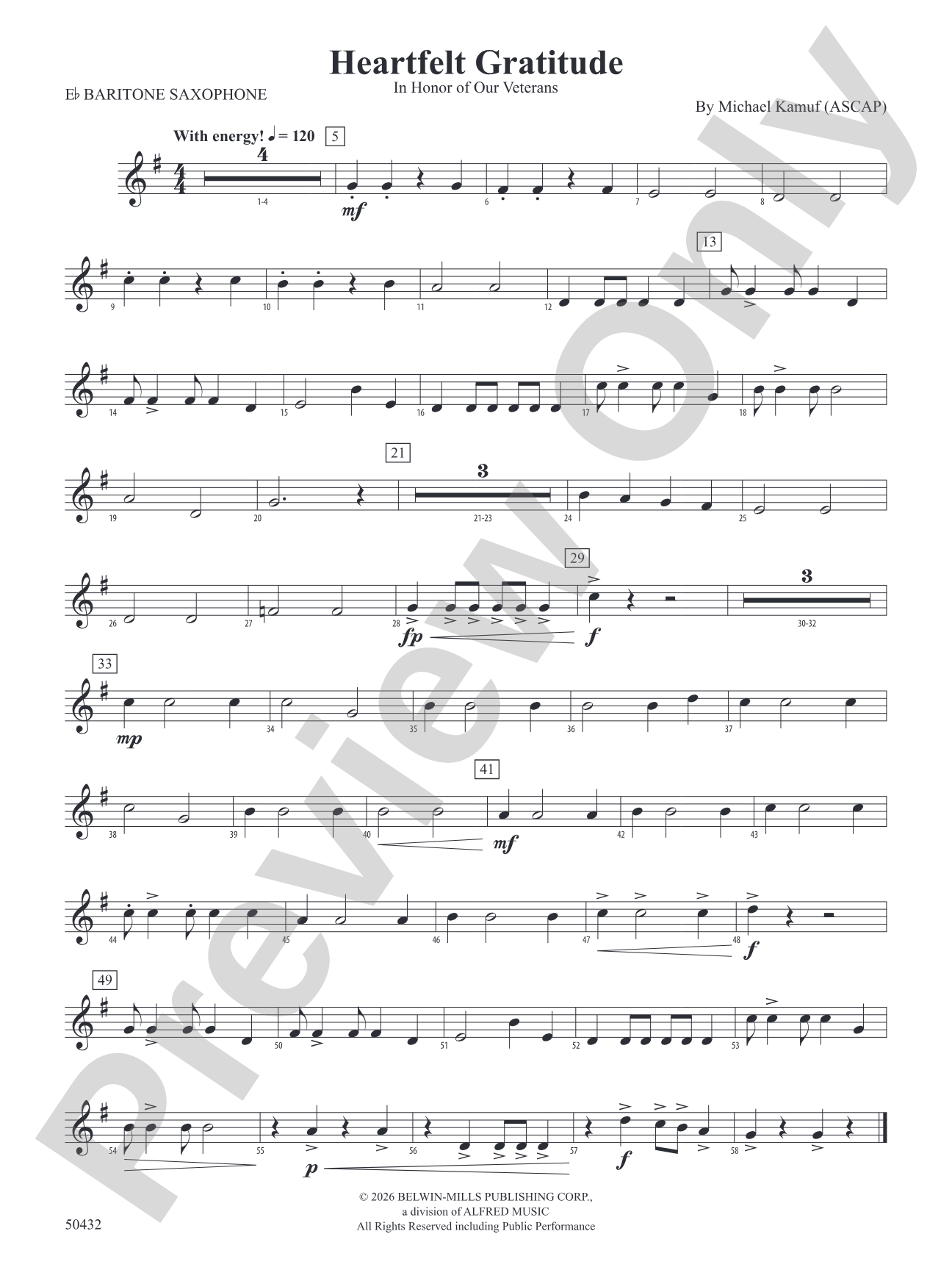

Heartfelt Gratitude: E-flat Baritone Saxophone
In Honor of Our Veterans
By Michael Kamuf
Grade: 1.5
Item: 00-PC-0019774_BTX
$3.00
Pickup currently not available
Description
Honor our veterans with Heartfelt Gratitude, by Michael Kamuf. It is filled with heroic melodies, driving rhythms, varied textures, and accessible percussion writing. Dotted quarter notes and syncopated figures are reinforced throughout the work, creating a sound teaching piece with a sentiment appropriate for celebrations and concerts.


Don't just read it, hear it, play along with it, and watch your students grow with it. In MakeMusic Cloud, Heartfelt Gratitude: E-flat Baritone Saxophone comes alive with professional accompaniment, adjustable tempo, and built-in practice tools that turn solo practice into real progress.
Open in the Player
Jump straight in and assign it today.
Start Your Free Trial
Open this title and explore the full library in minutes.
Sample Audio
1
Audio File
--:--
0:00
0:00
Sample Video
Additional Details
Series:
Belwin Beginning Band
Publisher:
Alfred Music
SKU:
00-PC-0019774_BTX
More about this title
About the Composer: Michael Kamuf

Michael Kamuf earned Bachelor of Music degrees in Jazz Performance and Music Education from Youngstown State University's Dana School of Music and a Master of Arts in Instrumental Conducting from George Mason University. His compositions and arrangements have been recorded and performed by major jazz ensembles including the Woody Herman Orchestra, Glenn Miller Orchestra, USAF Airmen of Note, and US Navy Commodores, as well as by soloists such as James Moody, Eddie Daniels, and Sean Jones. He served as assistant principal trumpet with the Youngstown Symphony Orchestra and has performed with the Woody Herman and Tommy Dorsey Orchestras.
Kamuf taught instrumental music in Montgomery County Public Schools for thirty years and directed bands and orchestras at John T. Baker Middle School in Damascus, Maryland for twenty-seven of those years. Under his leadership, the Baker ensembles earned consistent festival recognition and commissioned several works for young concert bands. He is an exclusive Belwin composer with over 100 publications across jazz, orchestra, and concert band catalogs. Currently, he leads the Mike Kamuf Little Big Band in the Baltimore and Washington, DC area and continues to compose for young ensembles.
Why we love this
Kamuf understands what Grade 1.5 bands actually need: straightforward writing that teaches real concepts without condescension. The dotted quarter and syncopated rhythms aren't decorative here; they're woven into an accessible context where students hear and perform them naturally. Programming a patriotic work that sounds confident and full rather than thin or overly simple gives your band genuine concert presence.
What to expect
Heroic and direct, with a warmth that feels earned rather than sentimental. The varied textures prevent the piece from becoming one-dimensional; driving rhythms alternate with moments that let the melody shine, creating a sense of narrative progression across the performance.
Who it's for
Grade 1.5 concert bands preparing for festival, concert, or veterans appreciation programs. The writing is accessible enough for developing bands yet substantial enough to hold an audience's attention and give ensemble members something meaningful to perform.
How to get the most out of it
- Keep the rhythmic figures crisp and clear, especially the syncopated passages. Young bands often rush or blur these figures under tempo pressure, so isolate them in sectional rehearsals before full ensemble runs.
- Balance heroic melodies across your woodwind and brass sections. The piece gains impact when all voices claiming a phrase are heard at equal dynamic level; adjust individual stand volume if needed rather than reshaping the contour.
- Engage your percussion section fully. Accessible writing does not mean simple; the rhythmic relationships between mallets, snare, and bass drum need precision to support the driving character Kamuf intends.
- Let the dotted rhythms breathe slightly without losing momentum. Young bands often interpret these patterns as rigid eighth-note subdivisions; conduct them clearly so performers understand the swing and lift within a straight meter.
How to use it
Pair this with other patriotic or ceremonial works to create a thematic concert segment, or use it as an opener to establish strong ensemble presence and audience connection. Its accessibility makes it an ideal choice for spring concerts or community events where you want to honor veterans while giving your band a confidence-building performance experience.
Skills your students will build
- Reading and performing dotted quarter note rhythms in varied contexts
- Executing syncopated figures at varying tempos without rushing
- Balancing melodic voices across woodwind and brass sections
- Maintaining driving rhythmic momentum while respecting dynamic shape
- Coordinating simple percussion parts that support ensemble pulse