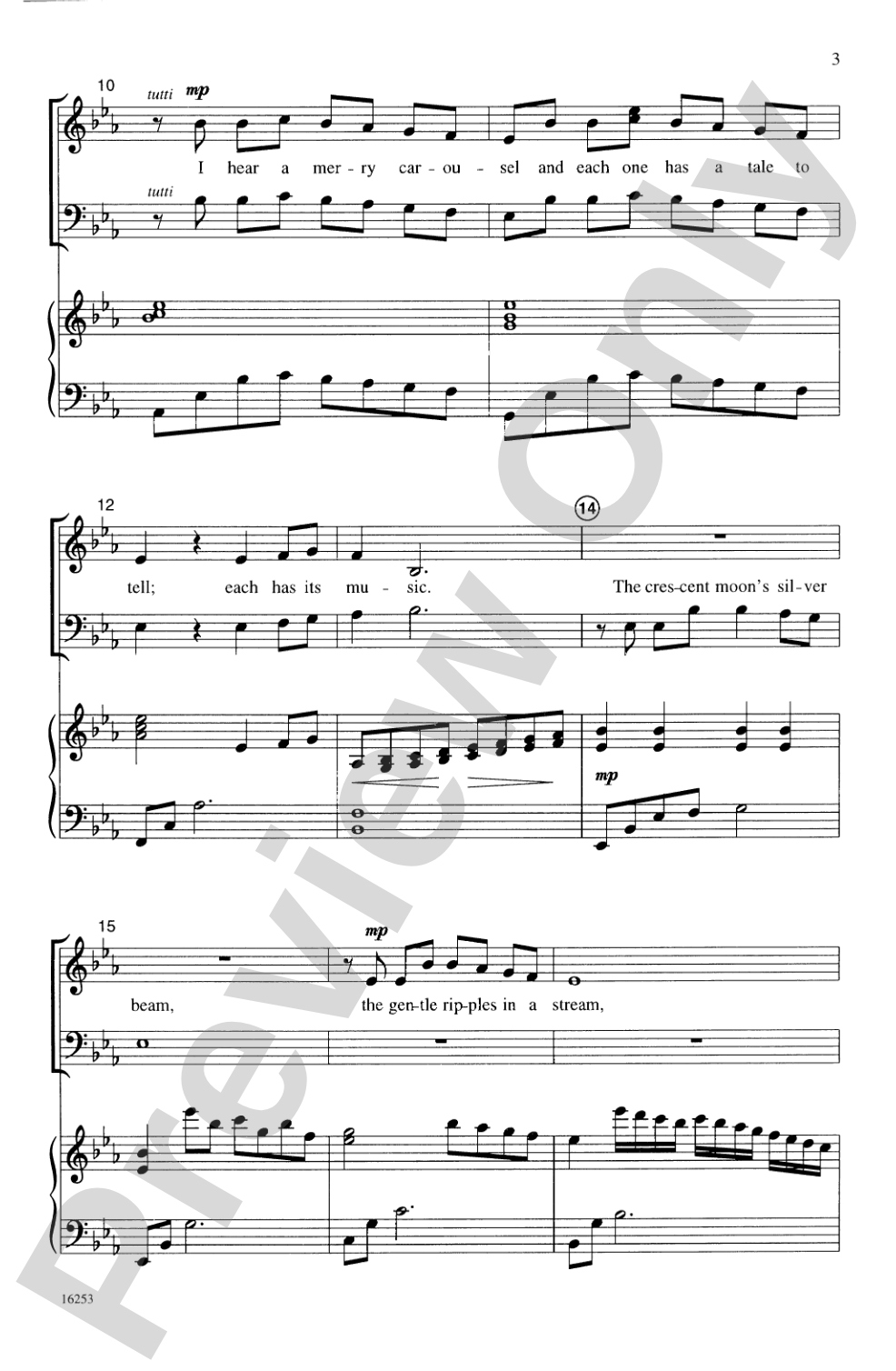
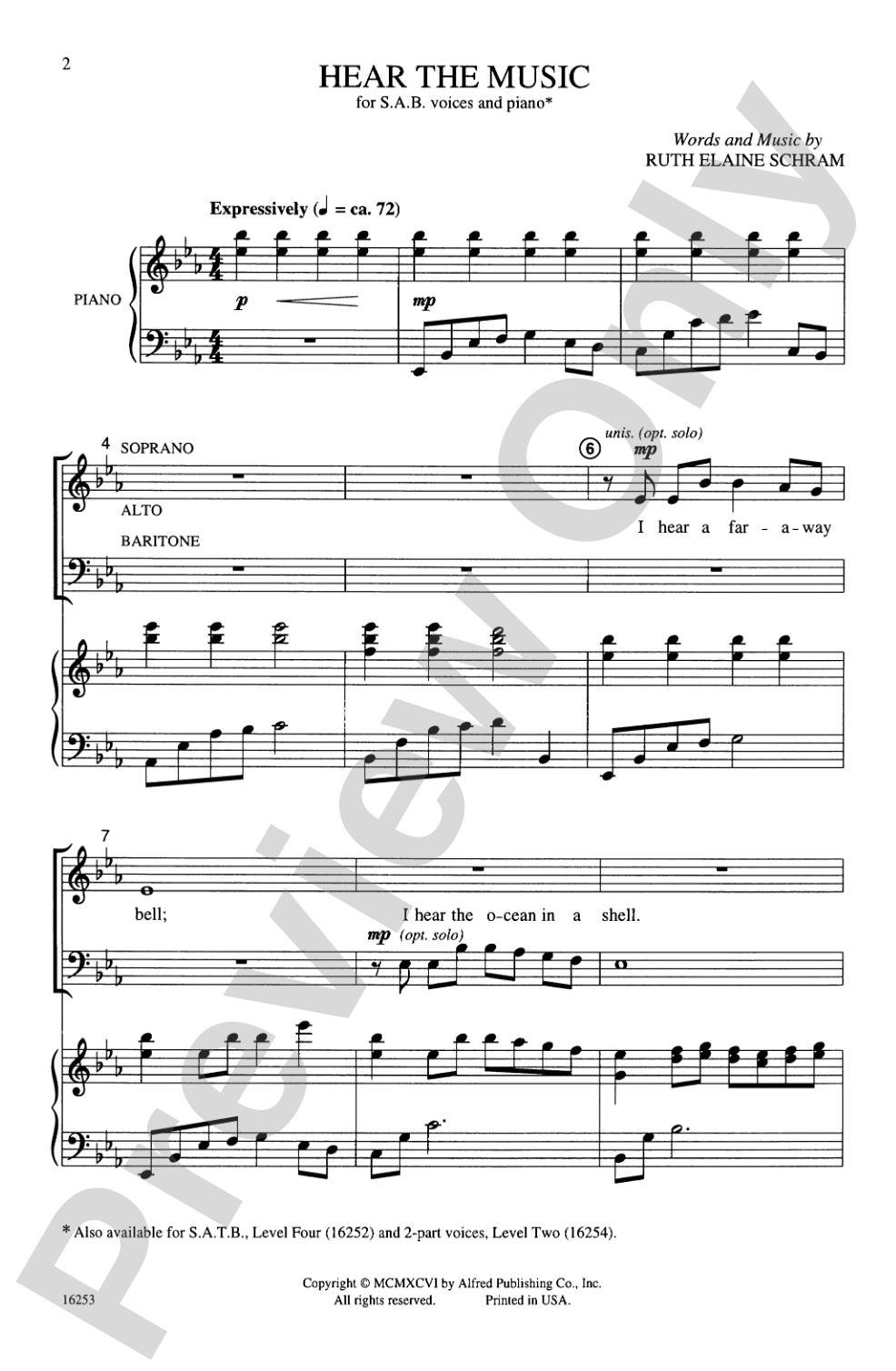
Hear the Music Sheet Music Preview

Hear the Music: SAB Choral Octavo

Music by Ruth Elaine Schram

Item: 00-PO-0003945

Digital Download
$2.25

Minimum order quantity: 20 copies

Description

Hear the Music: SAB Choral Octavo isn't in MakeMusic Cloud just yet...but it could be. Let us know you'd like to see it, and you'll help shape what comes next. In the meantime, start a free trial and dive into thousands of interactive titles your students can play along with today.

Sample Audio
No sample audio found.
Sample Video
Additional Details
Series: Alfred Archive Edition: Alfred Choral Designs
Publisher: Alfred Music
Page Count: 8
SKU: 00-PO-0003945

More about this title

About the Composer: Ruth Elaine Schram

Ruth Elaine Schram is a composer and arranger with a gift for creating accessible choral music that speaks to singers across skill levels. Her work appears regularly in educational and community choir settings, where her thoughtful voicings and clear musical storytelling engage both performers and audiences.

Why we love this

Schram writes for SAB with genuine understanding of what three-part mixed choirs can achieve. The piece balances musical substance with singability, giving singers real work to do without drowning them in complexity. You'll find it rewarding to rehearse and satisfying to perform.

What to expect

The piece has a direct, communicative quality that invites singers and listeners into its world. There's warmth in the writing and a sense of clarity that makes the musical ideas memorable and emotionally resonant.

Who it's for

This octavo works well for mixed choirs at the intermediate level, including community groups, high school ensembles, and college non-majors choirs. The SAB voicing makes it accessible to groups with changing voices or limited bass sections without sacrificing musical quality.

How to get the most out of it

  • Shape each phrase with intent rather than singing through the bar lines. Let the text and melody guide your breath placement and dynamic contour.
  • Balance the three parts by thinking of them as equal collaborators in a conversation. Avoid letting any one voice dominate unless the score explicitly calls for it.
  • Pay attention to the harmonic movement beneath the melody. When singers understand how their notes support the overall chord progression, intonation and blend improve naturally.
  • Use the text as your guide for phrasing and expression. Let the meaning of the words inform your tempo and emotional approach to each section.

How to use it

This works beautifully as a concert opener or as part of a set of secular choral selections. Its accessibility and musical integrity make it an excellent choice for building confidence in developing ensembles while keeping the program musically engaging.

Skills your students will build

  • Balancing three-part voicing with equal blend
  • Interpreting text to shape phrasing and dynamics
  • Reading harmonic movement and supporting chord progressions
  • Managing intonation in mixed-voice ensembles

You May Also Like