
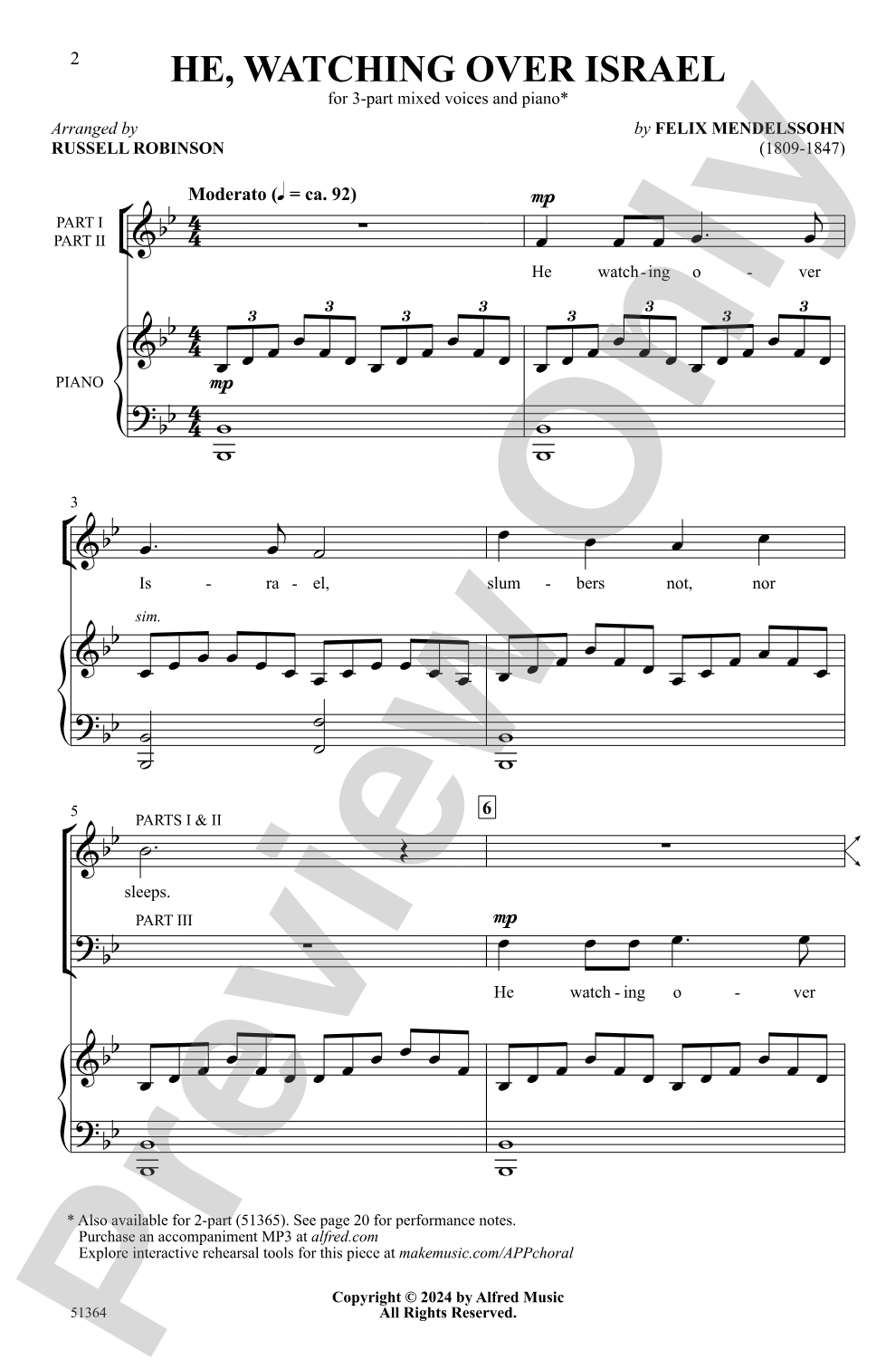
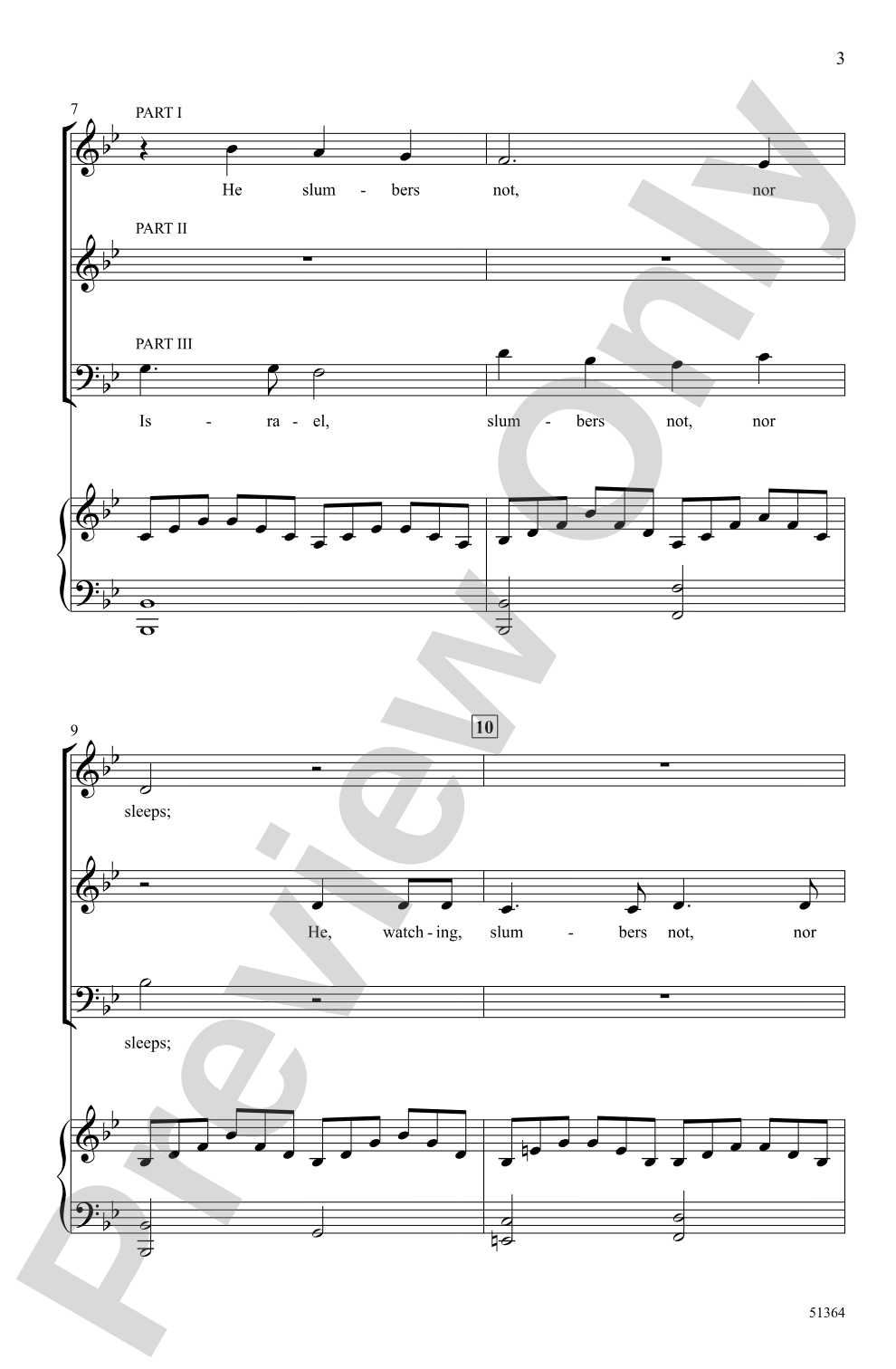
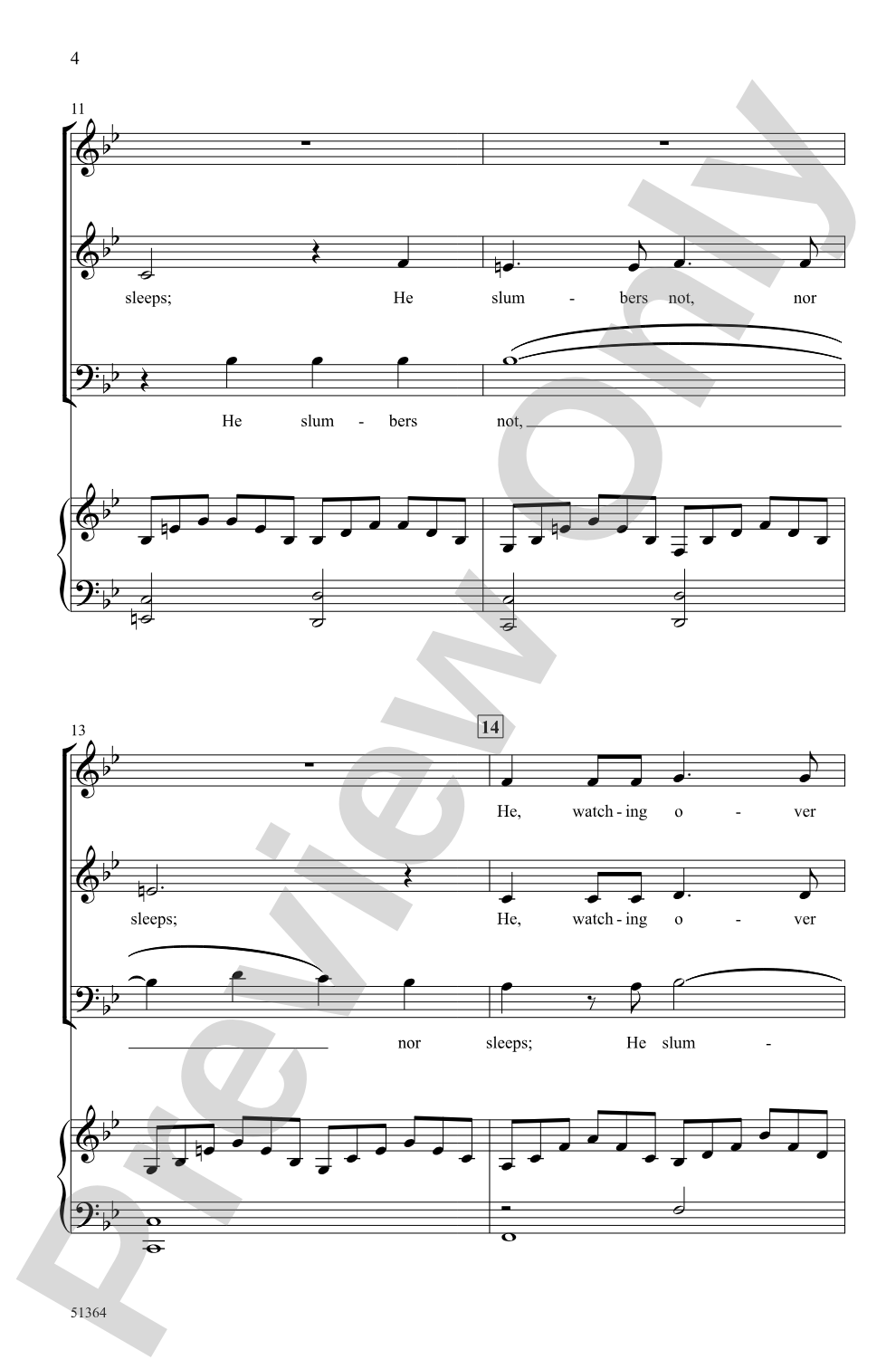
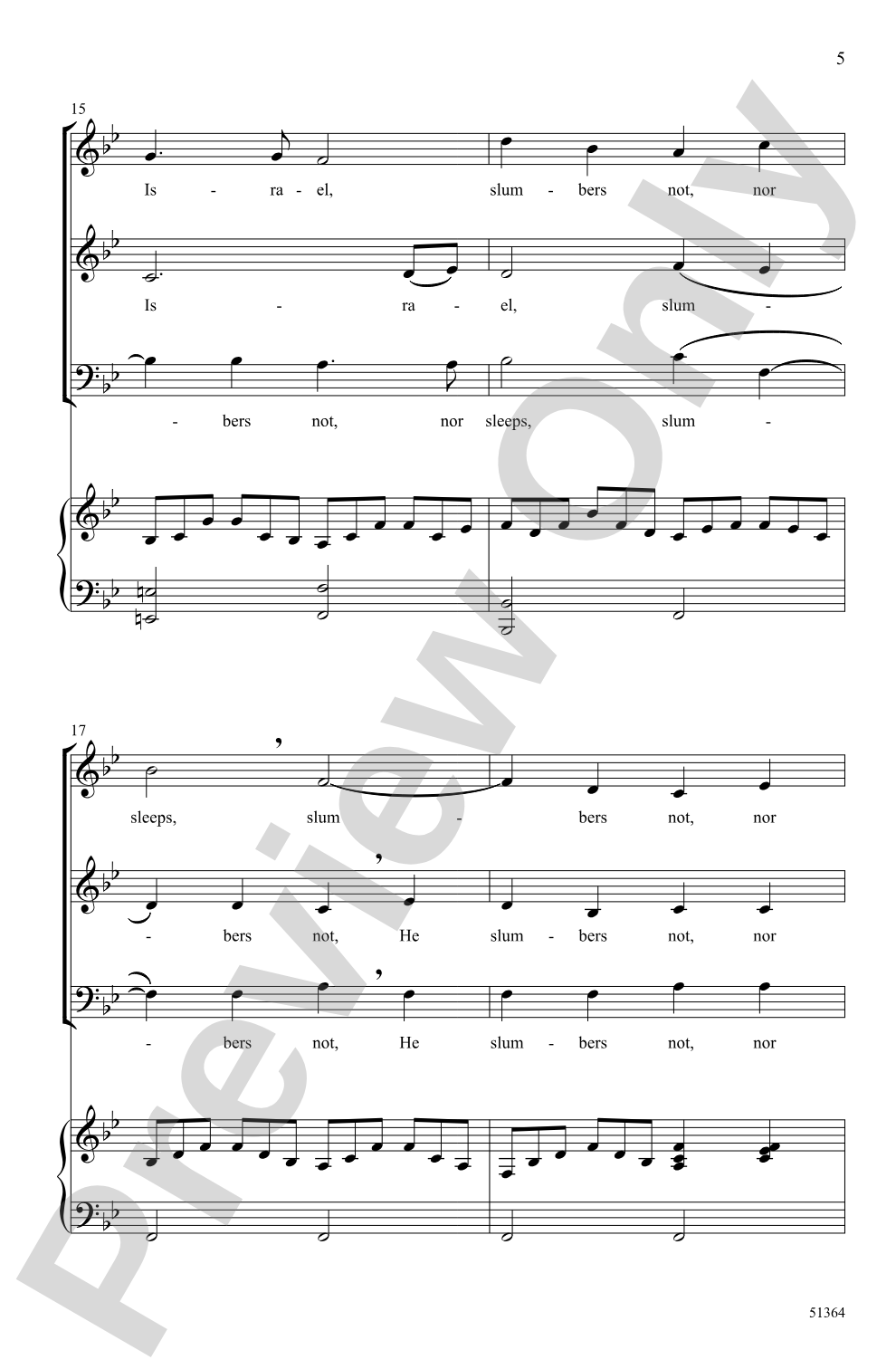

He, Watching Over Israel: 3-Part Mixed Choral Octavo
By Felix Mendelssohn / arr. Russell Robinson
Item: 00-PO-0007308
$2.50
Minimum order quantity: 20 copies
Pickup currently not available
Description
From Felix Mendelssohn's oratorio Elijah, this arrangement makes the famous chorus accessible to developing choirs. Voice and piano parts have been carefully reduced while maintaining the Romantic-era character of the original. Fine festival fare!
The PerformancePlus+ series is an innovative addition to the ever-expanding MakeMusic Cloud interactive library. These engaging selections are presented with educational resources designed to enrich the rehearsal process and create outstanding performances. Including:


The PerformancePlus+ series is an innovative addition to the ever-expanding MakeMusic Cloud interactive library. These engaging selections are presented with educational resources designed to enrich the rehearsal process and create outstanding performances. Including:
- Assignment, recording, and assessment tools within MakeMusic Cloud
- Part-predominant and accompaniment tracks
- Printable sheet music (with a standard MakeMusic Cloud subscription)
- Correlated rehearsal guides and performance notes
- Rights to perform in a live or virtual setting
He, Watching Over Israel: 3-Part Mixed Choral Octavo isn't in MakeMusic Cloud just yet...but it could be. Let us know you'd like to see it, and you'll help shape what comes next. In the meantime, start a free trial and dive into thousands of interactive titles your students can play along with today.
Request This Title
Tell us you want it.
Start Your Free Trial
Explore everything that's ready to play right now.
Sample Audio
1
Audio File
--:--
0:00
0:00
Sample Video
Additional Details
Series:
Alfred Choral - PerformancePlus+
Page Count:
20
SKU:
00-PO-0007308
More about this title
About the Composer: Felix Mendelssohn
Felix Mendelssohn (1809, 1847) was a German composer whose sacred choral works remain cornerstones of the oratorio and festival repertoire. His oratorio Elijah, premiered in 1846, stands alongside Handel's masterworks as a pinnacle of the form, combining dramatic storytelling with profound musical architecture. For music educators, Mendelssohn represents a bridge between classical form and Romantic expression, writing with both technical clarity and emotional depth that serves developing singers well.
Mendelssohn's approach to choral writing prioritized accessibility without sacrificing sophistication. He understood how to write idiomatically for voices, creating parts that sit naturally in the register while building ensemble discipline through thoughtful voice leading. His legacy in music education extends beyond the notes on the page; his works teach musicians how to shape phrases, balance texture, and communicate meaning through carefully controlled harmonic color.
Why we love this
This arrangement captures what makes the original chorus so compelling, the serene, hymn-like progression that builds into a declaration of faith, without overwhelming developing singers with four-part complexity or excessive range. Robinson's reduction preserves the Romantic character while creating a piece that actually sits in the voice, letting your singers focus on phrasing and expression rather than survival. It's substantial enough to program at a festival or concert as a genuine artistic statement, not filler.
What to expect
Hushed and reverent in its opening, gradually accumulating power through gentle harmonic motion rather than dramatic gesture. The piece has an almost meditative quality, with long lines that ask singers to sustain tone and shape phrases with maturity. You'll feel the architectural strength of Mendelssohn's original even in this streamlined form.
Who it's for
Intermediate to advancing mixed choirs (high school and college, or adult community ensembles with a season under their belts). The three-part texture accommodates limited tenor sections while remaining sophisticated enough to engage singers with more experience. This works for groups ready to program sacred music beyond pop or swing arrangements.
How to get the most out of it
- Let the harmonic movement breathe. This is not a piece that needs rushing; the stillness of the opening measures sets the spiritual tone for everything that follows.
- Balance the middle voices carefully in the homophonic sections so the top line emerges without anyone forcing. A light mezzo or second soprano line can disappear if basses and tenors aren't singing with intention.
- Use the recorded accompaniment during rehearsals to establish tempo and harmonic context, but pull it away in final rehearsals so the choir learns to support itself with good blend and intonation.
- Pay attention to the text underlay, particularly in longer phrases. Singers often rush vowel changes when they're not confident, so lock down articulation early.
How to use it
Program this as a sacred anchor in a mixed concert program, ideally pairing it with lighter secular repertoire to create dynamic programming. It also sits naturally in a holiday concert or spring festival setting where developing ensembles showcase festival repertoire. The 20-page length gives it real weight without requiring your entire rehearsal schedule.
Skills your students will build
- Singing sustained tones and shaping long phrases with direction
- Balancing blend and intonation in three-part SAB texture
- Responding to harmonic movement and understanding voice leading
- Interpreting sacred text with appropriate restraint and dignity
- Reading and performing music in traditional notation without relying heavily on parts-singing shortcuts