

He, Watching Over Israel: 3-Part Mixed Choral Octavo
From Elijah
By Felix Mendelssohn / arr. Russell Robinson
Item: 00-PO-0007187
$2.25
Minimum order quantity: 20 copies
Pickup currently not available
Description
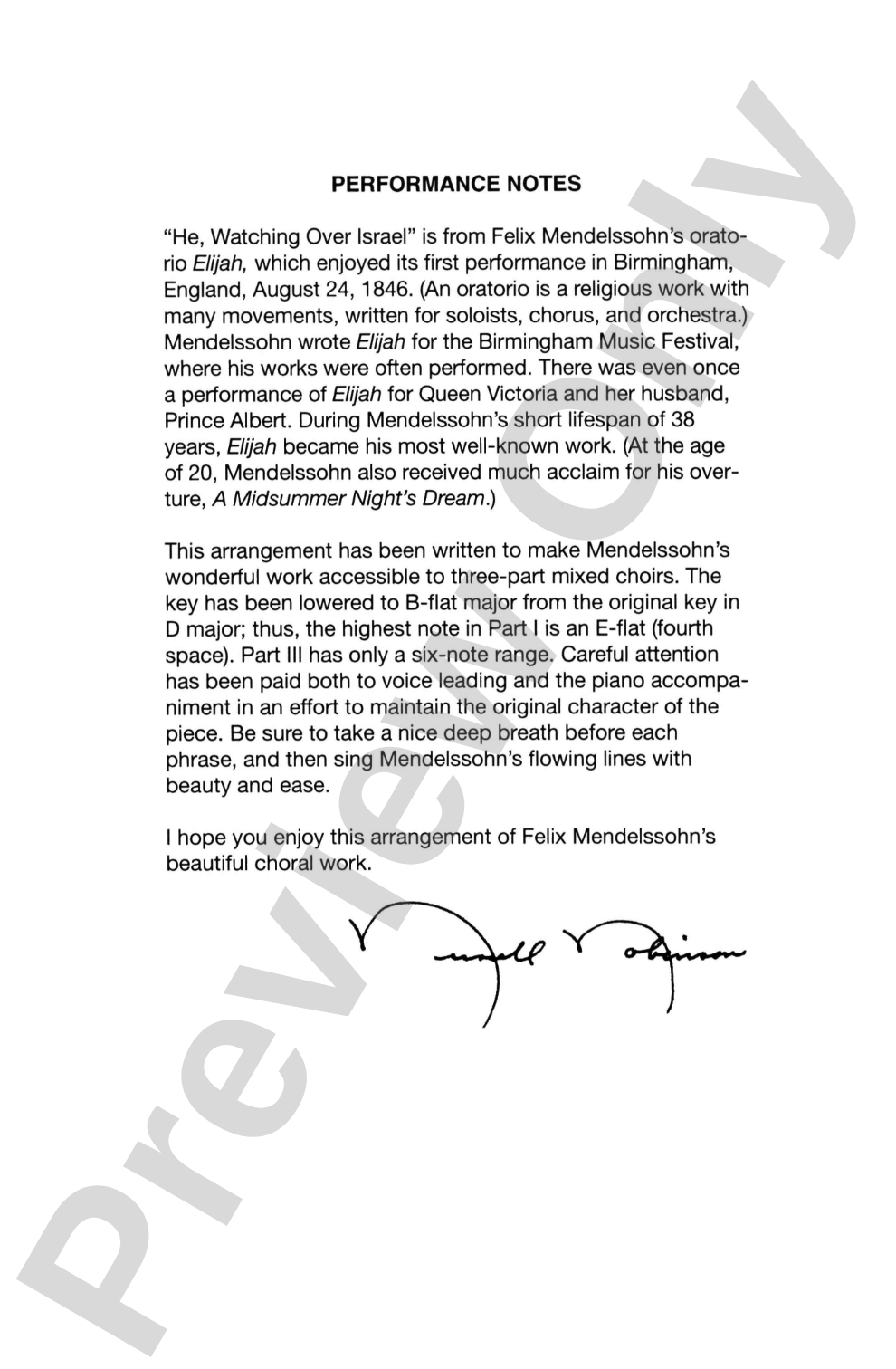
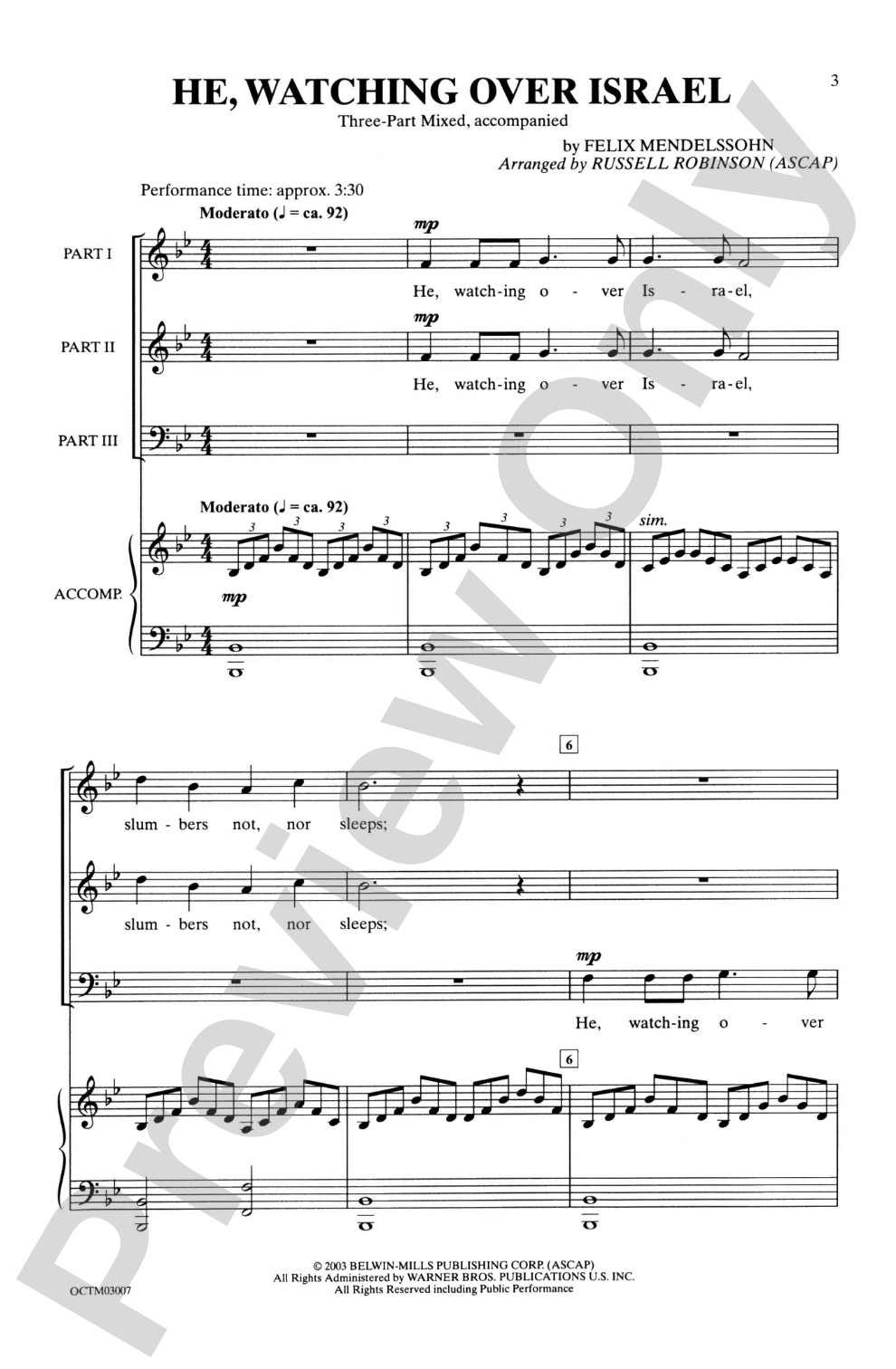
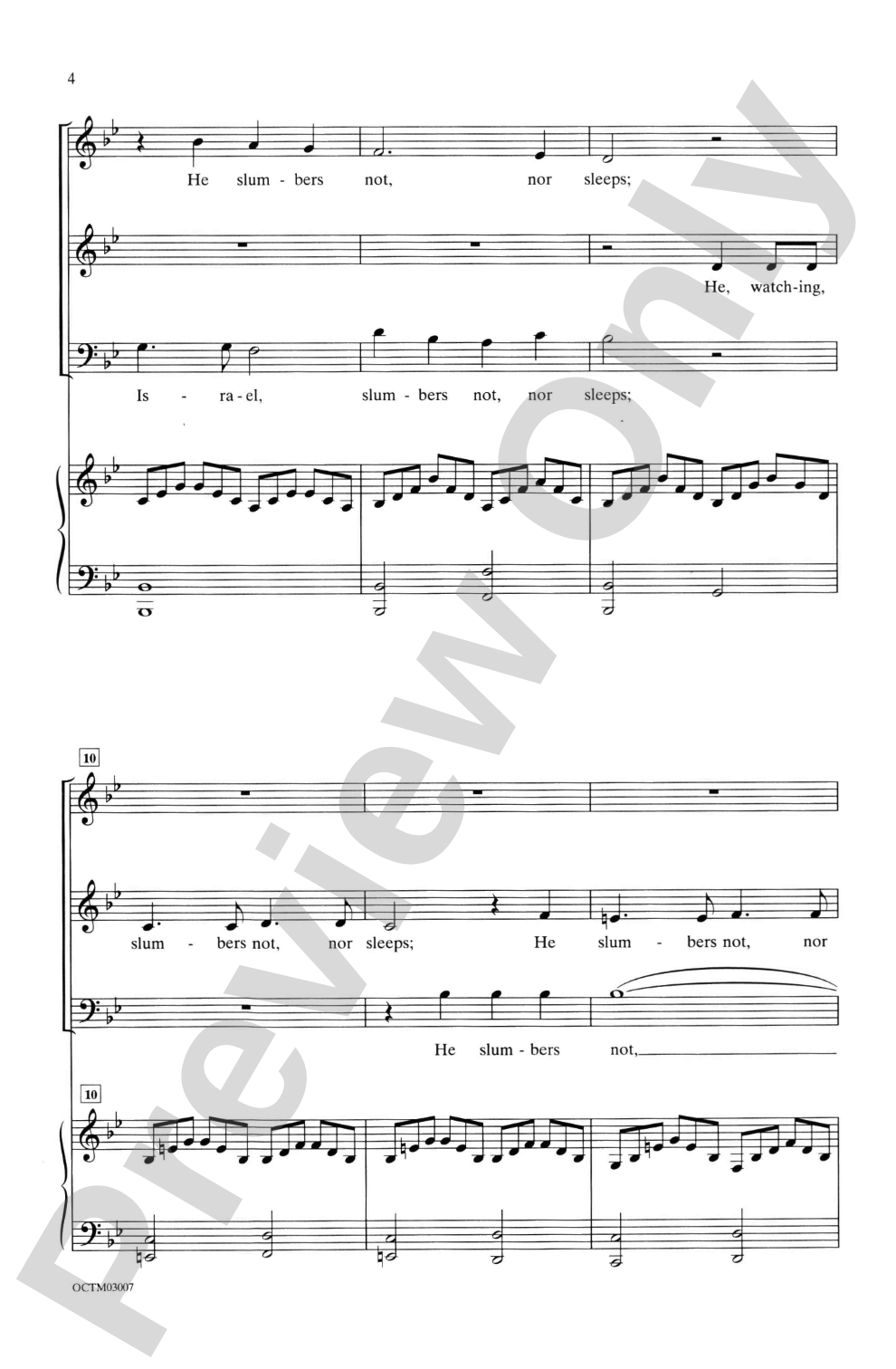
The classic chorus from Mendelssohn's Elijah is edited for performance for your developing choirs by Russell Robinson. Great choral repertoire within the reach of your younger singers.


He, Watching Over Israel: 3-Part Mixed Choral Octavo isn't in MakeMusic Cloud just yet...but it could be. Let us know you'd like to see it, and you'll help shape what comes next. In the meantime, start a free trial and dive into thousands of interactive titles your students can play along with today.
Request This Title
Tell us you want it.
Start Your Free Trial
Explore everything that's ready to play right now.
Sample Audio
1
Audio File
--:--
0:00
0:00
Sample Video
No sample videos found.
Additional Details
Series:
Archive Edition: Belwin Festival Series
Publisher:
Alfred Music
Page Count:
16
SKU:
00-PO-0007187
More about this title
About the Composer: Felix Mendelssohn
Felix Mendelssohn (1809, 1847) was a German composer whose works shaped the Romantic era. He possessed a gift for writing vocal music that was both structurally sophisticated and emotionally direct, making his choruses accessible without sacrificing artistic depth. His oratorio Elijah stands as one of the great choral works of the nineteenth century, performed regularly by amateur and professional choirs worldwide.
Mendelssohn's approach to choral writing influenced how composers thought about writing for developing singers. He understood how to balance harmonic interest with singable lines, creating pieces that challenge growing musicians without overwhelming them. His legacy as a composer extends well beyond concert halls; his works remain central to music education because they model how craft and accessibility can coexist.
Why we love this
Russell Robinson's arrangement brings one of the great choral moments in classical music within realistic reach for developing singers without gutting the harmonic richness that makes this piece so moving. The three-part writing maintains the emotional weight of the original while solving the practical challenges of mixed ensembles with limited soprano and alto ranges. Directors get to teach their singers a genuine masterwork rather than a simplified approximation.
What to expect
There's an almost hymnal quality to this music, yet with depths that emerge in rehearsal as the harmony unfolds. The text carries a protective tenderness, and Mendelssohn's writing creates moments where the voices seem to embrace the listener rather than simply conveying information. It's contemplative without being static, devotional without sentimentality.
Who it's for
Directors of intermediate choirs seeking substantive repertoire that won't require extensive transposition or rearrangement. This works well for singers who have sung simple sacred pieces and are ready to experience how harmonic sophistication deepens musical meaning. Choirs preparing for competitions or festivals benefit from material that is both performance-ready and genuinely rewarding.
How to get the most out of it
- Balance the parts carefully in rehearsal; the middle voice often carries harmonic weight that can disappear in a mixed group if not sung with intention.
- Work the text underlay slowly before building tempo, since Mendelssohn's phrasing requires breath control and awareness of where the musical phrase really ends.
- Lean slightly into the reverent character without dragging; this music gains power from steady forward motion, not excessive slowness.
- Record a sectional rehearsal of the inner parts alone, then have singers listen before full group rehearsals to internalize their harmonic function.
How to use it
This arrangement slots naturally into a sacred concert or festival program where you want to anchor the second half with something that grounds the listener emotionally. It pairs well with lighter choral works earlier in a program, as its substance and reverence will feel earned rather than heavy-handed. Spring concerts celebrating Romantic-era music are ideal venues for introducing this to audiences.
Skills your students will build
- Sustaining long vocal lines across multiple phrases without breath breaks that fragment the musical line
- Reading and performing three-part harmony where the middle voice carries essential harmonic information
- Balancing personal vocal production with ensemble blend in a mixed-voice setting
- Interpreting text with emotional sincerity while maintaining musical architecture
- Listening to and matching sustained pitches in harmony parts without drift