

He Shall Feed His Flock: 3-Part Mixed Choral Octavo
By George Frideric Handel / arr. Earlene Rentz
Item: 00-PO-0005320
$2.25
Minimum order quantity: 20 copies
Pickup currently not available
Related Items
He Shall Feed His Flock: 3-Part Mixed Choral Octavo |
$2.25
|
View |
Description
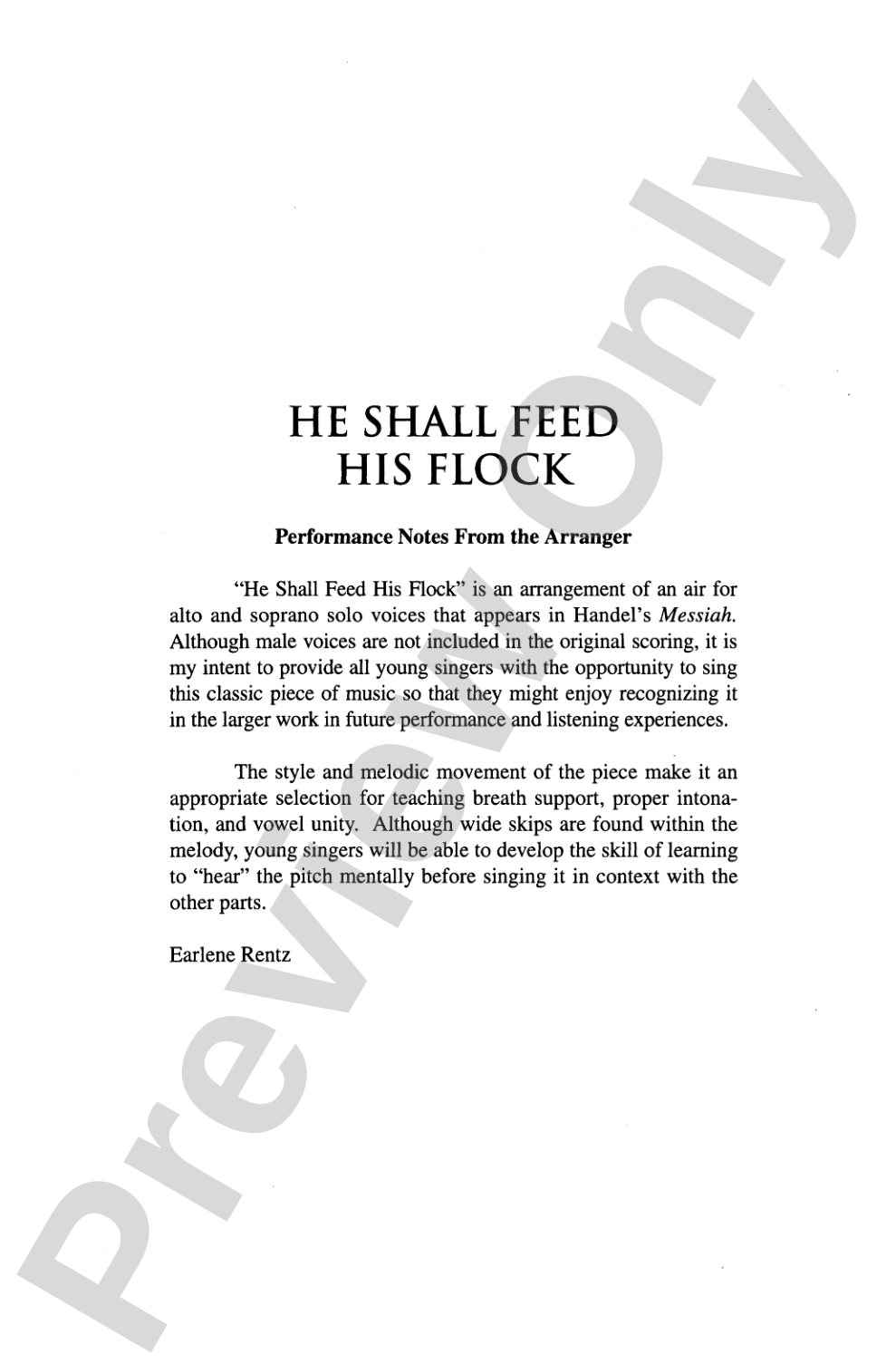
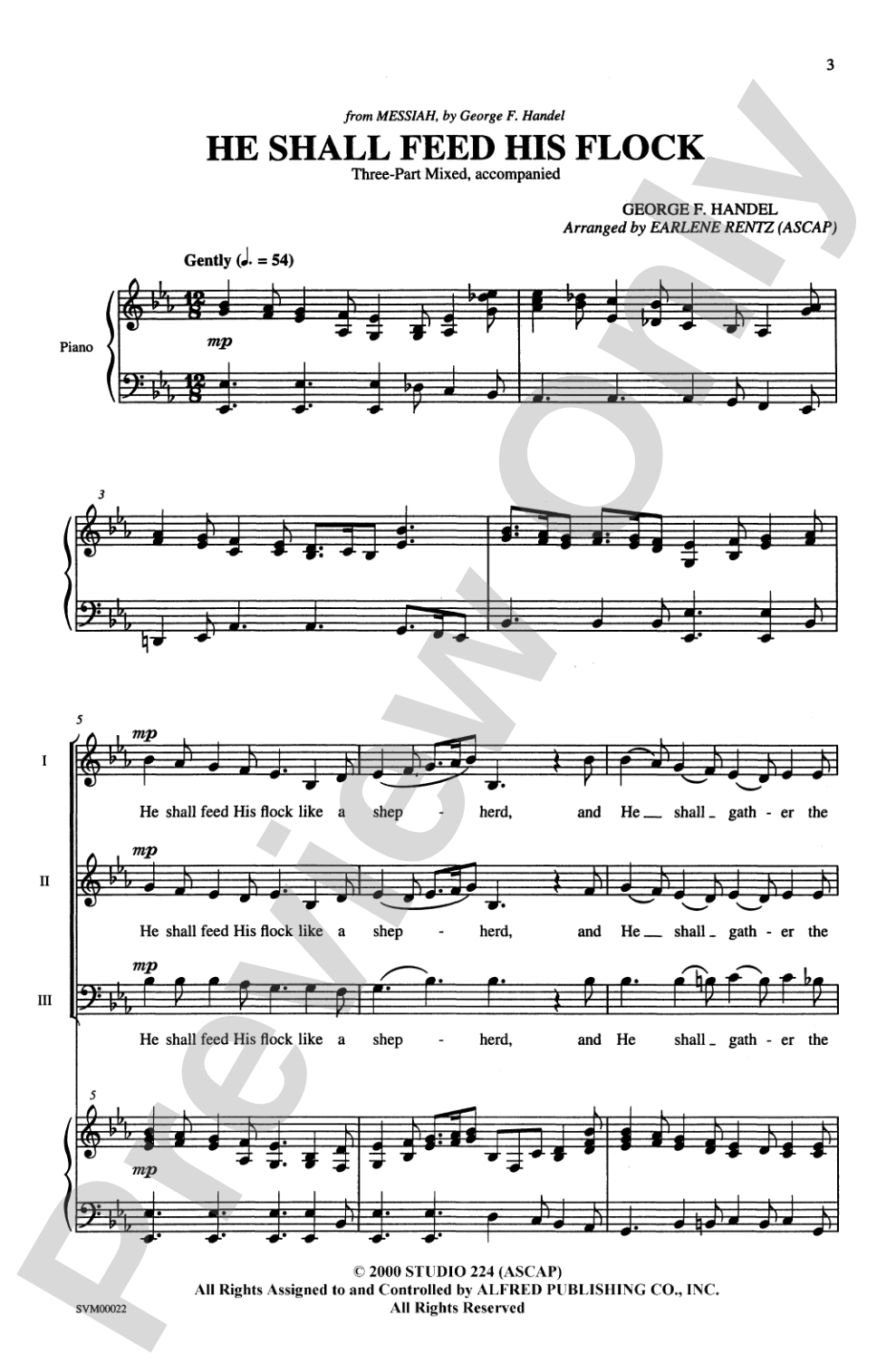
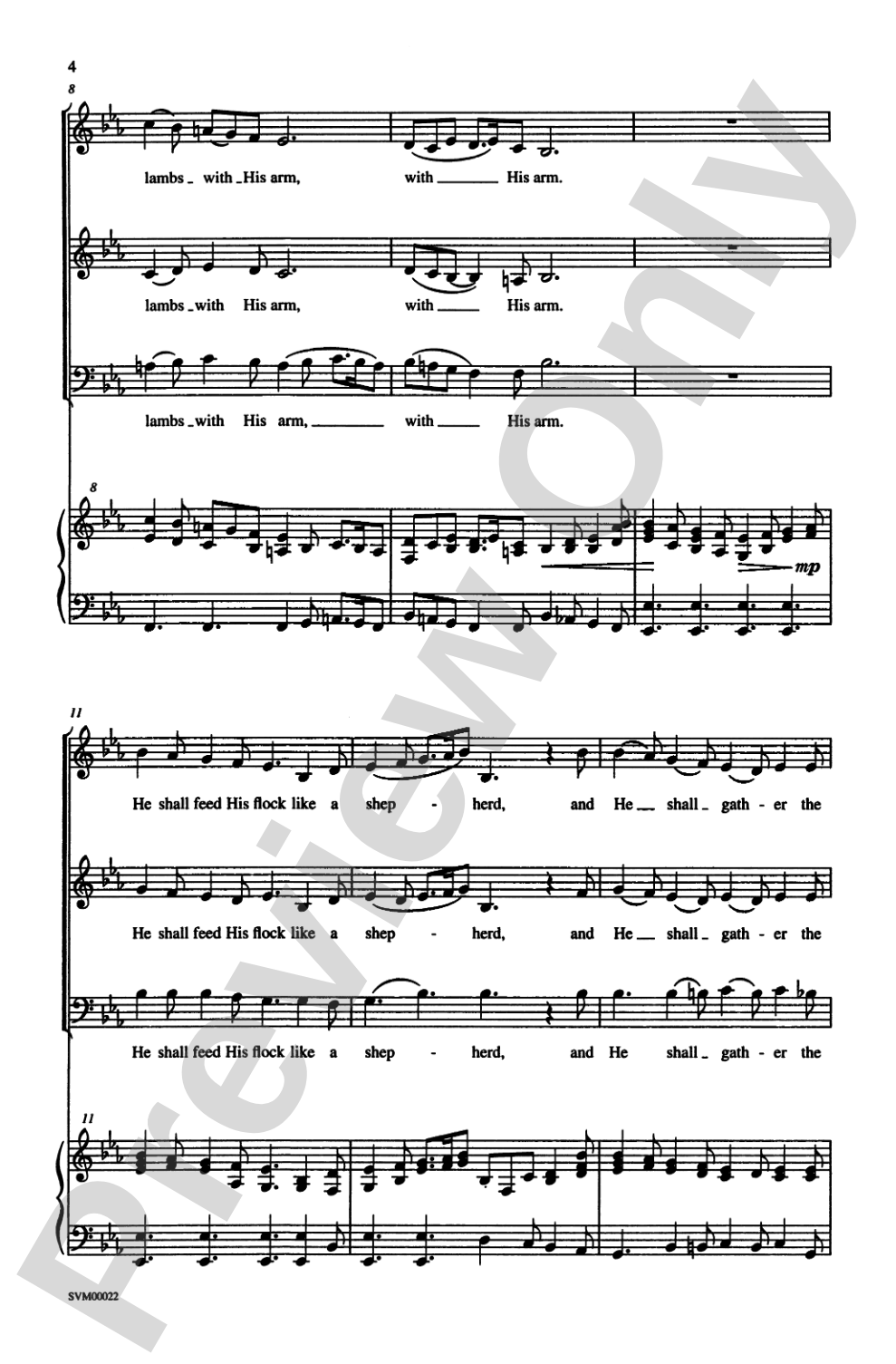
This classic arrangement is taken from an Air for alto and soprano solo voices in Handel's Messiah. Male voices are not included in the original scoring, however Earlene has provided an opportunity for all voices to sing this classic piece. Breath support, proper intonation, and vowel unity are the vocal skills challenged in this selection.


He Shall Feed His Flock: 3-Part Mixed Choral Octavo isn't in MakeMusic Cloud just yet...but it could be. Let us know you'd like to see it, and you'll help shape what comes next. In the meantime, start a free trial and dive into thousands of interactive titles your students can play along with today.
Request This Title
Tell us you want it.
Start Your Free Trial
Explore everything that's ready to play right now.
Sample Audio
No sample audio found.
Sample Video
No sample videos found.
Additional Details
Series:
Alfred Archive Edition: Studio PR Catalog
Publisher:
Alfred Music
Page Count:
12
SKU:
00-PO-0005320
More about this title
About the Composer: George Frideric Handel
George Frideric Handel (1685-1759) stands as one of the Baroque era's most prolific and influential composers. Born in Halle, Germany, he spent much of his career in England, where he became a master of opera, oratorio, and instrumental music. His works combine Italian melodic elegance with German harmonic sophistication, and they remain central to the choral and orchestral repertoire today.
Handel's oratorios, particularly Messiah, revolutionized sacred music by bringing operatic grandeur and emotional directness to religious texts. His melodies are instantly memorable, his harmonic language is clear and expressive, and his understanding of the human voice remains unmatched. For music educators, Handel's vocal writing offers students a direct path to understanding Baroque style, phrase structure, and the relationship between text and music.
Why we love this
Earlene Rentz's adaptation makes one of music's most beloved arias accessible to mixed choirs without sacrificing the piece's nobility or vocal challenge. By thoughtfully including lower voices while preserving Handel's original melodic character, this arrangement lets singers of all voice types experience the beauty of Messiah. The vocal demands around breath, intonation, and vowel consistency mean your ensemble will emerge with stronger fundamental skills.
What to expect
The gentle, pastoral character of the original aria shines through in this arrangement. There's a warmth and lyricism to the writing that invites singers to find beauty in restraint and long musical lines. The piece feels contemplative yet assured, with a spiritual quality that resonates whether performed in a concert hall or a sanctuary.
Who it's for
This arrangement works beautifully for mixed choirs at the intermediate to advanced level who have basic intonation skills and can sustain phrase lines with control. It's ideal for directors seeking a recognizable, meaningful piece that challenges singers' breath support and vowel discipline without overwhelming technical demands. Both concert choirs preparing a sacred program and community or church choirs wanting to perform a Messiah excerpt will find this accessible and rewarding.
How to get the most out of it
- Shape long phrases with purposeful breath placement rather than chopping them into smaller segments; plan breaths at natural text breaks to maintain the aria's sustained, cantabile quality.
- Unify vowels across all three voice parts, especially during sustained notes, so the blend feels seamless even when voices separate.
- Balance the part-writing so the melodic line remains prominent without the accompaniment voices receding into anonymity; Handel's inner voices deserve clarity.
- Approach the dynamic contrasts with restraint; Baroque style favors gradual shifts in intensity over sharp dramatic gestures.
How to use it
This works exceptionally well as part of a Christmas or Easter service, honoring the sacred calendar while introducing singers to cornerstone Baroque repertoire. It can also anchor a choral concert program featuring other Handel excerpts, Baroque sacred music, or even bridge historical styles by pairing it with a contemporary arrangement of similar text.
Skills your students will build
- Sustained phrase singing with intentional breath placement
- Vowel unification across three independent voice parts
- Baroque articulation and phrasing conventions
- Balance and blend when singing inner harmonic lines
- Intonation accuracy across longer melodic passages