He Loves and She Loves: Lead Sheet Digital Sheet Music

He Loves and She Loves: Lead Sheet Digital Sheet Music

George Gershwin, Fred Astaire

Item: 00-PS-0002118

Digital Download
$1.99
Description

He Loves and She Loves: Lead Sheet Digital Sheet Music isn't in MakeMusic Cloud just yet...but it could be. Let us know you'd like to see it, and you'll help shape what comes next. In the meantime, start a free trial and dive into thousands of interactive titles your students can play along with today.

Sample Audio
No sample audio found.
Sample Video
Additional Details
SKU: 00-PS-0002118

More about this title

About the Artist: Fred Astaire

Fred Astaire (1899-1987) was an American dancer, singer, and actor whose influence on musical theater and film transcended performance itself. Though known primarily as a dancer, Astaire was a thoughtful interpreter of the American Songbook, bringing precision and clarity to vocals that made standards accessible to broad audiences. His recordings and film performances established interpretive benchmarks for jazz standards that continue to guide musicians today.

Astaire's collaboration with composers like George and Ira Gershwin, Irving Berlin, and Cole Porter produced some of the most enduring songs in American music. His approach to phrasing and rhythmic placement influenced generations of jazz singers and instrumentalists, making him a crucial reference point for understanding how these standards should breathe and swing.

Why we love this

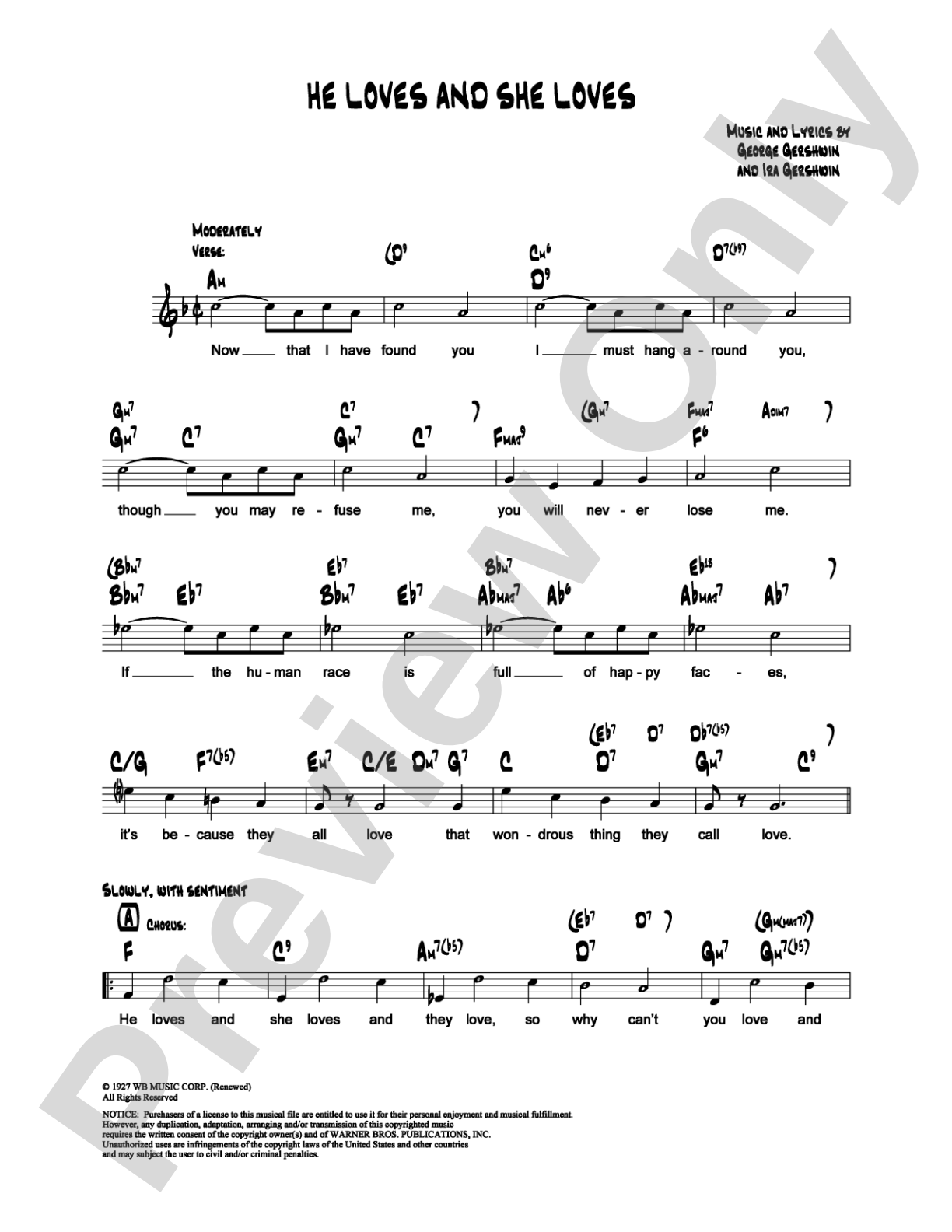
This lead sheet preserves one of the Gershwins' most elegant melodies in a format that works equally well for jazz combos, vocal jazz students, or pianists exploring the American Songbook. The song's moderate harmonic movement and balanced phrase structure make it ideal for teaching jazz interpretation without overwhelming harmonic complexity. Astaire's iconic association with the tune gives students a direct historical reference point for informed performance choices.

What to expect

The song captures the gentle romantic optimism of 1920s musical theater, with a melody that floats above its chord changes rather than wrestling with them. There's an unpretentious charm here—no melodramatic leaps or angular intervals, just straightforward musical conversation that invites both singers and listeners into an intimate moment. The overall effect is buoyant but understated, the kind of standard that reveals more with each careful listen.

Who it's for

Jazz pianists and vocalists seeking foundational standards repertoire will find this lead sheet immediately useful for learning both melody and harmonic structure. Combo leaders benefit from the clean format when sketching arrangements or teaching players who need a quick reference while rehearsing. Jazz educators can use this as a teaching example of well-crafted song form and elegant melodic writing.

How to get the most out of it

  • Study Astaire's original recording to understand the song's natural rhythmic placement and phrasing; his interpretation clarifies where the melody can breathe without rushing the lyrical line
  • Pay attention to the song's conversational quality between the two characters (He/She); shape your phrasing to highlight call-and-response moments if performing vocally
  • Keep harmonic movement beneath the melody relatively transparent in early takes; let the song's inherent lyricism guide voicing choices rather than over-coloring the progression
  • Notice how Astaire handles the bridge; it contains some of the song's most expressive possibilities without resorting to melodic clichés

How to use it

This standard fits naturally into a jazz or vocal standards concert alongside other Gershwin songs or American Songbook selections from the same era. In an educational setting, teach it early in a jazz curriculum to establish foundational interpretation skills before tackling more harmonically sophisticated repertoire. It works equally well as a solo feature, a small ensemble showcase, or a teaching example in a music history or jazz appreciation class.

Skills your students will build

  • Navigating AABA song form and recognizing how repetition with variation shapes a standard
  • Interpreting lead sheet notation and making informed harmonic choices from chord symbols
  • Phrasing lyrical melody in a way that respects both text and musical contour
  • Understanding swing feel and rhythmic placement in a conversational, non-aggressive context
  • Recognizing the historical performance practice associated with a iconic artist's interpretation

You May Also Like