
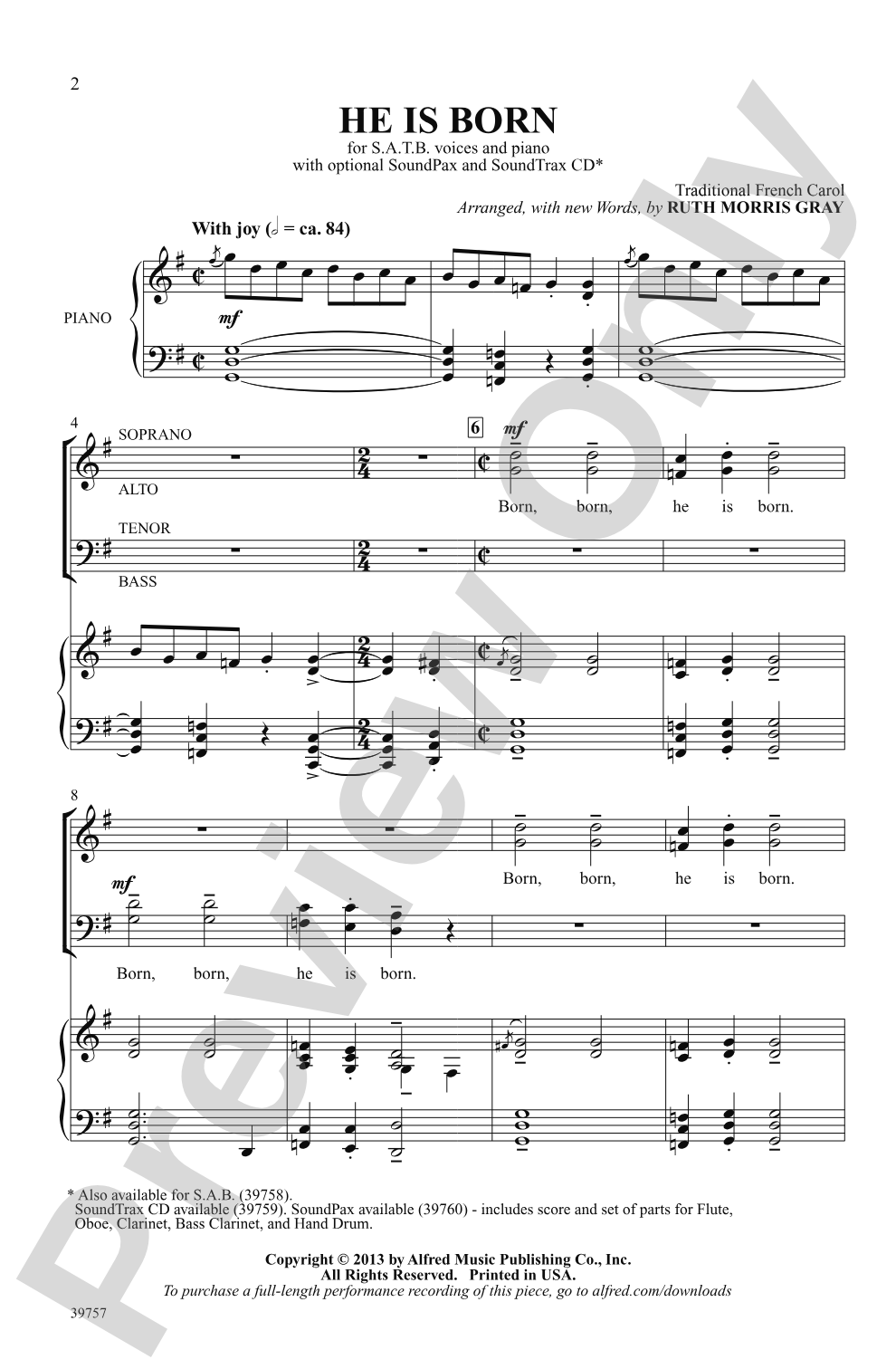

He Is Born: SATB Choral Octavo
Traditional French Carol / arr. Ruth Morris Gray
Item: 00-PO-0001587
$1.85
Minimum order quantity: 20 copies
Pickup currently not available
Related Items
He Is Born: SoundTrax Digital Audio Download |
$27.99
|
View | |
He Is Born: SAB Choral Octavo |
$1.85
|
View | |
He Is Born: Choral SoundPax |
$25.00
|
View | |
He Is Born: SATB Choral Octavo |
$1.85
|
View | |
He Is Born: SAB Choral Octavo |
$1.85
|
View | |
He Is Born: Choral Octavo SoundTrax CD |
$27.99
|
View | |
He Is Born: Choral SoundPax |
$25.00
|
View |
Description
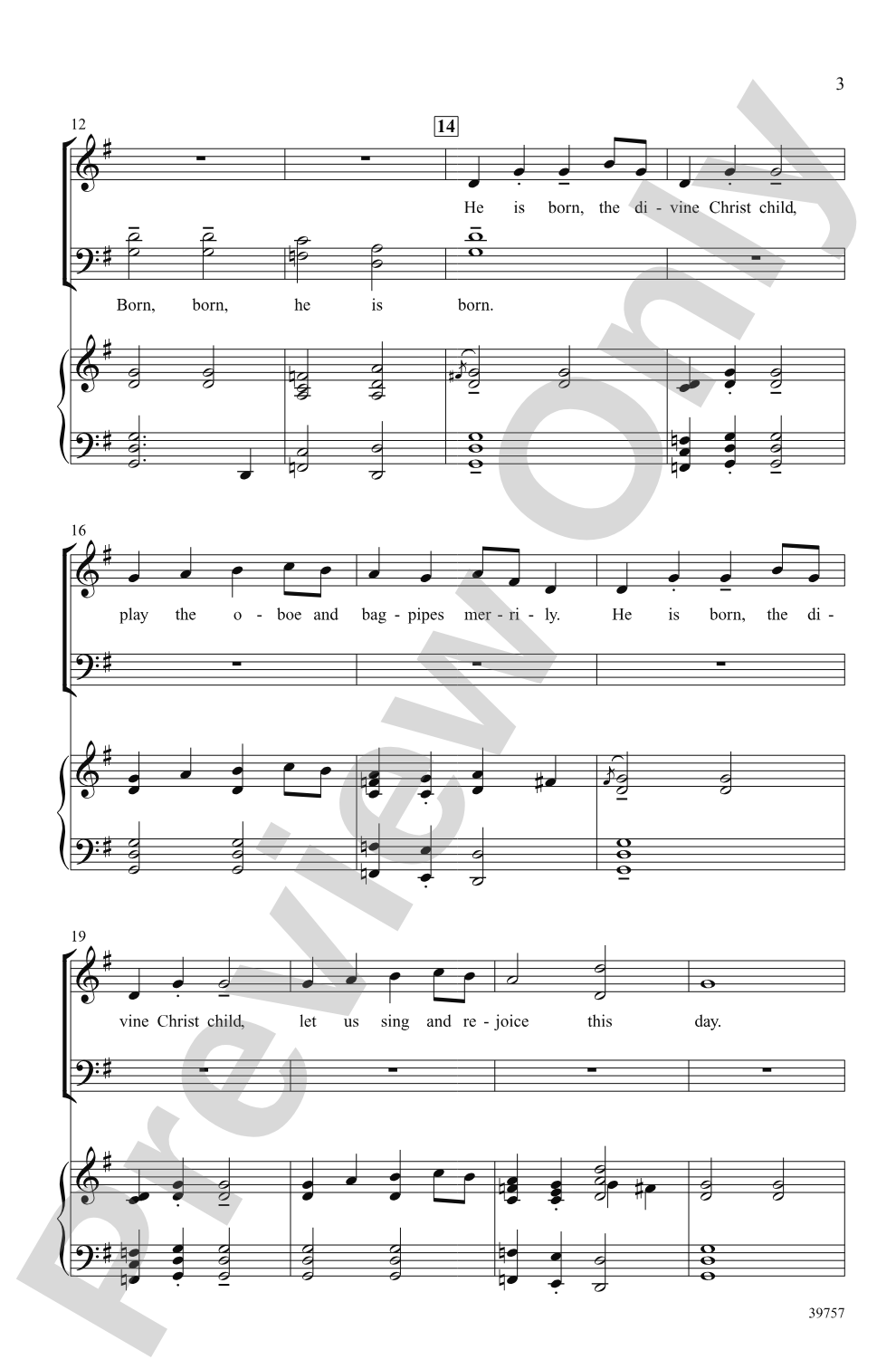
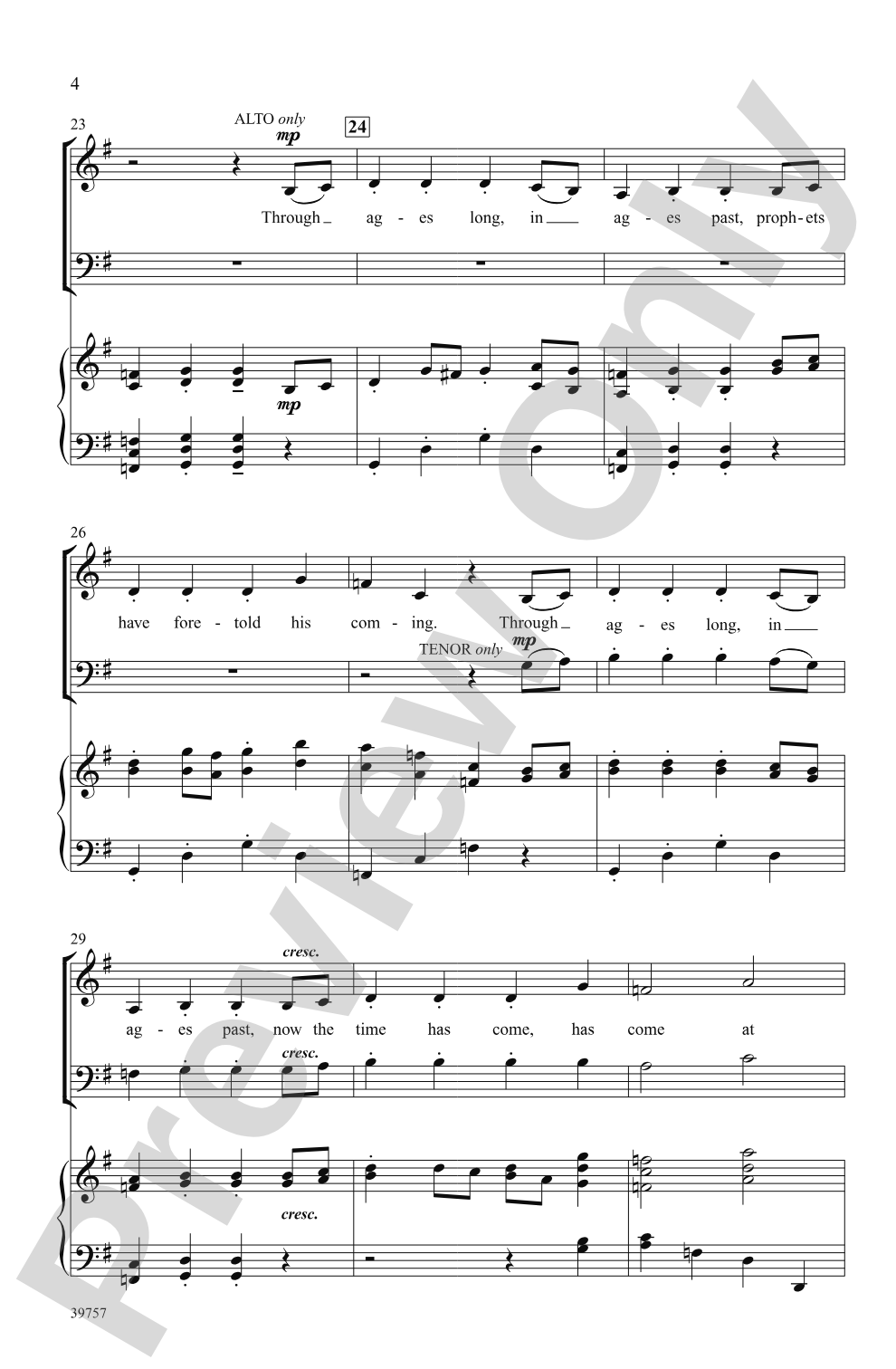
It's the familiar "Il Est Né" sung in English, arranged in a French consort style. Open choral harmonies and accumulating counterlines add to the effect and further the festivity.


He Is Born: SATB Choral Octavo isn't in MakeMusic Cloud just yet...but it could be. Let us know you'd like to see it, and you'll help shape what comes next. In the meantime, start a free trial and dive into thousands of interactive titles your students can play along with today.
Request This Title
Tell us you want it.
Start Your Free Trial
Explore everything that's ready to play right now.
Sample Audio
1
Audio File
--:--
0:00
0:00
Sample Video
No sample videos found.
Additional Details
Series:
Alfred Choral Designs
Publisher:
Alfred Music
Page Count:
12
SKU:
00-PO-0001587
More about this title
About the Arranger: Ruth Morris Gray

Ruth Morris Gray directs choirs at Rosemead High School in California, where she has taught since 2004. She holds a Bachelor of Music in Piano Performance and Composition from Biola University and a Master of Arts in Music Composition from UC Santa Barbara, completing her music credential at California State University, Northridge. With over 100 published choral compositions to her name, Gray brings both compositional depth and classroom experience to her arrangements.
Beyond her work as composer, arranger, and educator, Gray performs and travels actively. She shares her passion for music and movement with her husband Douglas, whether through e-biking adventures or collaborative musical projects.
Why we love this
Gray's arrangement reimagines a beloved Christmas carol through the lens of French Renaissance consort writing, giving conductors a sophisticated alternative to standard treatments. The accumulating counterlines create musical momentum and genuine festivity without overshadowing the melody, making it rewarding for singers and audiences alike.
What to expect
The piece unfolds with Renaissance elegance and transparency. Open harmonies create space and light, while counterlines that gradually accumulate build a sense of gathering celebration without losing clarity. The overall effect is festive yet refined, intimate yet full.
Who it's for
This arrangement suits SATB choirs of intermediate skill or above who have experience with counterpoint and can manage independent vocal lines. It works especially well for directors seeking repertoire that feels fresh yet rooted in recognizable tradition, bridging singers' comfort with the carol and audiences' joy at hearing something familiar treated with musicality.
How to get the most out of it
- Balance the open harmonies carefully during the early phrases, allowing each voice part clarity before the counterlines enter; avoid letting the texture become muddled as complexity builds.
- Shape the accumulating counterlines as a conductor's tool for pacing; bring them in deliberately rather than all at once, letting the ear follow the layering.
- Use the recorded accompaniment to establish the French consort style and tempo; singers can then internalize the harmonic language and lighter articulation the arrangement suggests.
- Emphasize the text underlay with clear diction; the English text should feel conversational, not mechanical, especially as voices interact contrapuntally.
How to use it
Program this as a centerpiece in a Christmas concert that mixes traditional and arranged carols, or use it to open a holiday service with a distinctive take on a universally known tune. Its moderate length and accessibility make it an excellent bridge between congregational carols and concert literature.
Skills your students will build
- Reading and singing independent counterlines in a SATB texture
- Balancing open harmonies and maintaining clarity in polyphonic passages
- Understanding Renaissance consort style and its application to familiar melodies
- Phrase shaping and text expression in contrapuntal writing