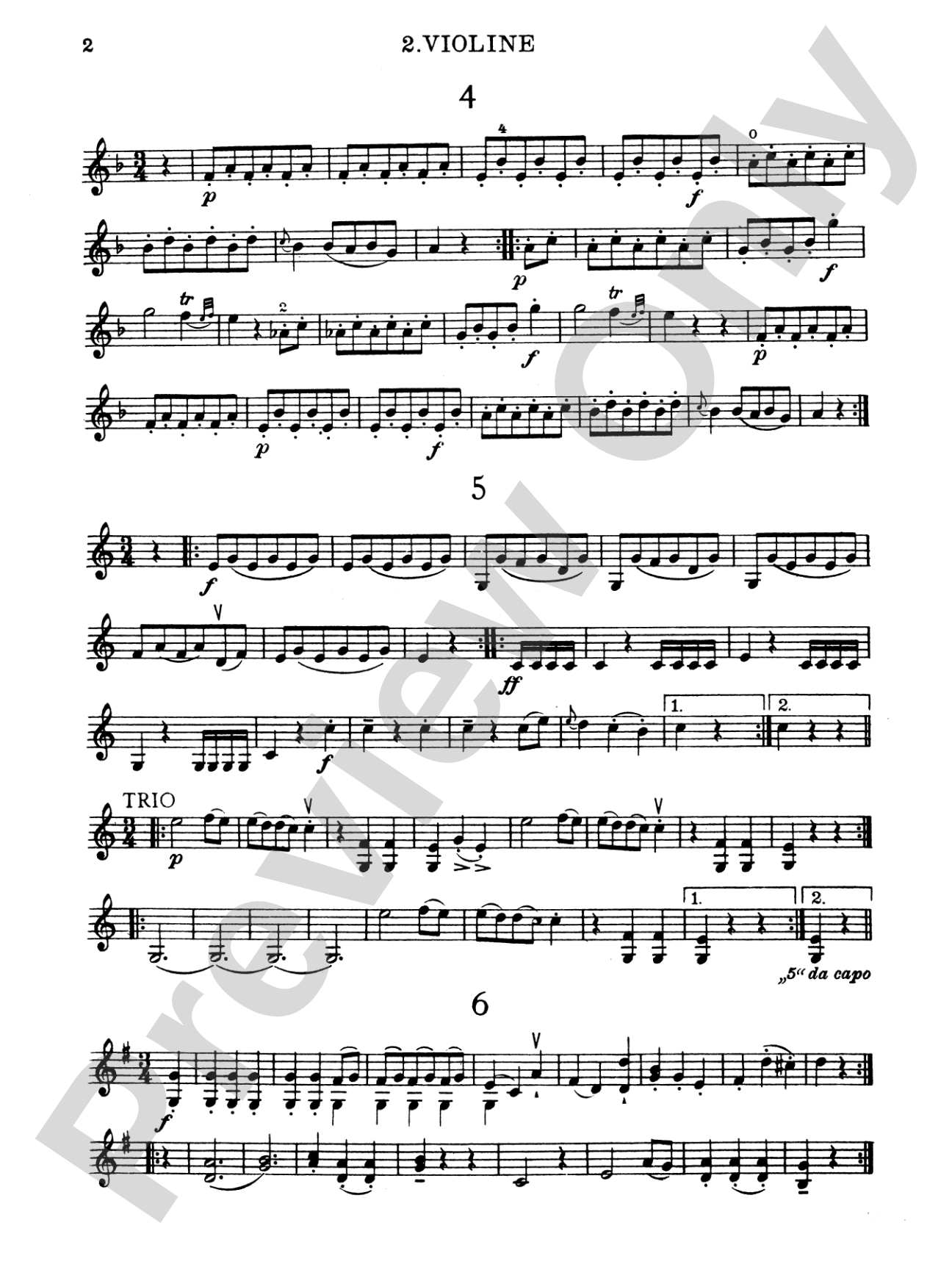
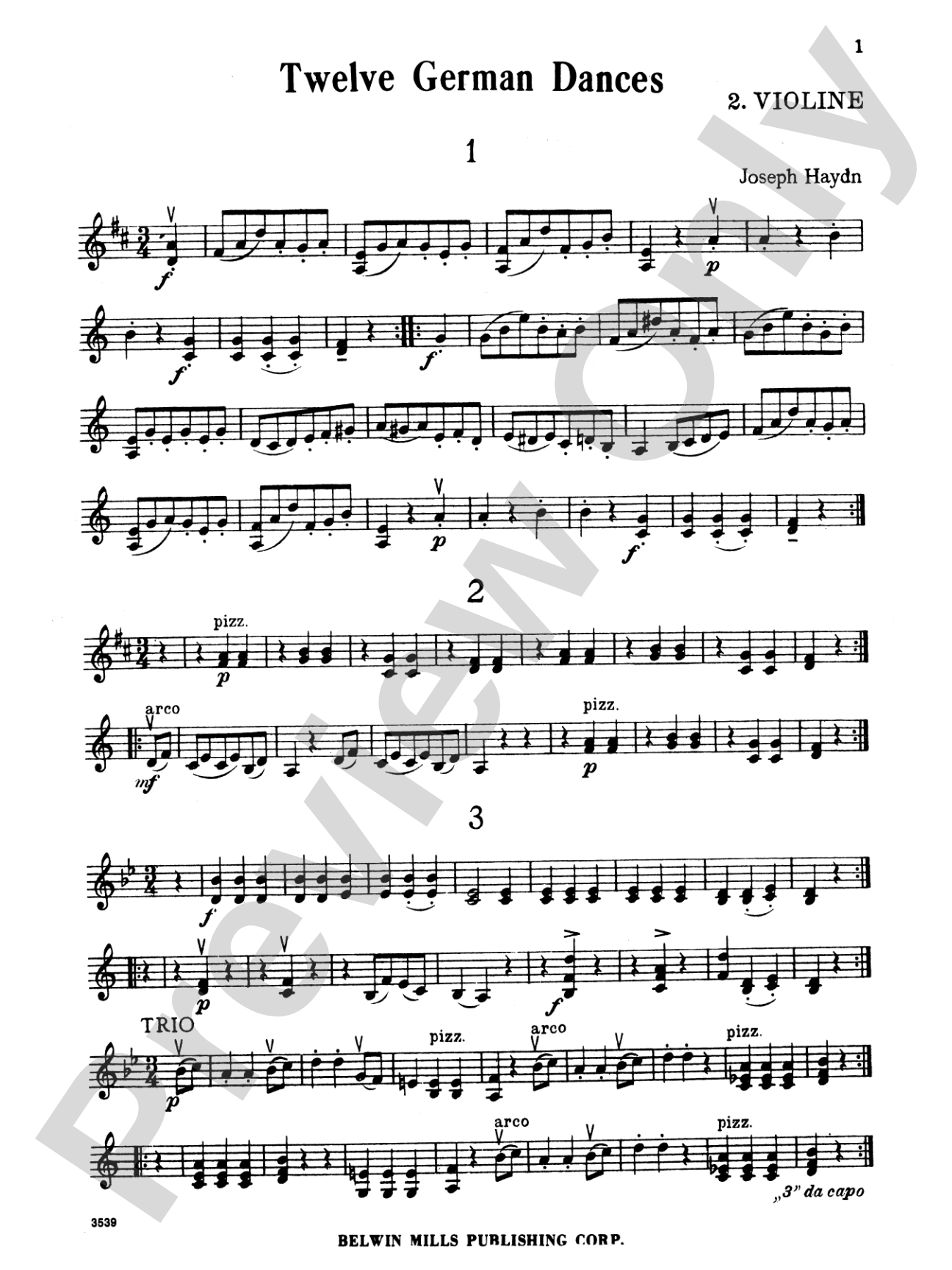
Haydn: Twelve German Dance (Score & Parts, arranged) Sheet Music Preview

Haydn: Twelve German Dance (Score & Parts, arranged)

By Franz Joseph Haydn

Item: 00-PC-0007935

Digital Download
$1.99
Description

Don't just read it, hear it, play along with it, and watch your students grow with it. In MakeMusic Cloud, Haydn: Twelve German Dance (Score & Parts, arranged) comes alive with professional accompaniment, adjustable tempo, and built-in practice tools that turn solo practice into real progress.

Sample Audio
No sample audio found.
Sample Video
Additional Details
Series: Kalmus Edition
Publisher: Alfred Music
Page Count: 40
SKU: 00-PC-0007935

More about this title

About the Composer: Franz Joseph Haydn

Franz Joseph Haydn (1732-1809) shaped the Classical era through relentless innovation and prolific output across every major genre. His 68 string quartets and numerous divertimenti and trios became the standard against which composers measured themselves, and his willingness to experiment with form, harmony, and orchestration influenced everyone from Mozart to Beethoven.

Haydn's gift for melody and structural clarity made him as comfortable writing dance music for the Viennese public as writing symphonies for the concert hall. His German dances combine folk-like directness with harmonic sophistication, offering ensemble musicians both immediate appeal and genuine compositional substance to work with.

Why we love this

These twelve dances sit at a sweet spot where the writing is elegant and musical without being forbidding. String trios at this level often feel thin or transitional, but Haydn builds real dialogue between the voices; each part earns its place. The set works beautifully in festival rotation or as a concert closer that leaves the audience smiling.

What to expect

Buoyant and straightforward, with the melodic generosity and harmonic clarity that define Haydn's best work. Each dance unfolds with natural grace, blending folk-inspired simplicity with refined Classical manners. There's an ease and warmth here that rewards playing but never demands heroics.

Who it's for

String trio ensembles preparing contest or festival repertoire, chamber coaches seeking substantive yet accessible Classical works, and advanced student musicians building comfort with three-part texture and period style. These dances also suit teachers assembling a balanced recital program or exploring Haydn's lighter output alongside more serious chamber works.

How to get the most out of it

  • Pay attention to the implied dance rhythms rather than treating each dance as generic Classical material. Haydn's phrasing suggests natural lift and weight; let the meter guide your articulation.
  • Balance the first violin line clearly without drowning out the second violin's harmonic and rhythmic support. The trio texture depends on hearing all three voices.
  • Use the repeated sections strategically. You can add subtle dynamics or articulation variations on repeats without altering Haydn's notes, bringing each dance back to life on its second time through.
  • Treat phrase endings with care. Haydn's cadences are often brief and clean; resist the urge to linger or over-shape them.

How to use it

Program these as a multi-movement set to anchor a chamber concert, breaking up longer works with their directness and charm. They also work well as an intermission opener or concert conclusion, offering ensemble polish and audience connection without requiring special staging or extended rehearsal time.

Skills your students will build

  • balancing three-part string texture with independent voices
  • recognizing and executing dance rhythms within Classical forms
  • phrasing and shaping in paired phrases typical of the era
  • intonation at varying distances from the melody line
  • reading multiple harmonic functions across score and parts

You May Also Like