
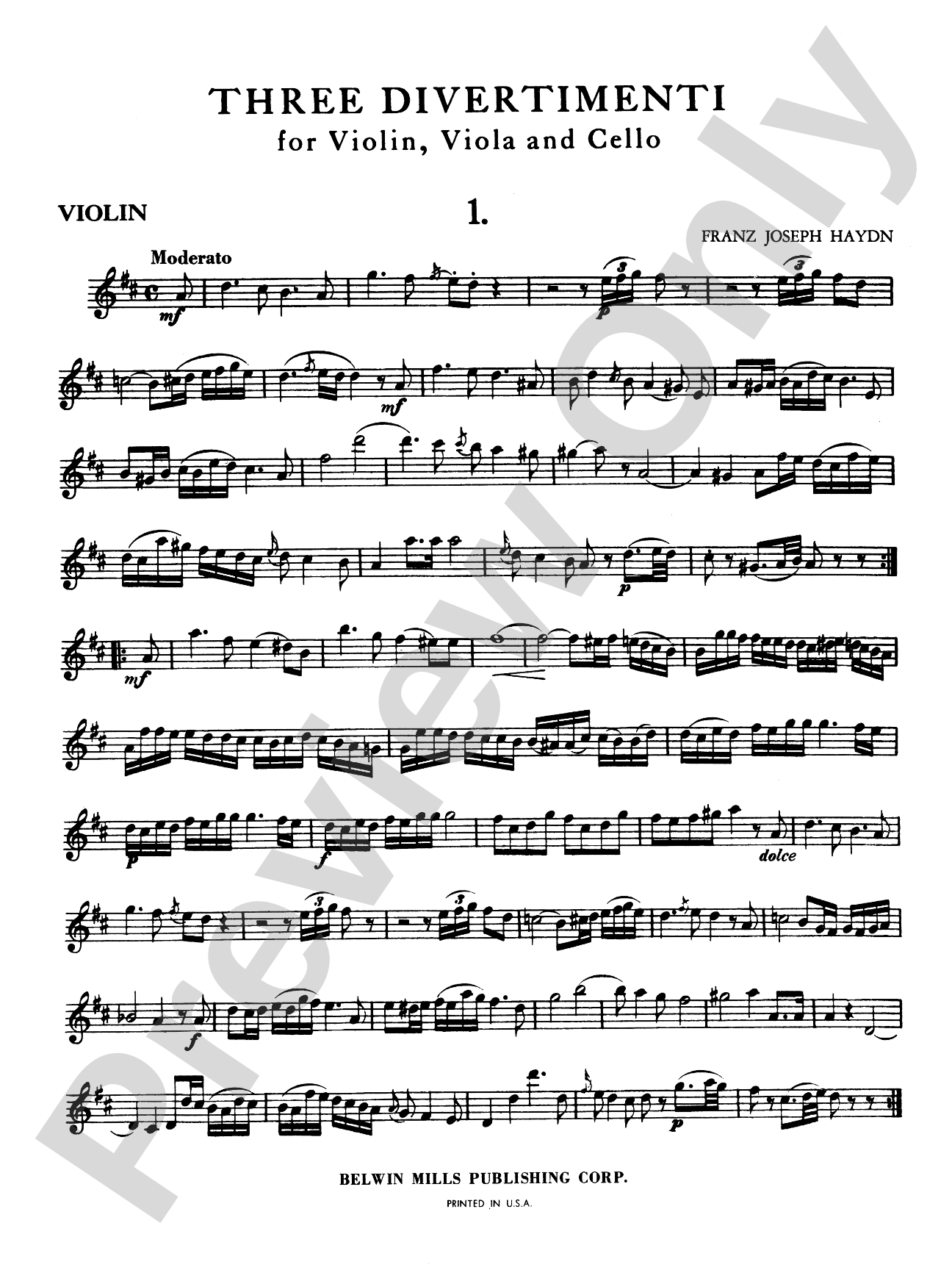
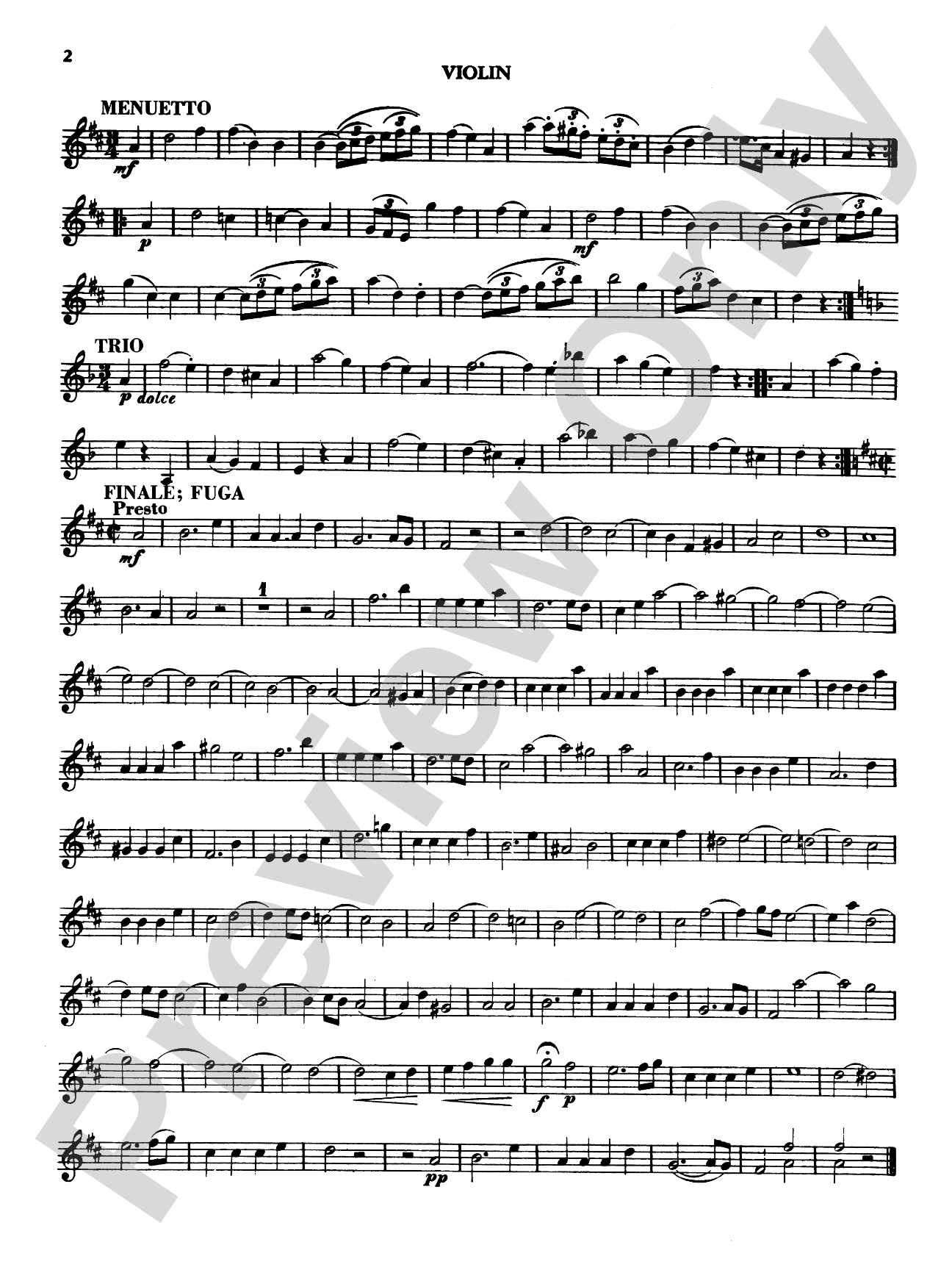

Haydn: Three Divertimenti: String Trio Book
By Franz Joseph Haydn
Item: 00-PK-0003154
$8.99
Pickup currently not available
Buy Extra Parts (Digital PDF Download)
| Product | Price | Quantity |
|---|---|---|
| Haydn: Three Divertimenti | $0.99 | |
| Haydn: Three Divertimenti | $0.99 | |
| Haydn: Three Divertimenti | $0.99 | |
| Haydn: Three Divertimenti | $0.99 | |
| Haydn: Three Divertimenti | $0.99 | |
| Haydn: Three Divertimenti | $0.99 | |
| Haydn: Three Divertimenti | $0.99 | |
| Haydn: Three Divertimenti | $0.99 | |
| Haydn: Three Divertimenti | $0.99 |
Parts Added to Cart!
Related Items
Three Divertimenti: String Trio Book |
$8.95
|
View |
Description
A String trio Violin, Viola, and Cello composed by Franz Joseph Haydn.


Haydn: Three Divertimenti: String Trio Book isn't in MakeMusic Cloud just yet...but it could be. Let us know you'd like to see it, and you'll help shape what comes next. In the meantime, start a free trial and dive into thousands of interactive titles your students can play along with today.
Request This Title
Tell us you want it.
Start Your Free Trial
Explore everything that's ready to play right now.
Sample Audio
No sample audio found.
Sample Video
No sample videos found.
Additional Details
Series:
Kalmus Edition
Publisher:
Alfred Music
Page Count:
24
SKU:
00-PK-0003154
More about this title
About the Composer: Franz Joseph Haydn
Franz Joseph Haydn (1732-1809) shaped the Classical symphony and string quartet into forms that defined an era. His prolific output across every major genre established conventions of structure, orchestration, and harmonic language that composers still follow today. For string players, Haydn's chamber works remain essential study because they demand both technical precision and the musical intelligence to balance independent voices within tight ensemble textures.
Why we love this
These three divertimenti sit at a sweet spot for serious chamber players: they require mature musicianship and secure ensemble skills, yet they reward performance with genuine melodic warmth and the satisfying clarity of Classical form. Haydn's writing for string trio is lean and conversational, with no wasted notes, making these works ideal for contest and festival settings where judges listen for balance, intonation, and stylistic awareness.
What to expect
These divertimenti sparkle with the wit and economy of Haydn's late chamber style. Melodies unfold with natural grace, harmonies turn in unexpected directions, and the three instruments engage in a kind of musical conversation that feels both intimate and intellectually engaged, never cloying or overly sentimental.
Who it's for
String trio ensembles preparing for competition or chamber music festivals will find these works demanding but deeply rewarding. Players need solid intonation, independent part security, and enough musical maturity to navigate Classical phrasing and ensemble balance; this collection suits advanced high school and collegiate performers.
How to get the most out of it
- Approach each movement's opening as a distinct character statement. Haydn signals intention quickly through tempo, texture, and harmonic motion; commit to the gesture rather than entering tentatively.
- Manage the viola's role with care. The middle voice carries harmonic weight and inner-voice counterpoint; resist the temptation to play softer than the violin or cello, and voice chords so the viola's contribution is audible.
- Shape long lines through subtle dynamic shaping rather than sudden changes. Haydn's melodies often span multiple measures with minimal markings; track the phrase arc and breathe together at logical points.
- Balance rhythmic precision with forward momentum. These works move briskly in many sections; lock in the ensemble's rhythmic foundation so ornaments and counterpoint can breathe naturally above it.
How to use it
Program one divertimento as a standalone chamber work to open a recital or concert; the elegant architecture and moderate length make it an inviting introduction for audiences unfamiliar with Classical string trio repertoire. Alternatively, pair multiple movements from different divertimenti to create a curated program that showcases range within a unified stylistic frame.
Skills your students will build
- Classical phrase architecture and period form (allegro, minuet, rondo structures)
- Ensemble balance and voice independence in three-part writing
- Stylistically informed vibrato control and articulation appropriate to the Classical era
- Harmonic awareness and voice-leading function (melody, bass, inner harmony)
- Intonation refinement through sustained ensemble listening and adjustment