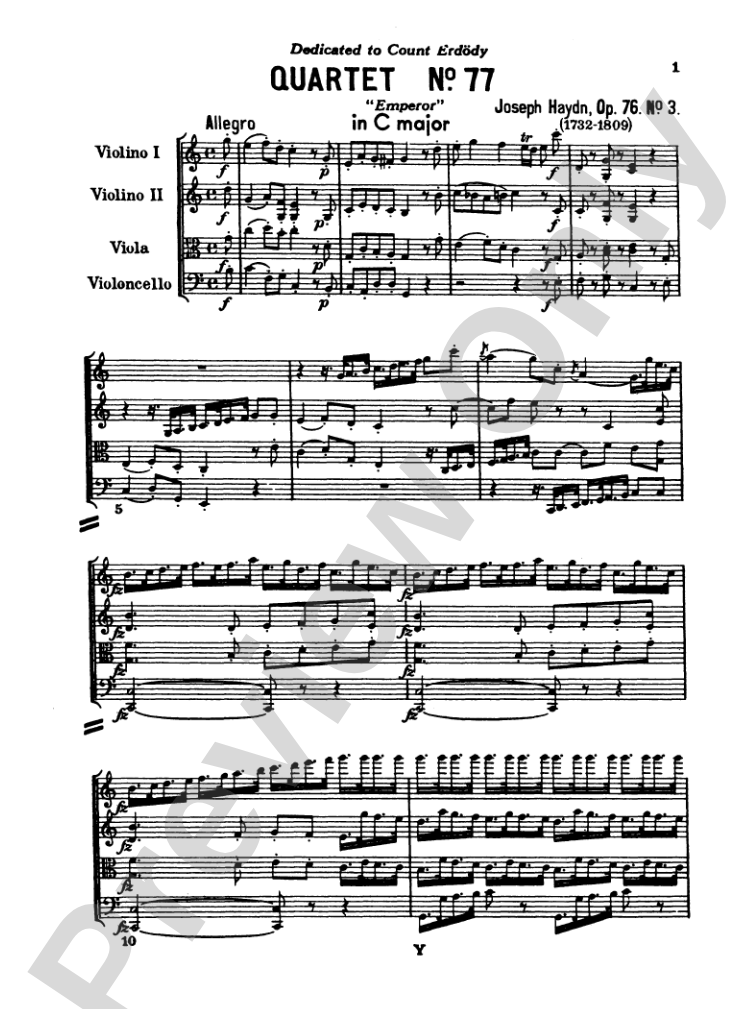
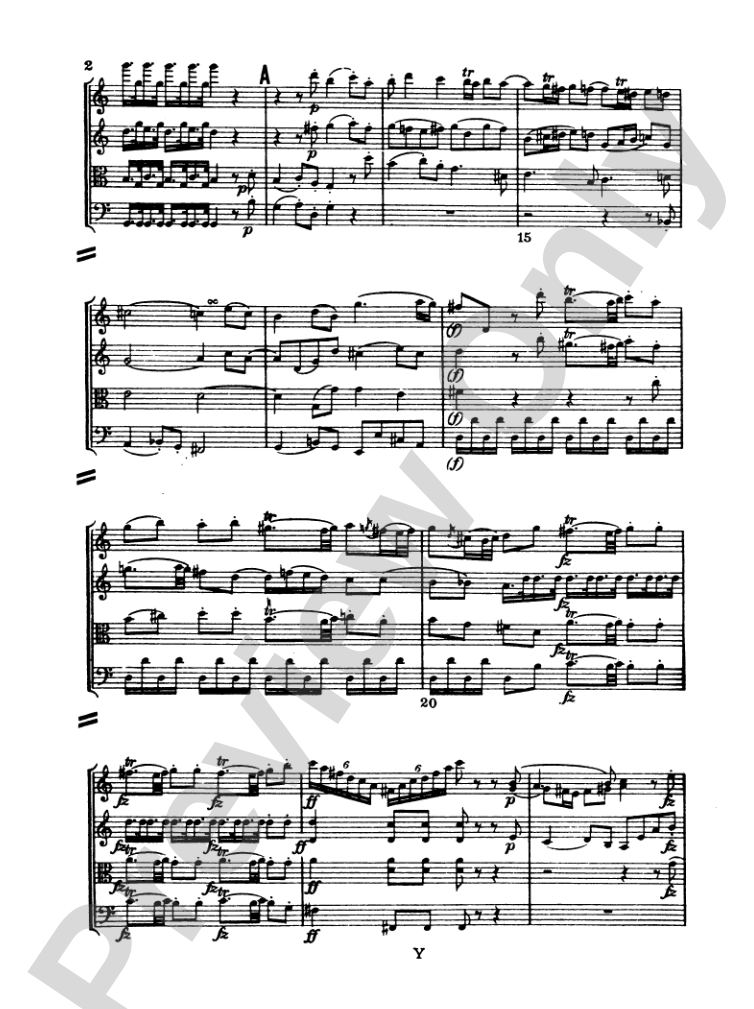
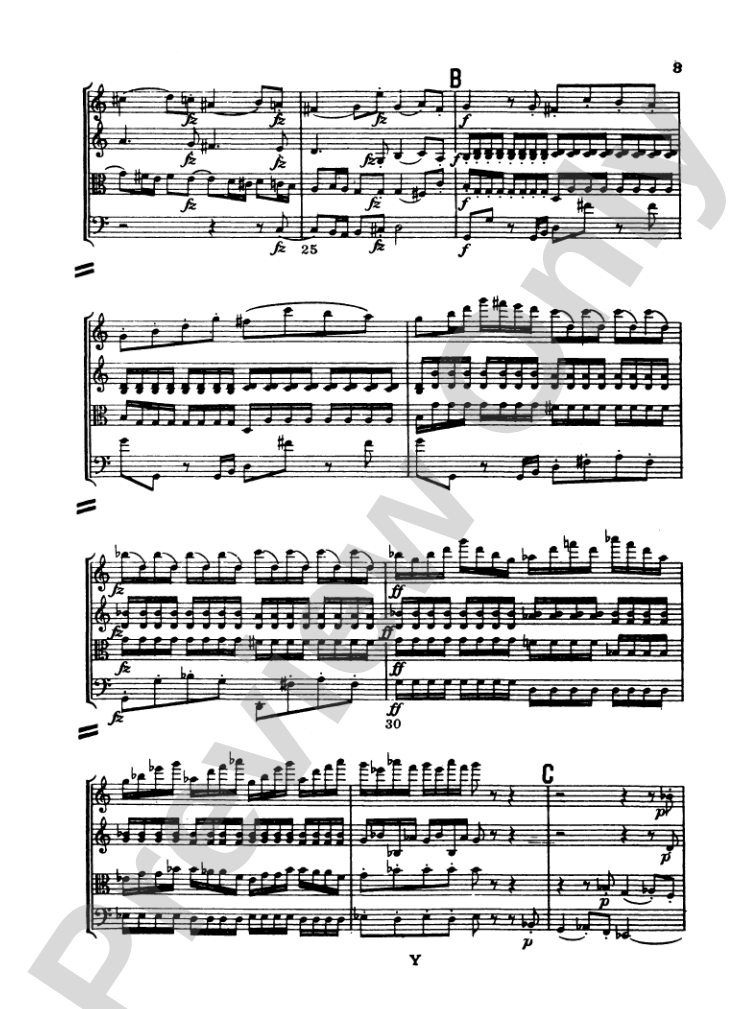
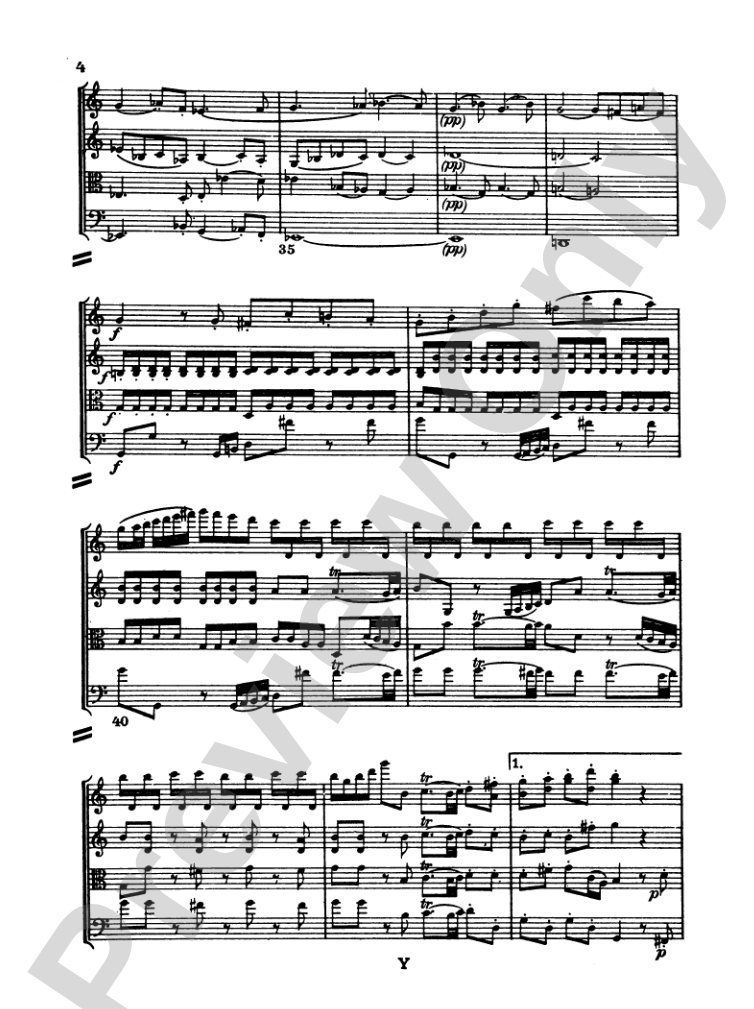
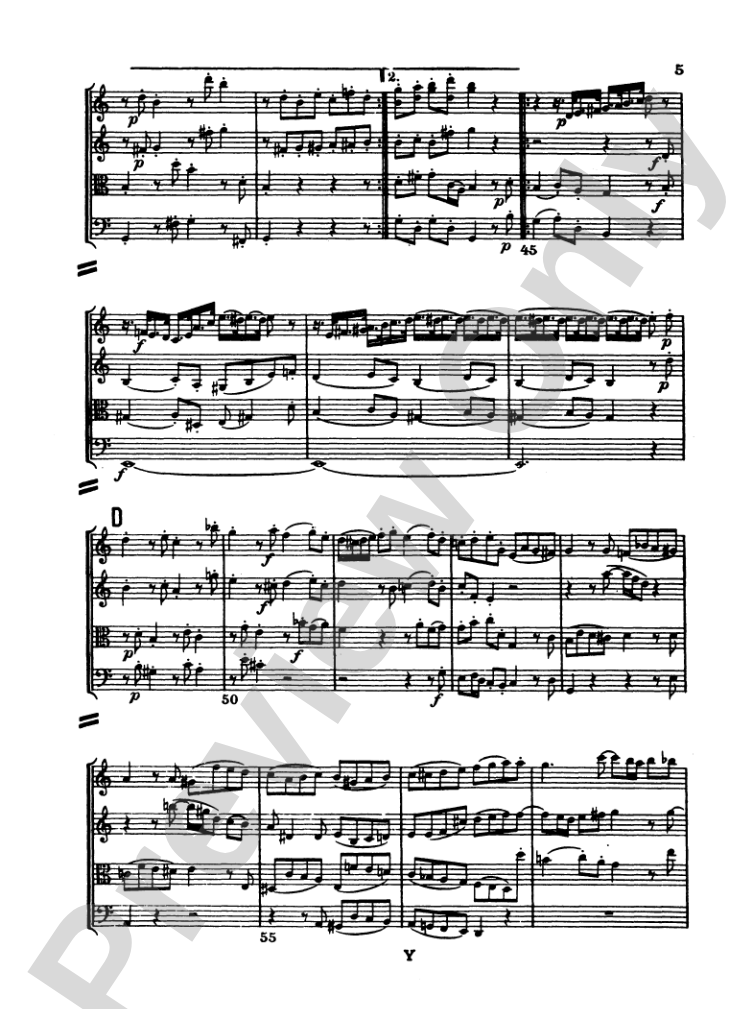
Haydn: String Quartet No. 77 in C Major, Op. 76, No. 3 Sheet Music Preview

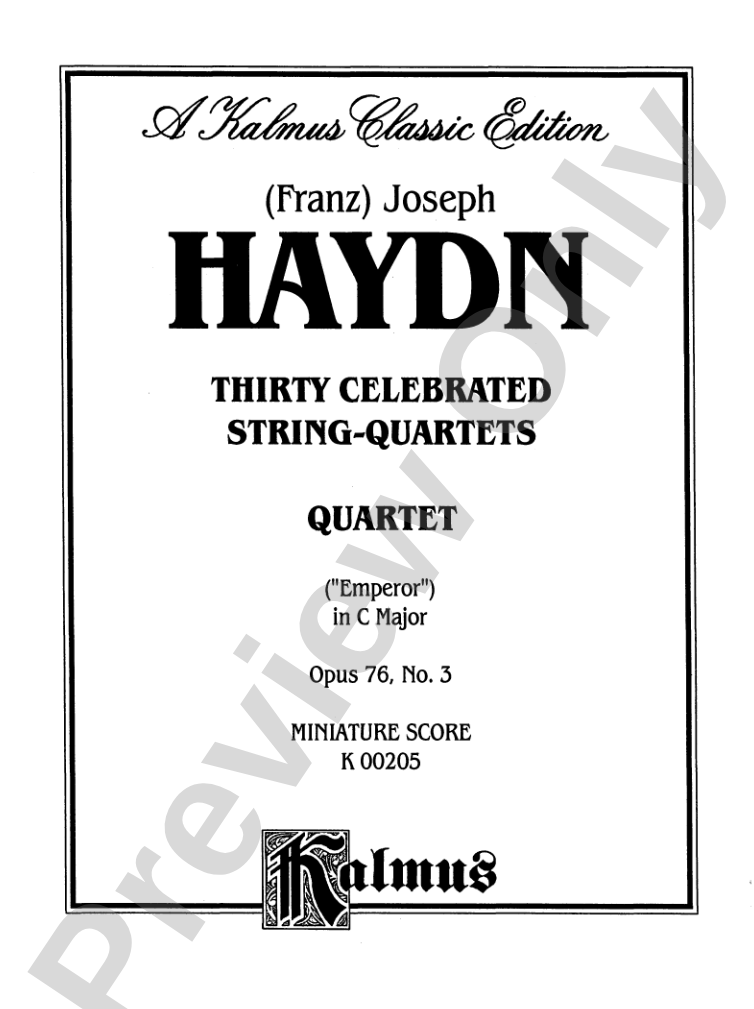
Haydn: String Quartet No. 77 in C Major, Op. 76, No. 3

By Franz Joseph Haydn

Item: 00-PC-0002620

Digital Download
$7.95
Description
Franz Joseph Haydn's String Quartet No 77 in C Major, Op. 76, No. 3 is composed for string quartet.

Don't just read it, hear it, play along with it, and watch your students grow with it. In MakeMusic Cloud, Haydn: String Quartet No. 77 in C Major, Op. 76, No. 3 comes alive with professional accompaniment, adjustable tempo, and built-in practice tools that turn solo practice into real progress.

Sample Audio
No sample audio found.
Sample Video
Additional Details
Series: Kalmus Edition
Publisher: Alfred Music
Page Count: 32
SKU: 00-PC-0002620

More about this title

About the Composer: Franz Joseph Haydn

Franz Joseph Haydn (1732-1809) shaped the string quartet from a divertimento-like entertainment into a serious musical form. His 68 quartets span five decades and document the evolution of Classical chamber music, moving from galant simplicity toward the intellectual rigor and emotional depth that influenced Beethoven and beyond.

Haydn's mastery of motivic development and structural clarity made him the defining voice of the Classical era. His quartets remain central to ensemble pedagogy because they balance technical accessibility with sophisticated compositional thinking, rewarding both emerging and advanced players with opportunities to discover how musical ideas grow and transform.

Why we love this

Op. 76, No. 3 sits at the pinnacle of Haydn's output and offers your ensemble a masterwork that plays like a lesson in itself. The writing is transparent enough for serious amateur quartets to hear the voices clearly, yet compositionally sophisticated enough to sustain repeated study and performance without ever feeling simple. Programming this work signals that your group is engaging with the literature at its highest level.

What to expect

The work moves through four movements with remarkable emotional range: opening bright and declarative, softening into a singing Adagio, turning playful in the Minuet, and closing with a perpetual-motion Presto that dances with wit and energy. The music feels both inevitable and surprising, formal yet deeply expressive.

Who it's for

This score serves advanced chamber musicians preparing repertoire for competitions, festivals, or serious recital programs. String quartets with several years of ensemble experience and strong individual technique will find rewarding material here; the writing demands secure intonation, independence of voice, and collaborative listening.

How to get the most out of it

  • Shape the first movement's exposition around the play between the primary theme and the singing secondary idea; resist the urge to treat both equally.
  • Balance articulation across all four voices in the Minuet to prevent the viola and cello from disappearing into harmonic filler.
  • The Andante benefits from precise dynamic control and careful attention to the sustain and release of long tones; use silence as actively as sound.
  • In the Finale, maintain clarity of the canon at a tempo that allows each voice to project without rushing; the humor lies in the precision.

How to use it

This quartet anchors a chamber recital devoted to Classical string literature or stands alone as a substantial centerpiece. It pairs naturally with other Haydn quartets from Op. 76 or with Mozart and Beethoven works from the same period; audiences expect to hear this standard in professional and collegiate ensemble concerts.

Skills your students will build

  • Voice independence and balance across four equal lines
  • Motivic development and thematic transformation
  • Intonation precision in sustained harmonic contexts
  • Articulation control across different textures and tempos
  • Ensemble synchronization in rapid contrapuntal writing
  • Stylistic phrasing and breathing in the Classical aesthetic

You May Also Like