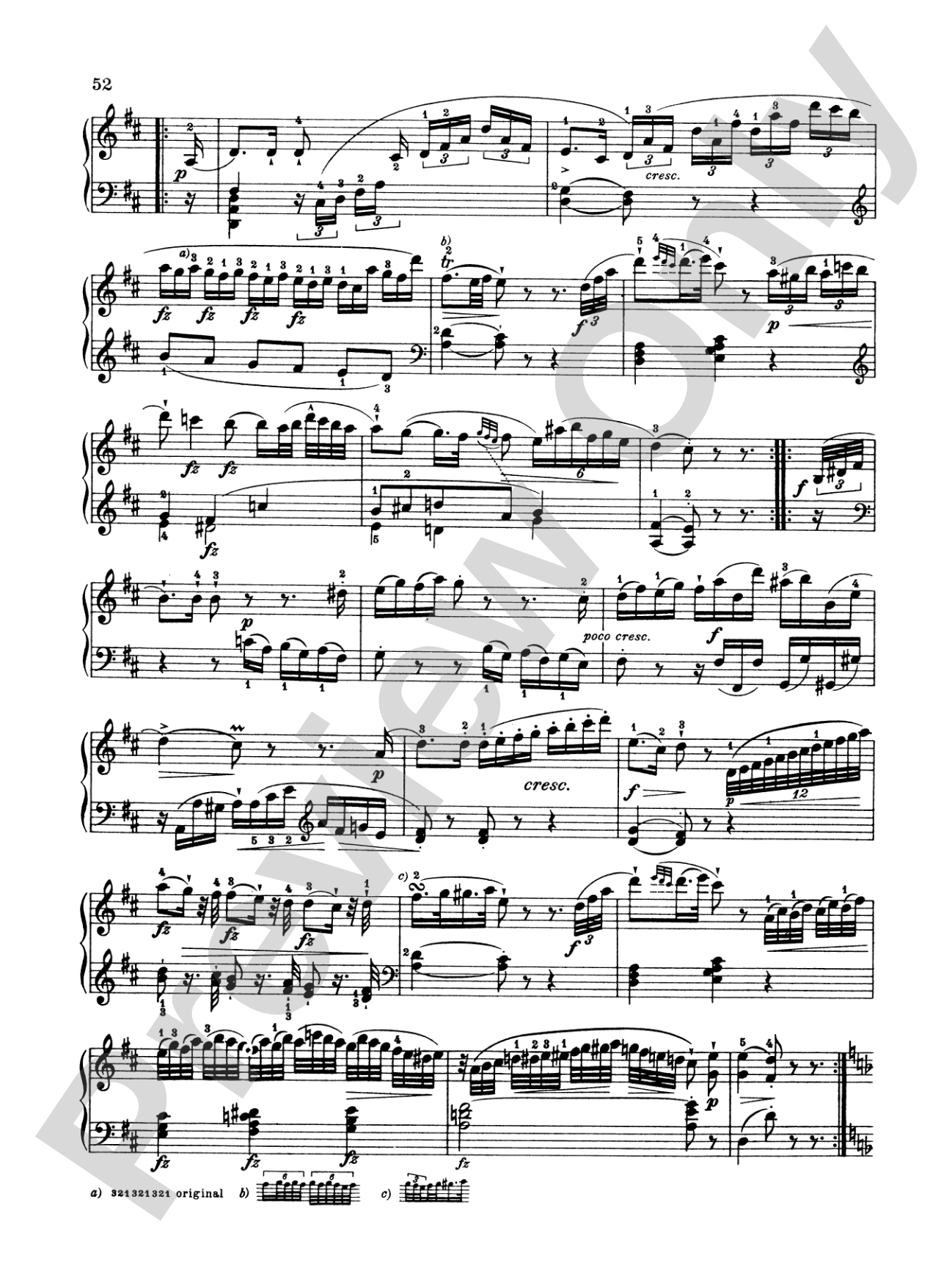
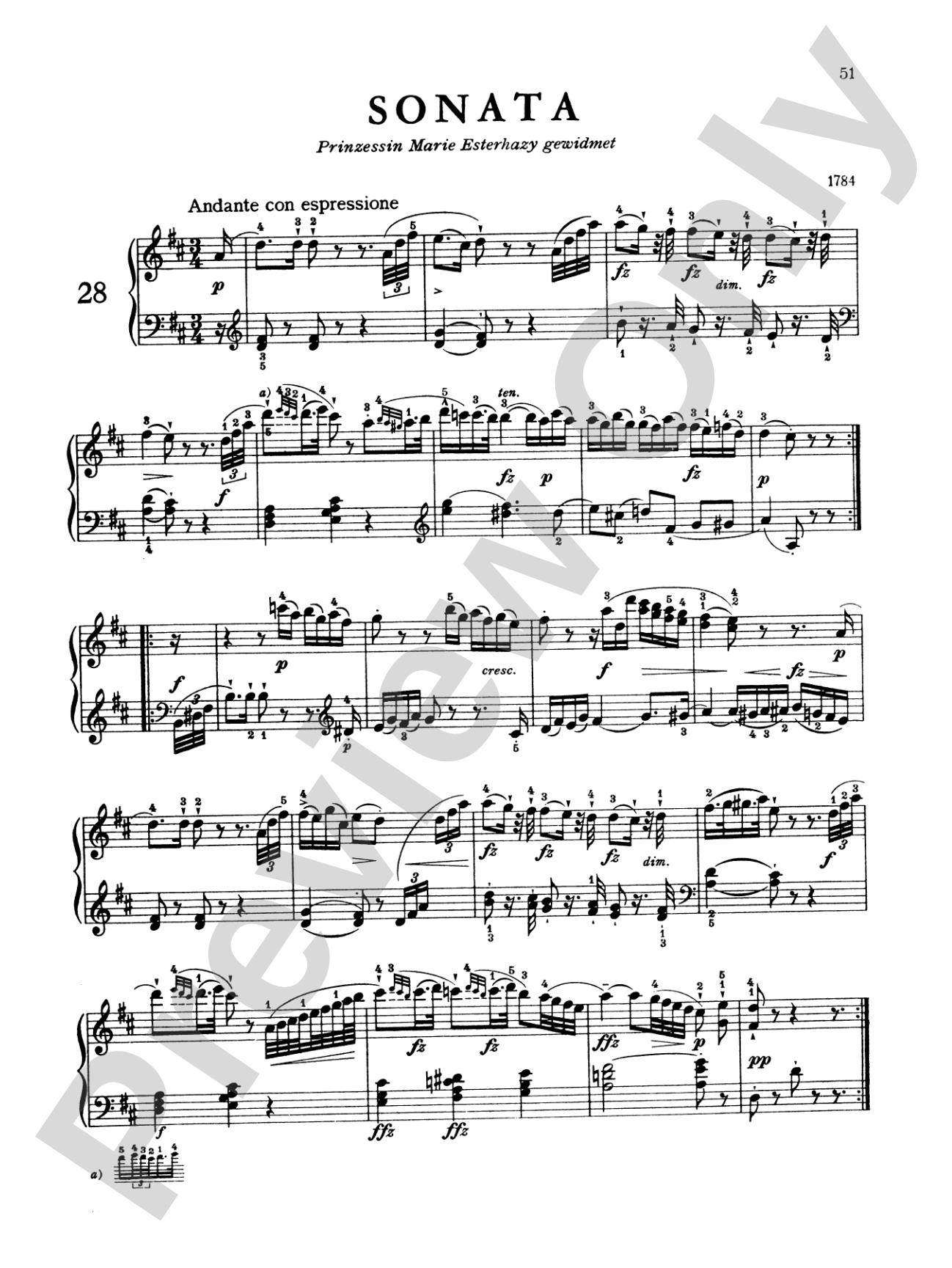
Haydn: Sonatas (Volume III) Sheet Music Preview

Haydn: Sonatas (Volume III)

For Piano

By Franz Joseph Haydn

Item: 00-PC-0007890

Digital Download
$0.99
Description
A collection of exercises, for Piano, composed by Franz Joseph Haydn.

Don't just read it, hear it, play along with it, and watch your students grow with it. In MakeMusic Cloud, Haydn: Sonatas (Volume III) comes alive with professional accompaniment, adjustable tempo, and built-in practice tools that turn solo practice into real progress.

Sample Audio
No sample audio found.
Sample Video
Additional Details
Series: Kalmus Edition
Publisher: Alfred Music
Page Count: 96
SKU: 00-PC-0007890

More about this title

About the Composer: Franz Joseph Haydn

Franz Joseph Haydn (1732-1809) spent most of his career as Kapellmeister for the Esterházy family, a position that demanded constant musical invention across every genre. His prolific output shaped the Classical style itself; his symphonies, string quartets, and keyboard works established structural principles that Beethoven and Mozart would inherit and transform.

For pianists, Haydn's sonatas represent the bridge between the Baroque keyboard tradition and the modern piano repertoire. These works reward careful attention to voice leading, ornamentation, and the interplay between hands. They ask performers to think architecturally about phrasing and form while maintaining the clarity and directness that defines his compositional voice.

Why we love this

This volume collects sonatas that sit perfectly between approachable and substantive. Haydn's keyboard writing is transparent enough for intermediate pianists to grasp the structure quickly, yet sophisticated enough to sustain growth across multiple seasons of practice. You'll find genuine artistry here, not simplified popularizations.

What to expect

Haydn's keyboard language is elegant and conversational. Melodies emerge from figuration without fanfare; wit and surprise live in harmonic turns and unexpected key shifts. There's an almost chamber-music intimacy to these sonatas, as though the composer is thinking through ideas at the keyboard rather than composing in the abstract.

Who it's for

This collection serves intermediate to advanced pianists working to understand Classical form from the inside. Students preparing for conservatory auditions, music theory students grounding their studies in actual scores, and community musicians seeking repertoire that deepens their craft will all find material here.

How to get the most out of it

  • Articulate the accompaniment patterns with care. Haydn's Alberti bass figures need forward motion and clarity, not mindless repetition; shape them as if they matter melodically.
  • Honor the minuet and scherzo movements by keeping them light and dance-like. Resist the urge to slow these down; the character lives in their rhythmic buoyancy.
  • Study the score for hand independence. Haydn often writes independent lines for each hand that obscure the underlying harmonic architecture. Separate them out in practice before bringing them together.
  • Use the printed dynamics as structural signposts. Haydn's subito piano and forte markings direct harmonic or thematic turns; they're not decorative.

How to use it

Pair these sonatas with later Beethoven or Mozart to illustrate how the Classical sonata evolved. A student recital built around a single Haydn sonata and contrasting 19th-century works creates a satisfying arc. Alternatively, program one movement as an intermission piece; these travel well and reward attentive listening without demanding the concentration of a full symphony.

Skills your students will build

  • Voice leading through Alberti bass and other accompaniment figurations
  • Classical sonata form and theme development
  • Hand independence and coordinated phrasing across staves
  • Ornamentation and articulation in the Classical idiom
  • Harmonic analysis through practical keyboard work
  • Period-appropriate tempo and character choices for dance movements

You May Also Like