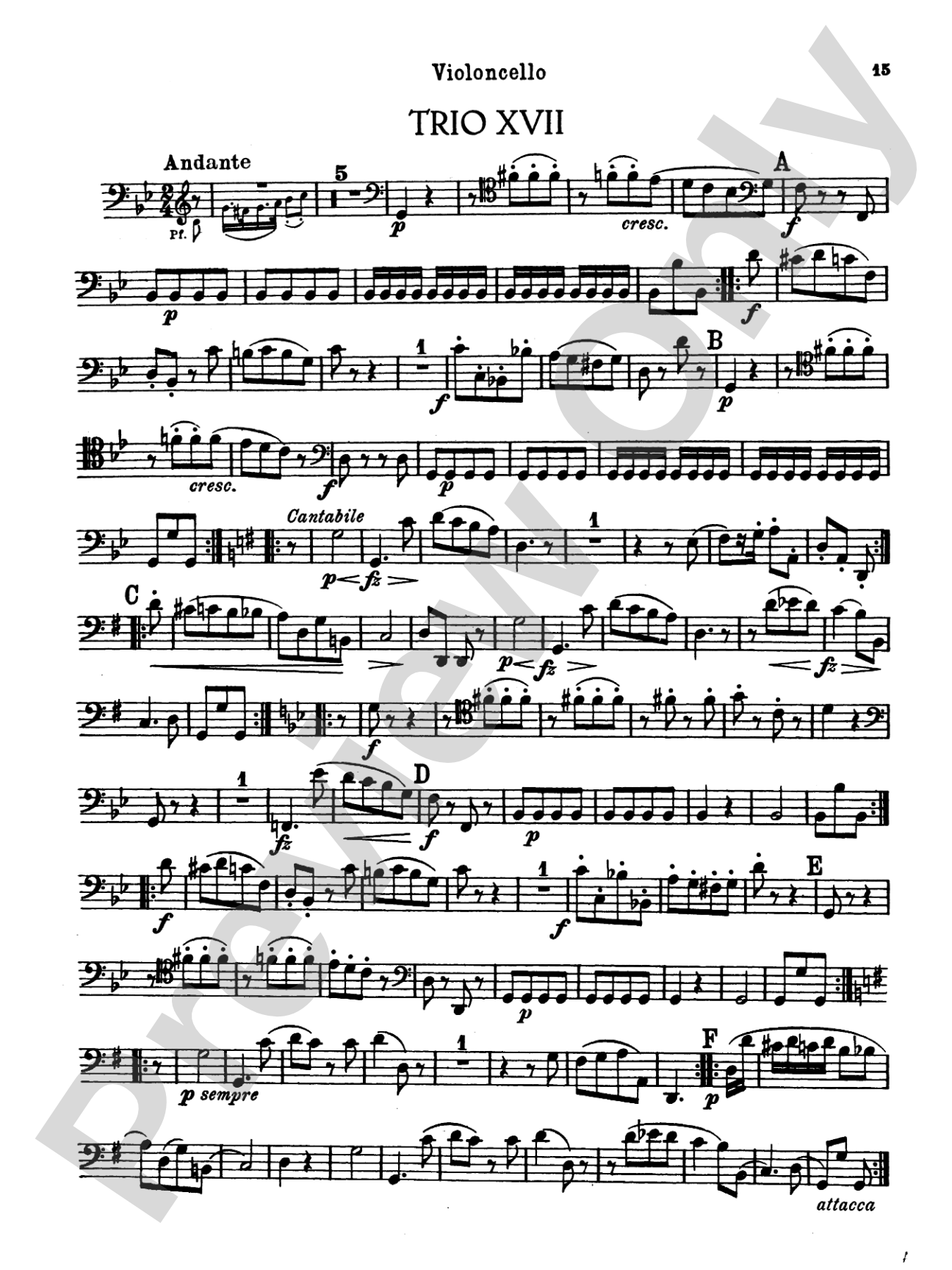
Haydn: Piano Trios, Volume III (Nos. 13-17) Sheet Music Preview

Haydn: Piano Trios, Volume III (Nos. 13-17)

By Franz Joseph Haydn

Item: 00-PC-0012998

Digital Download
$0.99
Description
Expertly arranged Chamber Trios by Franz Joseph Haydn from the Kalmus Edition series. These Trios are from the Classical era.

Don't just read it, hear it, play along with it, and watch your students grow with it. In MakeMusic Cloud, Haydn: Piano Trios, Volume III (Nos. 13-17) comes alive with professional accompaniment, adjustable tempo, and built-in practice tools that turn solo practice into real progress.

Sample Audio
No sample audio found.
Sample Video
Additional Details
Series: Kalmus Edition
Publisher: Alfred Music
Page Count: 136
SKU: 00-PC-0012998

More about this title

About the Composer: Franz Joseph Haydn

Franz Joseph Haydn (1732-1809) shaped the Classical chamber music idiom through decades of prolific composition and tireless experimentation. Working primarily for the Esterházy court in Hungary, he refined the trio sonata into a vehicle for sophisticated musical development, balancing technical demands with lyrical invention across all three instruments.

Haydn's chamber music taught generations of composers how to write for small ensembles. His trios showcase the clarity, wit, and structural rigor that define the Classical period, making them essential study for musicians learning how voices interact within a unified musical argument.

Why we love this

These five trios are substantive works that reward careful study without requiring the virtuosic demands of later Romantic chamber music. They sit perfectly at the boundary between pedagogical and concert repertoire, giving young chamber musicians real artistic material while building the ensemble discipline that matters in any group setting.

What to expect

Elegant and conversational, these trios feel like three intelligent musicians thinking out loud together. There is wit and architectural soundness beneath the graceful melodic lines; moments of emotional depth emerge organically from the formal structure rather than from exaggerated expression.

Who it's for

String trio ensembles (violin, viola, cello) working at the intermediate to advanced chamber level who want substantial Classical repertoire that develops musicianship without requiring professional-level technical facility. These trios also serve upper-level chamber students preparing for festival competition or recital programs.

How to get the most out of it

  • Balance the trio texture by allowing the cello to sing through its melodic passages rather than treating it as purely harmonic support; Haydn frequently gives the bass voice thematic responsibility.
  • Shape phrase endings with slight articulation and dynamic release rather than dramatic breaks; the Classical aesthetic favors clarity and continuity.
  • Coordinate bow changes in the two upper strings to avoid rhythmic fudging, especially in rapid figuration where alignment determines whether the line feels elegant or clumsy.
  • Approach ornamentation and cadenzas with restraint; Haydn's written notation is usually sufficient without embellishment.

How to use it

Program one trio as a full chamber recital anchor, or extract movements for concert variety alongside larger ensemble work. These also serve well in festival or competition contexts where judges expect both musicianship and stylistic understanding of the period.

Skills your students will build

  • Balancing three independent voices in dialogue
  • Executing Classical-era phrasing and articulation conventions
  • Collaborative listening and response within a fixed ensemble
  • Reading and performing ornamentation appropriate to the period
  • Understanding sonata form through active participation in development sections
  • Maintaining rhythmic precision during coordinated figurations across instruments

You May Also Like