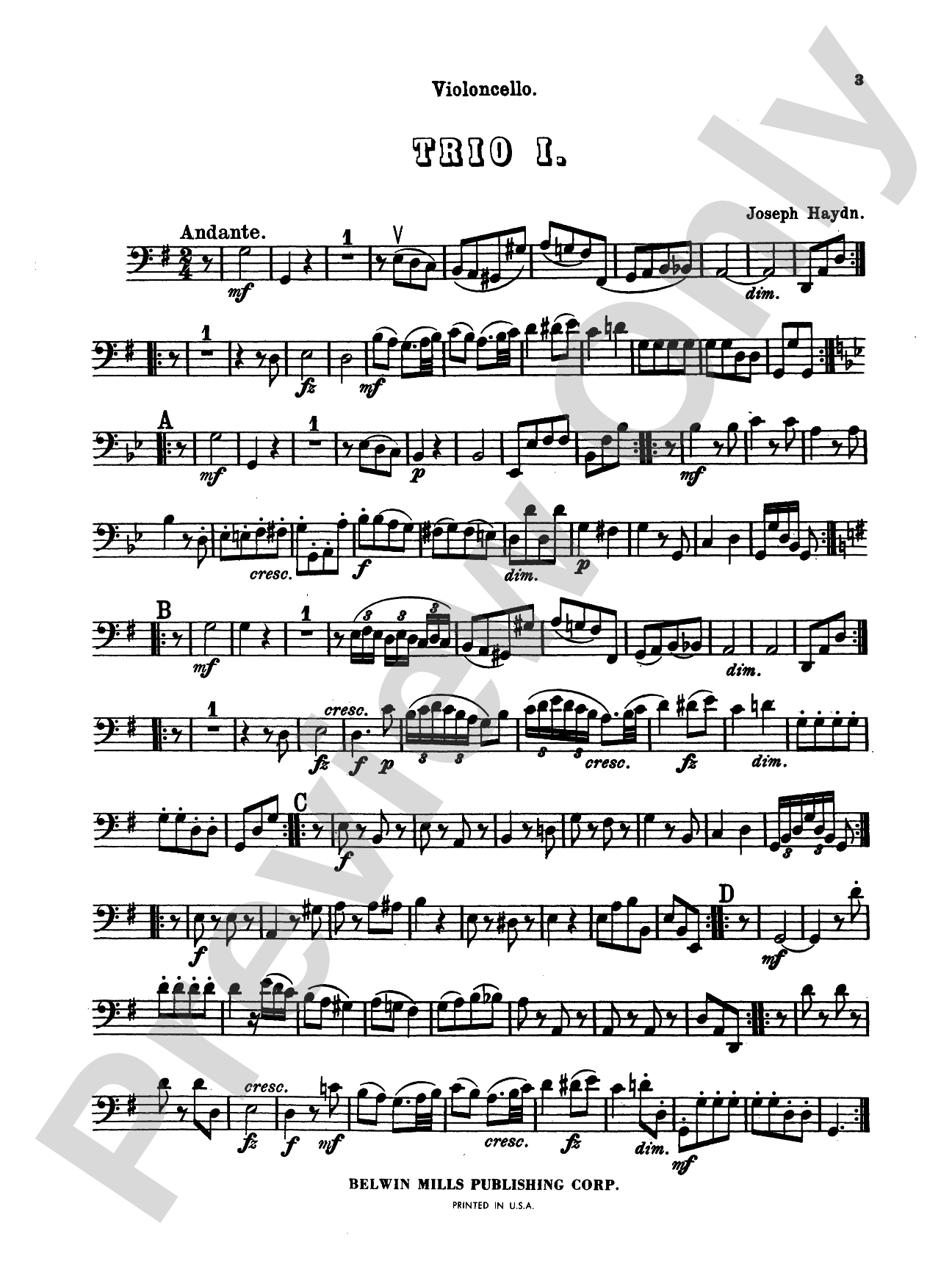
Haydn: Piano Trios, Volume I (Nos. 1-6) Sheet Music Preview

Haydn: Piano Trios, Volume I (Nos. 1-6)

By Franz Joseph Haydn

Item: 00-PC-0012950

Digital Download
$0.99
Description
Expertly arranged Chamber Trios by Franz Joseph Haydn from the Kalmus Edition series. These Trios are from the Classical era.

Don't just read it, hear it, play along with it, and watch your students grow with it. In MakeMusic Cloud, Haydn: Piano Trios, Volume I (Nos. 1-6) comes alive with professional accompaniment, adjustable tempo, and built-in practice tools that turn solo practice into real progress.

Sample Audio
No sample audio found.
Sample Video
Additional Details
Series: Kalmus Edition
Publisher: Alfred Music
Page Count: 99
SKU: 00-PC-0012950

More about this title

About the Composer: Franz Joseph Haydn

Franz Joseph Haydn (1732-1809) shaped the string trio as a serious chamber form during the Classical era. His 31 trios for violin, cello, and viola (or two violins and cello) transformed what had been a lighter domestic genre into works of structural sophistication and emotional range, establishing models that Mozart and Beethoven would follow.

Haydn's trios balance accessibility with craft. They reward amateur musicians with clear melodic lines and manageable technical demands, yet offer professionals genuine interpretive challenges in voice leading, phrasing, and the interplay between instruments. His influence on chamber music pedagogy remains direct: these works teach ensemble coordination without requiring virtuosity.

Why we love this

These six trios represent Haydn's ability to write music that feels both elegant and purposeful. The writing for trio texture is transparent enough that students hear how each voice contributes to the whole, making them excellent pedagogical models for understanding Classical harmony and form without unnecessary complexity. Chamber musicians at intermediate and advanced levels find genuine musical substance here, not filler.

What to expect

Elegant and conversational, with the ease of a refined chamber room rather than a concert hall. Melodies dance between instruments while harmonic clarity and period-appropriate phrasing keep the music moving forward with purpose. There is warmth here, genuine lyrical invention, without excess or pretense.

Who it's for

Intermediate to advanced chamber musicians preparing repertoire for recitals, competition, or concert programming. Music teachers seeking authentic Classical models for student ensembles will find these works more rewarding than simplified arrangements. Serious amateurs committed to building ensemble skill through well-written literature.

How to get the most out of it

  • Establish clear articulation patterns among the three players before rehearsing for tempo. Haydn's Classical textures depend on rhythmic precision and unified tonguing or bow attacks across the ensemble.
  • Balance the inner voice (viola or second violin) distinctly enough to hear the harmonic progression. Many amateur groups bury this part; bringing it forward transforms the listening experience.
  • Shape phrases with gentle rubato rather than rigid tempo. Haydn's melodies often span multiple measures, and allowing the ensemble to breathe together makes the architecture audible.
  • Approach the exposition repeat thoughtfully. Use it as an opportunity to hear the material again before moving forward, or skip it if programming constraints demand shorter pieces.

How to use it

Pair these trios with later Romantic or contemporary chamber works to show the evolution of string trio writing. Program a single trio as an intermission piece or as part of a themed concert on Classical chamber music. Include them in festival and competition seasons where judges expect knowledge of the period's standard repertoire.

Skills your students will build

  • Balanced ensemble voicing in three-part texture
  • Classical harmonic progression through voice leading
  • Transparent phrasing and articulation across independent parts
  • Interpretation of period-appropriate ornamentation and articulation
  • Intonation adjustment for triadic harmony
  • Listening skills through genuine dialogue between instruments

You May Also Like