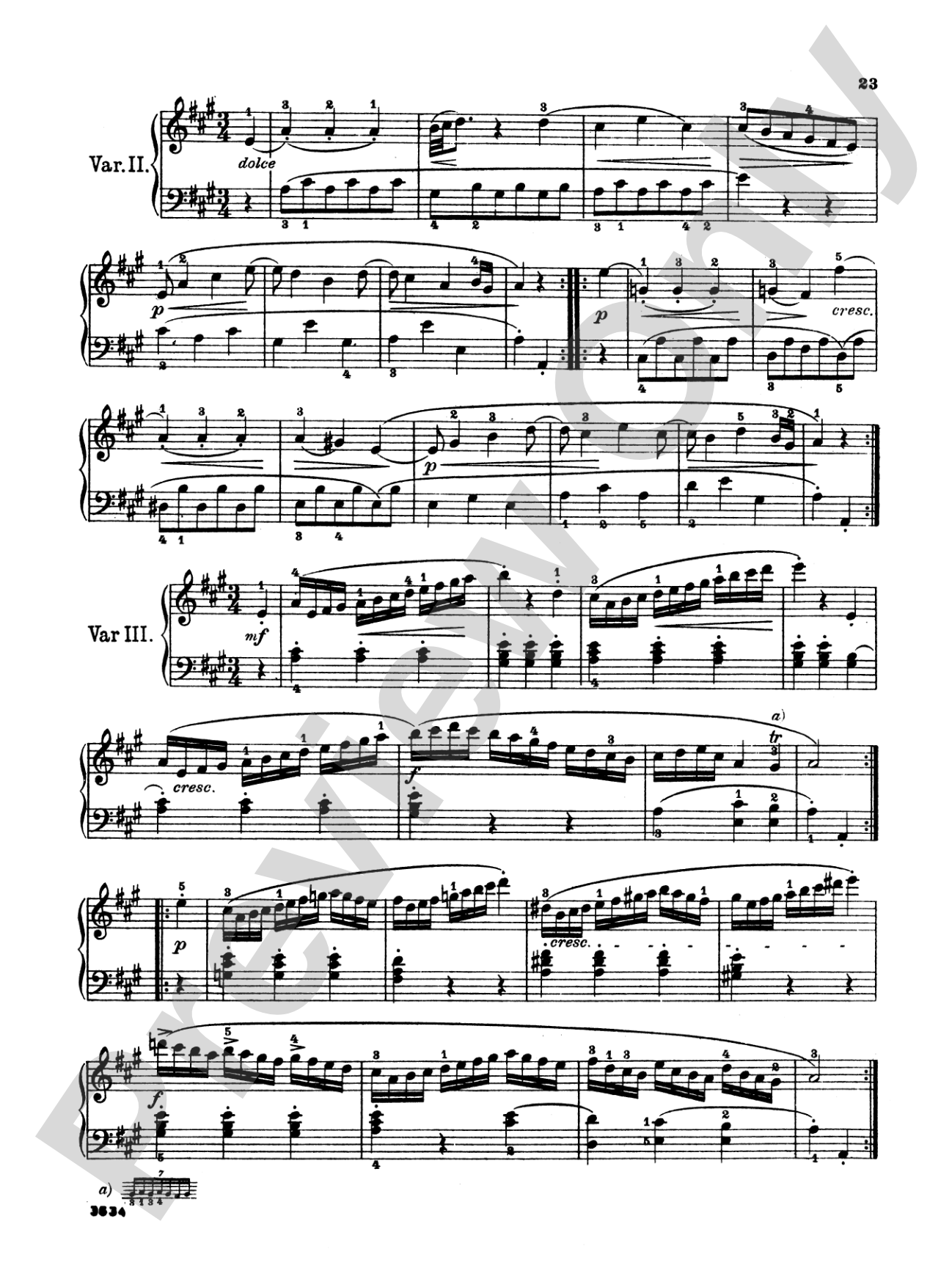
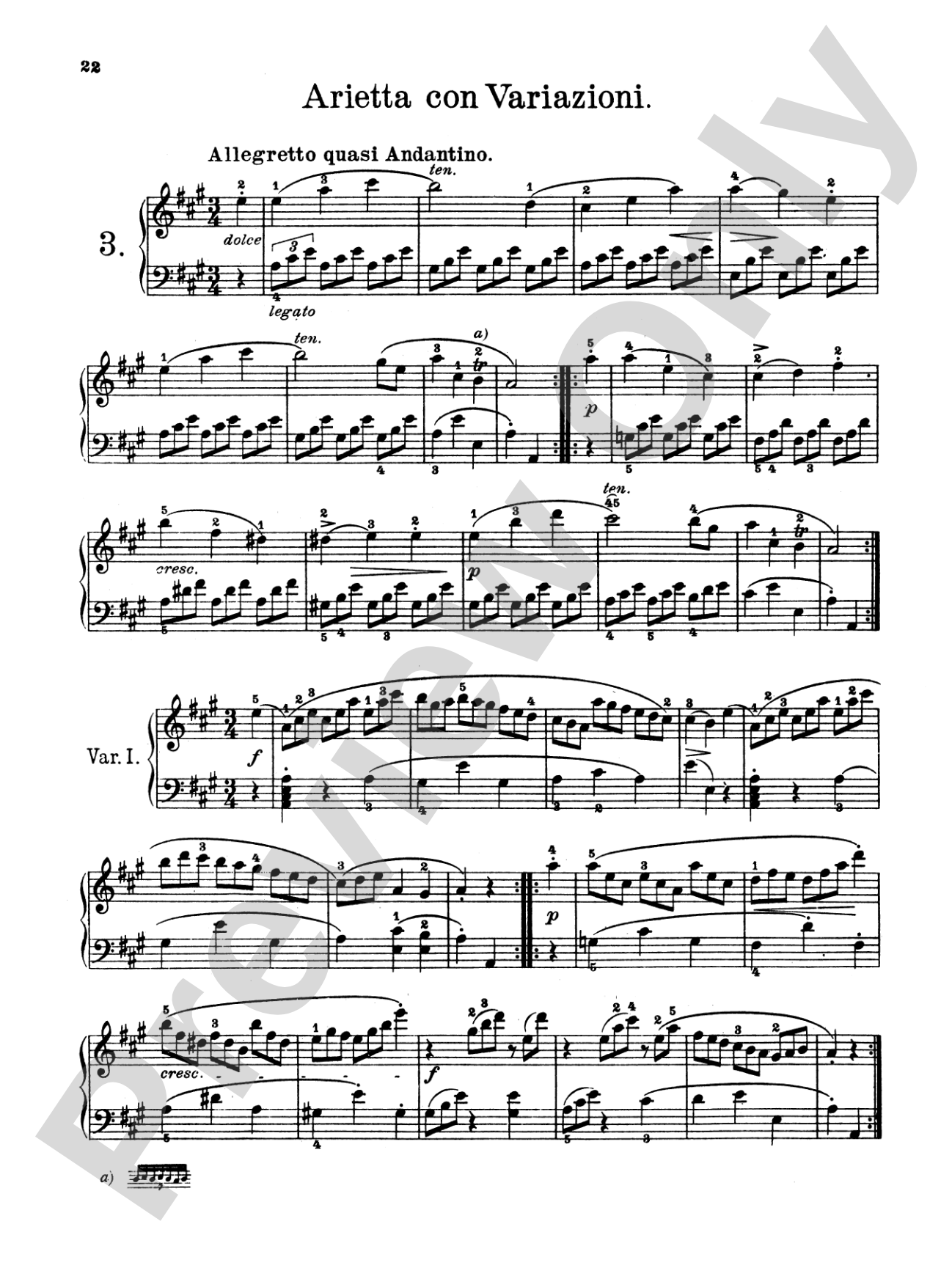
Haydn: Eight Various Compositions Sheet Music Preview

Haydn: Eight Various Compositions

By Franz Joseph Haydn

Level: Intermediate / Advanced

Item: 00-PC-0007908

Digital Download
$0.99
Description
A collection of Intermediate / Advanced piano solos composed by Franz Joseph Haydn.

Don't just read it, hear it, play along with it, and watch your students grow with it. In MakeMusic Cloud, Haydn: Eight Various Compositions comes alive with professional accompaniment, adjustable tempo, and built-in practice tools that turn solo practice into real progress.

Sample Audio
No sample audio found.
Sample Video
Additional Details
Series: Kalmus Edition
Publisher: Alfred Music
Page Count: 60
SKU: 00-PC-0007908

More about this title

About the Composer: Franz Joseph Haydn

Franz Joseph Haydn (1732-1809) shaped the Classical symphony and sonata into the forms we know today. His prolific output across every genre—symphonies, string quartets, masses, and keyboard works—established the harmonic language and structural clarity that defined an era. For pianists, Haydn's keyboard works reveal a composer deeply engaged with the instrument's capabilities, combining intellectual rigor with unexpected warmth and wit.

Haydn spent most of his career in the service of the Esterházy family, where he conducted orchestras and composed constantly under conditions that demanded both innovation and practicality. This balance between experimentation and accessibility runs through his piano works. Teachers value Haydn because his music teaches students how to listen; every phrase has purpose, every modulation has logic, and surprise arrives without pretense.

Why we love this

Haydn's keyboard writing sits at a perfect intersection for intermediate and advanced students: the technical demands are genuine without becoming showy, and the musical content rewards careful listening. These eight pieces offer variety in character and mood, giving you programming flexibility within a single composer, and students encounter the harmonic sophistication and structural clarity that make Classical form worth studying.

What to expect

These works balance wit and sincerity. Themes unfold with conversational ease, moving through unexpected harmonic territory with calm assurance. You'll encounter moments of brightness and charm alongside passages of genuine depth, all delivered with the straightforward elegance that Haydn mastered.

Who it's for

Advanced intermediate to advanced pianists looking for substantial Classical repertoire that develops control, clarity, and musical maturity. Teachers seeking pieces that challenge students to understand form and harmony through performance, not just analysis.

How to get the most out of it

  • Honor the Classical principle of proportional phrasing. Haydn's symmetry is intentional; resist the urge to stretch cadences or add rubato where the notation is straightforward.
  • Listen for voice independence in the left hand. Many passages feature counterpoint that disappears if the accompaniment becomes purely rhythmic; bring out inner lines without sacrificing overall shape.
  • Approach ornaments and articulation marks as structural markers, not decoration. Staccato, slurs, and grace notes clarify form and harmonic function in Haydn's writing.
  • Pay attention to dynamic contrast. Haydn uses sudden shifts in volume and texture to create structural drama; these surprises work only when the surrounding material is cleanly executed.

How to use it

Program a single Haydn piece as a bridge between Baroque and Romantic repertoire, or use this collection to build a thematic recital around Classical keyboard aesthetics. The eight pieces provide enough variety to suit different concert contexts, from intimate studio recitals to larger student showcases.

Skills your students will build

  • Clarity and control in Classical phrasing
  • Voice leading and harmonic analysis through performance
  • Articulation and dynamic shaping as structural tools
  • Pedal restraint and transparent texture
  • Recognizing and executing Haydn's formal structures (sonata, rondo, theme and variations)
  • Independence between treble and bass voices, particularly in contrapuntal passages

You May Also Like