
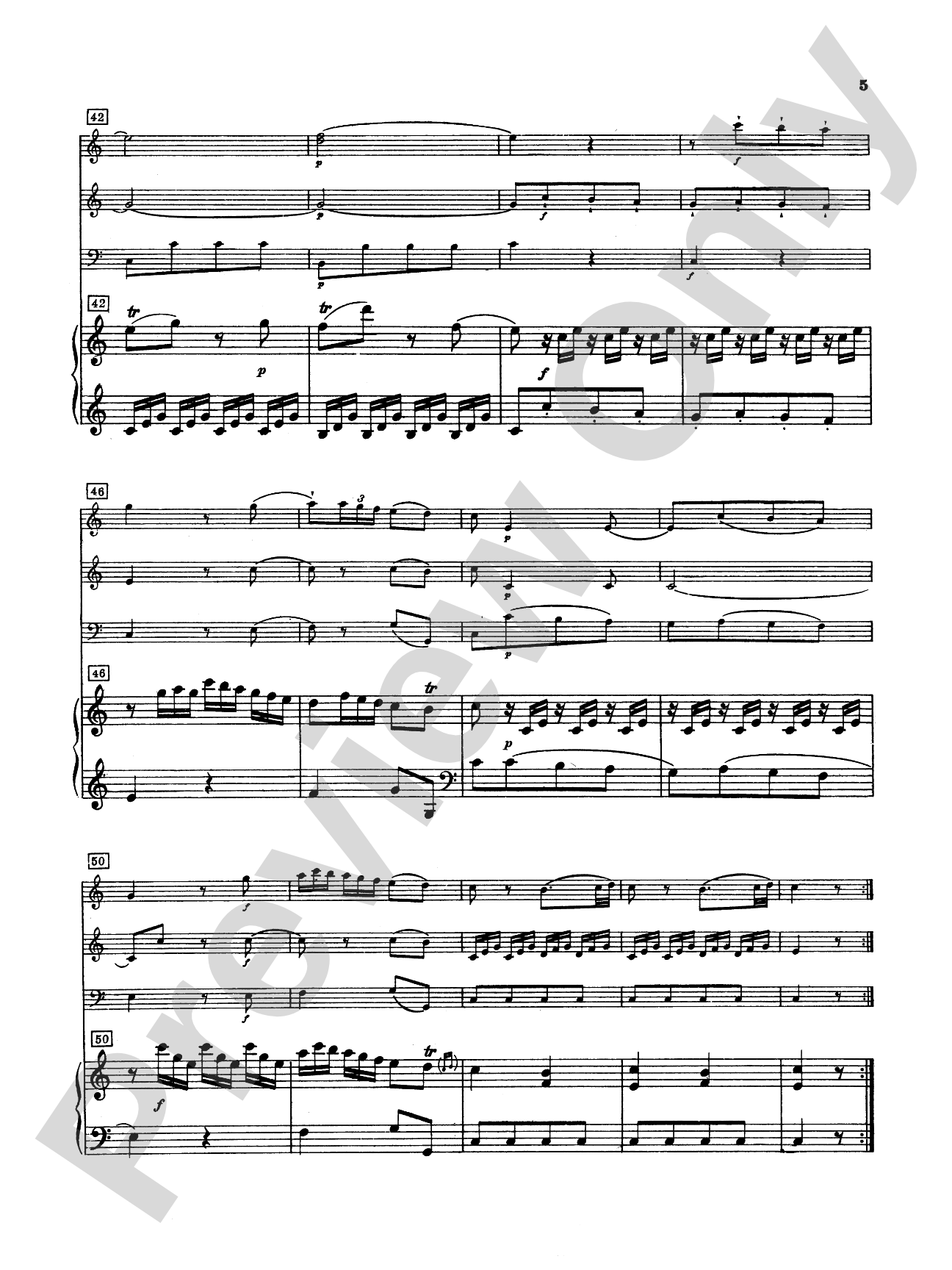
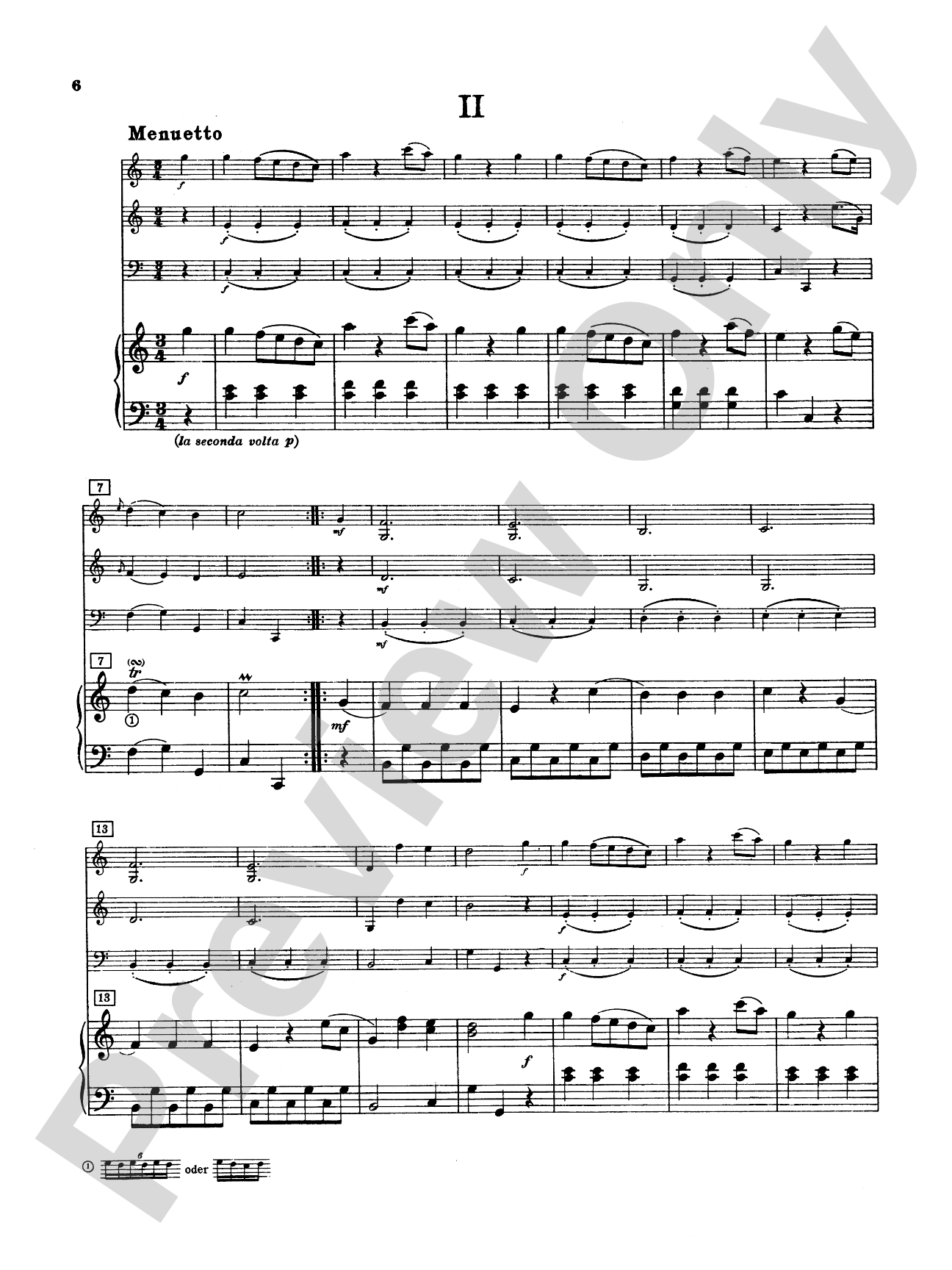
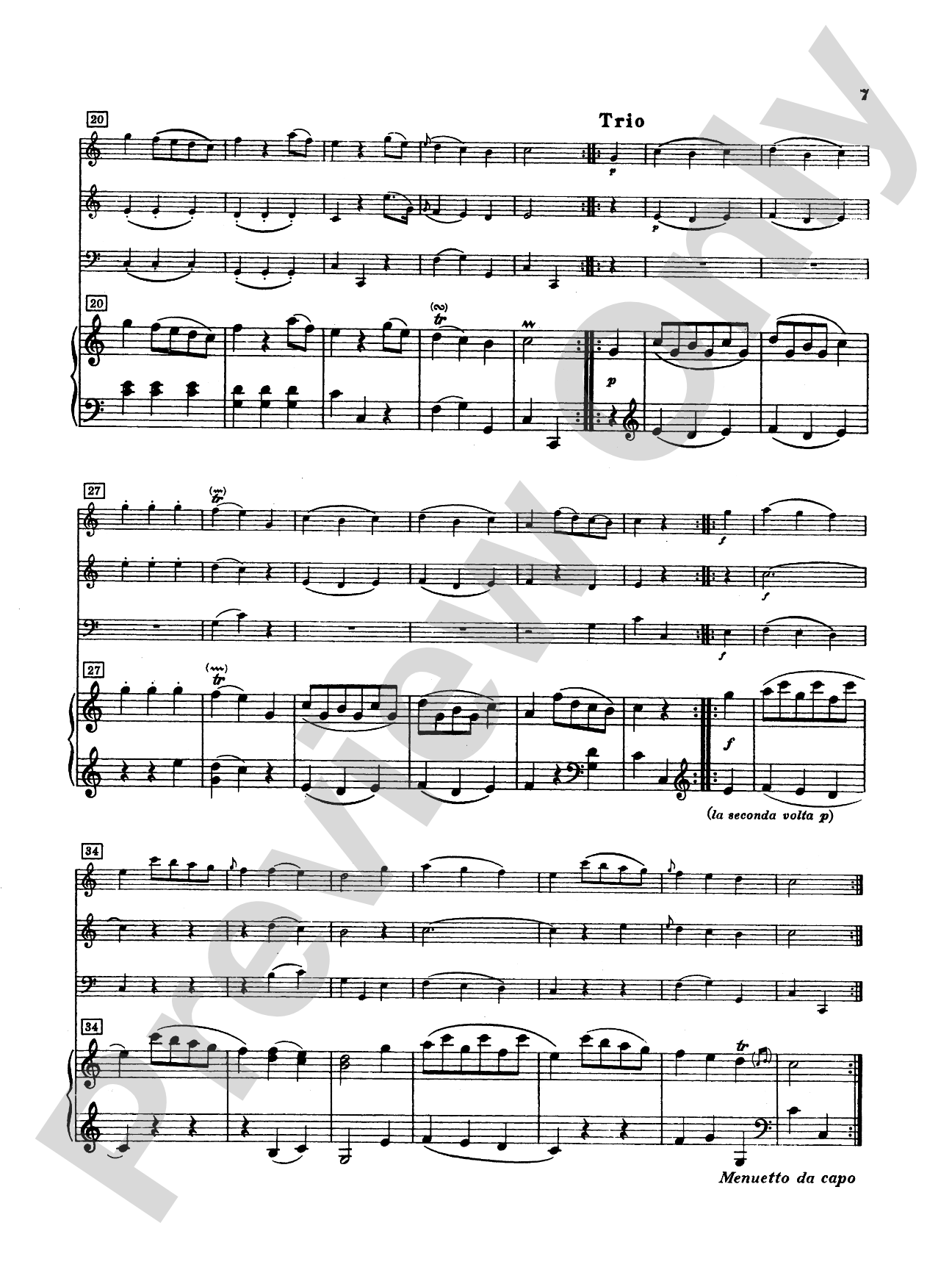
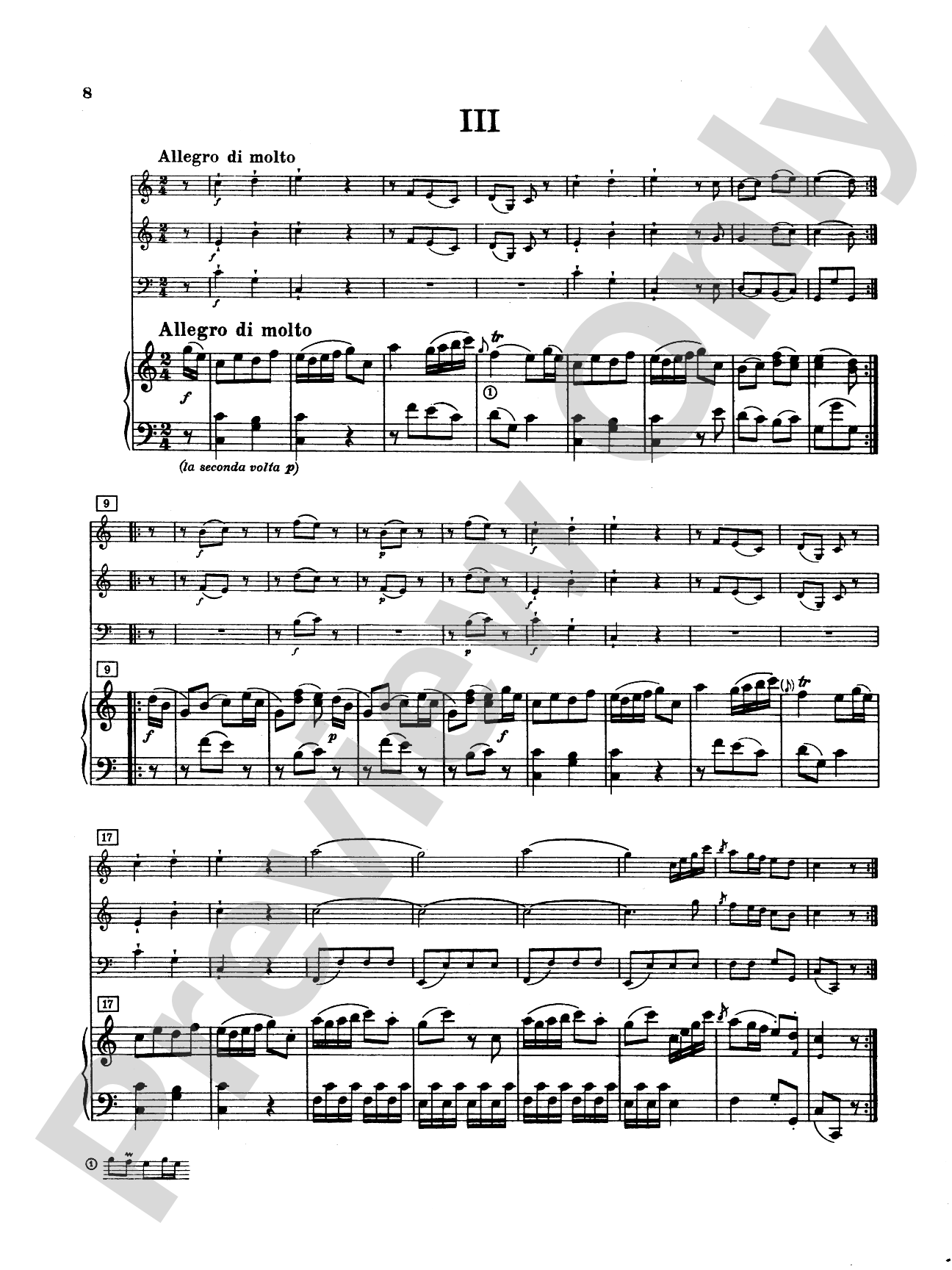

Haydn: Concertino in C Major: Chamber Quartet Book
By Franz Joseph Haydn
Item: 00-PK-0003822

$7.99
Pickup currently not available
Parts Added to Cart!
Related Items
Concertino in C Major: Chamber Quartet Book |
$7.99
|
View |
Description
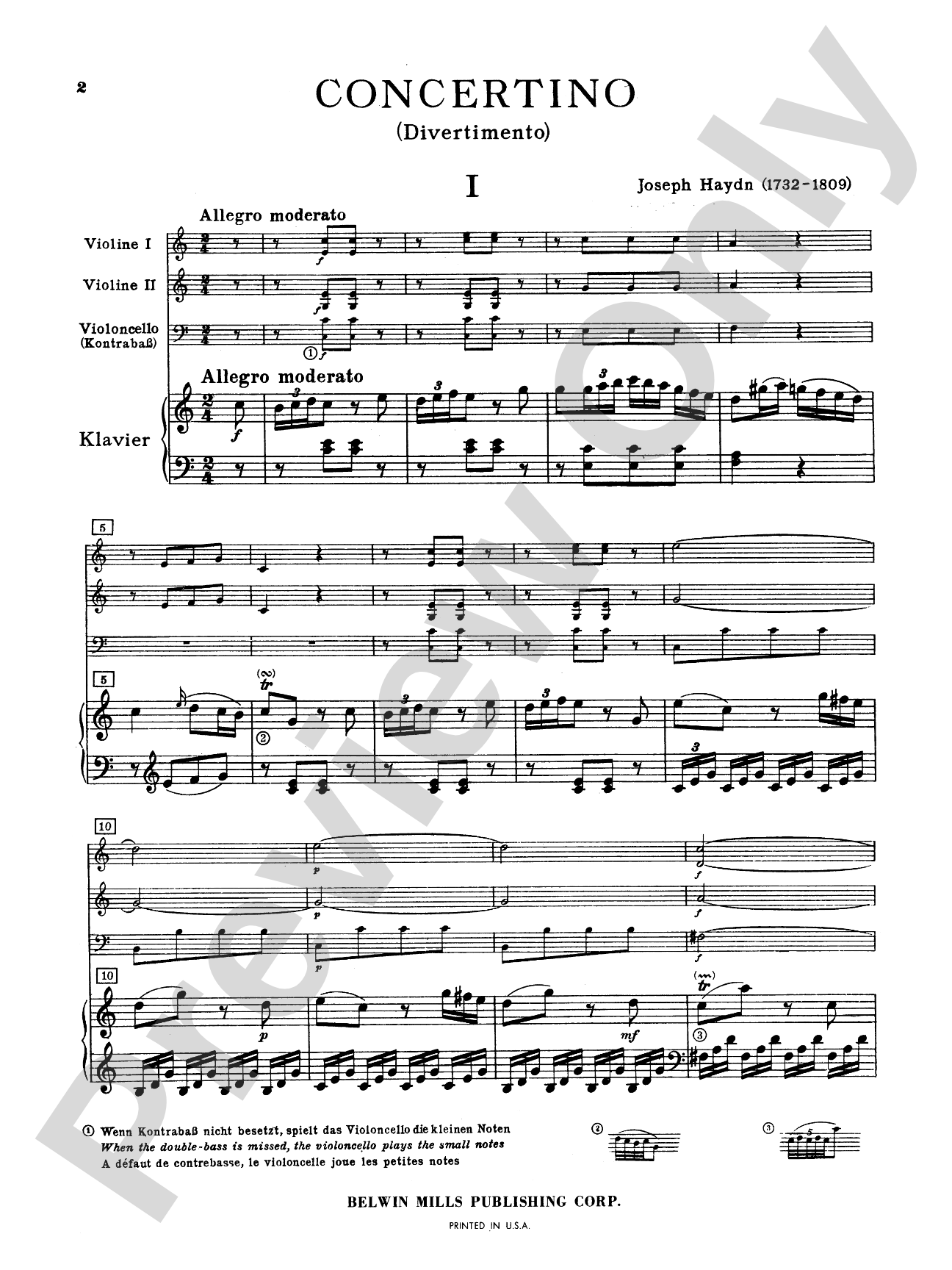
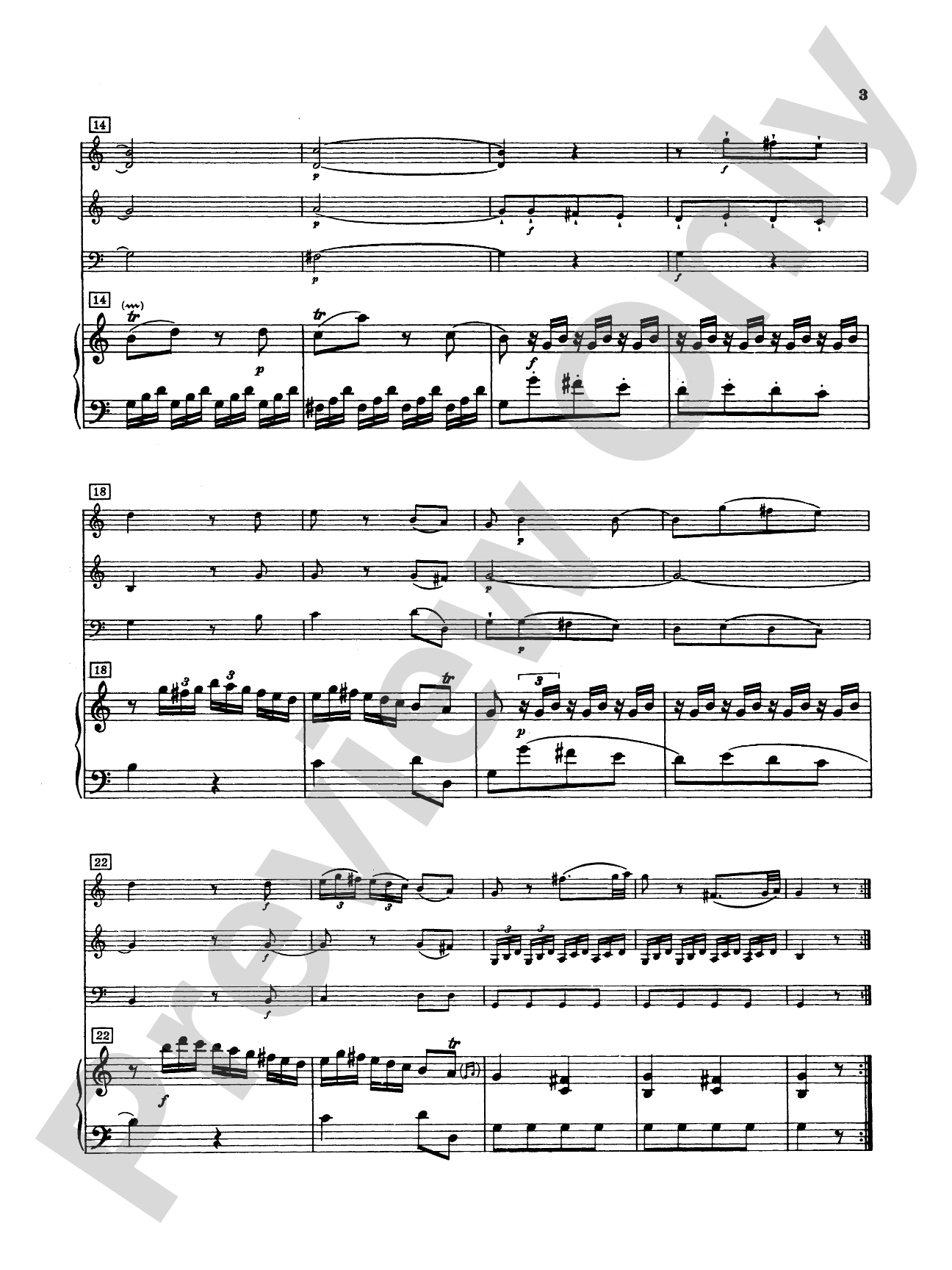
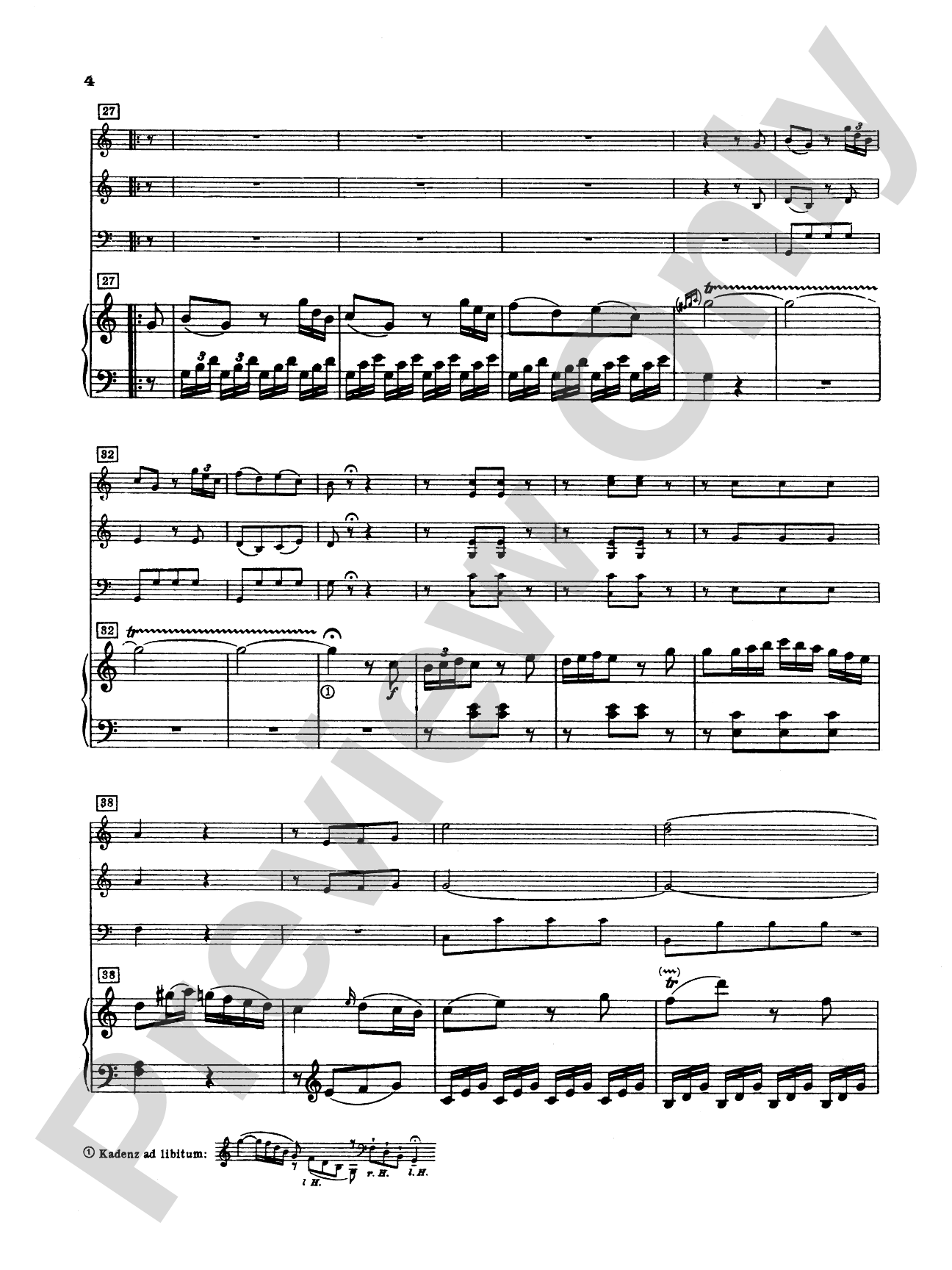
Composed by Frnaz Joseph Haydn, Concertino in C is written for Piano, two Violins, and Bass.


Don't just read it, hear it, play along with it, and watch your students grow with it. In MakeMusic Cloud, Haydn: Concertino in C Major: Chamber Quartet Book comes alive with professional accompaniment, adjustable tempo, and built-in practice tools that turn solo practice into real progress.
Open in the Player
Jump straight in and assign it today.
Start Your Free Trial
Open this title and explore the full library in minutes.
Sample Audio
No sample audio found.
Sample Video
No sample videos found.
Additional Details
Series:
Kalmus Edition
Publisher:
Alfred Music
Page Count:
14
SKU:
00-PK-0003822
More about this title
About the Composer: Franz Joseph Haydn
Franz Joseph Haydn (1732-1809) shaped the Classical symphony and string quartet into the forms we recognize today. His prolific output across every major genre established conventions that composers from Mozart to Beethoven built upon, making him one of the most influential figures in Western music history.
Haydn's gift for melody, structural clarity, and wit made his music immediately popular across Europe. He spent nearly three decades as court composer to the Esterházy family in Hungary, a position that gave him the freedom to experiment extensively with instrumental forms. His chamber works, especially his string quartets, remain essential teaching repertoire because they balance accessibility with sophisticated musical ideas.
Why we love this
The Concertino in C Major sits at a sweet spot for chamber ensembles: it's accessible enough for strong student groups to learn quickly, yet it contains genuine Haydn craft that rewards careful rehearsal. The four-part texture stays transparent, making it an ideal choice for contests and festivals where clarity matters, and the work's bright, energetic character leaves audiences consistently delighted.
What to expect
Bright, elegant, and conversational. The piece radiates the optimism and clarity of the Classical style, with melodies that feel inevitably shaped and harmonies that are never murky. There's a sophisticated lightness throughout; nothing feels heavy, yet nothing feels trivial either.
Who it's for
String quartets and mixed chamber ensembles at the intermediate to advanced level who want substantial repertoire that combines pedagogical value with concert appeal. The work suits string students who are ready to explore Classical chamber texture and balance without the complexity of more demanding Romantic or contemporary writing.
How to get the most out of it
- Shape each phrase with a clear arc rather than playing mechanically through the measure lines; Haydn's phrases are conversational, and the ensemble should breathe together at logical punctuation points.
- Balance the two violin parts so they function as genuine partners in dialogue, not as first and second fiddles. The interplay between them drives much of the piece's character.
- Keep the piano accompaniment rhythmically steady and unobtrusive; it anchors the texture, but the string melodies should always remain the focus.
- Attend to articulation consistency across the ensemble; uniform tonguing and bowing habits create the clarity that makes this work shine in performance halls.
How to use it
Program this on a chamber ensemble or young artist concert as an opener or mid-program palate cleanser that audience members immediately enjoy. It works beautifully alongside other Classical chamber works, and its 14-page length makes it a natural fit for festivals and competitions where time slots are limited.
Skills your students will build
- Balancing melody and accompaniment in a four-part texture
- Ensemble intonation across string and piano timbres
- Phrase shaping and breathing in Classical style
- Dialogue between violin parts as equal conversational partners
- Reading and performing on the C major scale with harmonic awareness