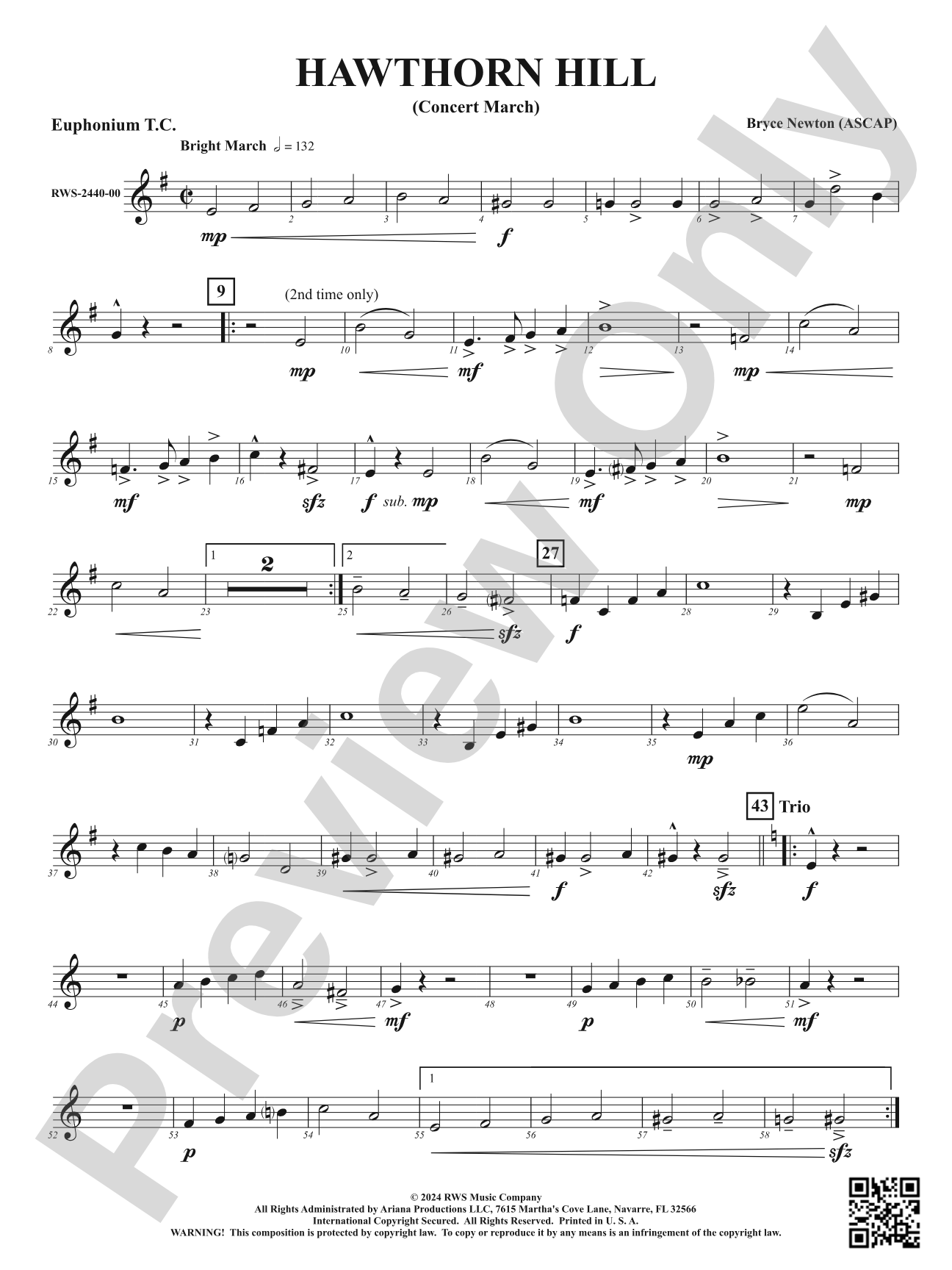
Hawthorn Hill - (Concert March): Baritone T.C. Sheet Music Preview

Hawthorn Hill - (Concert March): Baritone T.C.

(Concert March)

By Bryce Newton

Grade: 2.5

Item: 98-PC-RWS2440_BTC1

Digital Download
$3.99
Description
Celebrating the home of Dayton, Ohio's Orville Wright, Hawthorn Hill follows the invention and construction of the first airplane, the Wright Flyer. The sensible rhythms and memorable melodies make this march by Bryce Newton musically and historically intriguing for your ensemble. Starting with the excitement of the introduction, followed by the melodic trio, and on to the bold ending, this memorable march would be a successful cross-curricular addition to any concert or festival program. (2:13)

Hawthorn Hill - (Concert March): Baritone T.C. isn't in MakeMusic Cloud just yet...but it could be. Let us know you'd like to see it, and you'll help shape what comes next. In the meantime, start a free trial and dive into thousands of interactive titles your students can play along with today.

Sample Audio
0:00
0:00
Sample Video
Additional Details
Series: RWS - Developing Band
Publisher: RWS Music Company
SKU: 98-PC-RWS2440_BTC1

More about this title

Why we love this

Newton anchors this march in genuine historical narrative without sacrificing musical interest. The architecture is sturdy (introduction, melodic trio, strong finish), but what sets it apart is how sensible the rhythmic writing is for Grade 2.5 bands, allowing students to engage with the story rather than wrestle with technical complexity.

What to expect

A brisk, purposeful walk through an important moment in American innovation. The writing captures the energy of aviation's birth with clear melodic lines and straightforward rhythms that let young musicians feel the forward momentum of the piece.

Who it's for

Grade 2.5 concert bands preparing for festival programming or building a spring concert with cross-curricular appeal. Ensembles looking for historically themed repertoire that educates audiences without demanding advanced technical skills will find strong material here.

How to get the most out of it

  • Shape the introduction to build momentum gradually. Resist rushing the early material; let the excitement grow through dynamic contrast rather than tempo changes.
  • Balance the trio so the melody sings clearly above the supporting voices. This is where the marchlike character really emerges, so precision in the accompaniment pays off.
  • Mark your tempo before the downbeat of the final section. The bold ending needs confidence from the conductor to land with full impact.

How to use it

Program this as a festival entry or as part of a themed concert celebrating Ohio history, American inventors, or the Wright brothers. Its length (2:13) and moderate demands make it an excellent choice for a developing band that needs a confident closer or centerpiece without overextending.

Skills your students will build

  • Reading and executing marchlike rhythmic patterns with stylistic accuracy
  • Balancing melody and accompaniment in a trio section
  • Sustaining dynamic control through a multi-section form
  • Responding to clear structural cues (introduction, trio, ending)

You May Also Like