
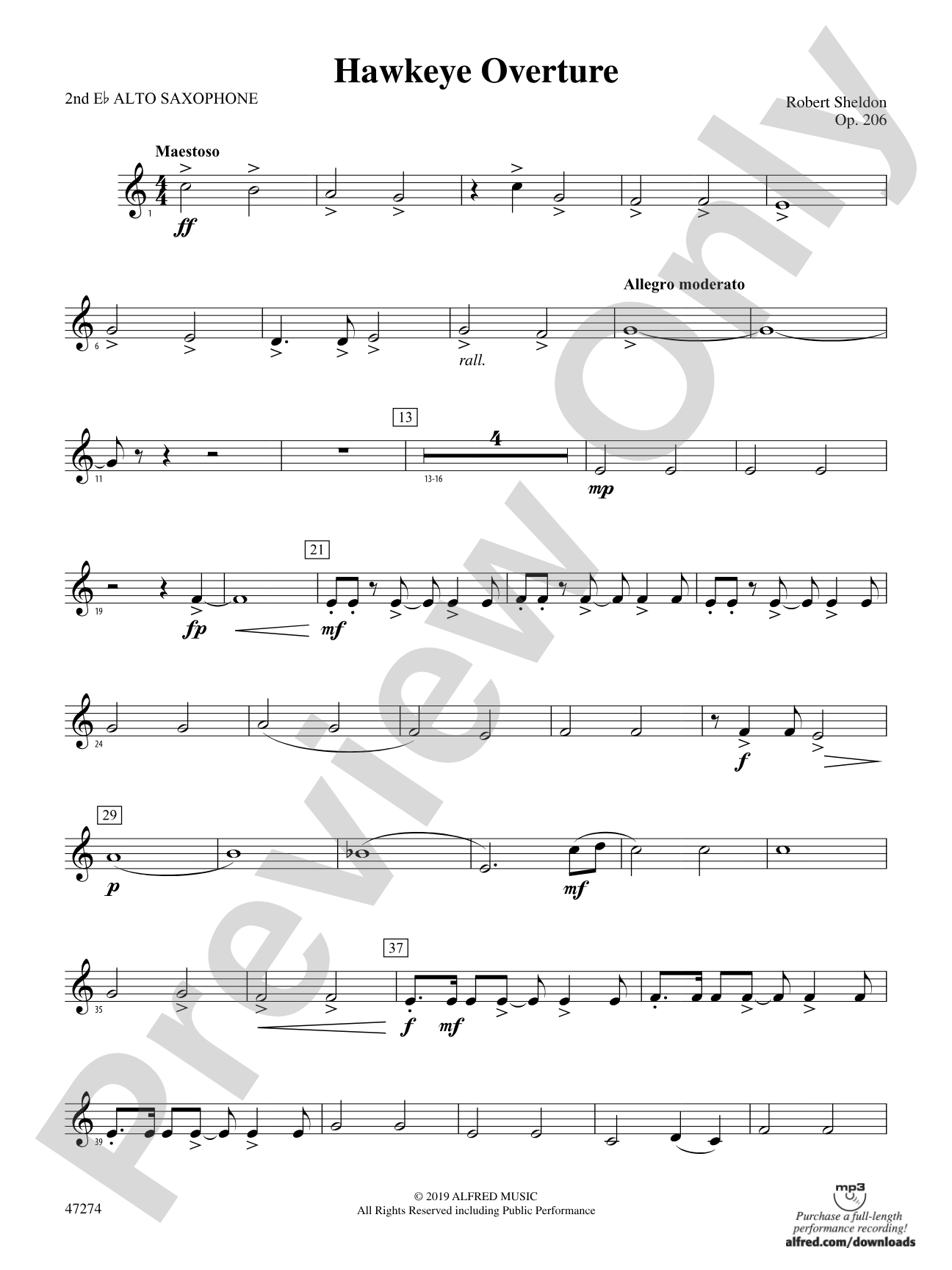

Hawkeye Overture: 2nd E-flat Alto Saxophone
By Robert Sheldon
Grade: 2
Item: 00-PC-0017887_AX2
$5.99
Pickup currently not available
Description
This energetic overture is brimming with catchy melodies for nearly every section of the band. The bold opening fanfare leads to a brisk Allegro that uses a variety of textures and colors. A contrasting lyrical section provides many opportunities for expressive performance before returning to the main theme.


Don't just read it, hear it, play along with it, and watch your students grow with it. In MakeMusic Cloud, Hawkeye Overture: 2nd E-flat Alto Saxophone comes alive with professional accompaniment, adjustable tempo, and built-in practice tools that turn solo practice into real progress.
Open in the Player
Jump straight in and assign it today.
Start Your Free Trial
Open this title and explore the full library in minutes.
Sample Audio
1
Audio File
--:--
0:00
0:00
Sample Video
Additional Details
Series:
Young Symphonic
Publisher:
Alfred Music
Page Count:
262
SKU:
00-PC-0017887_AX2
More about this title
About the Composer: Robert Sheldon

Robert Sheldon's music appears on contest lists and concert programs worldwide. His works have earned recognition from the American School Band Director's Association, Phi Beta Mu, and ASCAP, and his compositions are performed regularly by ensembles across all levels. Beyond writing, Sheldon is a sought-after clinician and guest conductor for honor bands, bringing his expertise to universities and state music education conferences across the United States and internationally.
Sheldon's conducting appearances have taken him to prestigious venues including Carnegie Hall, Boston's Symphony Hall, the Sydney Opera House, and the Kennedy Center. He continues to accept commissions for new works and produces a substantial catalog of concert band publications annually. In 2020, VanderCook College of Music awarded him an honorary doctorate in recognition of his contributions to wind band music education.
Why we love this
This overture demonstrates Sheldon's gift for writing melodies that stick with every section of the band, which means your players stay engaged from the opening fanfare through the lyrical interlude and back again. At Grade 2, the writing is accessible without sacrificing musicianship, making it an ideal vehicle for teaching ensemble balance and textural clarity while the piece itself sounds genuinely impressive in a concert setting.
What to expect
Hawkeye Overture opens with theatrical flair and immediately establishes an energetic, forward-moving character. The shift into the lyrical section provides genuine emotional breathing room before the music pivots back to its bright, driving conclusion, creating a sense of journey rather than simple repetition.
Who it's for
Band directors looking for a Grade 2 concert opener or contest piece that demands nothing but strong musicianship and clear direction. Players at this level benefit from the straightforward writing while still developing their ability to shape phrasing and respond to conductor gestures across different tempos and textures.
How to get the most out of it
- Shape the opening fanfare with clear articulation and confident attacks; the boldness of this gesture sets the emotional tone for everything that follows.
- Use the lyrical section as an opportunity to work on sustained tone quality and dynamic control in your melodic voices; this contrast is where expressive depth becomes audible.
- Lock the rhythmic foundation in the accompaniment figures during the Allegro to allow the melodic material to float clearly above the texture.
- Bring out the variety of instrumental colors Sheldon has written throughout; resist the urge to balance everything equally, and let each section's contribution be heard.
How to use it
Program this as your concert opener to establish energy and command attention from the first moments of performance. It also works effectively as a contest entry at the Grade 2 level, where its clear structure and accessible pedagogy allow judges to hear focused, expressive playing without technical barriers.
Skills your students will build
- Executing dynamic contrast between fast and slow sections
- Balancing melody and accompaniment textures
- Playing with articulation clarity in fanfare figures
- Sustaining tone quality in lyrical passages
- Responding to conductor tempo and expressive gestures
- Maintaining rhythmic accuracy through varied textural arrangements