Have Yourself a Merry Little Christmas: Piano/Vocal/Chords Digital Sheet Music

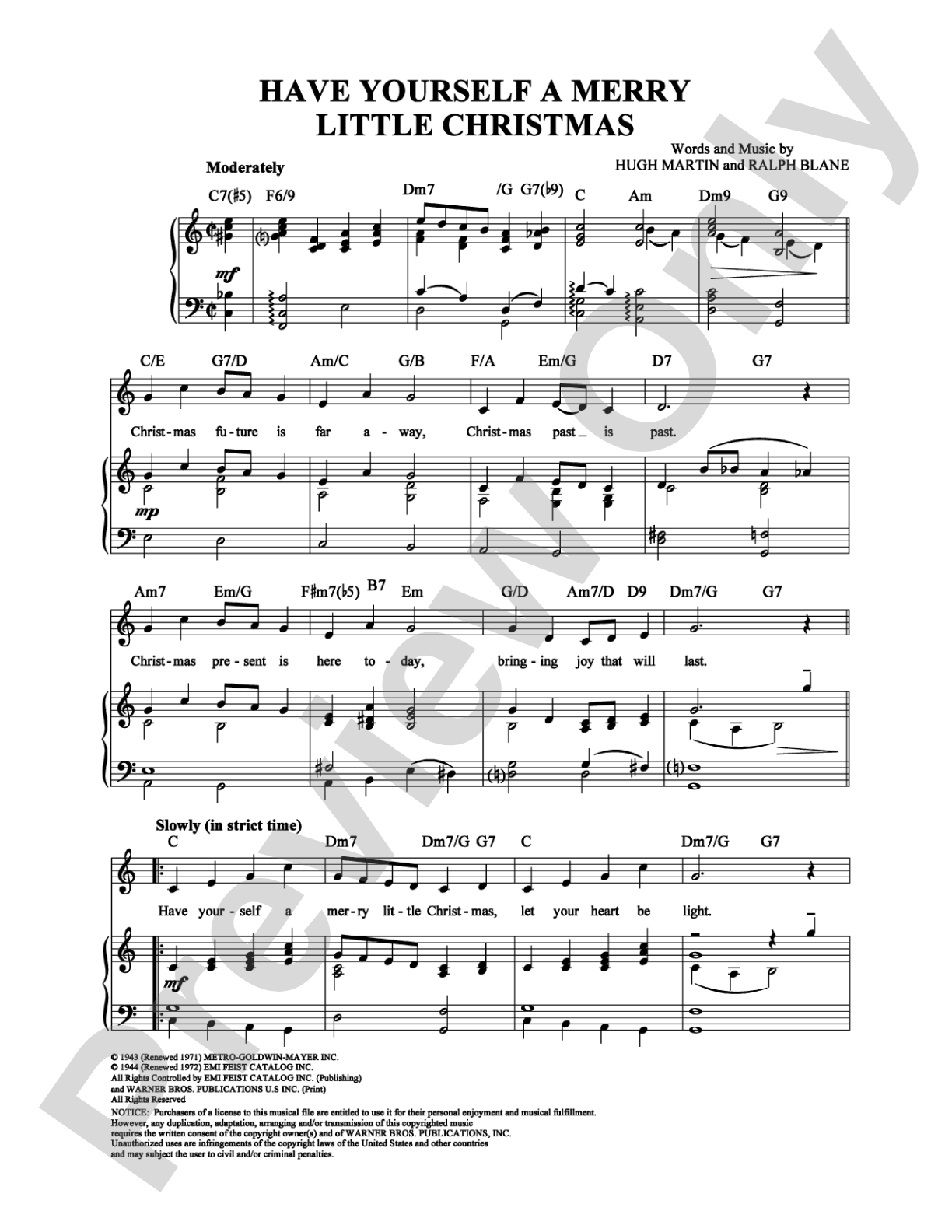
Have Yourself a Merry Little Christmas: Piano/Vocal/Chords Digital Sheet Music

Hugh Martin, Ralph Blane, Judy Garland

Item: 00-PS-0000571

Digital Download
$3.99
Description

Have Yourself a Merry Little Christmas: Piano/Vocal/Chords Digital Sheet Music isn't in MakeMusic Cloud just yet...but it could be. Let us know you'd like to see it, and you'll help shape what comes next. In the meantime, start a free trial and dive into thousands of interactive titles your students can play along with today.

Sample Audio
No sample audio found.
Sample Video
Additional Details
SKU: 00-PS-0000571

More about this title

About the Artist: Judy Garland

Judy Garland (1922-1969) was an American actress and singer whose vocal artistry defined the golden age of Hollywood musicals. Beyond her film career, Garland was a gifted interpreter of American popular song, known for her ability to infuse standards with emotional immediacy and technical control. Her recordings and live performances remain touchstones for understanding how to sing with both vulnerability and theatrical presence.

Garland's "Have Yourself a Merry Little Christmas" became one of the most recorded versions of this Ralph Blane/Hugh Martin composition, establishing a vocal and interpretive model that continues to influence how singers approach holiday repertoire. Her phrasing, sensitivity to lyrical meaning, and distinctive tone have made this arrangement essential study material for vocalists learning how to balance sincerity with sophistication in seasonal material.

Why we love this

Garland's interpretation of this carol offers singers a masterclass in restraint and emotional storytelling. Rather than relying on vocal gymnastics, she demonstrates how thoughtful phrasing, breath placement, and rhythmic flexibility can communicate the song's bittersweet, hopeful character. Her version remains a gold standard for understanding how to accompany yourself or work with a pianist to shape a complete musical narrative within a relatively simple harmonic framework.

What to expect

The piece carries an understated melancholy beneath its hopeful surface, reflective and warm rather than bright or celebratory. Garland's arrangement sits in a comfortable range and moves at a pace that encourages singers to think about each word, creating an intimate quality even in larger performance spaces.

Who it's for

This digital sheet music serves vocalists preparing holiday performances, from school choir soloists to voice students building a seasonal recital program. Pianists accompanying vocalists will find the chord notation and vocal line clear and singable, making it accessible for collaborative rehearsal and performance.

How to get the most out of it

  • Shape the opening phrases with gentle rubato; Garland never rushed the text, allowing space for the lyrics to land emotionally before moving forward
  • Balance your vocal line with the piano accompaniment rather than singing above it; the strength of this arrangement lies in the partnership between voice and instrument
  • Pay attention to the harmonic movement in the piano voicings and let those shifts inform your dynamic choices, particularly in the bridge where the song deepens emotionally
  • Mark the spots where you can breathe expressively without interrupting the lyrical flow; strategic breathing becomes part of the interpretation

How to use it

This arrangement works beautifully as a solo feature in a holiday concert, particularly if your program includes jazz standards, Broadway songs, or other popular American vocal music. It also serves as an excellent teaching piece for exploring how singers can work effectively with pianists to build interpretive choices through harmonic and textural awareness.

Skills your students will build

  • Singing with pianists and responding to harmonic changes in accompaniment
  • Phrasing popular song with sensitivity to lyrical content
  • Reading lead sheet notation and understanding chord symbols
  • Building emotional expression without excessive ornamentation
  • Breath management in sustained, story-driven melodies

You May Also Like