
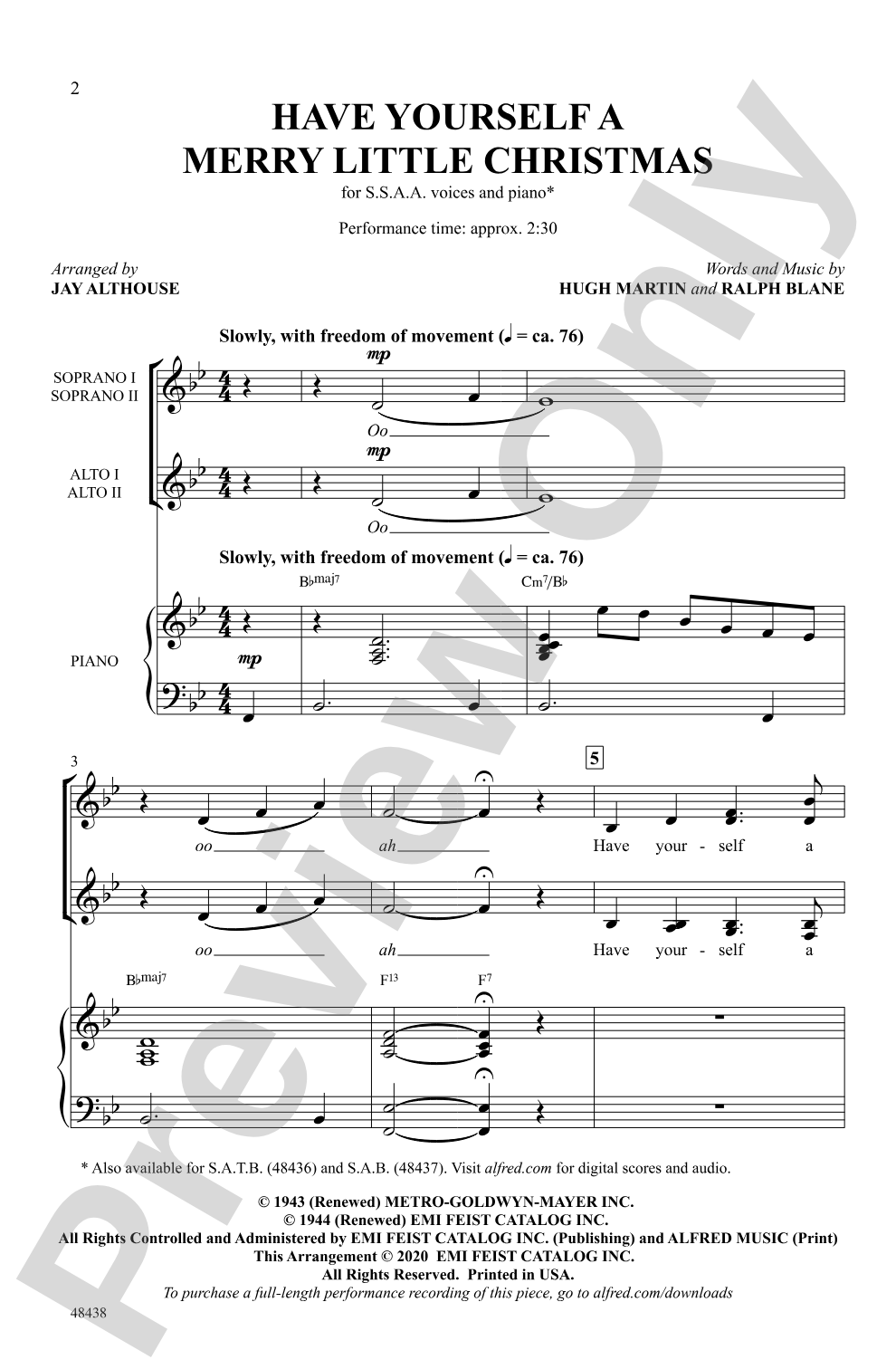

Have Yourself a Merry Little Christmas: SSAA Choral Octavo
Words and music by Hugh Martin and Ralph Blane / arr. Jay Althouse
Item: 00-PO-0006374

$2.10
Minimum order quantity: 20 copies
One moment…
Related Items
Have Yourself a Merry Little Christmas: SATB Choral Octavo |
$2.10
|
View | |
Have Yourself a Merry Little Christmas: SAB Choral Octavo |
$2.10
|
View | |
Have Yourself a Merry Little Christmas: SATB Choral Octavo |
$2.55
|
View | |
Have Yourself a Merry Little Christmas: SAB Choral Octavo |
$2.10
|
View | |
Have Yourself a Merry Little Christmas: SSAA Choral Octavo |
$2.10
|
View |
Description
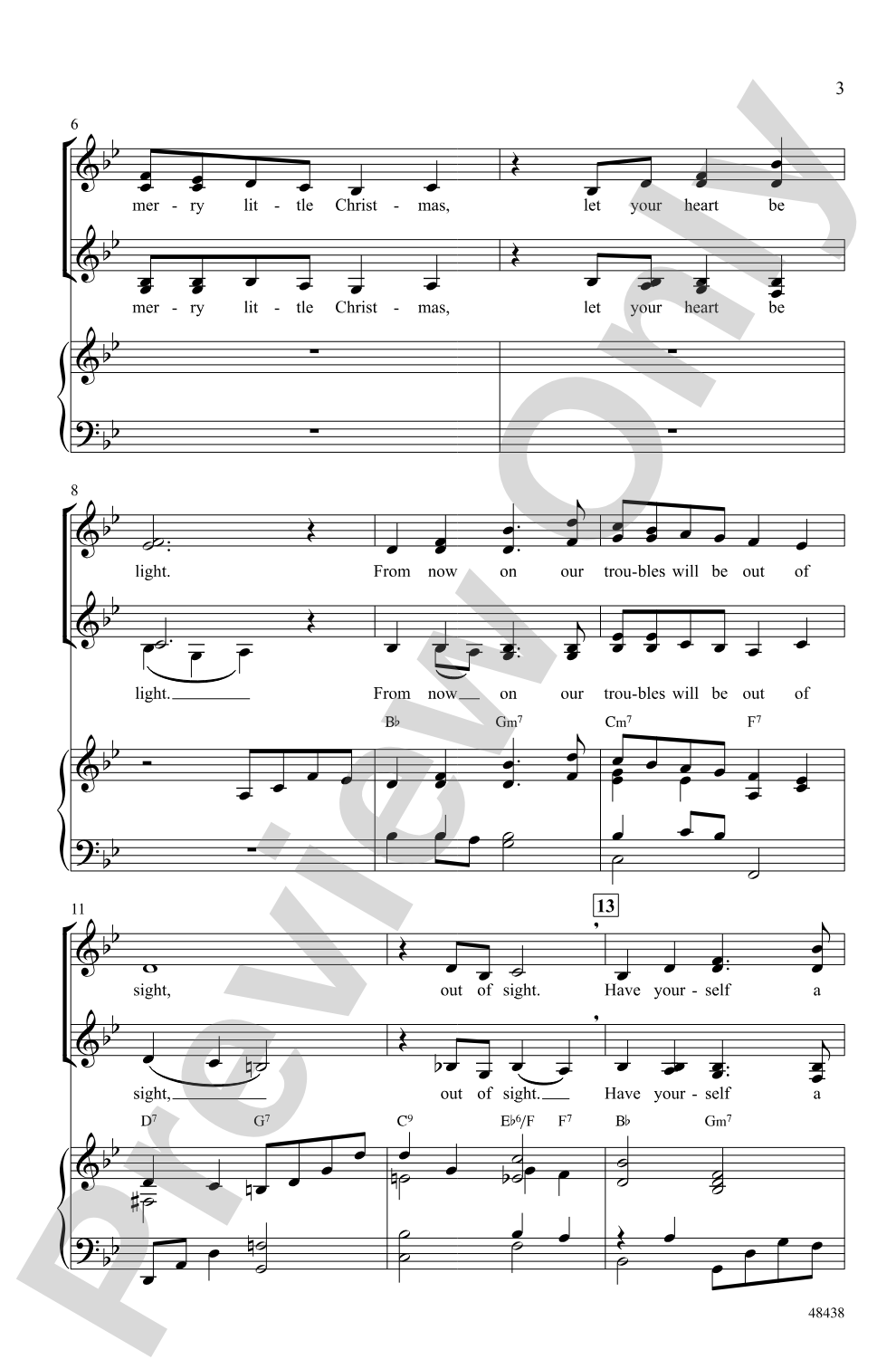
It's been covered by everyone from Frank Sinatra to the Muppets, but the classic heartfelt Christmas ballad was originally composed for none other than Judy Garland. Jay Althouse retains the timeless and unaffected character of the original song in this no-nonsense arrangement, evoking warm feelings and a touch of nostalgia.


Don't just read it, hear it, play along with it, and watch your students grow with it. In MakeMusic Cloud, Have Yourself a Merry Little Christmas: SSAA Choral Octavo comes alive with professional accompaniment, adjustable tempo, and built-in practice tools that turn solo practice into real progress.
Open in the Player
Jump straight in and assign it today.
Start Your Free Trial
Open this title and explore the full library in minutes.
Sample Audio
1
Audio File
--:--
0:00
0:00
Sample Video
No sample videos found.
Additional Details
Series:
Alfred Pop Choral Series
Publisher:
Alfred Music
Page Count:
8
SKU:
00-PO-0006374
More about this title
About the Composer: Hugh Martin
Hugh Martin composed "Have Yourself a Merry Little Christmas" in 1943 with lyricist Ralph Blane for the MGM film "Meet Me in St. Louis," written specifically for Judy Garland's character to sing in a poignant moment of the film. The song became one of the most enduring Christmas standards in American popular music, recorded countless times across generations of artists in every musical genre.
Martin's gift for melody and his understanding of how to write for the human voice made this ballad accessible to singers of all levels while maintaining emotional depth. His work in Hollywood songwriting during the Golden Age of musicals established him as a composer who could craft songs that transcend their original context and become part of the cultural landscape.
Why we love this
Jay Althouse's arrangement honors the simplicity and sincerity of the original without adding unnecessary complexity or modern production tricks. The SSAA voicing sits naturally for most choirs, and the straightforward approach lets singers focus on the phrase and emotion rather than technical gymnastics. Directors who want to program a beloved Christmas song that audiences will recognize and singers will connect with emotionally will find this arrangement genuinely moving.
What to expect
The song carries a bittersweet nostalgia, tender and reflective rather than jolly. There's an underlying hopefulness mixed with gentle melancholy, qualities that come through most powerfully when singers commit to the text and allow silence and space to be as important as the notes themselves.
Who it's for
Choirs of intermediate to advanced ability who want a Christmas piece with immediate emotional impact and audience recognition. High school, college, and community choirs will find the SSAA voicing accessible and the simplicity of arrangement freeing rather than limiting.
How to get the most out of it
- Shape the melody with long, connected phrases rather than breaking it into smaller units. This song relies on sustained legit singing to convey its nostalgic warmth.
- Balance the inner voices so the harmony enriches without overwhelming the top line. The arrangement is transparent by design, so clarity of spacing matters more than blend.
- Let the text guide your dynamics and phrasing. Words like "merry," "bright," and "near" each deserve subtle emphasis to keep the song conversational rather than orchestral.
- Consider how the piece sits in your voices before committing to a key. A transposition up or down one or two half steps can dramatically affect the accessibility and resonance of the singers' tone.
How to use it
This works beautifully as a concert closer or as part of a Christmas program that mixes sacred and secular traditions. Program it after more energetic pieces to give audiences a moment of reflection, or pair it with other mid-century popular standards for a program centered on American songwriting.
Skills your students will build
- Sustaining long melodic lines with consistent breath support
- Balancing harmony parts without doubling the melody
- Interpreting lyrical text through dynamic and phrasing choices
- Singing with intentional simplicity rather than added ornamentation