Have You Ever Seen The Rain? (arr. Kirby Shaw) Sheet Music Preview

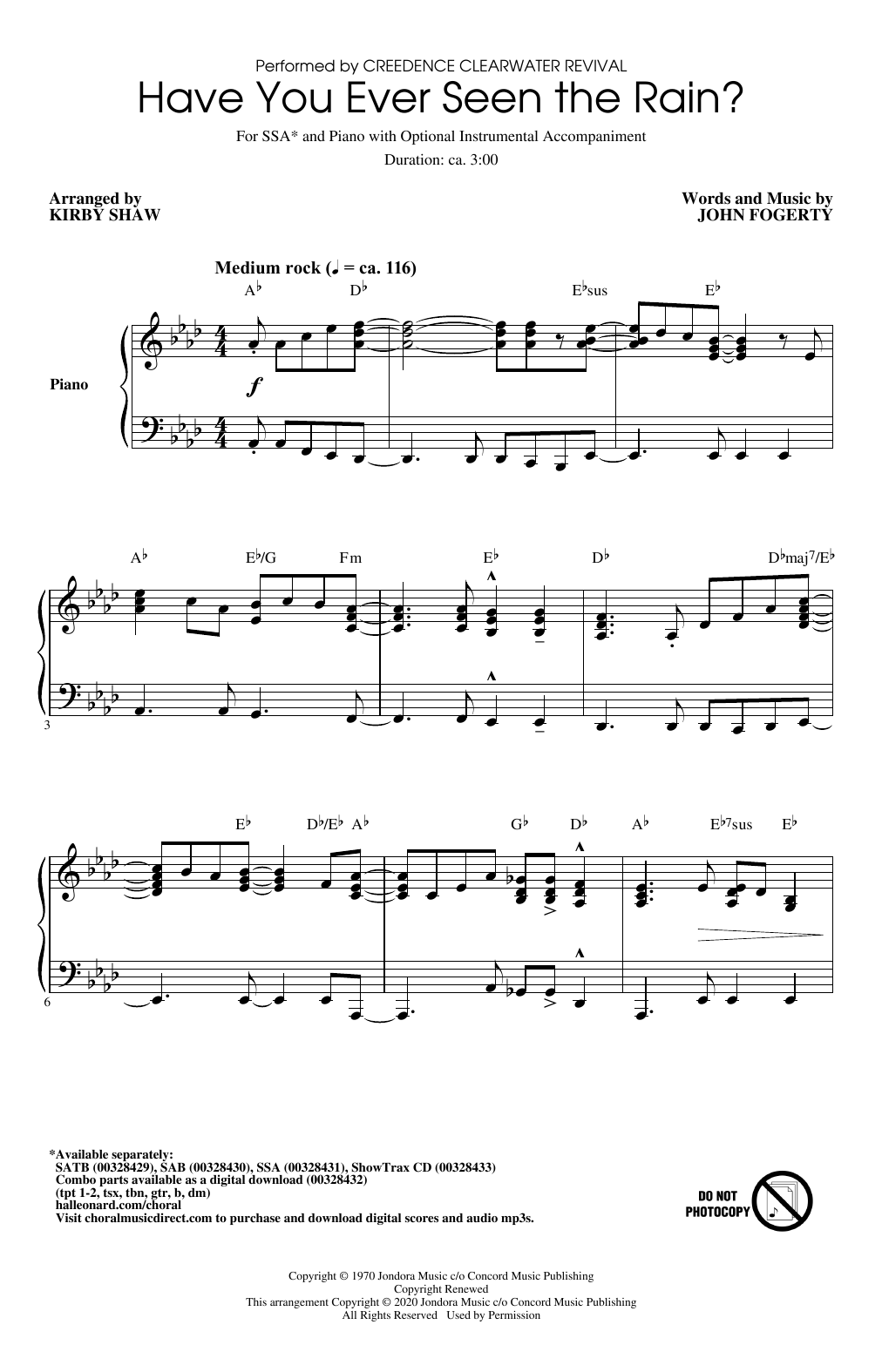
Have You Ever Seen The Rain? (arr. Kirby Shaw): SSA Choral Octavo

As performed by Creedence Clearwater Revival / Arranged by Kirby Shaw

Item: 35-DS00464282

Digital Download
$2.99
Description

Have You Ever Seen The Rain? (arr. Kirby Shaw): SSA Choral Octavo isn't in MakeMusic Cloud just yet...but it could be. Let us know you'd like to see it, and you'll help shape what comes next. In the meantime, start a free trial and dive into thousands of interactive titles your students can play along with today.

Sample Audio
No sample audio found.
Sample Video
Additional Details
Publisher: Hal Leonard
Page Count: 10
SKU: 35-DS00464282

More about this title

About the Artist: Creedence Clearwater Revival

Creedence Clearwater Revival emerged from El Sobrante, California in the late 1960s as one of rock's most prolific hitmakers. The band's tight harmonies, swampy groove, and John Fogerty's distinctive vocal delivery made them instantly recognizable across radio formats, and their catalog remains a cornerstone of American rock. Their influence extends far beyond the era in which they recorded; their songs continue to appear in films, television, and educational settings because they combine accessible melodies with genuine musicianship.

While the band disbanded in 1972, their recorded legacy has only grown in cultural significance. Songs like "Have You Ever Seen The Rain?" demonstrate why their work translates so effectively to choral arrangements: the melodies are memorable without being simplistic, the emotional core is genuine, and the lyrics resonate across generations. For music educators, CCR's catalog offers an entry point into rock music that rewards careful interpretation and respects the original artistry.

Why we love this

Kirby Shaw's arrangement captures the reflective quality of the original while giving SSA ensembles a genuinely singable, emotionally honest part. The song's straightforward structure and accessible tessitura mean singers can focus on tone and lyrical expression rather than navigating technical hurdles. Audiences immediately recognize this tune, which means your choir's performance lands with the emotional weight the song deserves.

What to expect

Contemplative and grounded. The arrangement honors the song's gentle resignation, that specific quality of acceptance in the face of uncertainty. There's warmth in the harmonies and a touch of melancholy that resonates with listeners whether they know the original recording or encounter it fresh.

Who it's for

SSA choirs seeking contemporary repertoire that connects with students and audiences without sacrificing musical substance. This arrangement works equally well for school ensembles building a mixed or pop-focused concert and auditioned groups looking to expand beyond traditional choral standards.

How to get the most out of it

  • Balance the vocal line with the accompaniment so the lyrics remain clear; resist letting the pop arrangement pull the tempo too fast in rehearsal, where the meditative quality is easy to lose.
  • Shape phrases around the lyrical punctuation rather than strictly musical measures; "Some day soon it'll all make sense" needs breath and space to land.
  • Let the minor tonality inform your interpretation. This isn't an upbeat pop song despite its origins; the arrangement invites a more reflective delivery.
  • Blend the SSA voicing carefully in the tutti sections so the three-part harmony reads cleanly rather than muddying.

How to use it

Include this on a concert celebrating rock and pop songs that have stood the test of time, or program it as a lighter moment in a more classical-heavy concert where it provides emotional contrast. The 10-page format makes it manageable for groups with limited rehearsal time, and its accessibility means you can feature it early in the season while building toward more demanding repertoire.

Skills your students will build

  • Sustaining lyrical phrasing across longer melodic lines
  • Balancing three-part SSA harmony in a contemporary idiom
  • Interpreting minor tonality with emotional nuance rather than darkness
  • Connecting to rock and pop song traditions through skilled arranging

You May Also Like